
 English
 ကညီကျိာ်
 မြန်မာ
 Print:
This Situation Update describes events occurring in Hsaw Htee (Shwegyin) Township, Kler Lwee Htoo (Nyaunglebin) District during the period between May 2025 and November 2025. This report documents local villagers’ testimonies and experiences of the human rights situation in Hsaw Htee Township during the reporting period. It covers a range of human rights violations, including armed conflict; security concerns; forced recruitment by the Burma Army; arbitrary arrest, including for portering; the forced use of villagers as navigators and human shields; house burnings; shelling; air strikes; killings; injuries; destruction of civilian property; displacement; and the resulting impacts on livelihoods, healthcare, and education. The report also examines villagers’ perspectives on the Burma military regime’s planned 2025-2026 general election and the increasing availability and use of drugs in local communities. Since the Burma military regime seized power in the 2021 coup, armed conflict between the Karen National Liberation Army (KNLA) and the Burma Army has intensified across the township. As a result of the Burma Army’s ongoing military operations, including shelling and air strikes, villagers continued to face serious threats to their safety and security. Many were forcibly displaced and lived in constant fear and uncertainty, while others were injured or killed during attacks. The escalation of the conflict also severely disrupted civilians’ access to essential services. Students and teachers faced increasing insecurity due to repeated military attacks, making it unsafe to attend or conduct classes and negatively affecting children's access to education and interest in learning. In addition, ongoing displacement and insecurity limited access to healthcare and undermined villagers’ livelihoods. Alongside the impacts of armed conflict, villagers in Hsaw Htee Township also faced significant livelihood challenges resulting from climate change. The combined effects of insecurity, displacement, and environmental pressures further reduced their ability to sustain their livelihoods and meet their basic needs.[1]
1. Armed conflict caused injuries and healthcare challenges to local villagers
Healthcare remained a major challenge for local villagers in Hsaw Htee (Shwegyin) Township, Kler Lwee Htoo (Nyaunglebin) District, an area under the control of the Karen National Union (KNU),[2] in Southeast Burma.[3] Only five Karen Department of Health and Welfare (KDHW)[4] clinics and three community clinics supported by local community-based organisations were available across the entire township. These village tract[5]-level clinics provided only basic healthcare services. Compared to areas where hospitals are available, access to healthcare in Hsaw Htee Township was limited and insufficient to meet the needs of the local population.
During the 2024 and 2025 rainy seasons, local villagers faced additional health challenges caused by flooding and an increase in seasonal illnesses, including influenza. The shortage of medicines and medical supplies at local clinics made it difficult for healthcare workers to provide adequate treatment. In August 2025, several children in Hsaw Htee Township were also diagnosed with dengue fever, placing further pressure on the already limited healthcare services.
Political insecurity has also affected villagers' access to healthcare. Due to the ongoing armed conflict, villagers and family members of individuals affiliated with the resistance movement, including those participating in the Civil Disobedience Movement (CDM),[6] often feared travelling to hospitals in towns controlled by the Burma military junta.[7] As a result, many delayed or avoided seeking medical treatment, further limiting their access to healthcare services and affecting their right to health.
In addition to illness, local villagers faced serious health risks as a result of the ongoing armed conflict. Civilians were injured during fighting and required medical treatment. However, shortages of medicines, medical supplies, and equipment made it difficult for healthcare workers to provide adequate care. Many villagers also did not dare to seek treatment at hospitals in towns because they feared being questioned or harassed by the Burma military junta authorities, including the State Security and Peace Commission (SSPC)[8] [Burma Army]. As a result, some delayed or avoided seeking medical care despite their injuries or illnesses. Financial barriers also limited villagers' access to healthcare. Many local villagers could not afford the cost of transportation or medical treatment, making it difficult for them to receive appropriate care. Some villagers instead relied on the KNU, which arranged transportation to rural clinics and hospitals administered by the KDHW. However, access to these healthcare facilities was also challenging due to flooding and damaged roads, particularly during the rainy season.
To improve healthcare services in local communities, the KNU organised medical training for local youths in 2025 [exact date unknown] so that they could provide basic healthcare support in their villages. Approximately 600 participants attended the training, including staff from local organisations and village representatives. Villagers reported that the training was beneficial because it helped strengthen community-based healthcare capacity. However, despite these efforts, shortages of medicines and medical supplies continued to limit the provision of healthcare services.
Medics from the Karen National Liberation Army (KNLA)[9] and the People's Defence Force (PDF)[10] also provided medical assistance to local villagers whenever they were operating in nearby areas and were able to offer support. They treated villagers who were sick or injured whenever possible, and some villagers relied on them for healthcare when other services were inaccessible. However, access to medicines remained a major challenge. Villagers often struggled to obtain the medicines they needed, and purchasing medicine was also difficult due to limited availability. Even when villagers had sufficient money to buy medicine, it was often unavailable. Although the KNU, through the KDHW, provided some medical supplies and healthcare support, these efforts were insufficient to meet the healthcare needs of the local population.
Overall, local villagers were unable to fully realise their right to healthcare. Compared to the period before the 2021 military coup,[11] access to healthcare significantly deteriorated. The combined impacts of armed conflict, insecurity, shortages of medicines and medical supplies, transportation challenges, and limited healthcare facilities made it increasingly difficult for villagers to access timely and adequate medical treatment.
2. Impacts of local armed conflict and Burma military junta military operations: injuries, difficulties, fear, and anxiety
a) Challenges to education
Education is essential to the development of a nation. However, local villagers faced significant challenges in accessing education following the Burma military junta's seizure of power. Armed conflict between the Burma military junta and revolutionary armed groups frequently occurred in Hsaw Htee Township, disrupting education and creating an insecure learning environment. As a result, teachers were unable to teach regularly, and many students experienced interruptions to their education. On 10 February 2024, the Burma military junta imposed a conscription law, requiring eligible civilians aged 18 and above to serve in the military. At the time, the junta referred to itself as the State Administration Council (SAC).[12] On 31 July 2025, it was reconstituted as the State Security and Peace Commission (SSPC). The implementation of the conscription law caused many young people to feel fearful and anxious about their future. As a result, some lost interest in continuing their education. Nevertheless, some parents continued to encourage their children to remain in school and pursue their studies despite the ongoing insecurity.
Many local villagers opposed the Burma military junta's conscription law and did not want to join the military. As a result, villagers reported fearing that the Burma military junta would enter their villages and forcibly recruit young people into military service. This fear affected access to education, particularly for families living in remote areas. Some parents were reluctant to send their children to schools in towns because they feared their children might be forcibly arrested and recruited by the Burma military junta. Despite these challenges, the Karen Education and Culture Department (KECD)[13] continued its efforts to improve access to education by establishing schools in local areas so that children and young people could continue their studies closer to their communities. Compared to previous years, access to education in the area improved. However, the ongoing armed conflict meant that students were still unable to study in a safe and secure environment, as schools remained at risk from insecurity related to the conflict.
The Burma military junta also targeted areas where local villagers were perceived to oppose its rule or support resistance groups, placing civilians at increased risk. One of the greatest concerns for local communities was the use of air attacks, including drone strikes and aircraft carrying out air strikes with machine-gun fire and bombings. These attacks created a constant threat to civilians, including students and teachers. In response to the deteriorating security situation, education stakeholders, including school committee members, responsible community leaders, and parents, worked together to establish schools in forested and concealed locations to reduce the risk of attack and enable children to continue their education. However, these arrangements also created additional challenges. During the rainy season, students faced difficulties travelling to and from school through forested areas and were frequently bitten by mosquitoes and other insects while attending classes. These were among the challenges experienced by students in Hsaw Htee Township.
During the reporting period, schools in the lower part of Hsaw Htee Township were temporarily closed for approximately two weeks following flooding on 26 July 2025. Later, on 26 September 2025, fighting broke out between combined Burma Army forces and combined local resistance forces, including the KNLA, Karen National Defence Organisation (KNDO),[14] and PDF. Due to the deteriorating security situation, ten schools in four village tracts including Pyay Yay, Aye Waing, and Pazon Myaung village tracts were forced to close. Some schools closed on 3 October 2025, while others closed on 5 or 6 October 2025. As of November 2025, the ongoing armed conflict and insecurity had prevented these schools from reopening, leaving many students unable to resume their education.
On 29 October 2025, at approximately 10 am, two Burma Army paramotors dropped five bombs on Kk--- village, Pyay Yay village tract, Hsaw Htee Township. Four of the bombs landed on farmland near the village, while one bomb struck the compound of the Kk--- school. The school had been closed since the Burma military junta seized power in the February 2021 coup because of the deteriorating security situation. As a result, there were no casualties when the bombs struck the school compound. However, bomb fragments damaged the school buildings. Following the attack, village authorities, including the village administrator and village leaders, arranged alternative learning spaces so that students could continue their education. Some students attended classes in villagers' houses, while others studied at a monastery. The KECD provided the curriculum, textbooks, and other teaching materials, and continued to administer the schools.
There were two types of schools operating in Hsaw Htee Township during the reporting period. Some schools were administered by the KECD, while others were community-established and self-funded. These self-funded schools used the Burma national curriculum; however, they were not permitted by the KNU to teach history from the Burma national curriculum. This situation arose because KECD had insufficient curriculum materials to distribute to all schools, and some schools also faced shortages of qualified teachers. As a result, many parents living in the Plaw (Per Htee) area chose to send their children to schools in nearby towns. Similarly, families living close to urban areas often preferred town-based schools. According to local villagers, some parents perceived that qualifications obtained through the Kaw Thoo Lei[15] (KECD) education system were not widely recognised and that graduates might face difficulties accessing higher education or securing employment. Consequently, some parents lacked confidence in the KECD education system and preferred to enrol their children in schools using the Burma national curriculum. The information above describes the educational system and the situation of high school students in Hsaw Htee Township during the reporting period.
b) Livelihoods and livelihood challenges
Most local villagers in Hsaw Htee Township relied on agriculture as their primary source of income during the reporting period. In addition to farming, villagers depended on natural resources, including timber, bamboo, fruits, and forest products, as well as rubber plantations, hill farming, and, for some households, small-scale gold mining. Communities living near rivers also relied on fishing and other aquatic resources to support their livelihoods.
- Difficulties with transportation and increased taxation
Many villagers cultivated perennial crops, including jengkol bean (dog fruit), betel nut, citron, lime, betel vine, and durian. Although durian prices were relatively high in 2025, the benefits were limited to households that owned durian plantations. Prices for many other agricultural products remained low. According to local villagers, transporting agricultural products to markets became increasingly difficult because of insecurity and the presence of Burma Army checkpoints. Traders and farmers reported being required to pay taxes or other unofficial payments while transporting goods. These additional costs reduced farmers' incomes and increased the prices of essential goods sold in villages.
Local traders also faced difficulties purchasing goods from towns because of transportation costs, checkpoint restrictions, and multiple taxes and fees. As a result, consumer goods became more expensive in rural communities. In the Plaw (Per Htee) area, most villagers relied on farming, fishing, and river-based livelihoods. Many households had limited cash income and depended primarily on subsistence agriculture.
Some villagers earned a living by harvesting timber and bamboo. However, these activities were regulated by the KNU, which established seasonal restrictions and permit requirements. When harvesting was temporarily prohibited, villagers who depended on these activities were required to seek alternative legal sources of income.
Gold mining also provided income for some households in Hsaw Htee Township, although this work generally required significant financial investment and was carried out mainly by wealthier individuals. According to local sources, those engaged in gold mining were required to pay taxes and other fees to authorities operating in areas under mixed control of the KNU and the Burma military junta.
- The Burma Army arrested villagers [affecting livelihoods]
Some local villagers who did not own farmland or plantations relied on trade to support their families’ livelihoods. However, travelling to buy or sell goods exposed them to security risks. According to local villagers, traders were frequently stopped at Burma Army checkpoints, where they were required to pay money before being allowed to continue their journeys. Others were reportedly arrested under the conscription law and transferred to military training centres instead of being released.
Many households also depended on river resources, including fish, prawns, crabs, frogs, and other aquatic products. Because these products are highly perishable, villagers needed to transport them quickly to markets. However, insecurity, travel restrictions, and checkpoints frequently delayed transportation. Local villagers also reported that some people transporting fish, prawns, crabs, and frogs were arrested by the Burma Army, further affecting their livelihoods.
- Weather-related challenges
This year [2025], flooding that began on 21 July 2025 continued for approximately one month, damaging paddy fields [across Hsaw Htee Township]. Although floodwaters receded, many fields did not recover. According to local farmers, rice plants turned yellow and dried before harvest, reducing agricultural production. Moreover, in October 2025, flooding along the Kaw Lo River continued to affect farmland. Farmers whose fields were located near the Kaw Lo River were forced to harvest rice while their fields remained flooded because the paddies on their farms were ready to be reaped. After harvesting, they also experienced difficulties selling their rice because market prices remained low, ranging from approximately 130,000 to 150,000 kyats (61.90 to 71.43 USD[16]) per large basket (32 kg). According to local farmers, production costs often exceeded their earnings, leaving many households without profit and, in some cases, in debt.
Heavy rainfall in October 2025 also disrupted the planting of green beans. Some farmers were unable to plant on time, while others lost crops that had already been planted because of excessive rainfall. Despite these challenges, local villagers continued to work hard to sustain their livelihoods.
Agriculture remained the main source of income for most households, including the cultivation of both perennial and seasonal crops. However, agricultural production depended heavily on weather conditions, market demand, and traders' ability to access local communities. According to local villagers, prices for agricultural products remained low, while the prices of essential consumer goods continued to rise, placing additional financial pressure on rural households.
c) Security concerns affecting travel and daily life
During the reporting period, the security situation in Hsaw Htee Township continued to affect the daily lives of local villagers. According to local villagers, they lived and worked under constant fear and uncertainty because of the ongoing armed conflict and military operations in the area. Many described feeling that even routine activities involved significant risks to their safety and livelihoods. The continuing political and armed conflict disrupted many aspects of civilian life. Local villagers faced difficulties travelling between villages, accessing farmland and workplaces, pursuing their livelihoods, and ensuring that children could continue their education. The insecurity also had significant psychological impacts. Villagers reported experiencing fear, anxiety, stress, and trauma, and many felt that neither their lives nor their property were secure. In addition to the risks posed by armed conflict, villagers encountered numerous challenges while travelling. According to local sources, they frequently passed through Burma Army checkpoints, where they faced questioning, demands for money, the risk of arbitrary arrest under the conscription law, and being forced to serve as porters. These security concerns restricted freedom of movement and made it increasingly difficult for local villagers to carry out their daily activities and sustain their livelihoods. Despite these ongoing hardships, local villagers continued to adapt to the conflict and sought ways to maintain their livelihoods and support their families, even as they remained exposed to persistent insecurity and human rights abuses.
d) Displacement, armed conflict, and house burnings
Ongoing armed conflict and military operations by the Burma Army continued to cause widespread displacement in Hsaw Htee Township [during the reporting period]. Local villagers reported living in constant fear that Burma Army troops would enter their villages and conduct military operations. As a result, some families temporarily relocated to stay with relatives, while others fled to forests or other safer locations. The continuing armed conflict also exposed civilians to the risk of death and injury.
In May 2025, fighting between Burma Army soldiers and combined local resistance forces affected Pyay Yay, Aye Waing, and Pazon Myaung village tracts. As a result, villagers from eight villages fled to nearby forests, while others sought safety in other areas.
Beginning on 26 September 2025, fighting resumed in the area between Kler Lwee Htoo (Nyaunglaybin) Town and Way Htoo (Shwegyin) Town. The renewed clashes forced many local villagers to abandon their homes and seek refuge elsewhere. According to local sources, approximately 10,000 villagers from 11 villages were displaced. Some sought shelter in nearby towns, while others fled to neighbouring villages. On 16 October 2025, Burma Army soldiers entered Kq--- village, Pazon Myaung village tract, and burned down approximately 70 houses, causing extensive destruction and further displacement of local residents.
e) Force recruitment and extortion by the Burma Army
According to local villagers, forced recruitment by the Burma Army remained a serious concern in Hsaw Htee Township during the reporting period. Following the enforcement of the conscription law after 10 February 2024, villagers reported frequent arbitrary arrests for military recruitment. These incidents continued throughout 2025 and created widespread fear among local communities. Local villagers reported that individuals selected for military service could avoid recruitment only by paying a conscription exemption fee. The amount demanded reportedly varied depending on local authorities and administrative practices, ranging from 20,000 kyats to 150,000 kyats (9.52 to 71.43 USD) per household in some areas. In villages where no one volunteered to join the military, local authorities reportedly used a lottery system to select individuals for conscription. Those selected who did not wish to serve were reportedly required to pay more than 500,000 kyats (238.10 USD) to avoid recruitment. According to local sources, these payments were reportedly used to provide financial support to individuals who agreed to join the military. Villagers also reported that people who were arbitrarily arrested for recruitment were often required to pay large sums of money to secure their release. In some documented cases, families paid between 10 million (4,761.90 USD) and more than 20 million kyats (9,523.81 USD) to obtain the release of detained relatives.
According to local villagers, these practices created opportunities for corruption and extortion by members of the Burma Army. Local sources reported that recruitment quotas were assigned to townships and that pressure to meet these quotas contributed to arbitrary arrests. Because many villagers were unwilling to join the military, families often paid whatever they could afford to prevent or end the forced recruitment of their relatives.
In August, September, and November 2025, local sources reported that more than 100 villagers were arrested for recruitment in Hsaw Htee Township, with more than 30 people arrested in each of those months. Those detained were reportedly transferred to military training centres, including Aung Twin and Taik Gyi. According to local villagers, in November 2025, some Burma Army units were reportedly instructed to recruit 13 people but arrested around 30 villagers instead. Local sources alleged that the additional arrests were carried out to obtain money from families seeking the release of their relatives. Local villagers further alleged that some Burma Army units transferred detained villagers to units in other townships that had failed to meet their recruitment quotas in exchange for money. According to local sources, payments of approximately 15 million kyats (7,142.86 USD) were made for each transferred detainee. Local villagers viewed these practices as amounting to human trafficking because individuals were treated as commodities and transferred for financial gain. These allegations could not be independently verified by KHRG but were consistently reported by local sources during the reporting period.
f) Fighting, house burning, air strikes, death, injuries, and destruction of local villagers’ property
During the reporting period, ongoing fighting between the Burma Army and combined local resistance forces had severe consequences for civilians in Hsaw Htee Township. In May 2025, combined local resistance forces captured two Burma Army military camps belonging to Light Infantry Battalion (LIB)[17] #598 at Hpa Bawh and Kwin Seik [villages, Kwin Seik (Section 1), Hsaw Htee Township]. Following the loss of these camps, the Burma Army launched military operations to retake them. According to local sources, these operations included indiscriminate mortar shelling, drone strikes, and air strikes. Local villagers reported that the attacks were not limited to military targets but also struck villages, religious buildings, and civilian property. As a result of air strikes carried out by drones and aircraft, more than 35 villagers' houses were destroyed. Additional homes were damaged or destroyed by indiscriminate mortar shelling. During ground operations, Burma Army soldiers also burned down more than 70 villagers' houses.
On 26 September 2025, fighting broke out between Burma Army soldiers and combined KNLA forces near Kg--- village, Pyay Yay village tract. According to local sources, after the Burma Army sustained casualties during the fighting, a Burma Army Y-12 aircraft carried out an air strike at approximately 12 pm, dropping six bombs on Pyay Yay village tract. Two of the bombs landed within the compound of a monastery in Kk--- village, damaging the monastery's roof, walls, and other property.
On 8 October 2025, at 3:32 pm, a Burma Army fighter jet dropped a 500-pound bomb on the garden of U K---'s house in Ke--- village, Thet Kel Kone village tract, Hsaw Htee Township. The explosion killed 18-year-old Ma G--- after bomb shrapnel struck her in the face. The blast also damaged two houses belonging to U K--- and U Q---.
Furthermore, the Burma Army continued to conduct air strikes on villages using drones and fighter jets [throughout the reporting period]. Additionally, beginning on 26 October 2025, the Burma Army also reportedly used paramotors to drop bombs on villages in Hsaw Htee Township, further increasing the risk to local villagers.
g) The Burma Army forced villagers to serve as porters, navigators, and human shields
During the reporting period, one Burma Army Military Operations Command (MOC)[18] and five battalions were based in Hsaw Htee Township. The Burma Army maintained more than 12 military camps and operated numerous checkpoints throughout the township. According to local villagers, the Burma Army carried out various military operations that adversely affected civilians. These included forced recruitment, compelling villagers to transport military supplies as porters, and forcing civilians to act as navigators and human shields during military operations. In October 2025, following an ambush by combined KNLA, KNDO, and PDF troops on a Burma Army supply convoy transporting rations to frontline troops, the Burma Army reportedly faced difficulties resupplying its forces. On 21 and 22 October 2025, Burma Army personnel held meetings with local traders and forced them to transport food supplies to soldiers stationed on the frontlines.
On 6 November 2025, at approximately 9 am, soldiers from Burma Army Infantry Battalion (IB)[19] #57 arrested six villagers at a rubber plantation in Aa--- village, Aye Ka Ni village tract, Hsaw Htee Township. According to local sources, the soldiers forced the six villagers to carry military equipment as porters and required them to accompany the troops as navigators and human shields during their movement. When the Burma Army column reached Ik--- village, Aye Ka Ni village tract, fighting broke out between Burma Army soldiers and combined KNLA forces. During the fighting, some of the villagers who had been forced to accompany the troops as porters were injured.
h) 2025-2026 sham election caused difficulties and dangers for local villagers
Following the 2020 general election, the Burma military alleged that electoral fraud had occurred and called for the election results to be reviewed. After the National League for Democracy (NLD),[20] which had won the election, rejected these allegations, the Burma military was not satisfied. Therefore, the Burma military seized power [in the February 2021 coup] and detained senior government and NLD leaders.
Under the 2008 Constitution, the Burma military was permitted to assume power during a declared state of emergency for an initial period of six months, with the possibility of extending the emergency under certain conditions. The constitution also requires that a general election be held following the end of the state of emergency. However, as of the reporting period, the Burma military had remained in power for more than four years since the February 2021 coup. In 2025, after reconstituting itself as the SSPC, the Burma military regime announced that it planned to hold [the first of three phrases of] an election in December 2025.[21]
According to local villagers in Hsaw Htee Township, many people did not believe that the planned election would be free or fair. Villagers reported that the ongoing presence of the Burma Army, together with threats, violence, and other forms of pressure, limited their ability to express their political views freely. Some villagers stated that they felt they had little choice but to comply with the authorities' instructions. Three political parties, the People Life for Development Party (PLDP), the Union Solidarity and Development Party (USDP), and the People's Pioneer Party (PPP), conducted political activities in Hsaw Htee Township ahead of the planned election. On 9 October 2025, these parties opened offices in Shwegyin Town and began organising local residents to participate in the election. They also collected household registration information from local villagers for election-related purposes. According to local sources, these political activities were mainly conducted in towns and villages under the control of the Burma Army or in areas where local resistance forces had not carried out public awareness activities. Many villagers reported that they believed the planned election would not be free or fair and stated that if they had not faced pressure from the authorities, they would not have chosen to participate.
i) Drug situation
According to local information, the drug situation in Hsaw Htee Township worsened following the Burma military junta's seizure of power in the February 2021 coup. Compared to previous years, a wider variety of drugs became available, and drug use reportedly increased in many villages. Alcohol has long been available in Hsaw Htee Township. However, local villagers reported that the production and consumption of chemically produced alcohol increased in recent years. In 2024, methamphetamine and other illegal drugs became increasingly available in the township. However, local authorities [KNU] reported facing challenges in investigating drug trafficking and taking effective action against those involved.
In 2025, checkpoints operated by the KNLA intercepted several drug shipments. According to local authorities, most of the seized drugs were WY methamphetamine tablets [yaba[22]]. Those arrested for transporting or using drugs reportedly included people from the Per Htee (Plaw) area and nearby towns. The Karen National Police Force (KNPF)[23] also conducted operations against suspected drug dealers and users, including the arrest of both men and women involved in drug-related activities. According to local authorities, individuals arrested for drug-related offences were dealt with in accordance with the drug control policies established by the KNU. In Hsaw Htee Township, drug-related offences are addressed under six provisions of the KNU's drug control regulations. In addition to law enforcement, the KNU and KNPF organised awareness-raising activities to educate local communities about drug-related laws and the harmful effects of drug use, with the aim of reducing drug use and trafficking in the area.
Conclusion
This report describes the experiences of local villagers and the human rights violations in Hsaw Htee Township documented by KHRG between May and November 2025. As described throughout this report, the human rights situation did not improve during the reporting period. Instead, violations continued and, in many cases, intensified. Local villagers were affected by ongoing armed conflict and the operations of the Burma military junta. Reported violations included arbitrary arrest, forced portering, the use of local villagers as human shields, the burning of villagers' houses, shelling, and air attacks involving drones and aircraft. These attacks caused civilian casualties and damaged or destroyed homes, religious buildings, plantations, and other local villagers’ property. In addition to conflict-related abuses, local communities also faced hardships caused by flooding and other adverse weather conditions. The combined effects of armed conflict and insecurity further worsened access to education, healthcare, livelihoods, transportation, and freedom of movement compared with previous years. Despite these challenges, local villagers continued to demonstrate resilience by working together to protect their communities and finding ways to address the difficulties they faced. At the same time, many villagers continued to experience forced labour, torture, arbitrary arrest, extortion, threats, and other forms of abuse. Many also saw their livelihoods repeatedly disrupted or destroyed by armed conflict and military operations, causing the benefits of their hard work to be lost. Nevertheless, local communities continued to adapt to the changing security situation and sought to maintain their daily lives despite the ongoing risks and hardships.
Further background reading on the human rights situation in Kler Lwee Htoo (Nyaunglebin) District in Southeast Burma/Myanmar can be found in the following KHRG reports:
- Stolen Childhoods: Violations of children’s rights, urgent needs, and local agency in rural Southeast Burma during the conflict, October 2025.
- “Kler Lwee Htoo District Situation Update: Burma Army attacks caused death, injuries, property damage, displacement, and challenges to villagers’ daily routine in Moo Township (February to May 2025)”, June 2026.
- “Photo Set: Burma Army air strikes on local communities, resulting in casualties, destruction, and displacement (January to December 2025)”, March 2026.
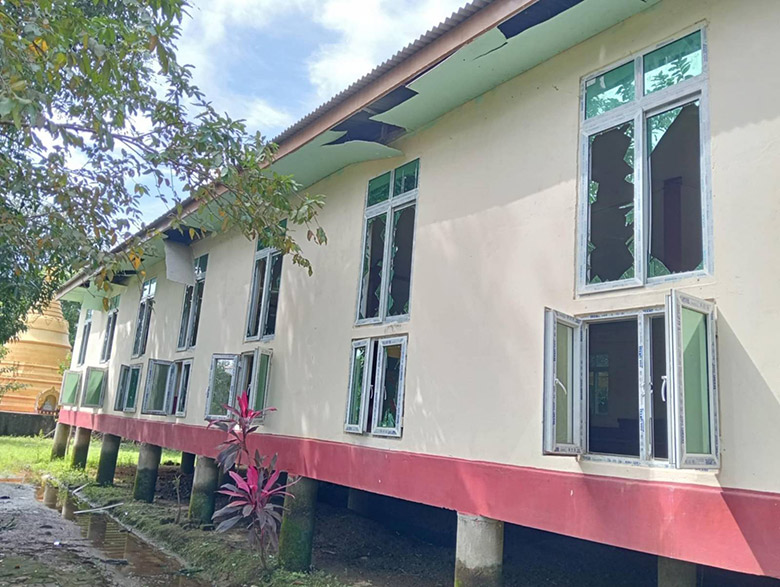
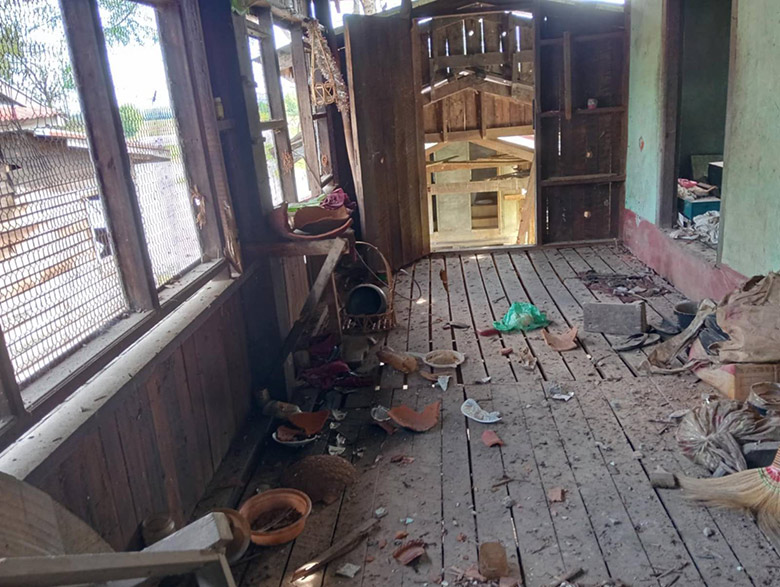
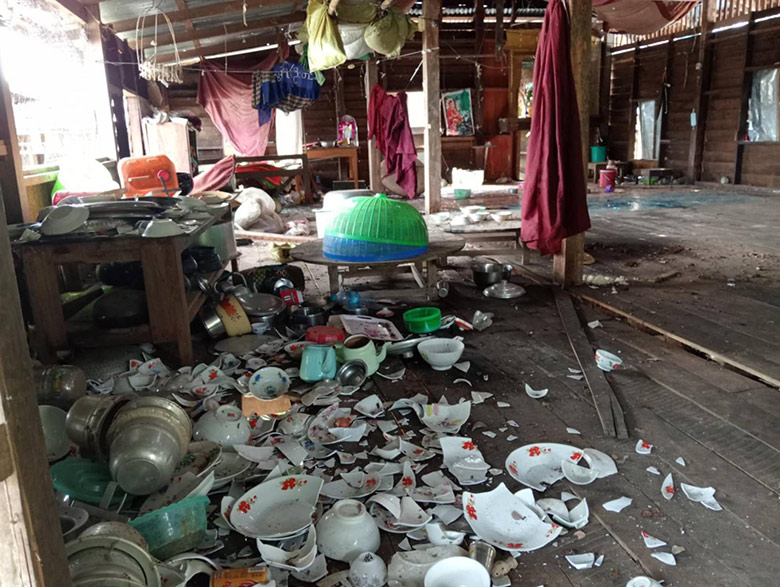
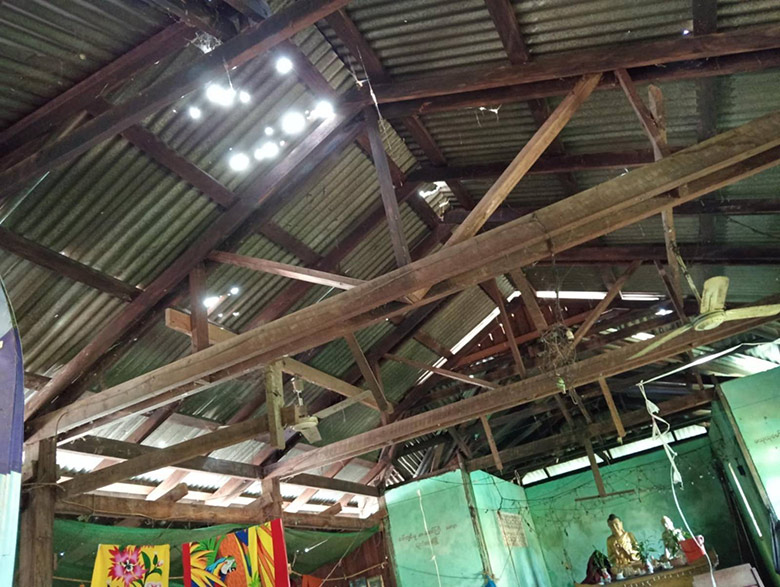


These four photos were received from a local authority on 26 September 2025. On 26 September 2025, at 12 pm, Burma Army aircraft dropped bombs onto a monastery campus in Kk--- village, Pyay Yay village tract, Hsaw Htee Township, Kler Lwee Htoo District. These photos show monastery buildings that were damaged and materials in the monastery that were destroyed as a result. [Photos: Local authorities]
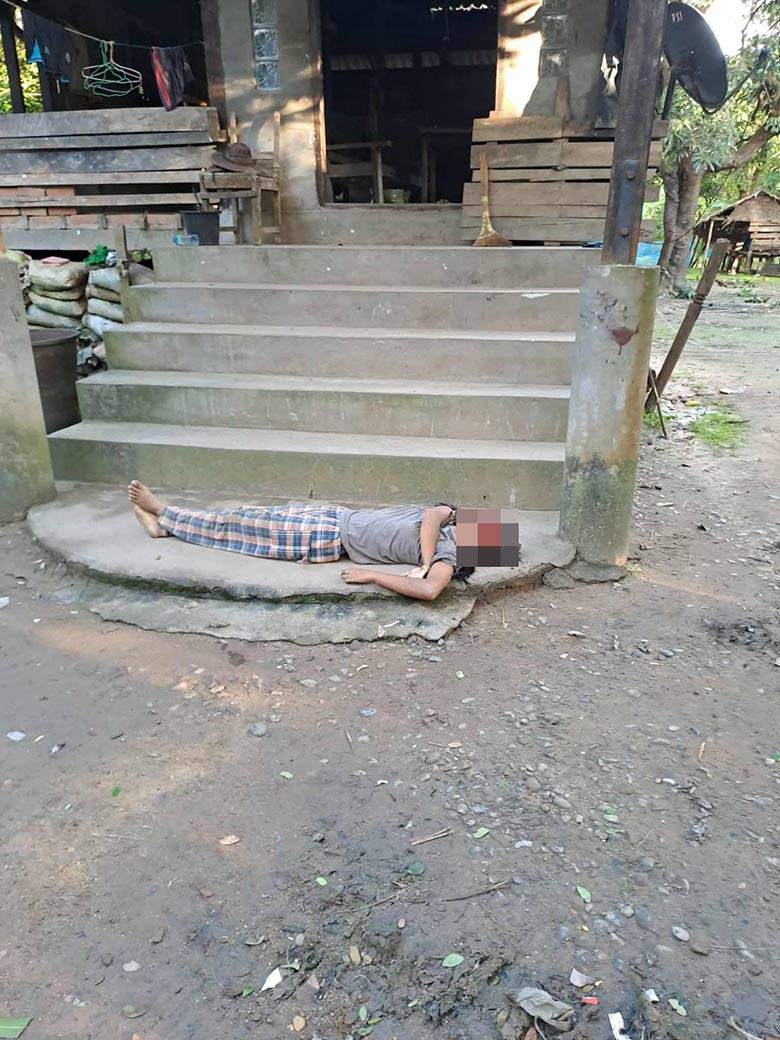
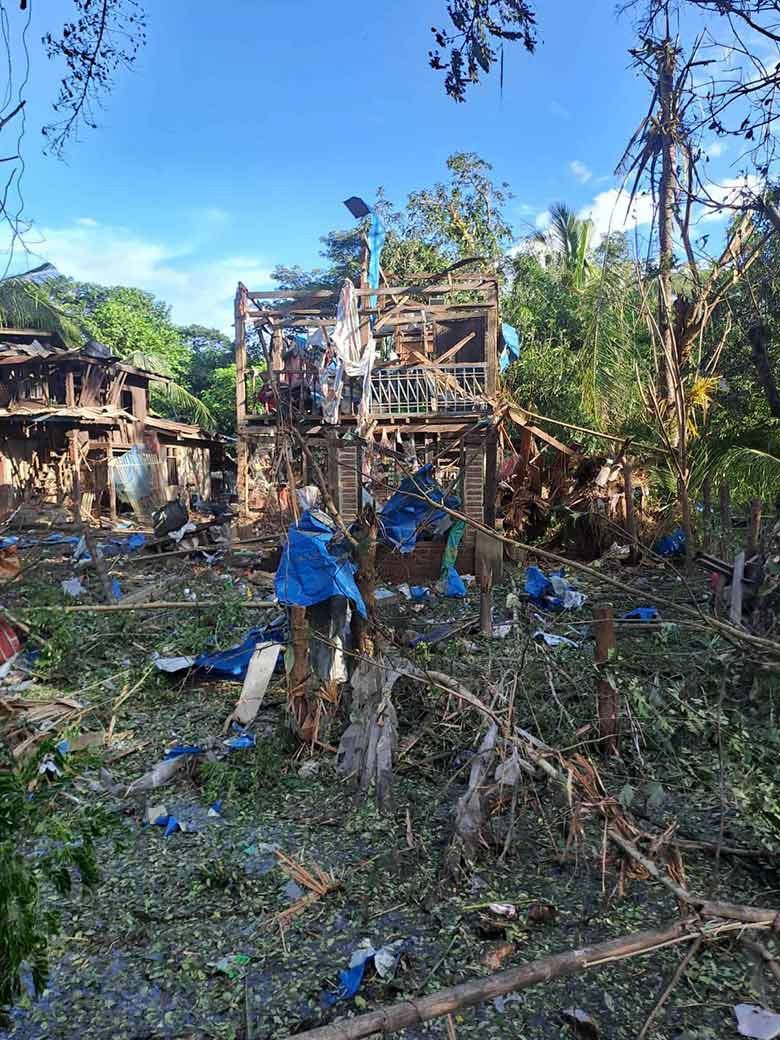


These two photos were received from a local authority on 8 October 2025. On 8 October 2025, the Burma Army conducted an air strike on Ke--- village, Thet Kel Kone village tract, Hsaw Htee Township, Kler Lwee Htoo District. A teenage girl was killed by the air strike, and two houses were destroyed by the air strike. The photo on the left shows the body of an 18-year-old girl named Ma G---, who was hit on her face by the shrapnel of the bomb explosion and died on the spot. The photo on the right shows houses owned by U K--- and U Q---, which were destroyed by the air strike. [Photos: Local authorities]
Footnotes:
[1] The present document is based on information received in October, November, and December 2025. It was provided by a community member in Kler Lwee Htoo District who has been trained by KHRG as a researcher to monitor human rights conditions on the ground. The names of the victims, their photos and the exact locations are censored for security reasons. The parts in square brackets are explanations added by KHRG. This document combines several received reports with the following KHRG internal log numbers: #25-401-S1; #25-340-D1; #25-362-D1; #25-365-D1; #25-399-D1; and #25-473-I1.
[2] The Karen National Union (KNU) is the main Karen political organisation. It was established in 1947 and has been in conflict with the government since 1949. The KNU wields power across large areas of Southeast Myanmar and has been calling for the creation of a democratic federal system since 1976. Although it signed the Nationwide Ceasefire Agreement (NCA) in 2015, following the 2021 coup staged by Burma Army leaders, the KNU officially stated that the NCA has become void.
[3] In 1989, the then-ruling military regime changed the name of the country from Burma to Myanmar without consultation from the people. KHRG prefers the use of Burma because it is more typically used by villagers, and since the name change to Myanmar is reflective of the military regime’s longstanding abuse of power.
[4] The Karen Department of Health and Welfare (KDHW) is the health department of the Karen National Union. It was established in 1956 to address the lack of public healthcare resources in rural Southeast Myanmar. It currently operates a network of community-based clinics in the region, but its capabilities remain limited due to funding constraints.
[5] A village tract is an administrative unit of between five and 20 villages in a local area, often centred on a large village.
[6] On 2 February 2021, healthcare workers at state-run hospitals and medical facilities across Myanmar spearheaded what is being referred to as a Civil Disobedience Movement (CDM) consisting of labour strikes in protest against the 1 February 2021 military coup. The movement quickly spread to include civil servants from all sectors of the government who are walking off their jobs as a way of non-recognition and non-participation in the military regime. Because of the popularity of the movement, and its seminal role in wider protests across the country, some people have begun using it as a catch-all phrase to include other protest forms like boycotts and pot-banging.
[7] The terms Burma military regime, Burma Army, junta, and SAC are used interchangeably throughout this report to describe Burma’s armed forces. Villagers themselves commonly use Burma Army, Burmese soldiers, or alternatively the name adopted by the Burma military regime at the time –from the 2021 coup to July 2025, the State Administration Council (SAC). On 31 July 2025, the military junta changed its name to State Security and Peace Commission (SSPC).
[8] The State Security and Peace Commission (SSPC) is one of the names of the executive governing body created in the aftermath of the 1 February 2021 military coup. Formerly called the State Administration Council (SAC), it was renamed by Senior General Min Aung Hlaing on 31 July 2025. The name State Security and Peace Commission (SSPC) is used interchangeably with military junta and Burma military regime.
[9] The Karen National Liberation Army (KNLA) is the armed wing of the Karen National Union.
[10] The People’s Defence Force (PDF) is an armed resistance established independently as local civilian militias operating across the country. Following the 1 February 2021 military coup and the ongoing brutal violence enacted by the junta, the majority of these groups began working with the National Unity Government (NUG), a body claiming to be the legitimate government of Burma/Myanmar, which then formalized the PDF on 5 May 2021 as a precursor to a federal army.
[11] On 1 February 2021, the Burma (Myanmar) military deposed the democratically elected government led by the National League for Democracy (NLD). The military proclaimed a year-long state of emergency and transferred power to Min Aung Hlaing, the Commander-in-Chief of Myanmar's Armed Forces. Based on unproven fraud allegations, the Tatmadaw invalidated the landslide victory of the NLD in the November 2020 General Election and stated it would hold new elections at the end of the state of emergency. The coup d'état occurred the day before the Parliament of Myanmar was due to swear in the members elected during the 2020 election. Elected President Win Myint and State Counsellor Aung San Suu Kyi were detained, along with ministers, their deputies and members of Parliament.
[12] The State Administration Council (SAC) was the name of the executive governing body of the Burma military regime created in the aftermath of the 1 February 2021 military coup. It was established by Senior General Min Aung Hlaing on 2 February 2021 and was composed of eight military officers and eight civilians. The chairperson serves as the de facto head of government of Burma/Myanmar and leads the Military Cabinet of Myanmar, the executive branch of the government. Min Aung Hlaing assumed the role of SAC chairperson following the coup. The military junta changed its name on 31 July 2025 from SAC to State Security and Peace Commission (SSPC), with Min Aung Hlaing retaining his position as chairperson.
[13] The Karen National Union's Education and Culture Department (KECD) is the education department of the Karen National Union. Its main goals are to provide mother tongue education services to rural Karen populations in Southeast Burma, as well as to preserve the Karen language, culture, and history. Despite being an important education provider in the region, it is not officially recognised by the Burma government.
[14] The Karen National Defence Organisation (KNDO) was formed in 1947 by the Karen National Union and is the precursor to the Karen National Liberation Army (KNLA). Today the KNDO refers to a militia force of local volunteers trained and equipped by the KNLA and incorporated into its battalion and command structure; its members wear uniforms and typically commit to two-year terms of service.
[15] The term Kaw Thoo Lei refers to Karen State as demarcated by the Karen National Union (KNU), but the exact meaning and etymology is disputed; see: Jonathan Falla. True Love and Bartholomew: Rebels on the Burmese Border, Cambridge University Press: 1991.
[16] All conversion estimates for the kyat in this report are based on the 30 April 2026 official market rate of 2,100 kyats to 1 USD, available at https://wise.com/gb/currency-converter/usd-to-mmk-rate.
[17] A Light Infantry Battalion (LIB) comprises 500 soldiers. Most Light Infantry Battalions in the Tatmadaw are under-strength with less than 200 soldiers, yet up-to-date information regarding the size of battalions is hard to come by, particularly following the signing of the NCA. LIBs are primarily used for offensive operations, but they are sometimes used for garrison duties.
[18] A Military Operations Command (MOC) is comprised of ten battalions for offensive operations. Most MOCs have three Tactical Operations Commands (TOCs) made up of three battalions each.
[19] An Infantry Battalion (IB) comprises 500 soldiers. However, most Infantry Battalions in the Tatmadaw are under-strength with less than 200 soldiers. Yet up to date information regarding the size of battalions is hard to come by, particularly following the signing of the NCA. They are primarily used for garrison duty but are sometimes used in offensive operations.
[20] The National League for Democracy (NLD) is the political party that governed Burma/Myanmar from 2016 to January 2021. Led by Aung San Suu Kyi, the NLD won landslide victories in the 2015 and 2020 General Elections. The NLD government was deposed by the Burma Army in the February 2021 Myanmar coup d'état, after which elected President Win Myint and State Counsellor Aung San Suu Kyi were detained, along with ministers, their deputies and members of Parliament.
[21] From December 2025-January 2026, the Burma Army held non-democratic elections amidst widespread reports of non-participation of opposition parties, voter exclusion, coercion, and intimidation. The junta’s election was split into three phases, making polling stations subsequently available in different regions: phase 1 took place on 28 December 2025; phase 2 took place on 11 January 2026; and phase 3 took place on 25 January 2026.
[22] Yaba, which means ‘crazy medicine’ in Thai, is a tablet form of methamphetamine. First developed in East Asia during the Second World War to enhance soldiers' performance, methamphetamine has become increasingly popular in Thailand, Laos, Cambodia, Vietnam, and Burma/Myanmar where it is typically manufactured.
[23] The Karen National Police Force (KNPF) is the law enforcement agency of the Karen National Union. It was established in 1991.


