
 English
 ကညီကျိာ်
 မြန်မာ
 Print:
This Photo Set presents photographic evidence of Burma Army air strikes conducted on local communities in Southeast Burma from January to December 2025. KHRG received more than 3,600 photographs displaying the impacts of the Burma Army’s indiscriminate and targeted air strikes during the reporting period. Since the 2021 coup, and throughout 2025, air strikes have resulted in civilian deaths and injuries, the destruction of numerous community buildings (including schools, monasteries, and churches), as well as plantations and rice fields, and have caused massive displacement. In 2025, at least 66 villagers, including 18 children, were killed, and 176 villagers, including 66 children, were injured by Burma Army air strikes in Southeast Burma. As a result of these attacks, fear has become widespread in the communities, severely impacting villagers’ security and livelihoods. Air strikes have also significantly disrupted villagers’ access to healthcare, education, and other essential services. The constant risk of further attacks has left villagers unable to continue working on their farms, and many have fled to forests and caves to find refuge.
Photo Set: Burma Army air strikes resulting in casualties, destruction, displacement, and contamination in 2025
Since 2021, the Burma military regime[1] has increasingly used air strikes in Southeast Burma, resulting in widespread civilian deaths and injuries, destruction, and displacement. Based on KHRG documentation, in 2025, the Burma Army used different types of weapons, including machine guns, mortars, and various bombs, when conducting deadly air strikes on communities in the seven districts of locally-defined Karen State[2]: Doo Tha Htoo (Thaton), Taw Oo (Toungoo), Kler Lwee Htoo (Nyaunglebin), Mergui-Tavoy, Mu Traw (Hpapun), Dooplaya, and Hpa-an districts.[3] Air attacks were conducted with or without active fighting near villages, without warning or other precautionary measures before the attack.[4] Often, air strikes followed air reconnaissance. A high number of air strikes impacted community buildings, such as schools, monastery compounds, and churches, which are often clearly identifiable from the air, as well as villagers’ homes, farms, and plantations.
This Photo Set includes 83 photos (selected from a total of 3,662 photographs received in 2025), providing evidence of impacts faced by local villagers in the aftermath of Burma Army air strikes in Southeast Burma. 74 of the included photographs were taken by local community members trained by KHRG to monitor human rights conditions in their areas, and nine were taken by local villagers and authorities. The photos show casualties, destruction, displacement, and the different types of weapons used by the Burma Army during air attacks. The names of the victims, their photos, and the exact locations are censored for security and sensitivity reasons.
Further background reading on the situation of air strikes in Southeast Burma/Myanmar can be found in the following KHRG reports:
- ကဘီယူၤဟဲလံ Aircraft coming! : Impacts of air strikes on local communities and villagers’ protection strategies in Southeast Burma since the 2021 coup, November 2024.
- Community spaces under fire: Attacks and destruction of community buildings and cultural events in Southeast Burma by the State Administration Council (SAC) (January - June 2025), August 2025.
- Stolen Childhoods: Violations of children’s rights, urgent needs, and local agency in rural Southeast Burma during the conflict, October 2025.
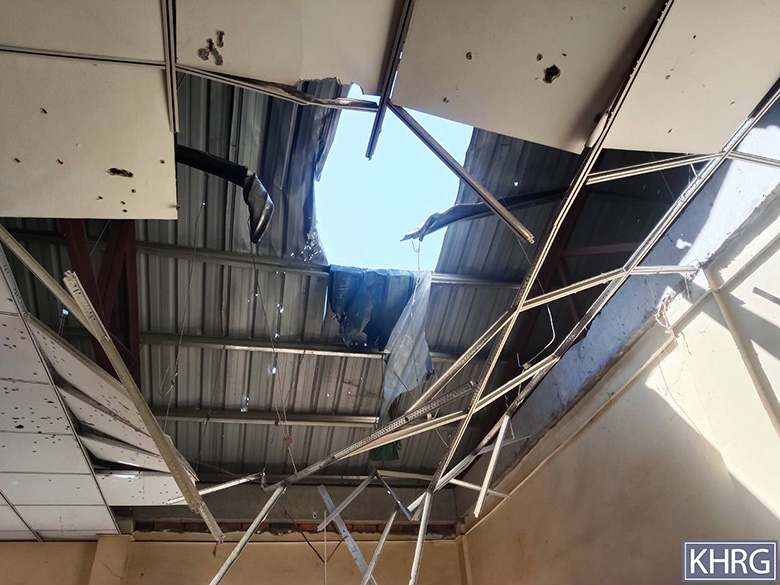
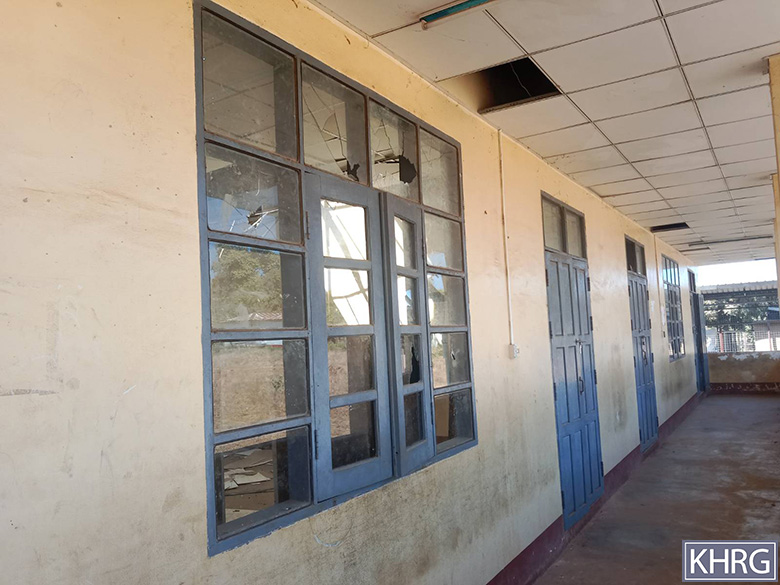


These two photos were taken in January 2025 in Bb--- village, Min Saw village tract[5], Bilin Township, Doo Tha Htoo District. On January 16th 2025, a State Administration Council (SAC)[6] kamikaze drone, also known as a suicide drone, crashed into the school in Bb--- village, damaging it. No one was harmed, as the drone strike happened after school hours. After the air strike, students could not attend school because villagers were too afraid. This caused the school to close. The school had been supported by the Karen Education and Culture Department (KECD)[7] since the 2021 coup. The photo on the left displays the damaged metal roof and ceiling of the school. The photo on the right displays the shattered windows and damage to the ceiling of the school.[8] [Photos: KHRG]


These photos were taken in January 2025 on a rubber plantation near Aa--- village, Ha T'Reh village tract, Hpa-an Township, Doo Tha Htoo District. On January 22nd 2025, an SAC fighter jet dropped two 500-pound bombs on Aa--- village area. The bombs landed and exploded in a rubber plantation near Aa--- village, damaging the plantation, as shown in the photos. The plantation is owned by a local villager from Aa--- village. [Photos: KHRG]
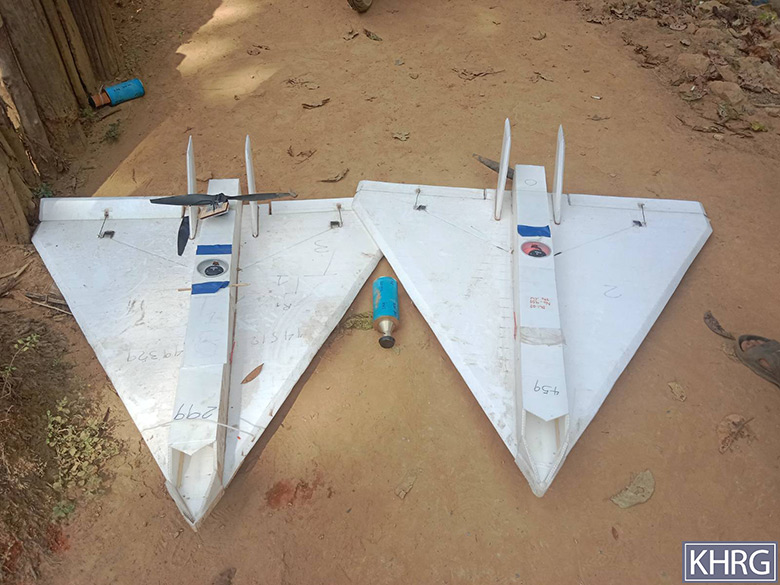
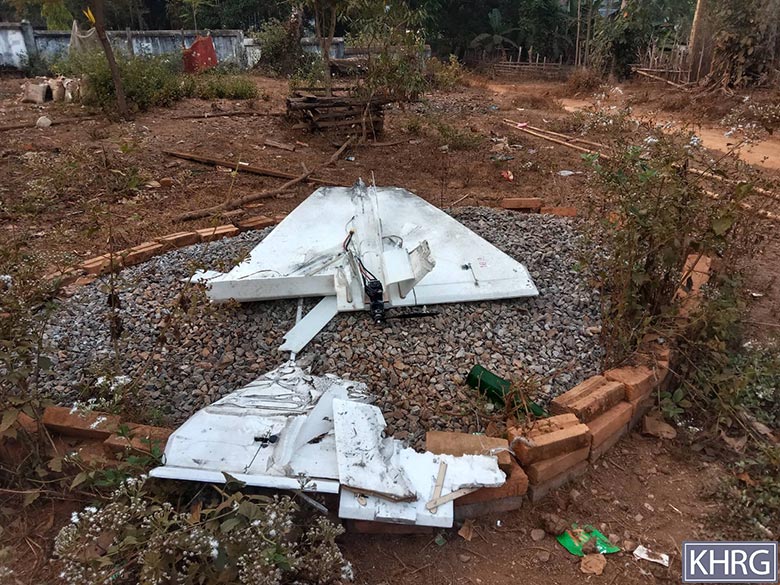


The photos were taken in January 2025 at Cc--- village, Ta Aoo Hkee village tract, Bilin Township, Doo Tha Htoo District. On January 31st 2025, six SAC kamikaze drones crashed into Cc--- village. Three kamikaze drones exploded inside the village, damaging a monastery. The other three landed in farms outside of the village and did not explode. As the drone strike caused fear among the villagers, some villagers slept in huts outside of the village during the nighttime and only returned to the village at sunrise. The photo on the left shows two kamikaze drones that were found by the villagers. One drone landed inside the village, and the other landed outside the village. The photo on the right shows an SAC drone after it crashed and exploded on a monastery’s grounds, near a school.[9] [Photos: KHRG]
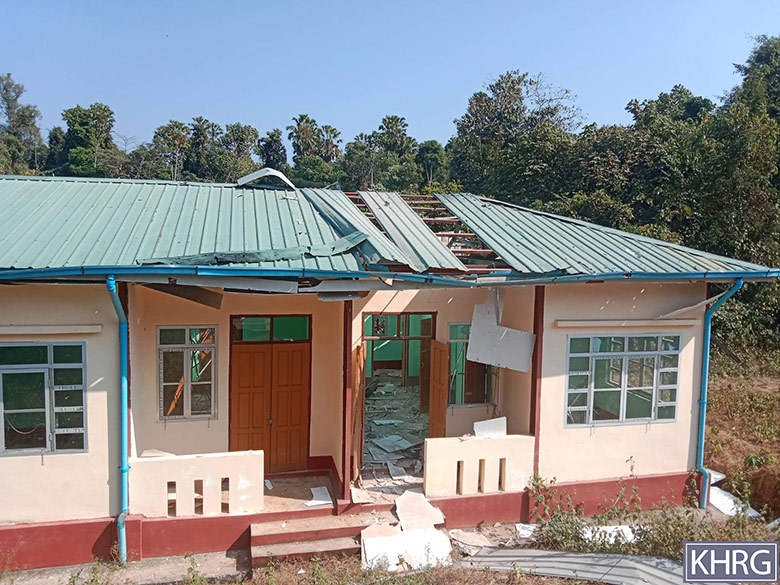
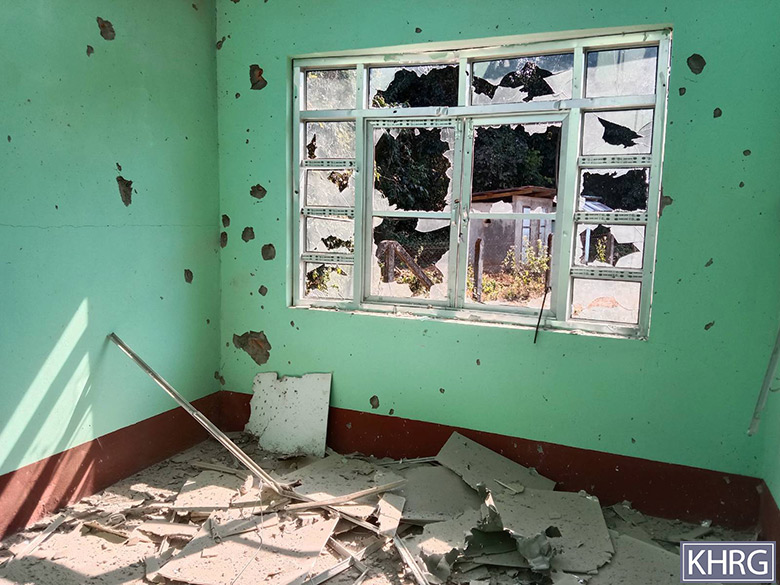


These photos were taken in February 2025 at Dd--- village, Ah Su Chaung village tract, Bilin Township, Doo Tha Htoo District. On February 7th 2025, an SAC fighter jet dropped seven bombs on Ah Su Chaung village tract. One bomb landed at the entrance of a KECD-supported school in Dd--- village, damaging the teachers’ boarding house and a school building. Two bombs landed in the village area, but as no villagers were living there, the bombs did not cause injuries. The four remaining bombs landed outside of Dd--- village and caused no damage or injuries. The photos show damage caused by the bomb that landed near the school in Dd--- village.[10] [Photos: KHRG]
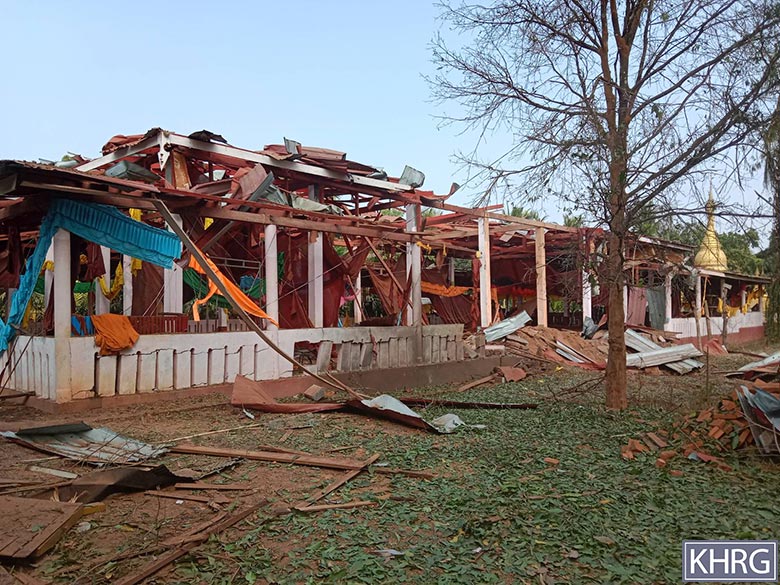
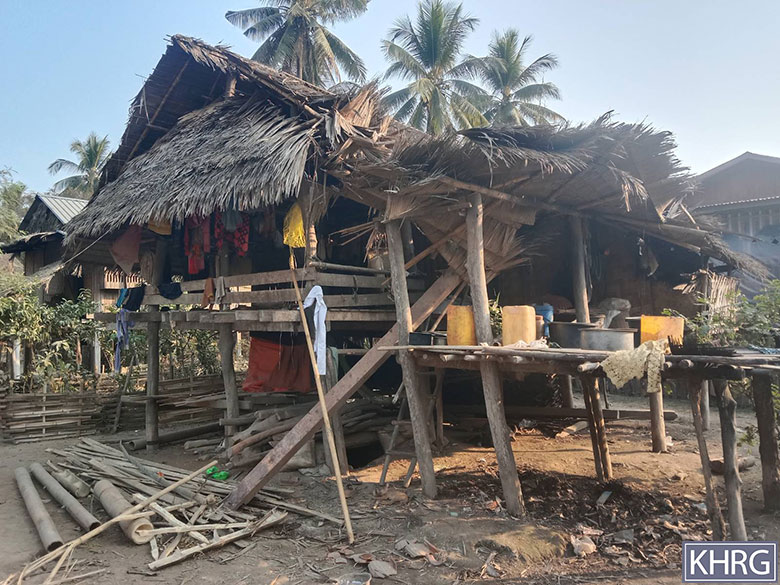


These photos were taken in February 2025 at Bb--- village, Min Saw village tract, Bilin Township, Doo Tha Htoo District. On February 9th 2025, at around 12:47 pm, an SAC fighter jet dropped two 500-pound bombs on Bb--- village, severely damaging a monastery building and a palm plantation in the monastery’s compound, injuring two monks, and destroying five villagers’ houses. The photo on the left shows the severe damage to the monastery building caused by the bombs. The photo on the right displays a villager’s house, which was damaged by the bombs. Nobody else was injured because all the villagers in Bb--- village had fled after the SAC attacks on the village in January 2025. [Photos: KHRG]
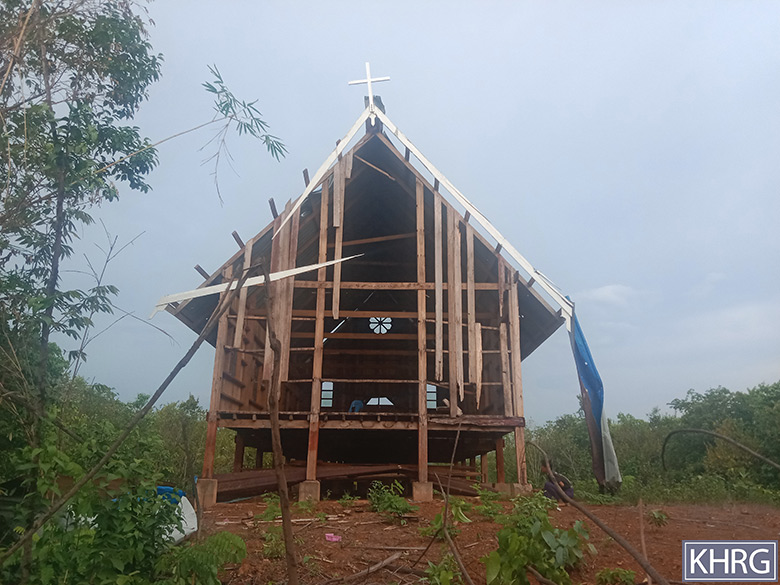
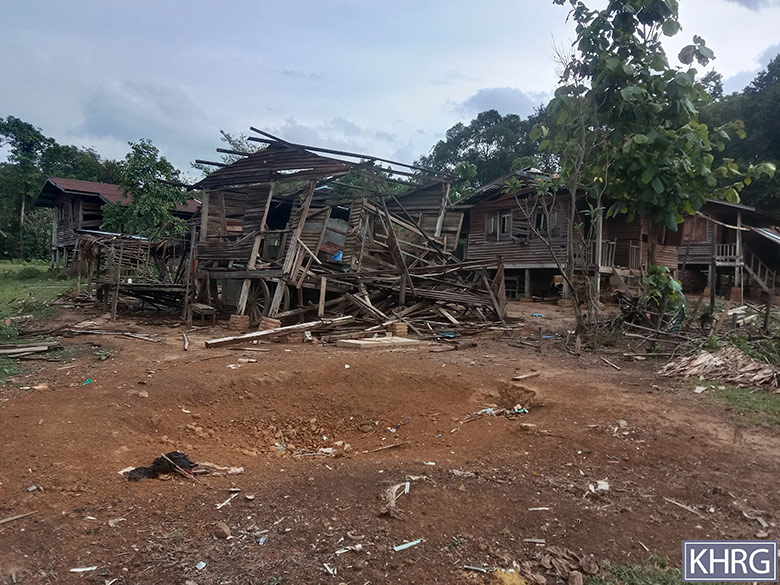


These photos were taken in April 2025 in Ee--- village, Htee Hpah Doh Hta village tract, Bilin Township, Doo Tha Htoo District. On February 13th 2025, an SAC fighter jet dropped two 500-pound bombs on Ee--- village, destroying a church and five villagers’ houses, and damaging 22 villagers’ houses. After the first bomb landed in the church area, villagers fled from the village. Therefore, no villagers were killed or injured. The photo on the left shows the destroyed church, and the photo on the right shows a villager’s destroyed house. [Photos: KHRG]
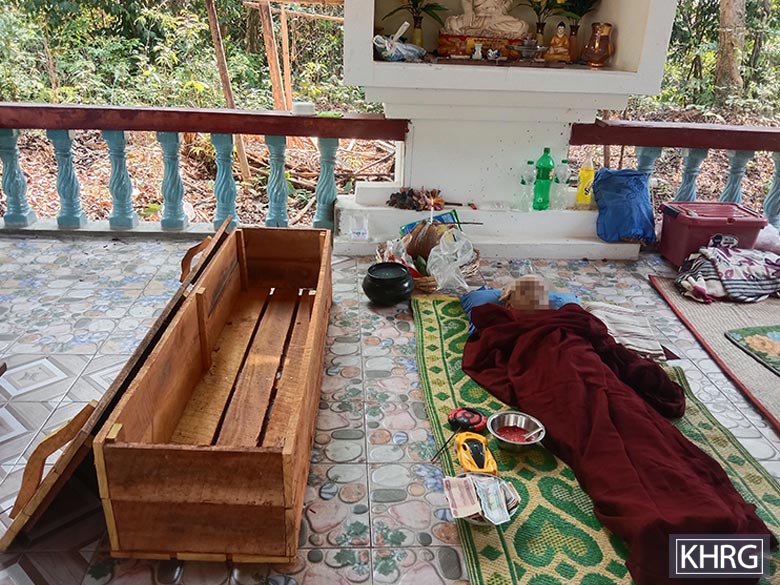
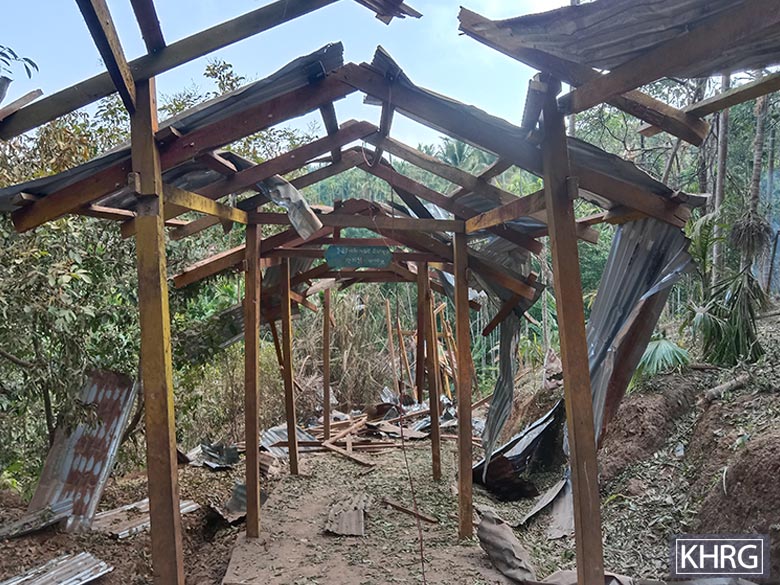


These photos were taken in April 2025 in a monastery’s compound in Ff--- village, Min Saw village tract, Bilin Township, Doo Tha Htoo District. On April 19th 2025, when monks were having lunch, an SAC fighter jet dropped two 500-pound bombs on a monastery in Ff--- village, killing one monk and two villagers, and injuring six other monks and four villagers. The monastery was also destroyed. The photo on the left shows a monk, who was killed by the SAC air strike, being prepared for burial. The photo on the right shows the destroyed monastery building in Ff--- village.[11] [Photos: KHRG]
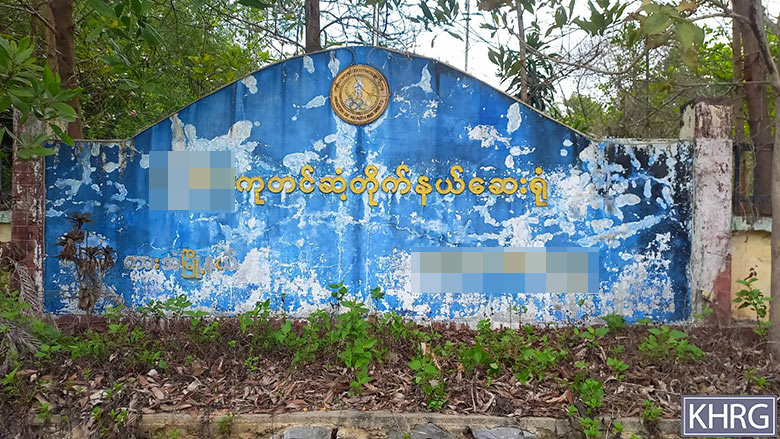


These photos were taken in May 2025 in Gg--- village, Ha T'Reh village tract, Hpa-an Township, Doo Tha Htoo District. On May 4th 2025, at around midnight, an SAC fighter jet dropped two bombs in Gg--- village (also known as Hh---), destroying a 16-bed hospital. After the SAC conducted an air strike on Gg--- hospital, villagers were unable to access healthcare in the village. This hospital was administered by the Karen Department of Health and Welfare (KDHW)[12]. The villagers and healthcare workers had temporarily fled before the incident, as they had been warned by local Karen National Union (KNU)[13] leaders about a possible SAC attack. As a result, no one was injured. These photos show a hospital that was destroyed after an SAC fighter jet conducted air strikes on Gg--- village.[14] [Photos: KHRG]
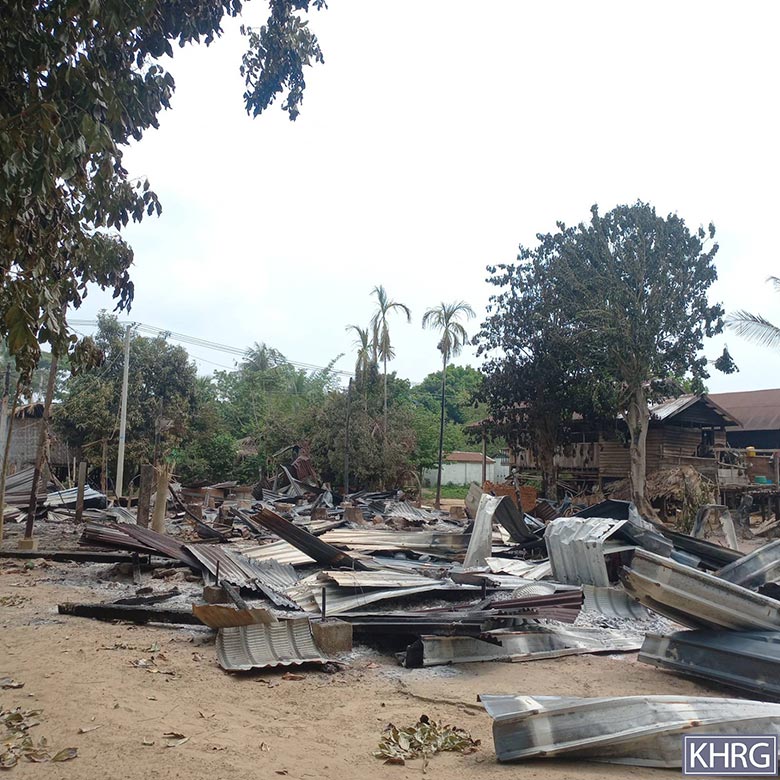
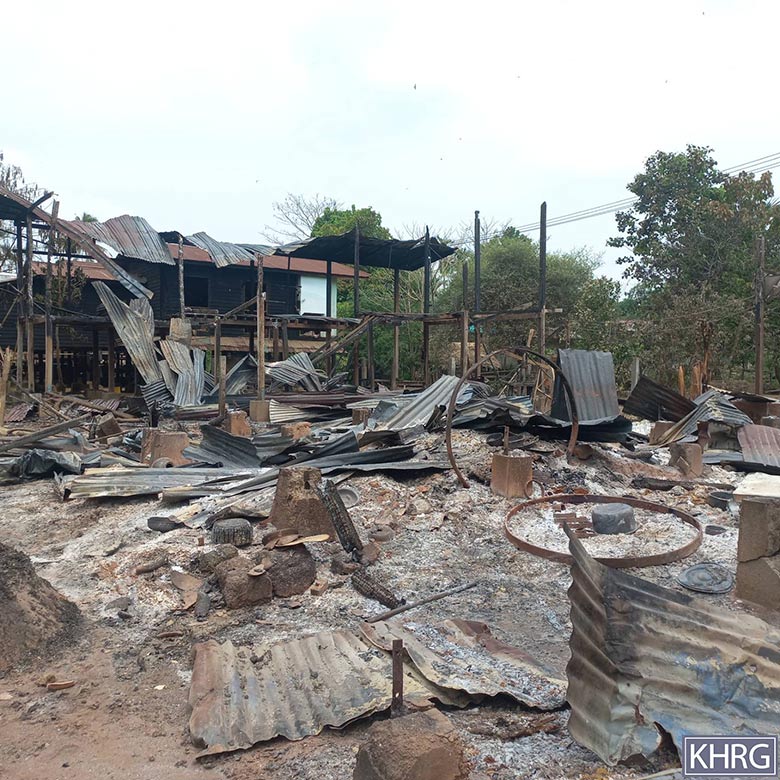
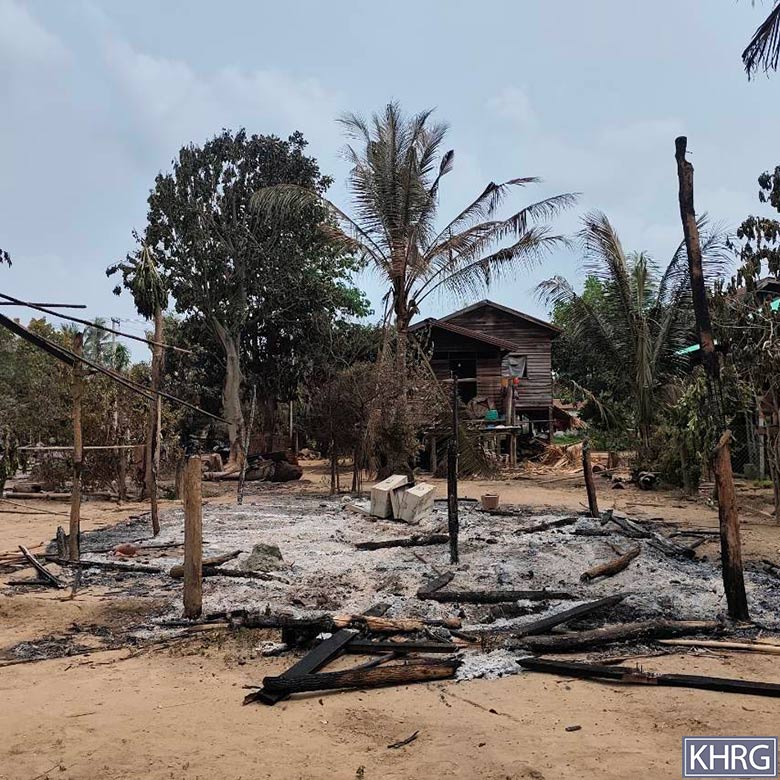


These photos were taken in May 2025 in Jj--- village, Win Kan village tract, Kyeh Htoh Township, Doo Tha Htoo District. On May 10th 2025, at 4 pm, an SAC Y-12 aircraft dropped five bombs onto Jj--- village. Four villagers' houses were burned, and two villagers' houses were damaged by the air strike. In addition, an 18-year-old villager named Saw[15] A--- and a 31-year-old villager named Saw B--- were injured by the shrapnel from the bomb explosion. After the incident, villagers from Jj--- village and other villages nearby fled from their villages. The photos show villagers’ houses in Jj--- village destroyed by the SAC air strike. [Photos: KHRG]
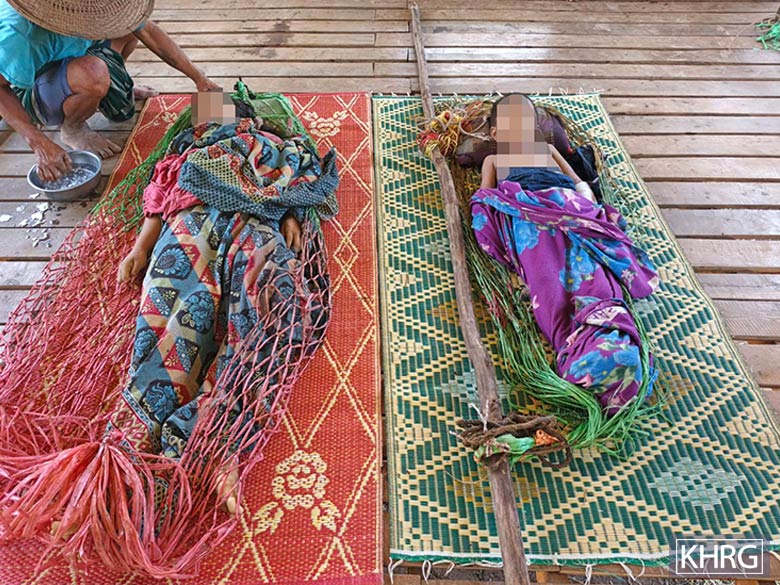
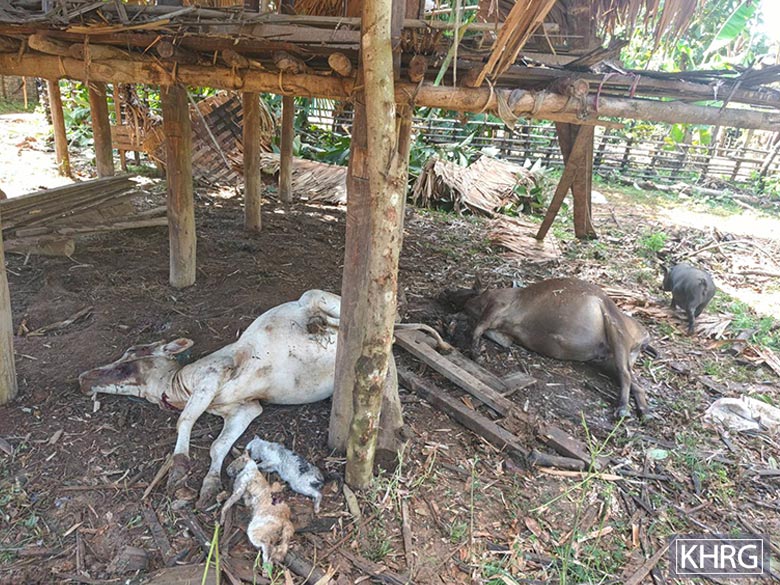


These photos were taken in October 2025 in Ii--- village, Yoh Klah village tract, Bilin Township, Doo Tha Htoo District. On October 9th 2025, at around 8 pm, a Burma Army aircraft dropped two 500-pound bombs on Ii--- village. While one of the bombs did not explode, the other bomb exploded, killing five children and injuring nine villagers, including two children. All of the victims were in their houses preparing to go to bed when the air strike happened. The bomb destroyed two villagers’ houses and damaged five others. In addition, livestock owned by local villagers were impacted: two cows, three pigs, two cats, and one dog were killed, and one cow was injured. The photo on the left shows two children who were killed by the Burma Army air strike. The photo on the right shows two cows and two cats, owned by villagers, who were killed by the Burma Army air strike.[16] [Photos: KHRG]
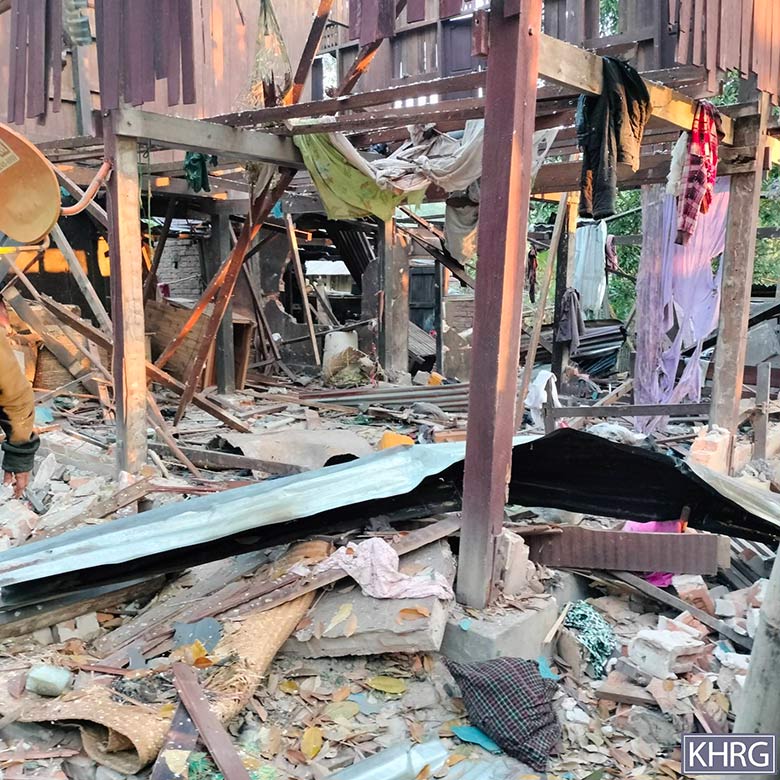
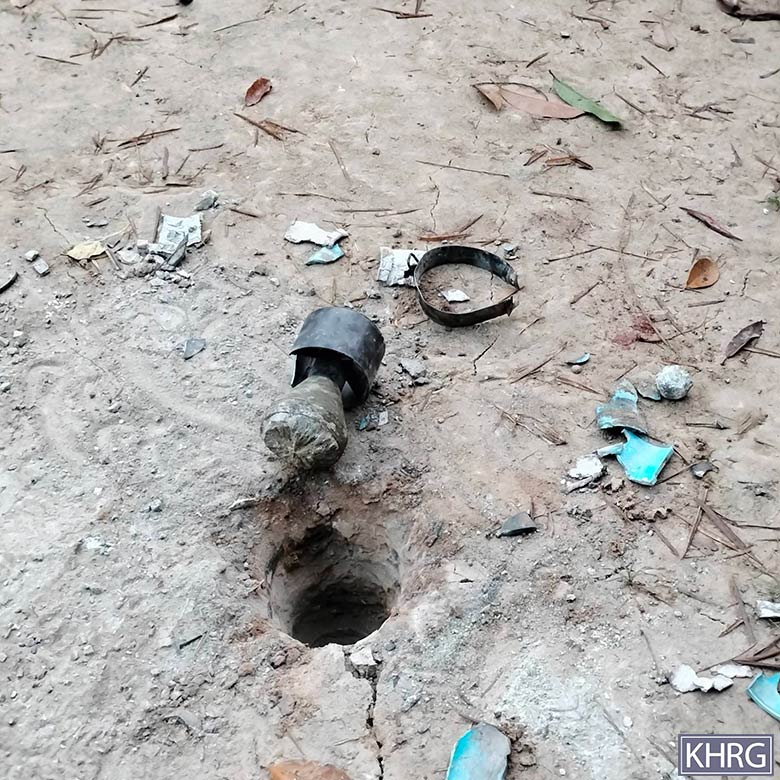


These photos were taken in January 2025 on a villager’s farm near Kk--- village, Day Loh village tract, Htaw Ta Htoo Township, Taw Oo District. From January 10th to 12th 2025, SAC soldiers in Infantry Battalion (IB)[17] #39’s army camp indiscriminately fired numerous rounds of mortar and conducted a drone attack in Day Loh village tract. Two of the bombs from the drone landed and exploded on a villager’s house near Kk--- village. The house is owned by a villager named Saw C--- and is located on his farm near the village. When the SAC conducted the drone attack, Saw C--- (82 years old) and his son, D--- (42 years old), were staying in the house and got injured. Saw C--- sustained injuries to his right hand, chest, and eyebrow bone. D--- sustained injuries to his forehead, chin, legs, and hands. Many household materials in the house were also damaged. Saw C--- was sent to Toungoo Hospital (administered by the SAC) in Toungoo Town, Daw Hpah Hkoh Township, Taw Oo District, by family members to get treatment, and D--- received medical treatment at home and recovered. Saw C--- was discharged from the hospital in February 2025 as he recovered from his injuries. His family had to pay the medical costs for the treatment. The photo on the left shows Saw C---’s house destroyed by the bomb explosion. The photo on the right shows a piece of the bomb that landed and exploded on Saw C---’s house.[18] [Photos: KHRG]
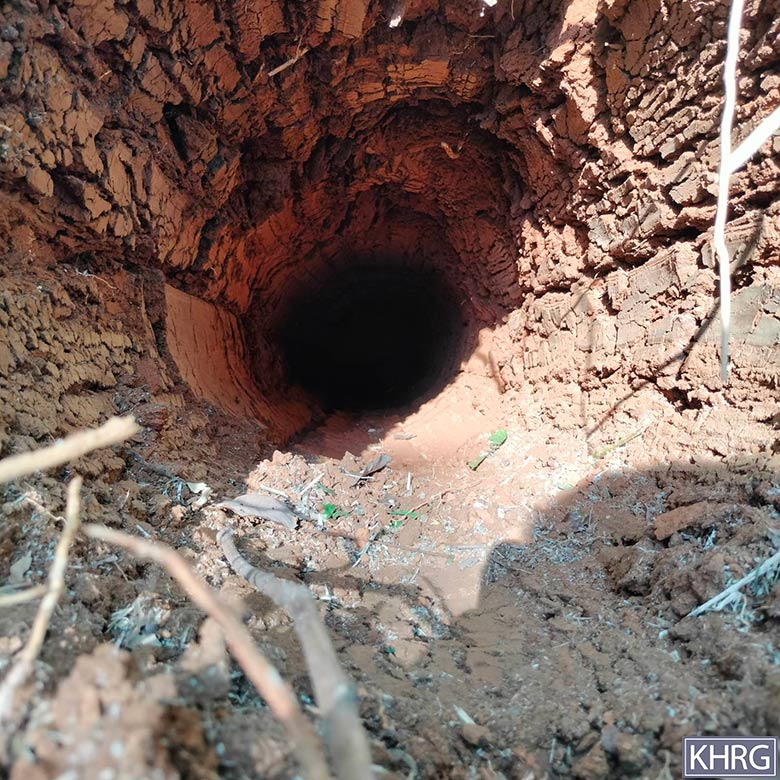
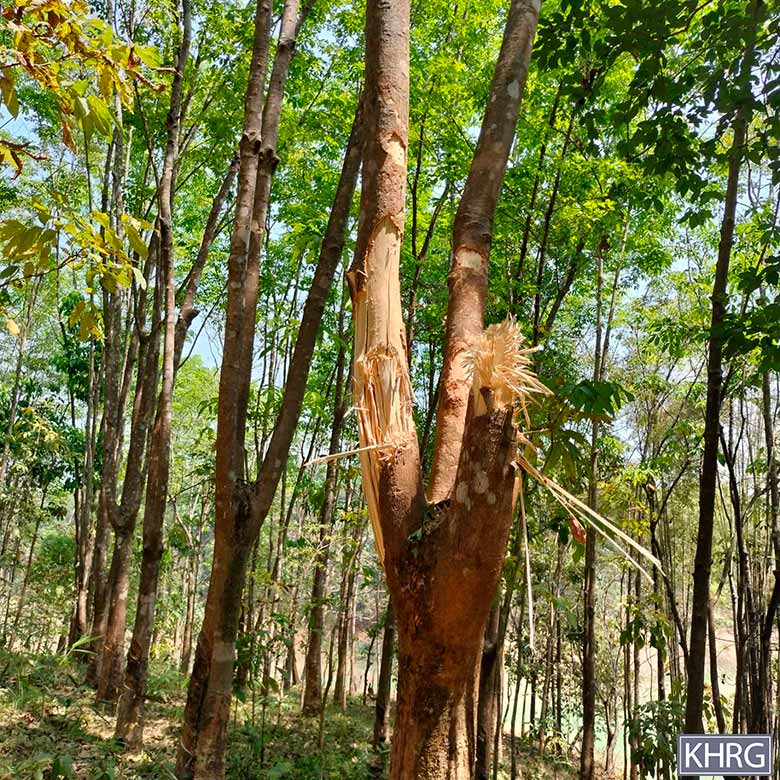


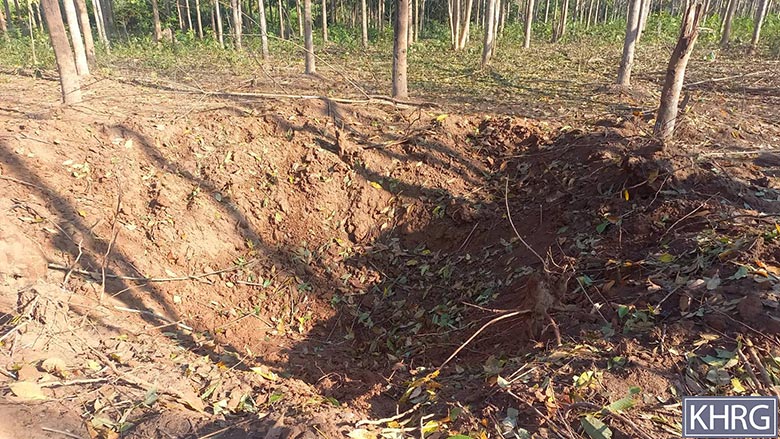
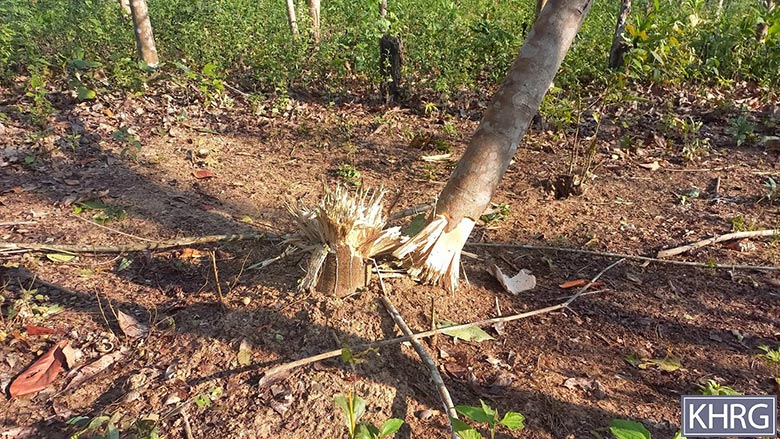
These photos were taken in March 2025 on a rubber plantation near Ll--- village, P’Saw Loh village tract, Daw Hpah Hkoh Township, Taw Oo District. On March 13th 2025, an SAC aircraft dropped two bombs on rubber plantations owned by local villagers. One bomb exploded, while the other one did not. The left photo shows a large hole in the rubber plantation where the unexploded bomb landed. The right photo shows rubber trees that were damaged by the explosion of the second bomb. Local villagers believe that these two bombs were 500-pound bombs. According to local villagers who saw the incident sites, nobody would have been safe, whether they had stayed in their houses or hidden in bunkers, if these bombs had been dropped and exploded in a village. Local villagers were very afraid.[19] [Photos: KHRG]
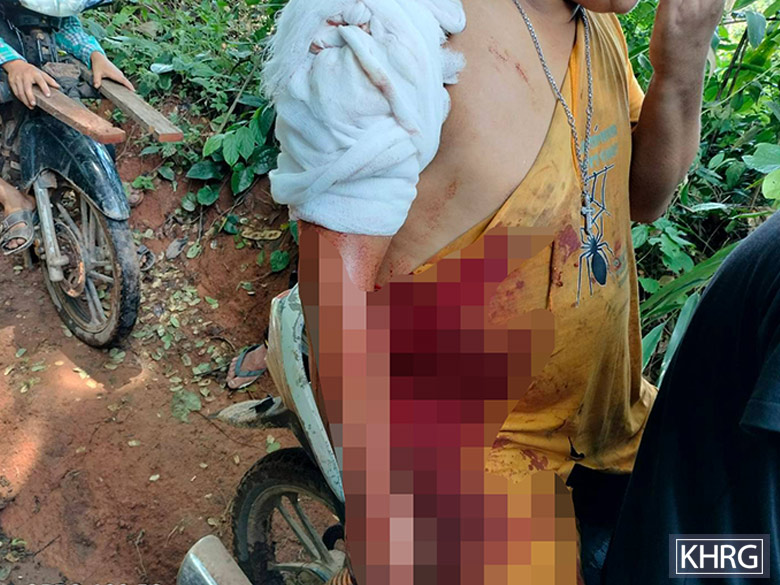
This photo was taken in May 2025 in K’lay Wah Mu Htaw village tract, Daw Hpah Hkoh Township, Taw Oo District. On May 18th 2025, around 11:30 am, an SAC fighter jet dropped two 500-pound bombs in the compound of Mm--- high school in K’lay Wah Mu Htaw village tract. The school is administered by the KECD. Only one bomb exploded. Saw E---, the school principal of Mm--- high school, was hit by a piece of the bombshell on his shoulder. Two villagers’ houses, some trees, and a toilet were also damaged. There were about 20 people, including students, local healthcare workers, and teachers in the school compound when the incident happened, who immediately ran to a stream to find safety. The injured principal sought medical treatment on the same day. The attack left all the students afraid and worried. The photo shows Saw E--- being transported to a nearby clinic by local villagers on a motorbike on May 18th 2025 after he was injured by the SAC air strike.[20] [Photo: KHRG]
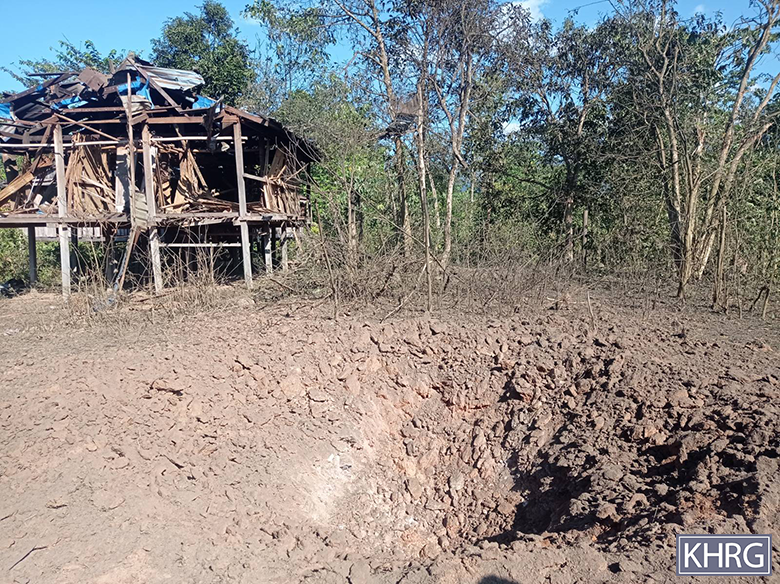
This photo was taken in January 2025 in Nn--- village, Kheh Der village tract, Ler Doh Township, Kler Lwee Htoo District. On January 1st 2025, at 9:30 pm, an SAC fighter jet dropped a 500-pound bomb in Nn--- village, damaging a villager’s house. Villagers fled to a forest after the incident. The photo shows the place where the bomb dropped and the destroyed house. Before this incident, on December 31st 2024, combined forces of the Karen National Defense Organisation (KNDO)[21] and Karen National Liberation Army (KNLA)[22] had attacked the SAC’s Hkoh Thay Kyoh army camp in Ler Doh Township. [Photo: KHRG]
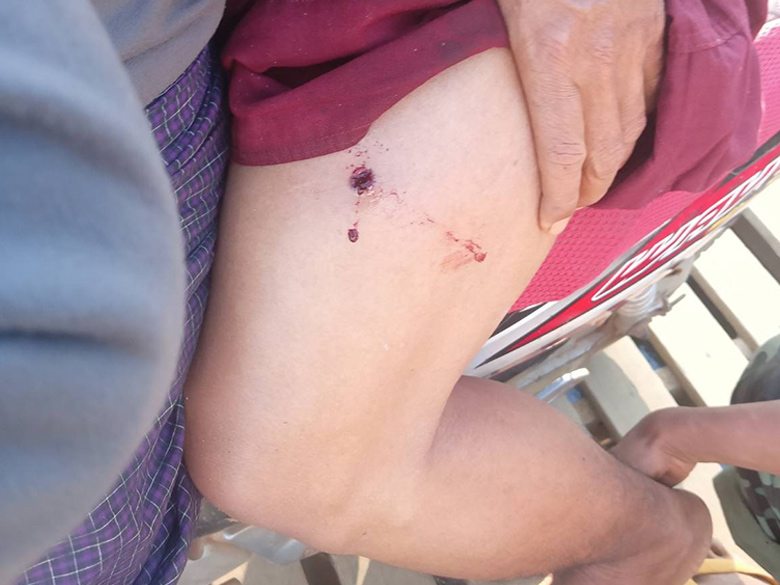
KHRG received this photo on January 29th 2025, from a local leader. On January 21st 2025, SAC Light Infantry Battalion (LIB)[23] #20, based in Yay Kyi Khayung village, Inn Wine village tract, Hsaw Htee Township, Kler Lwee Htoo District conducted a drone strike onto Oo--- village and Pp--- village in Pyin Yay village tract, Hsaw Htee Township. One of the bombs from the drone was dropped in a monastery in Pp--- village. As a result, a monk was killed, and another monk was injured on his left thigh. Another bomb from the drone was dropped in front of a villager’s house in Oo--- village, owned by Ko[24] F---. Ko F--- was injured on his arms by the bomb’s shrapnel. According to local villagers, People’s Defence Force (PDF)[25] soldiers sometimes travelled through the two villages, so the villagers believe that is why the SAC targeted and attacked these two villages. The photo shows the monk, injured by the SAC drone attack. [Photo: Local leader]
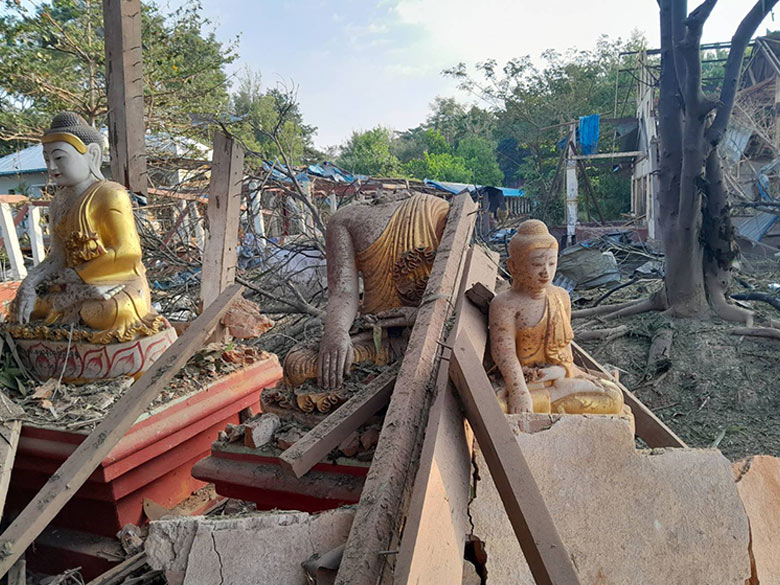
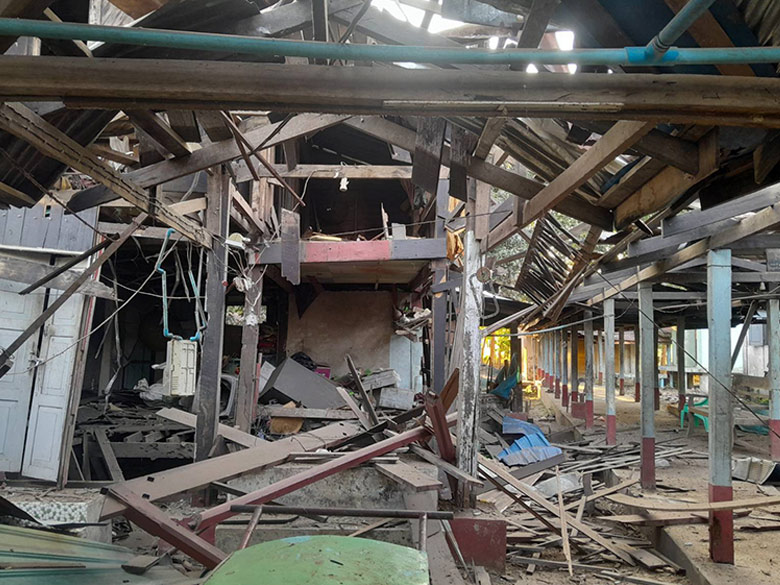


KHRG received these photos on January 29th 2025, from a local authority. On January 27th 2025, an SAC fighter jet dropped bombs in Qq--- village, Nyaung Pin Gyi village tract, Hsaw Htee Township, Kler Lwee Htoo District. The bombs landed and exploded in Rr--- monastery in Qq--- village. The next day, on January 28th 2025, an SAC aircraft dropped two 500-pound bombs in Qq--- village, with one of the bombs striking Rr--- monastery again. The other bomb landed on the house of a villager names U[26] G---. As a result of the two air strikes, the monastery was completely destroyed, including its roof, walls, floor, and Buddha statue. In addition, five villagers’ houses were damaged. After the incident, many local villagers fled to Pyin Yay village tract and Thet Kel Koh village tract, Hsaw Htee Township. Some villagers fled to a town nearby. Before the SAC conducted the air strike, PDF soldiers attacked SAC LIB #20 in Nyaung Pin Gyi village tract, which resulted in SAC soldiers’ casualties. The photos show Rr--- monastery in Qq--- village, destroyed by the SAC air strikes. [Photos: Local authority]
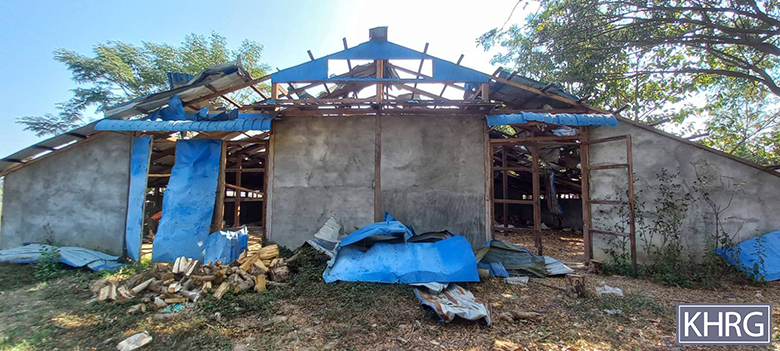


These photos were taken in February 2025 in Ss--- village, Kway Kon village tract, Hsaw Htee Township, Kler Lwee Htoo District. On January 31st 2025, SAC IB #264, based in Pein Z’Loik Town, Kler Lwee Htoo District conducted a drone attack on Ss--- village, damaging an electricity generator and a house owned by Saw G---, and destroying another house owned by U H---. Before the incident, PDF soldiers patrolled the village and set up a checkpoint at its entrance. The photos show U H---’s house, destroyed by the SAC drone strike. [Photos: KHRG]

This photo was taken in February 2025 in Ss--- village, Kway Kon village tract, Hsaw Htee Township, Kler Lwee Htoo District. On February 19th, 2025, at 12:37 pm, an SAC fighter jet carried out an air strike in Ss--- village, injuring an 18-year-old villager named Naw[27] I---. She sustained an injury to her left leg. In addition, the air strike destroyed two houses, killed two cows, and injured three cows owned by local villagers. The photo shows a cow, killed by the SAC air strike. [Photo: KHRG]
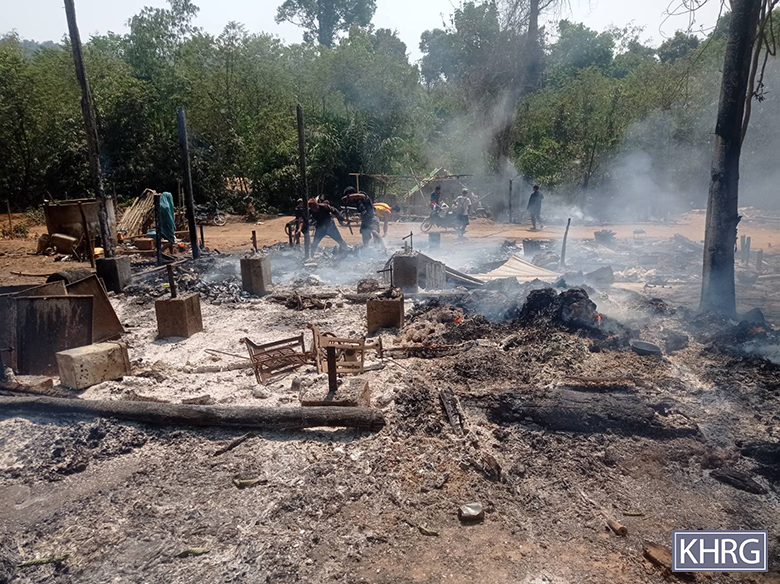
This photo was taken in March 2025 in Tt--- place near Uu--- village, Kheh Der village tract, Ler Doh Township, Kler Lwee Htoo District. On March 25th 2025, an SAC fighter jet dropped what villagers believed to be an incendiary bomb onto Tt--- place. As a result, a shop and a house, owned by a villager named Saw J---, were burned to the ground. Saw J--- said that the value of his shop was about 40,000,000 Kyat (19,000 USD[28]). No villagers were injured. Before the incident, on March 24th 2025, an SAC drone flew over Tt--- place to conduct reconnaissance. The photo shows villagers trying to stop the fire of the burning shop. [Photo: KHRG]


These photos were taken in May 2025, in Vv--- village, Pyin Yay village tract, Hsaw Htee Township, Kler Lwee Htoo District. On May 11th 2025, at 7:20 am, an SAC fighter jet flew over Vv--- village three times to conduct air reconnaissance. Villagers believe that the aircraft came from Toungoo Town in Taw Oo District. The third time it flew over, it dropped a 500-pound bomb, which landed and exploded behind Vv--- high school, inside the school’s compound, damaging it. The high school is administered by the KECD. The bomb’s shrapnel went through the window of the house of Ko K---, a 39-year-old villager who lived near the school’s compound, and hit him on his waist and the back of his shoulders, causing minor injuries. The house was also slightly damaged. The photo on the left shows the school’s walls and windows damaged.[29] The photo on the right shows the high school’s roof, full of holes, and the ceiling collapsing as a result of the air strike. [Photos: KHRG]

This photo was taken in June 2025 in a field near Ww--- village, Hay Tha Weh village tract, Ler Doh Township, Kler Lwee Htoo District. On June 28th 2025, at around 2 pm, an SAC fighter jet dropped two 500-pound bombs in Ww--- village area. The two bombs landed in a rice field, exploding and causing damage to the field. The rice field is about 40 cubits (18 metres)[30] away from the villagers’ houses. In addition, two villagers (Saw L--- and Naw M---) were injured. Eight villagers’ houses were damaged. The two injured villagers were sent to Xx--- hospital in Ler Doh Township, administered by the KDHW. The photo shows the rice field, damaged by the SAC air strike on June 28th 2025. [Photo: KHRG]
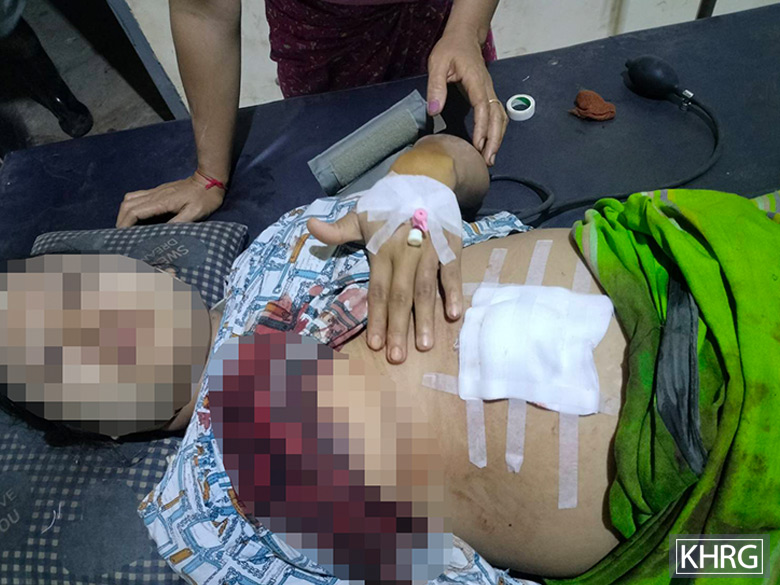
This photo was taken in July 2025 in a clinic in Ler Doh Township, Kler Lwee Htoo District. On July 5th 2025, at around 5:50 pm, the Burma Army carried out drone strikes and dropped two bombs on Yy--- village, Taw Kyaung Pauk village tract, Ler Doh Township. The first bomb landed in the school compound. As a result, four villagers were killed on the spot, and four others, including two children and a pregnant woman, were severely injured. All were displaced villagers from Wah Pin Su village tract, Moo Township, Kler Lwee Htoo District. One injured child died on the way to the hospital, and another child died upon arrival. Only two out of the four injured villagers survived. A school building was also destroyed in the attack. The second bomb landed in another area but failed to detonate. The village school and a school nearby were closed down due to security concerns after the incident. The photo shows one of the injured villagers receiving medical treatment in a KDHW-run clinic. [Photo: KHRG]
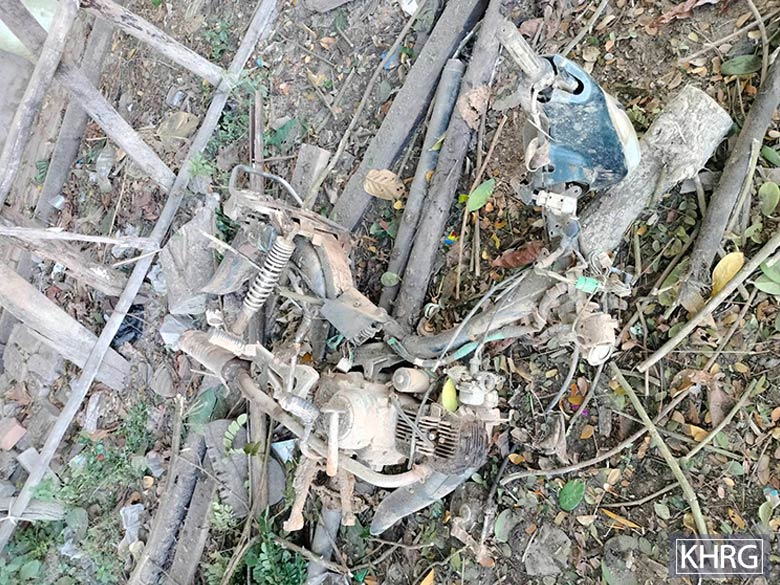


These photos were taken in December 2025 in Zz--- village, Inn Dine Kone village tract, Ler Doh Township, Kler Lwee Htoo District. On December 10th 2025, at around 8 pm, a Burma Army fighter jet dropped a 500-pound bomb on Zz--- village. As a result of the bomb’s explosion, a 46-year-old villager was killed. Additionally, five villagers’ houses were damaged, and a motorbike was destroyed. Five cows were killed, and one was injured, all owned by a local villager. The photo on the left shows one of the villagers’ houses, damaged by the Burma Army’s air strike. The photo on the right shows a motorbike, destroyed by the air strike. [Photos: KHRG]

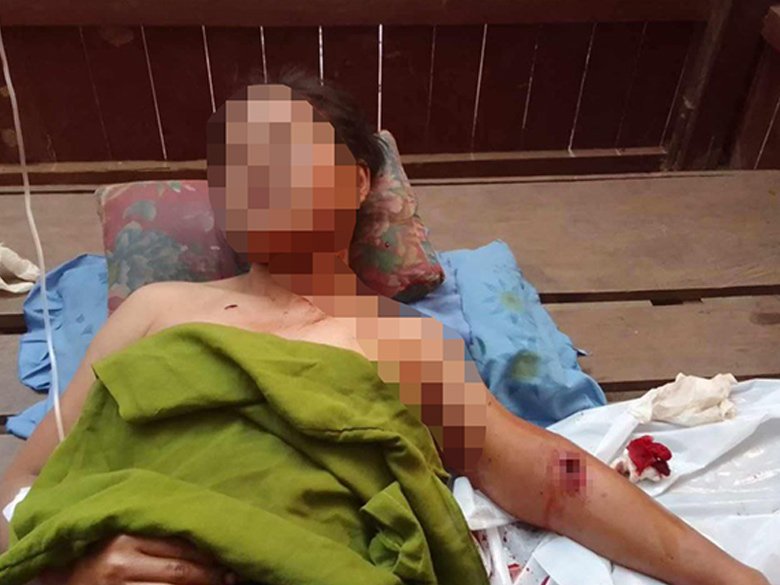


KHRG received these photos from a local authority on January 8th 2025. On January 7th 2025, at around 11:30 am, an SAC fighter jet from Myeik Town, Mergui-Tavoy District, carried out an air strike on Ab------ village in Paw Hkoh area, K’Ser Doh Township, Mergui-Tavoy District. The air strike happened after the Karen New Year’s[31] ceremony took place in the area on December 30th 2024. The fighter jet dropped three bombs and strafed the village. As a result, two villagers, Saw N--- (aged 34) and Naw O--- (aged 33), were seriously injured. Saw N--- sustained injuries to his legs, hands, and chest. Naw O--- sustained injuries to her legs, hands, and other parts of the body. After the incident, they were both sent to a KDHW-administered clinic in Ac--- village, Paw Hkoh area. The photos show the two villagers receiving medical treatment in the clinic. As they were seriously injured, they were later transferred to a hospital in Ad--- Town, in Thailand’s Kanchanaburi province. The air strike also damaged a motorbike, two villagers’ houses, and multiple plantations, and killed livestock. Villagers reported that it was the first time an air strike had happened in the area. Villagers were worried and had major security concerns regarding further attacks in the area. [Photo: Local authority]
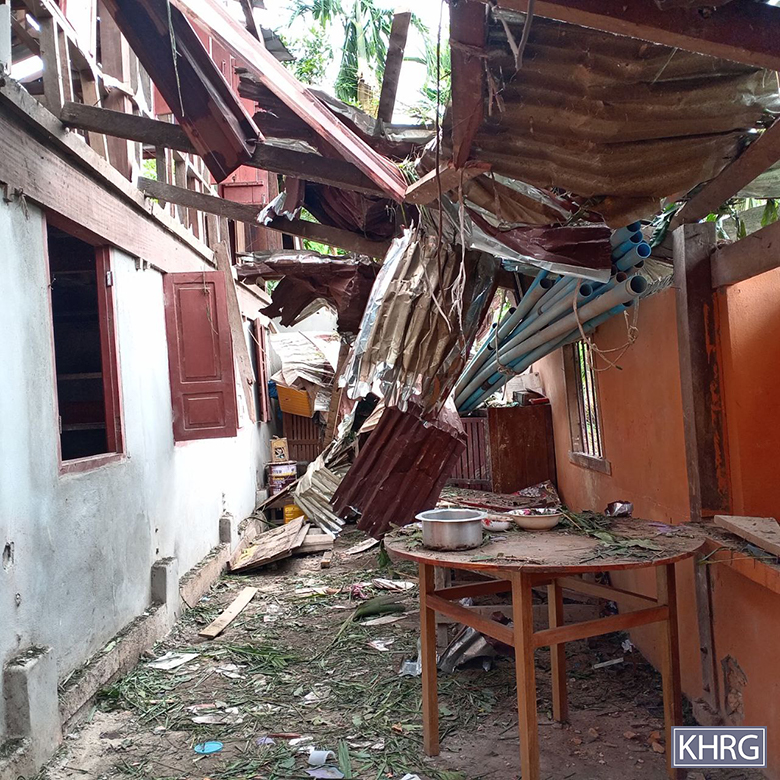
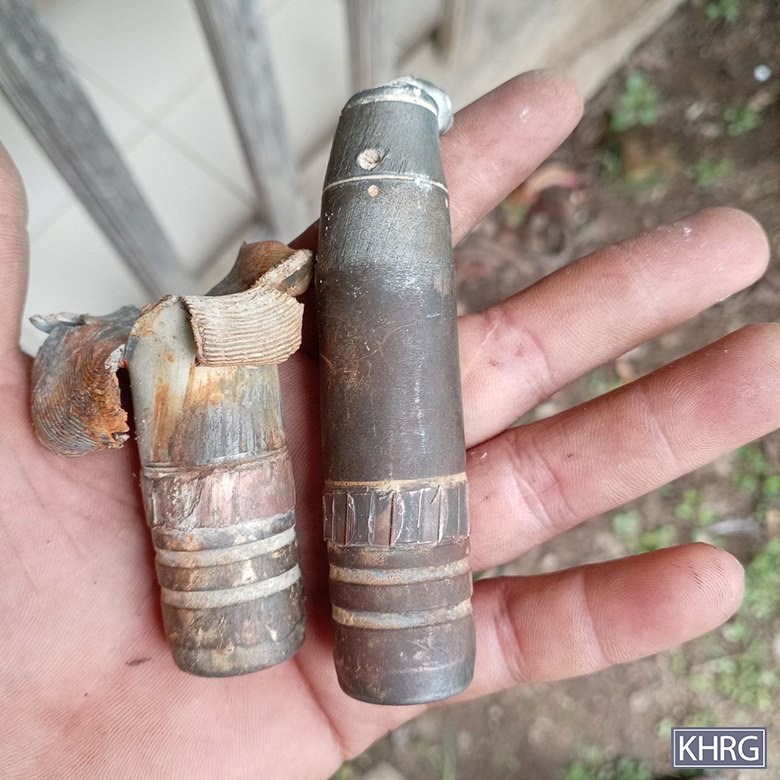


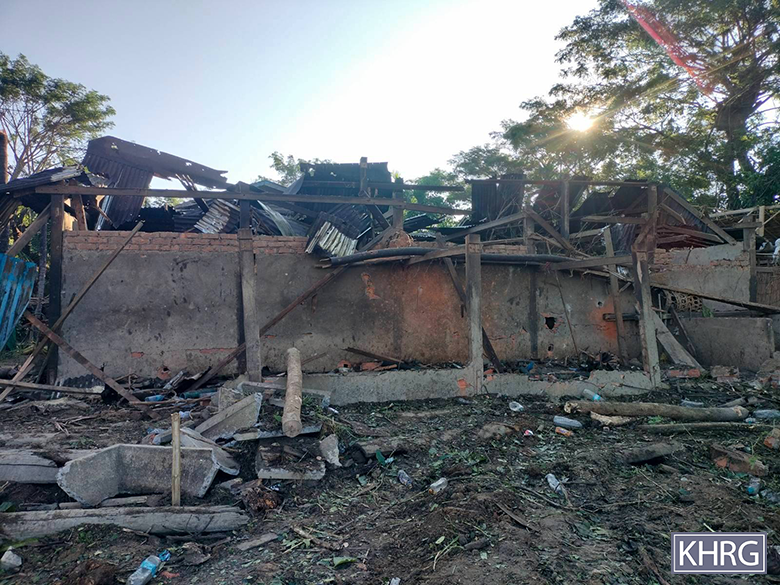
These photos were taken in July 2025 in Ah--- village, Maw Doh village tract, T’Naw T’Ree Township, Mergui-Tavoy District. On July 10th 2025, a Burma Army fighter jet dropped bombs onto Ah--- village. Fighting did not happen in the village on the day of the air strike. This is the first time that the Burma Army conducted an air strike on the village. As a result of the air strike, two villagers’ houses, betel nut trees, and a well were damaged. The photo on the left shows one of the villagers’ damaged houses, while the photo on the right shows pieces of the bombs that landed in Ah--- village. Children were studying in the village school when the air strike happened. After the incident, the school was forced to close. [Photos: KHRG]
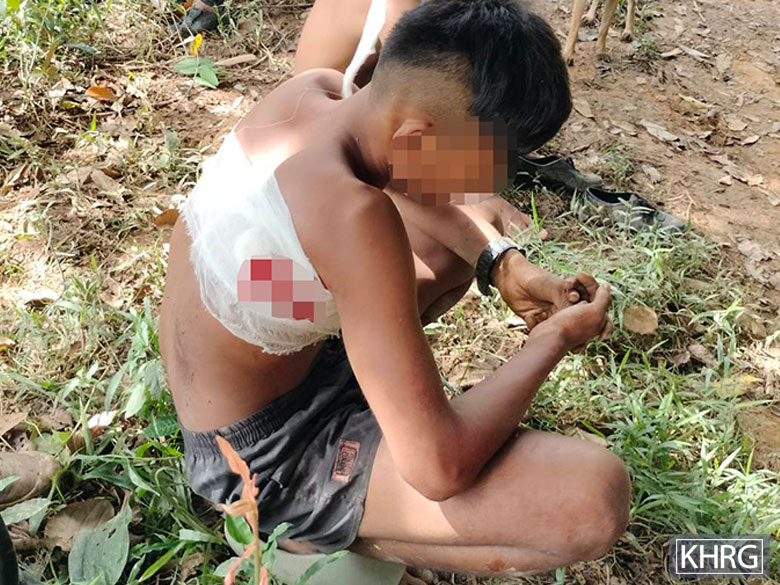
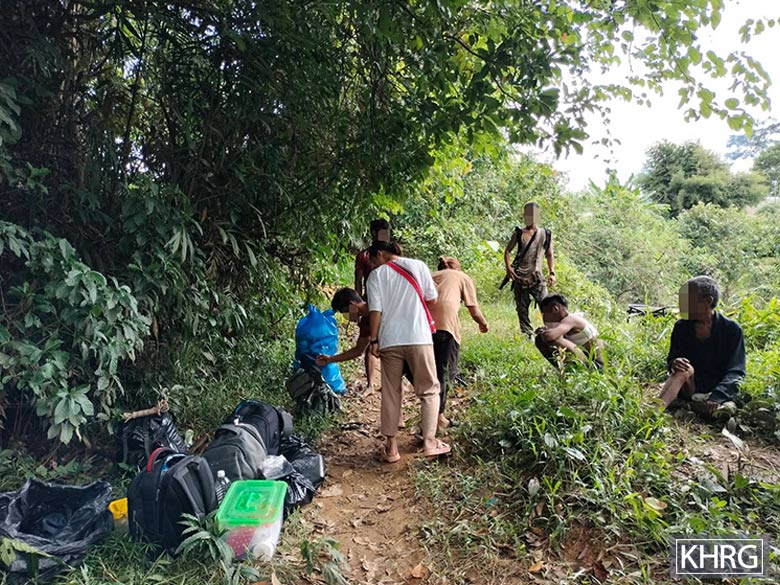


These photos were taken in July 2025, in Ae--- place, Lay Nya Hta Hkaw area, Ler K’Saw Township, Mergui-Tavoy District. On July 16th 2025, at 1:45 pm, a Burma Army aircraft dropped bombs on Ae--- place. As a result, four villagers, including two children, were injured, and a villager’s house was burned. After the incident, some villagers in Ae--- place fled to a forest. PDF medics and KDHW staff provided medical treatment to the injured villagers. Villagers were afraid due to the Burma Army air strike. Following the incident, schools from Af--- and Ag--- villages in Lay Nya Hta Hkaw area were forced to close. The photo on the left shows one of the injured villagers receiving medical treatment in the forest to which they fled. The photo on the right shows where villagers fled in the forest. [Photos: KHRG]


These photos were taken in August 2025 in Ai--- village, K’Ser Kler area, K’Ser Doh Township, Mergui-Tavoy District. On August 25th 2025, around 100 Burma Army soldiers from Light Infantry Battalion (LIB) #404, based in Th’Yeh Chaung Town, Mergui-Tavoy District, travelled to Aj--- village and Ai--- village, K’Ser Kler area. When they arrived at Aj--- village, they were attacked by KNLA Company #1, under Battalion #12. Some Burma Army soldiers were injured in the attack. After, Burma Army soldiers burned down 58 villagers’ houses in Aj--- village. On August 26th 2025, Burma Army soldiers patrolled to Ai--- village. When they arrived in Ai--- village, KNLA Company #1 attacked them again. Then, Burma Army soldiers burned 20 villagers’ houses in Ai--- village. Following the attack, a Burma Army aircraft conducted an air strike in Ai--- village, destroying the village monastery and damaging plantations owned by villagers. The photos show the destroyed monastery buildings. [Photos: KHRG]
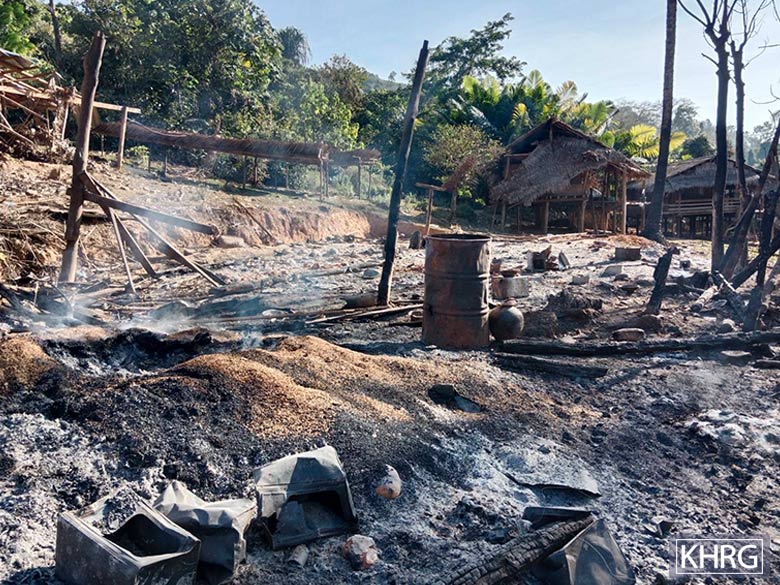
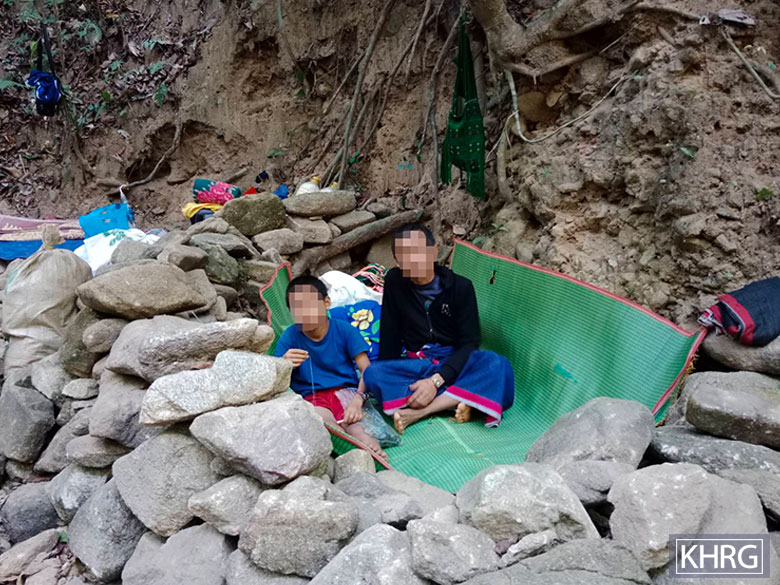
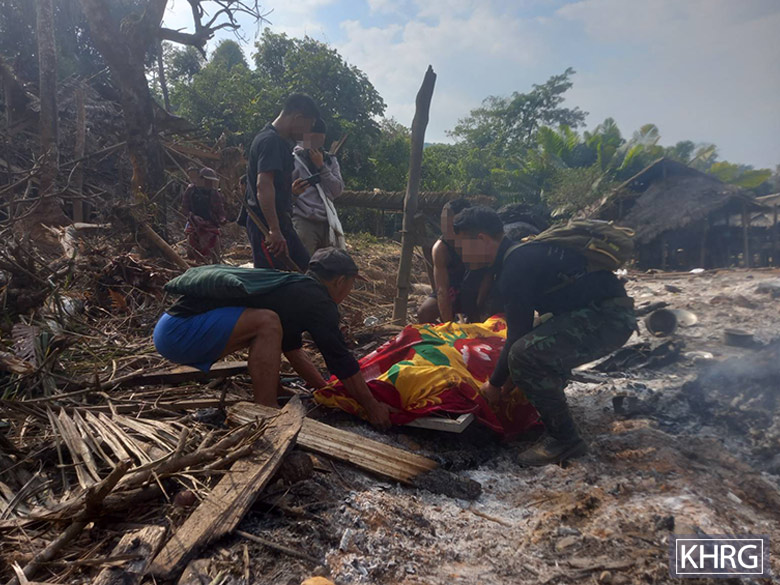
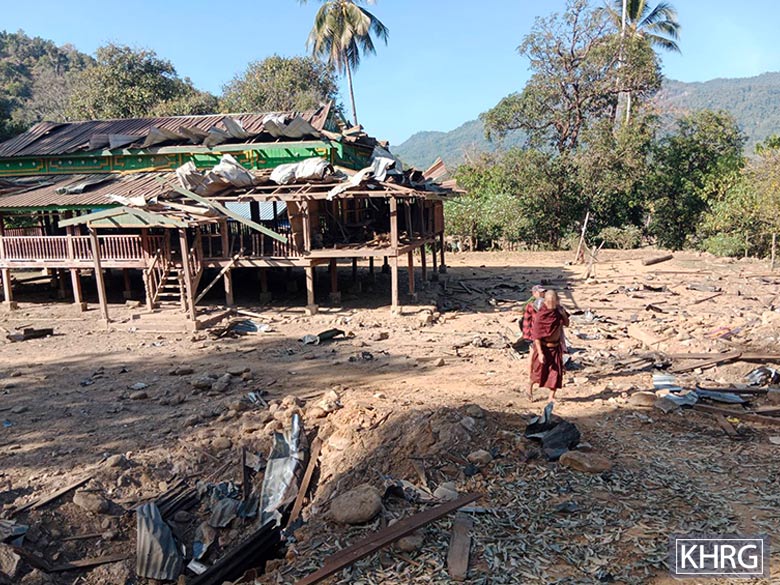


These photos were taken in January and February 2025 in Kyaw Pa village tract, Bu Tho Township, Mu Traw District. On January 28th 2025, the SAC carried out an air strike on Ak------ village, Kyaw Pa village tract. The attack caused several casualties: four villagers (including one child) were killed, while six others (including two children) were injured. Additionally, five houses were completely burned down by the air strike. Consequently, all residents of Ak--- village were forced to flee. These displaced villagers needed food, shelter, and healthcare support in their hiding locations in Bu Tho Township (as of June 2025), although they received some initial support from the Karen Women’s Organisation (KWO)[32]. On January 28th 2025, the SAC also conducted an air strike near Al--- village, Kyaw Pa village tract, destroying a monastery and several other buildings. As a result, villagers from Al--- village fled to the forest to escape further attacks. The left photo on the top row shows the remains of villagers’ houses that were burned down and destroyed by the SAC air strike conducted on January 28th 2025 in Ak--- village. The right photo on the top row shows Ak--- displaced villagers due to the SAC air strike. In the photo, they are staying at the bottom of a valley in the forest near Ak--- village. The left photo on the bottom row shows villagers trying to recover the dead bodies of villagers from a burned-down house. The right photo on the bottom row shows the monastery that was destroyed by the SAC air strike that happened on Al--- village.[33] [Photos: KHRG]
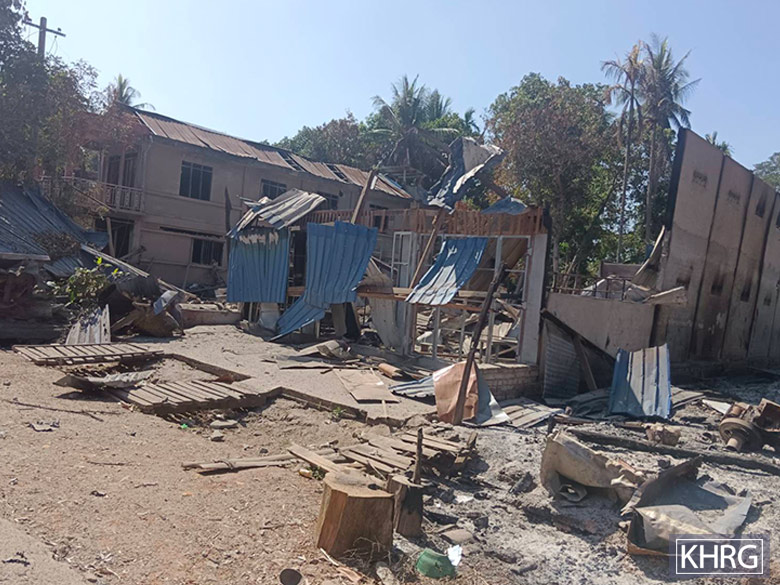
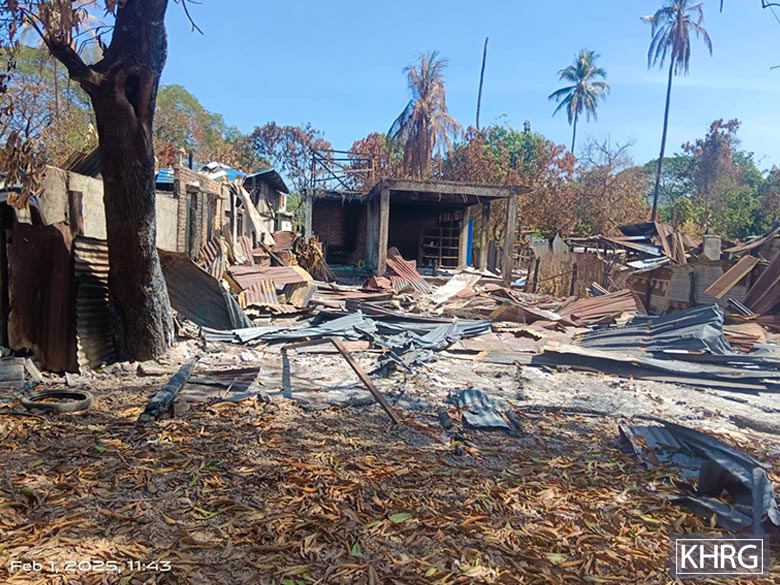
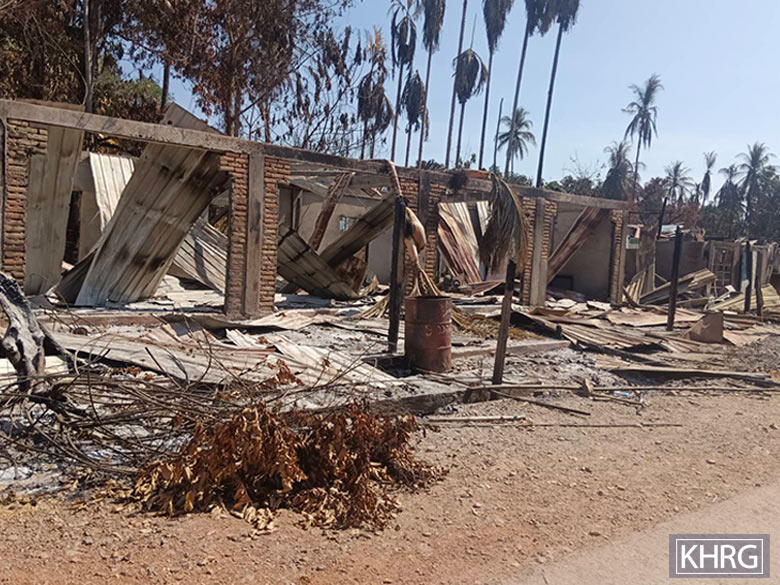


The photo was taken in January 2025, Am--- village, K’ter Tee village tract, Dwe Loh Township, Mu Traw District. In January 2025, an SAC fighter jet conducted an air strike on Am--- village while fighting was taking place between SAC soldiers and KNLA soldiers near the village. As a result, several villagers’ houses were damaged and destroyed. The photos show villagers’ houses destroyed and damaged by the SAC air strike. [Photos: KHRG]
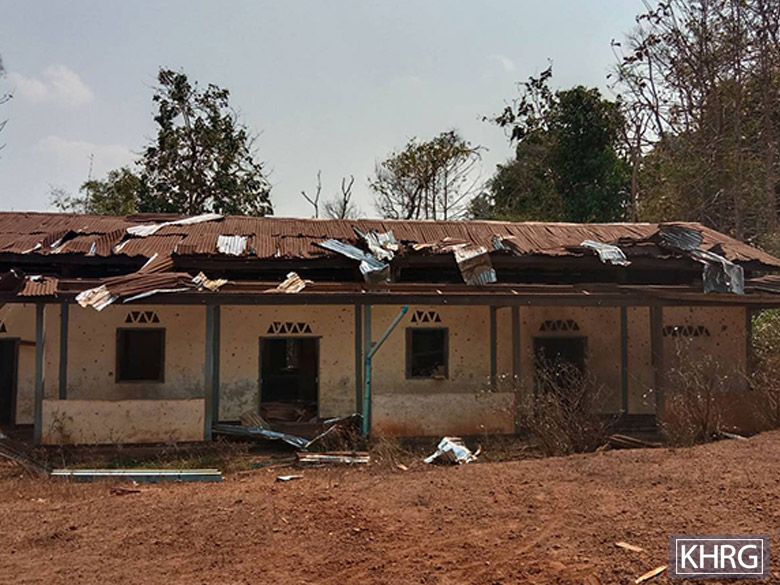
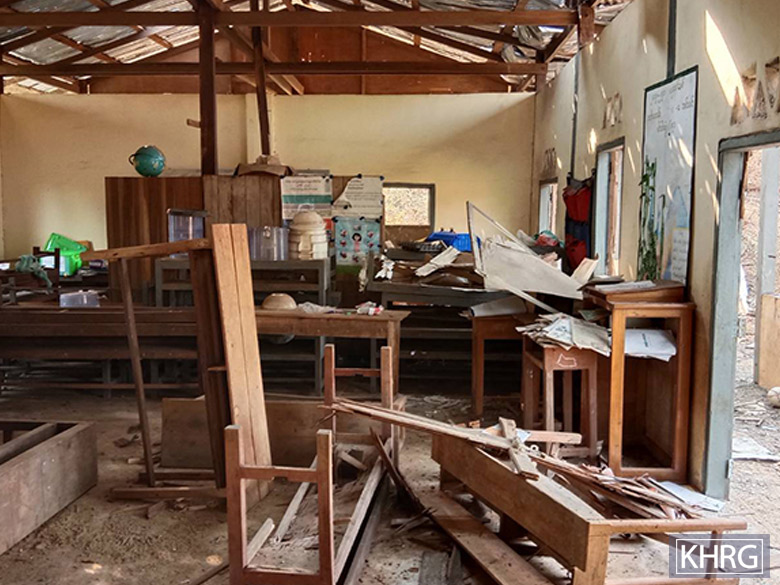


These photos were taken in March 2025 in An--- village, Ma Htaw village tract, Dwe Lo Township, Mu Traw District. On March 19th 2025, at 5 am, an SAC fighter jet dropped a 500-pound bomb on An--- village. The bomb landed and exploded in a compound of a nursery school in the village, damaging the school buildings (administered by the KECD) and several villagers’ houses nearby. The photos show the destruction of the school buildings in An--- village. [Photos: KHRG]
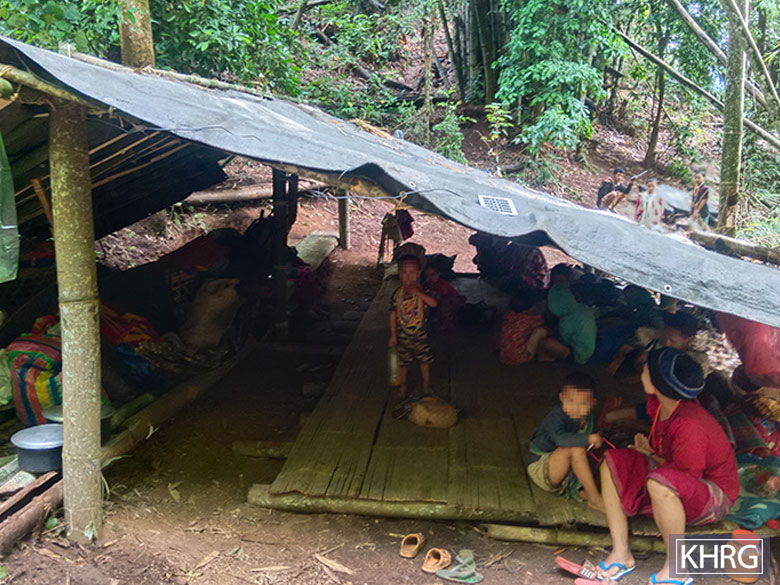


These photos were taken in May 2025 in a forest near Ao--- village, Ler Muh Plaw village tract, Lu Thaw Township, Mu Traw District. On April 21st 2025, the SAC conducted an air strike on Ao--- village, damaging five villagers’ houses and destroying one villager’s house. After the incident, local villagers from the village fled to a forest nearby for their safety. The photos show the displaced villagers hiding in the forest. Some of the displaced villagers faced food shortages and a lack of access to shelter, so it was very difficult for them during the displacement. [Photos: KHRG]
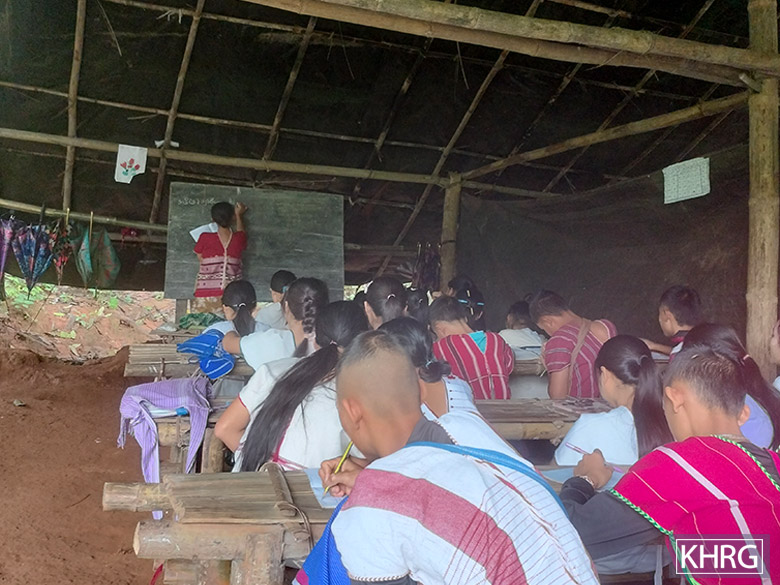
This photo was taken in July 2025 in a forest in Pay Kay village tract, Lu Thaw Township, Mu Traw District. On January 12th 2023, the SAC conducted an air strike in Ap--- village, Pay Kay village tract, causing damage to the village church, the village school, and several villagers’ houses. The air strike killed five villagers and injured two others. After the incident, many villagers, including children, fled from the village. The school in the village was still closed as of February 2026. The photo shows displaced children from Ap--- village studying in hidden place in the forest. [Photo: KHRG]
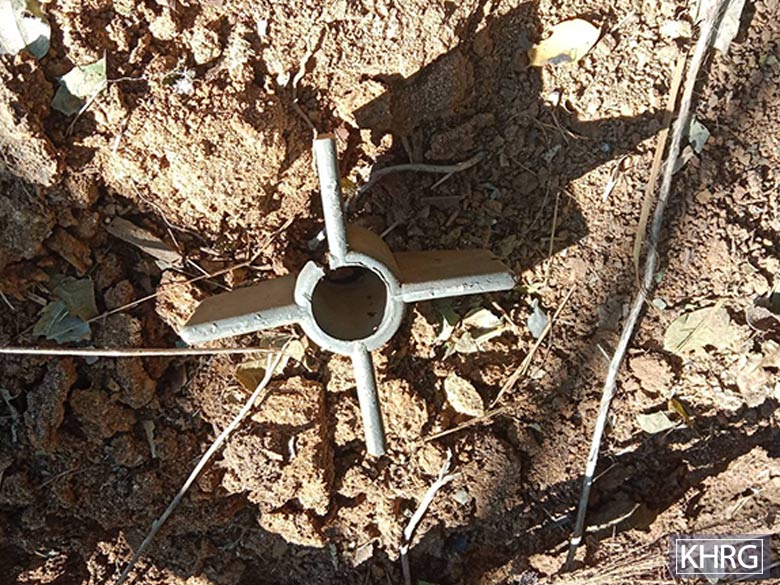
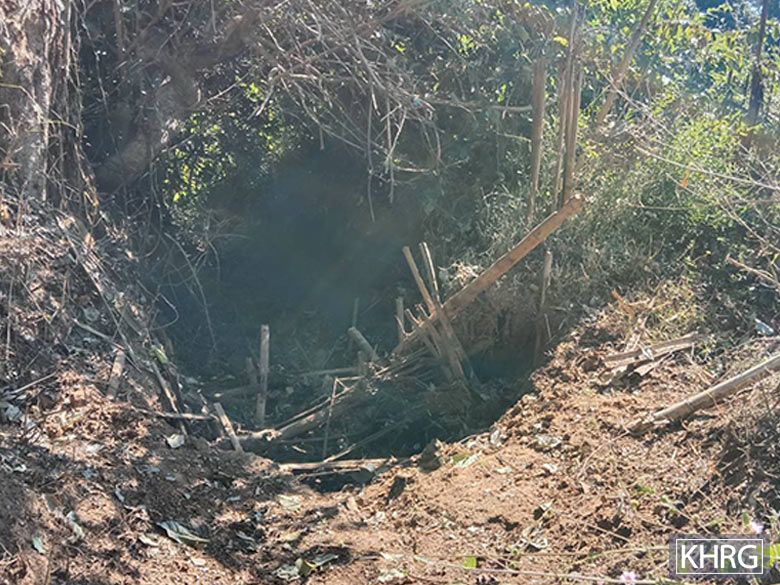


These photos were taken in December 2025 in An--- village, Ma Htaw village tract, Dwe Lo Township, Mu Traw District. On November 29th 2025, at around 9 am, a Burma Army Y-12 aircraft dropped two bombs in An--- village. One of the bombs landed and exploded in a villager’s plantation in the village, destroying a spirit house and some trees, owned by a villager named Naw P---. The other bomb landed and exploded near a house, owned by another villager in the village, but there were no damages reported. No villager was injured or killed by the explosions, as villagers were not in their houses and plantations during the incident. The photo on the left shows the tail of the bomb that landed in Naw P---’s plantation. The photo on the right shows a spirit house destroyed by the bomb’s explosion. [Photos: KHRG]
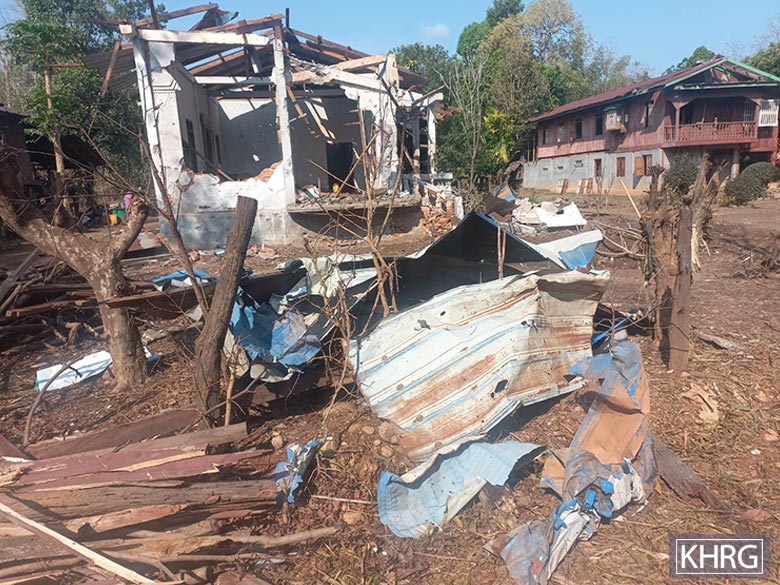
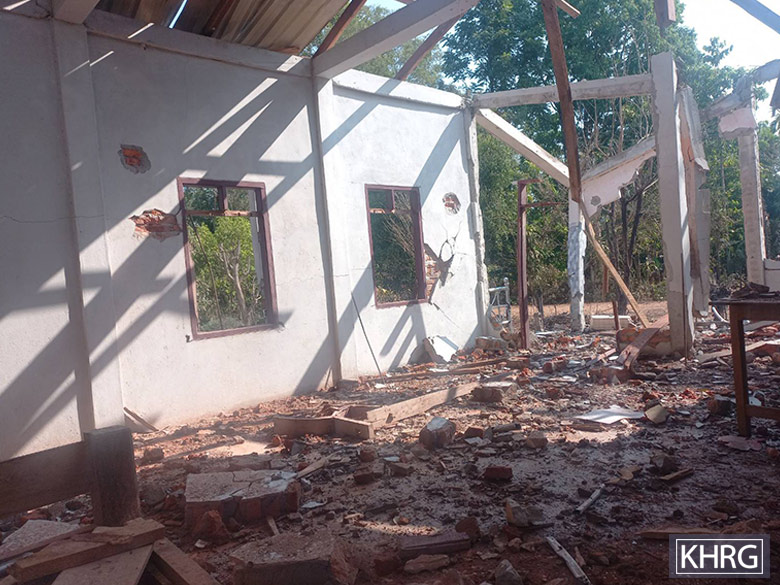


The photos were taken in March 2025 in Aq--- village, A’Kyoo village tract, Kaw T’Ree Township, Dooplaya District. On March 5th 2025, the SAC conducted an air strike in Aq--- village, injuring two villagers and damaging three villagers’ houses. The two villagers sustained minor injuries on their legs. The photos show the damaged villagers’ houses. [Photos: KHRG]
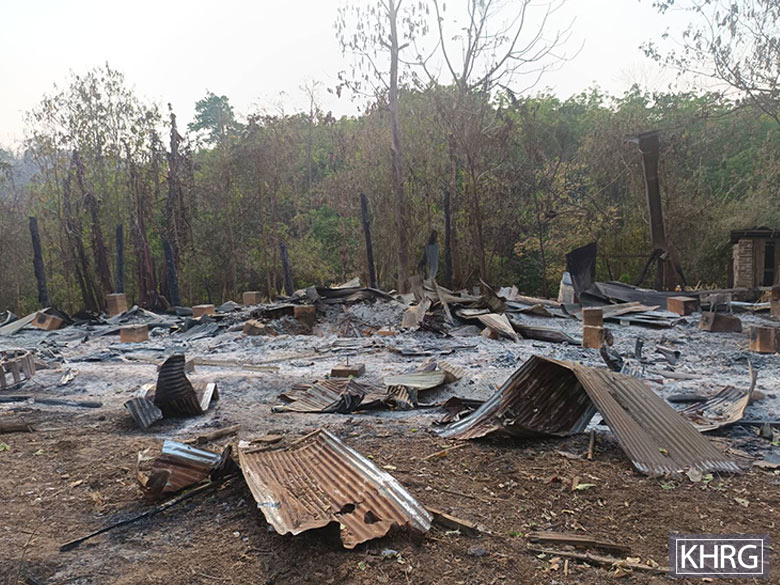
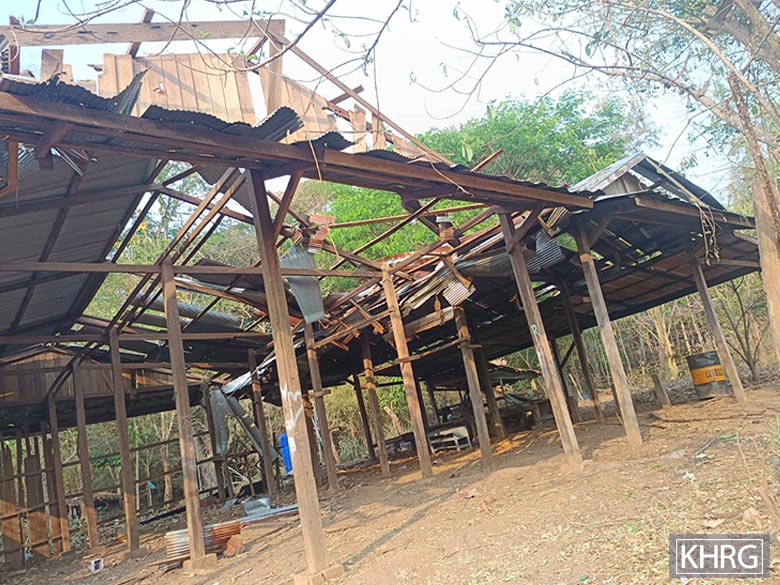


These photos were taken in March 2025 in Ar--- village, Noh Hpoh village tract, Kaw T’Ree Township, Dooplaya District. On March 19th 2025, at around 11 am, an SAC fighter jet carried out an air strike on Ar--- village. The SAC fighter jet dropped two bombs on the village, which landed near a villager’s house, killing two villagers. One of the villagers was severely injured by bomb fragments and was barely recognisable. Both victims had young children and were the breadwinners of their families, so their deaths caused hardships and livelihood challenges. The house near where the bombs landed was destroyed by fire, and its owners were unable to retrieve any belongings. A building near the house was also damaged during the incident. According to villagers, the SAC intentionally targeted villagers, as there were no armed forces present in the village at the time of the attack and no prior fighting had occurred in the area. After the attack, villagers expressed concerns and worries about their security. The photo on the left shows the villager’s house destroyed by the fire as a result of the bomb explosion from the SAC air strike on March 19th 2025. The photo on the right shows a damaged building located near the destroyed house. [Photos: KHRG]
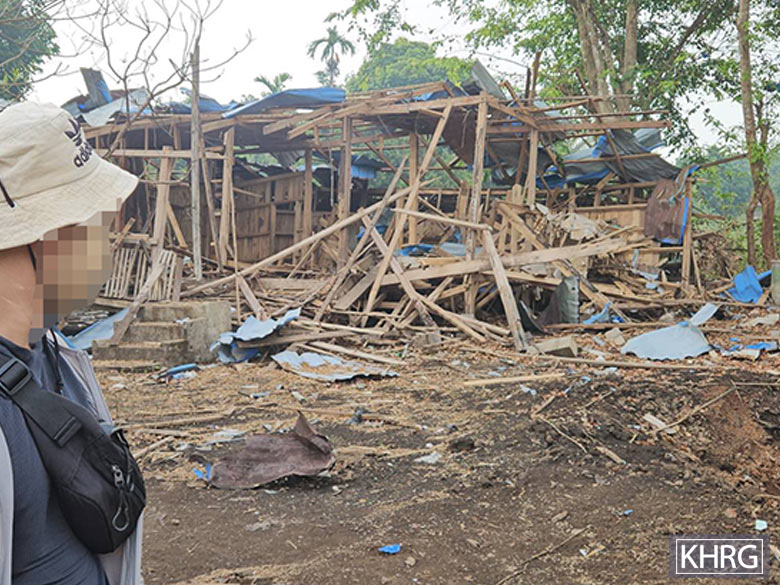
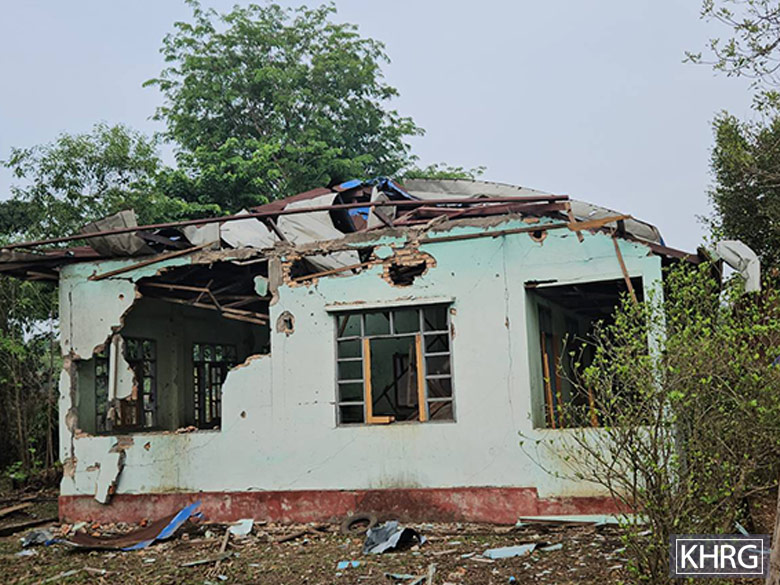


These photos were taken by a KHRG researcher in May 2025 in As--- village, Wa Ka village tract, Kruh Tuh Township, Dooplaya District. On April 23rd 2025, at 8:06 pm, the SAC dropped three bombs onto Bq--- village, injuring a villager. Two of the bombs landed on the school campus, close to the teachers’ quarters. One of the bombs exploded, and another bomb remained unexploded on the campus. The exploded bomb destroyed the school, the teachers’ quarters, the school toilets, and the school’s water tank, and damaged another two school buildings and some villagers’ houses. As--- school was under the administration of the SAC. Villagers from As--- village told KHRG that they assumed that the SAC was targeting three buildings during this air strike: the teacher’s quarters in the school campus; a KNU office, located in the village; and As---’s hospital, next to the school. A group of displaced villagers had recently come to stay at the school campus, and so local villagers believed that the SAC might have mistakenly thought they were related to armed resistance forces. Villagers also believed the hospital was targeted because fighting had happened close to the village, and the SAC had assumed that the armed resistance forces were being treated at the hospital. After the attack, fear was widespread. The left photo shows the school’s teacher’s quarters, and the photo on the right shows the destruction of the As--- school, both destroyed by the SAC air strike on April 23rd 2025 on the village.[34] [Photos: KHRG]
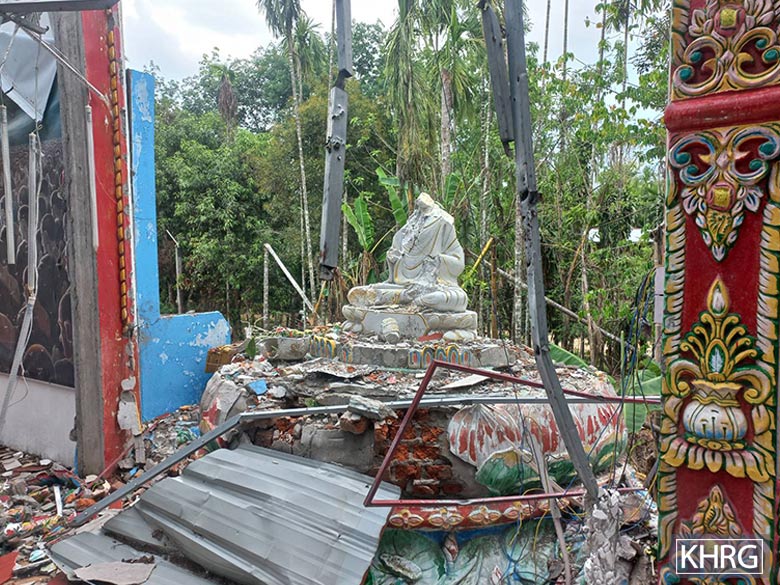
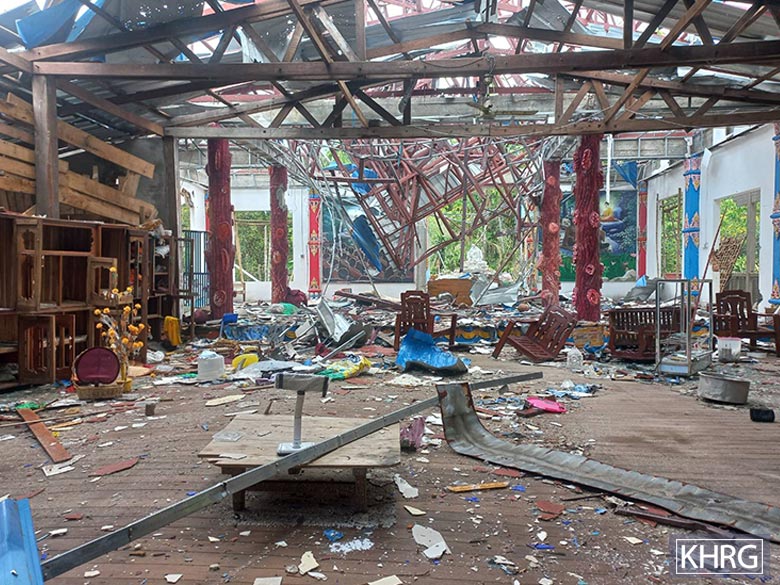


These photos were taken in April 2025 in At--- village, Noh Su Net village tract, Waw Ray Township, Dooplaya District. On March 25th 2025, an SAC fighter jet dropped two 500-pound bombs onto a monastery compound in At--- village while fighting between SAC soldiers and KNLA soldiers was taking place. The air strike injured two monks and six villagers, including a child, and destroyed multiple monastery buildings. The photos show the destroyed village monastery building and a Buddha statue. After the incident, villagers and monks fled from the village for their safety. [Photos: KHRG]
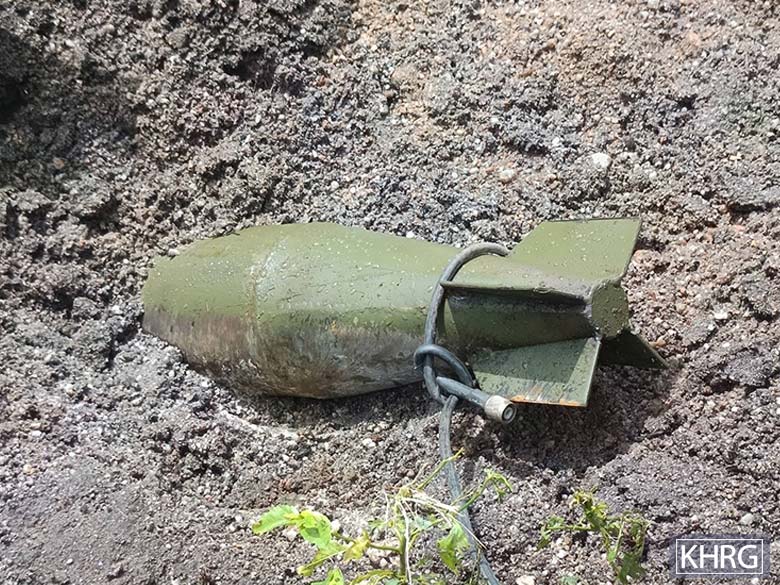
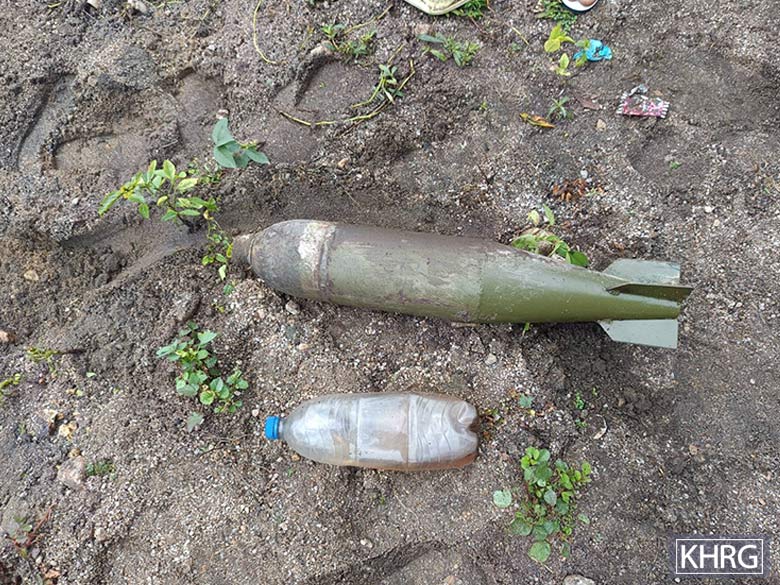


These photos were taken in May 2025 in Au--- village, Thay Baw Boh village tract, Kaw T’Ree Township, Dooplaya District. On May 29th 2025, an SAC fighter jet came and dropped multiple bombs on Au--- village, including at least two 250-pound bombs, despite the absence of fighting in the village. Bombs landed inside a school’s compound in the village, and one remained unexploded. The air strike damaged the school building. This school is administered by the KECD. The explosions also damaged four houses. The photos show the unexploded bomb dropped by the SAC fighter jet. [Photos: KHRG]
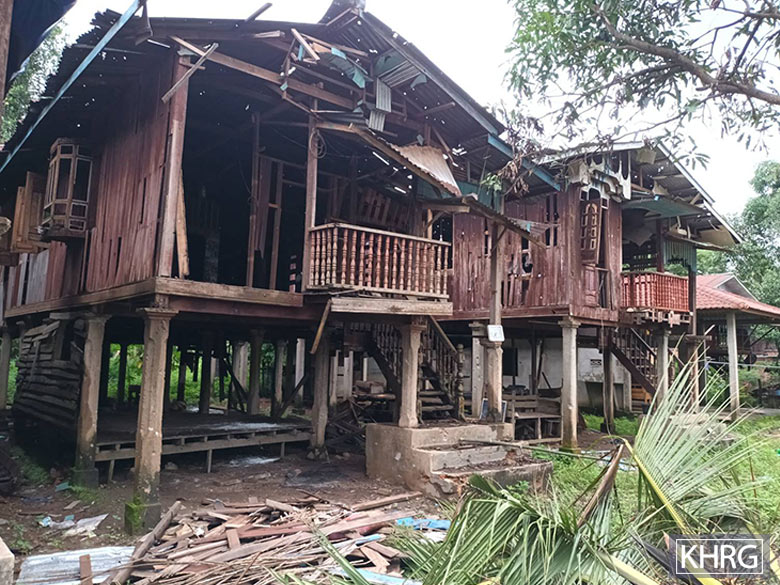
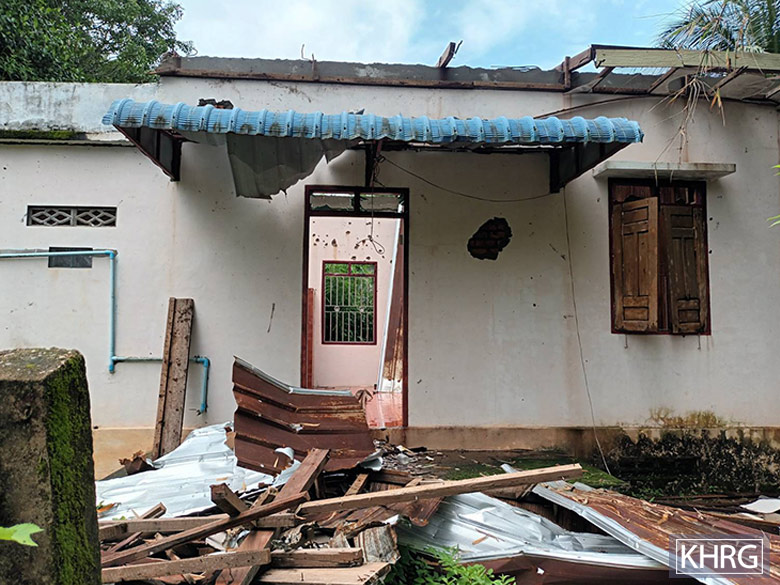
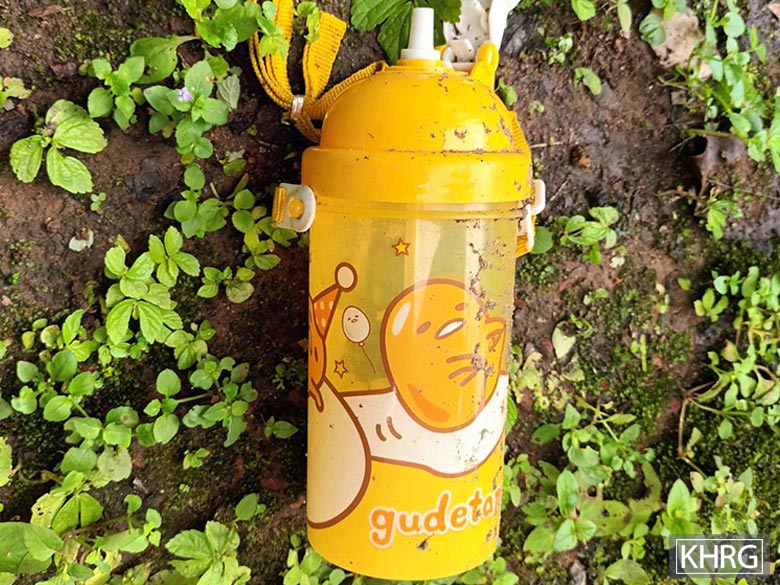


These photos were taken in June 2025 in Av--- village, Paing Ya village tract, Kruh Tuh Township, Dooplaya District. On June 9th 2025, at 1:45 pm, an SAC fighter jet dropped multiple 500-pound bombs and various types of small mortar shells, while a helicopter fired machine guns at Av--- village. As one of the bombs landed on the house in the village where students were studying, the air strike killed three students, one teacher, and one villager. It also injured at least 29 people, including 24 students, one 4-year-old child, and four villagers. The air strikes also damaged at least 12 houses owned by villagers. After the attack, villagers with serious injuries sought treatment in Hpa-an and Mawlamyine towns, while those with less severe injuries were treated in nearby villages. Due to security concerns raised by local village leaders before the attack, the self-funded middle school with around 90 students closed down. Teachers had instructed students to secretly study in villagers’ houses before the attack. The two photos on the top row show villagers’ houses, damaged by the SAC air strike in Av--- village on June 9th 2025. The left photo in the bottom row shows a bottle of water, owned by a student, remaining in the incident place.[35] [Photos: KHRG]
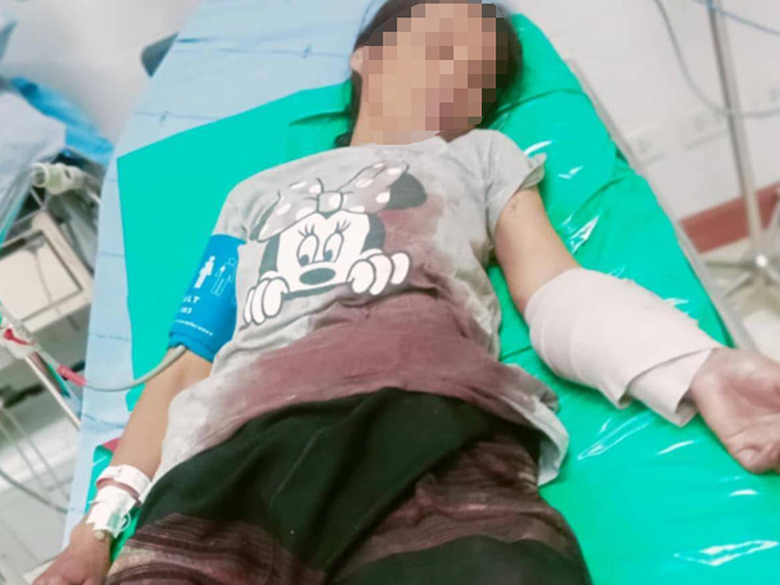
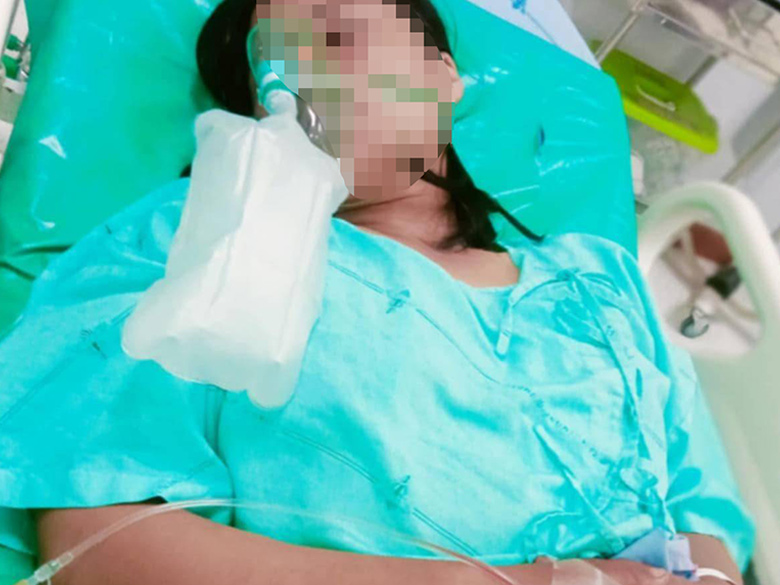
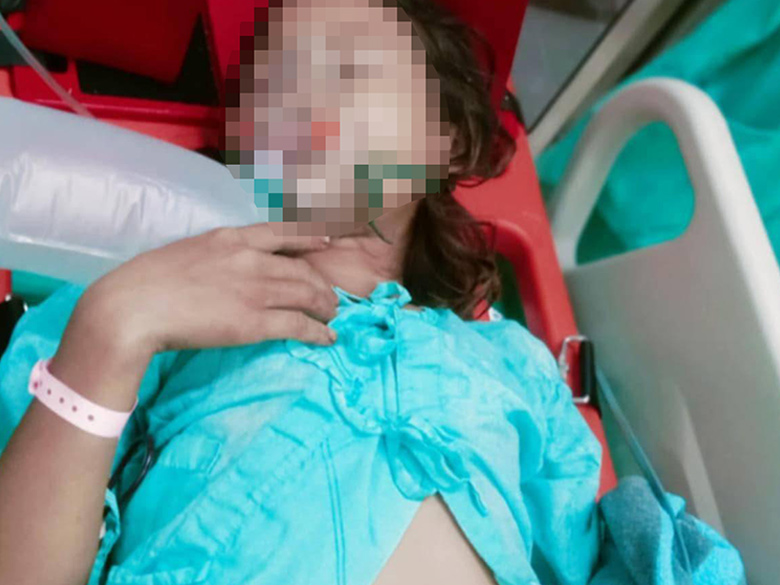
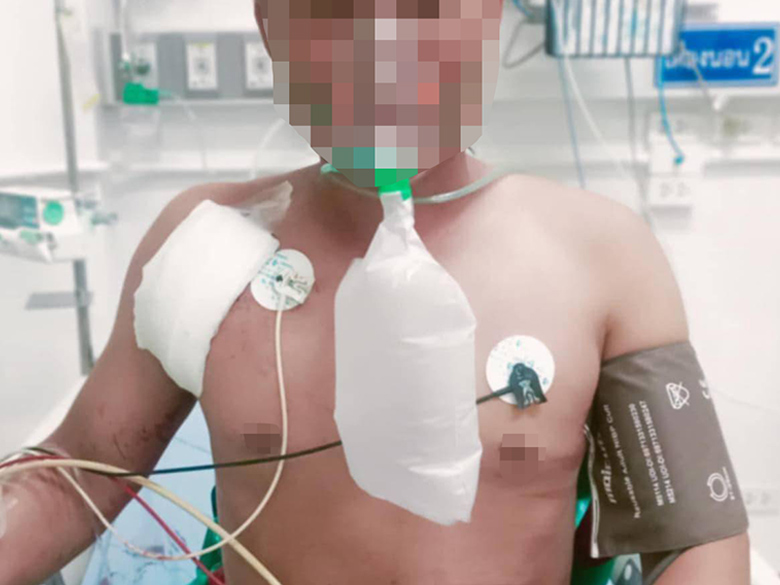


KHRG received these photos from a local villager in July 2025. On July 5th 2025, the Burma Army carried out an air strike on Aw--- village, Maw Hkee village tract, Kaw T’Ree Township, Dooplaya District. The air strike severely injured four villagers, including a child, and they were sent to a hospital in Ax--- Town, in Thailand’s Tak province, for medical treatment. According to a local villager, there was no fighting near the village where the air strike happened. The photos show the four injured villagers receiving medical treatment in Ax--- hospital. [Photos: Local villager]
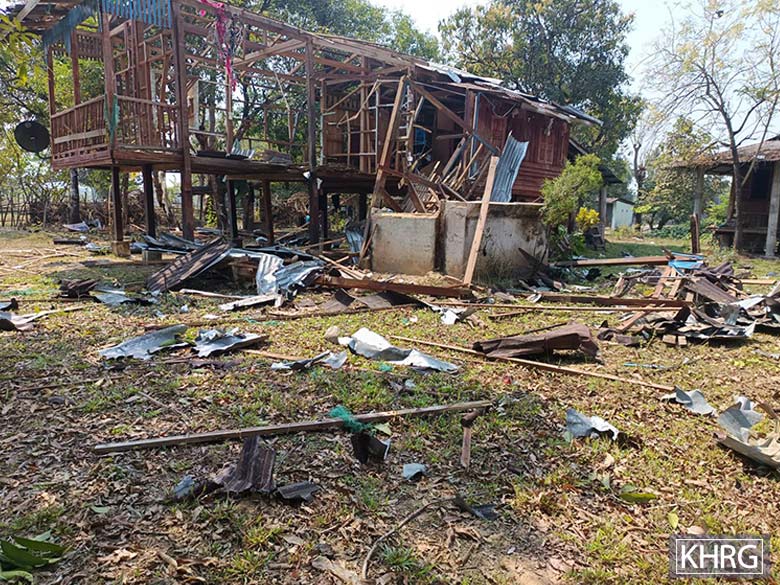
This photo was taken in February 2025 in Ay--- village, Yaw Kuh village tract, T’Nay Hsah Township, Hpa-an District. On February 3rd 2025, SAC Military Operations Command (MOC)[36] #12, based in Hlaing Wa Artillery Unit army camp, Hlaing Wa area, near Kaw T’Ree Town, Kaw T’Ree Township, Dooplaya District, deployed a drone and dropped bombs onto Ay--- village, damaging a villager’s house. The photo shows the heavily damaged house owned by a villager named U Q---. [Photo: KHRG]
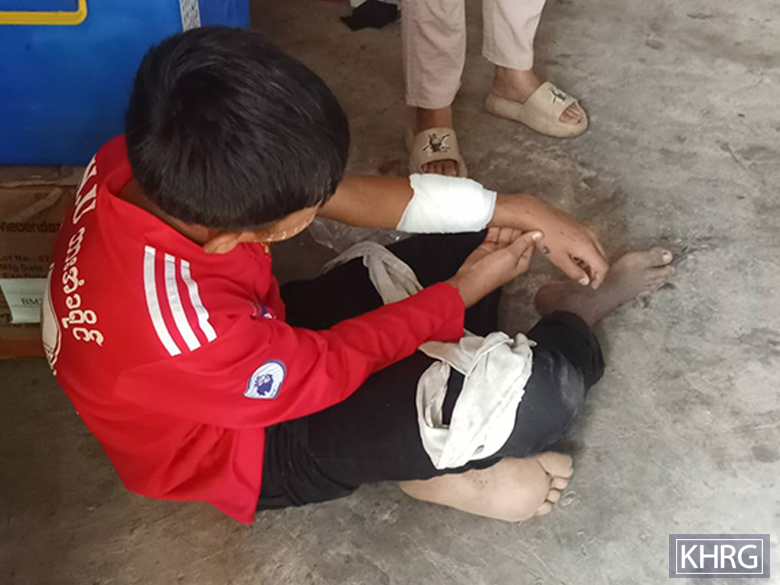
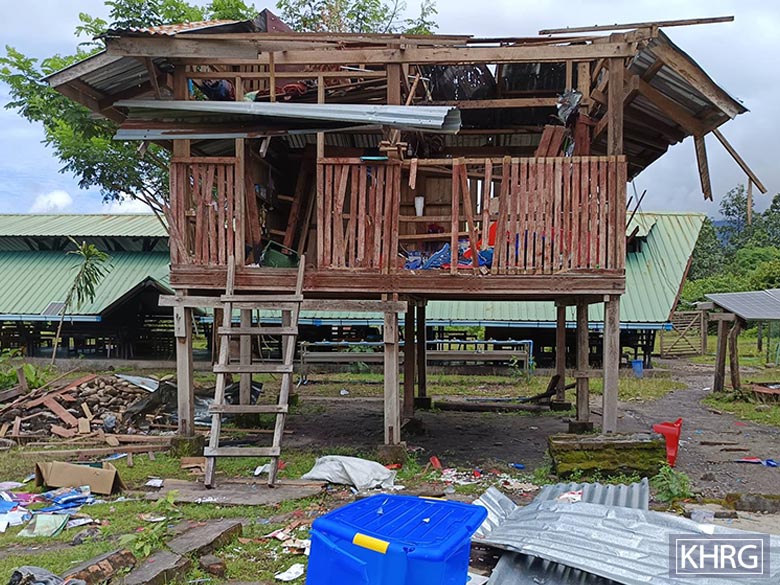


These photos were taken in September 2025 in Az--- village, Pee Ter Hka village tract, Ta Kreh Township, Hpa an District. On September 3rd 2025, at around 9:52 am, the Burma Army used a kamikaze drone and carried out a drone strike on Az--- middle school, in Az--- village. The school is administered by the KECD. The drone attack injured two teachers and a student and damaged a school building. The photo on the left shows an injured student from Bx--- school, and the photo on the right shows a damaged building of the school.[37] [Photos: KHRG]
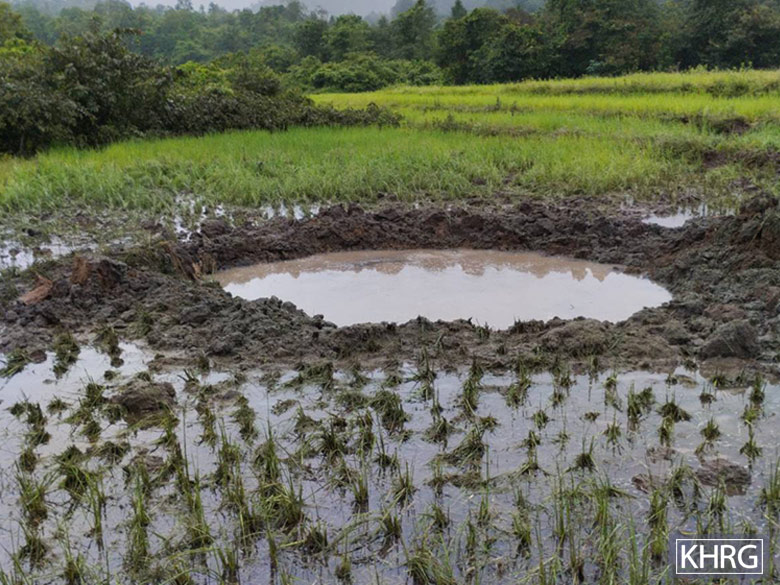
This photo was taken in September 2025 in a rice field near Bc--- village, Htee Wah Blaw village tract, T’Nay Hsa Township, Hpa-an District. On September 10th 2025, a Burma Amy aircraft dropped a bomb on a farm owned by a local villager near Bc--- village. The bomb explosion caused damage to the rice farm. The farm’s owner told KHRG that he was very disappointed about what happened to his farm. [Photo: KHRG]
Footnotes:
[1] The terms Burma military regime, Burma Army, junta, and SAC are used interchangeably throughout this report to describe Burma’s armed forces. Villagers themselves commonly use Burma Army, Burmese soldiers, or alternatively the name adopted by the Burma military regime at the time –from the 2021 coup to July 2025, the State Administration Council (SAC). On July 31st 2025, the military junta changed its name to State Security and Peace Commission (SSPC).
[2] Karen State, defined locally, includes the following areas: Kayin State, Tanintharyi Region and parts of Mon State and Bago Region. Karen State, located in Southeastern Burma, is primarily inhabited by ethnic Karen people. Most of the Karen population resides in the largely rural areas of Southeast Burma, living alongside other ethnic groups, including Bamar, Shan, Mon and Pa’O.
[3] KHRG operates in seven areas in Southeast Burma: Doo Tha Htoo (Thaton), Taw Oo (Toungoo), Kler Lwee Htoo (Nyaunglebin), Mergui-Tavoy, Mu Traw (Hpapun) and Dooplaya and Hpa-an. When KHRG receives information from the field, it organises data according to these seven areas. These are commonly referred to as ‘districts’ and are used by many local Karen organisations. KHRG’s use of the district designations in reference to our research areas does not imply political affiliation. For clarity, the Burmese terms for these districts are provided in brackets but do not correspond with the Burma (Myanmar) government administrative divisions.
[4] See also: KHRG, ကဘီယူၤဟဲလံ Aircraft coming! : Impacts of air strikes on local communities and villagers’ protection strategies in Southeast Burma since the 2021 coup., November 2024.
[5] A village tract is an administrative unit of between five and 20 villages in a local area, often centred on a large village.
[6] The State Administration Council (SAC) was the name of the executive governing body of the Burma military regime created in the aftermath of the February 1st 2021 military coup. It was established by Senior General Min Aung Hlaing on February 2nd 2021, and was composed of eight military officers and eight civilians. The chairperson serves as the de facto head of government of Burma/Myanmar and leads the Military Cabinet of Myanmar, the executive branch of the government. Min Aung Hlaing assumed the role of SAC chairperson following the coup. The military junta changed its name on July 31st 2025 from SAC to State Security and Peace Commission (SSPC), with Min Aung Hlaing retaining his position as chairperson.
[7] The Karen National Union's Education and Culture Department is the education department of the Karen National Union. Its main goals are to provide mother tongue education services to rural Karen populations in Southeast Burma, as well as to preserve the Karen language, culture, and history. Despite being an important education provider in the region, it is not officially recognised by the Burma government.
[8] KHRG, “Doo Tha Htoo District Short Update: SAC air strikes and shelling, causing casualties, damages and displacement; and forced labour, in Bilin Township (September 2024 to February 2025)”, June 2025.
[9] KHRG, “Doo Tha Htoo District Short Update: SAC air strikes and shelling, causing casualties, damages and displacement; and forced labour, in Bilin Township (September 2024 to February 2025)”, June 2025.
[10] KHRG, “Doo Tha Htoo District Short Update: SAC air strikes and shelling, causing casualties, damages and displacement; and forced labour, in Bilin Township (September 2024 to February 2025)”, June 2025.
[11] KHRG, “Doo Tha Htoo District Incident Report: The Burma Army air strikes killed five children and injured nine villagers in Bilin Township (October 2025)”, December 2025.
[12] The Karen Department of Health and Welfare (KDHW) is the health department of the Karen National Union. It was established in 1956 to address the lack of public healthcare resources in rural Southeast Myanmar. It currently operates a network of community-based clinics in the region, but its capabilities remain limited due to funding constraints.
[13] The Karen National Union (KNU) is the main Karen political organisation. It was established in 1947 and has been in conflict with the government since 1949. The KNU wields power across large areas of Southeast Myanmar and has been calling for the creation of a democratic federal system since 1976. Although it signed the Nationwide Ceasefire Agreement (NCA) in 2015, following the 2021 coup staged by Burma Army leaders, the KNU officially stated that the NCA has become void.
[14] KHRG, Community spaces under fire: Attacks and destruction of community buildings and cultural events in Southeast Burma by the State Administration Council (SAC) (January - June 2025), August 2025.
[15] ‘Saw’ is a S’gaw Karen male honorific title used before a person’s name.
[16] KHRG, “Doo Tha Htoo District Incident Report: The Burma Army air strikes killed five children and injured nine villagers in Bilin Township (October 2025)”, December 2025.
[17] An Infantry Battalion (IB) comprises 500 soldiers. However, most Infantry Battalions in the Tatmadaw are under-strength with less than 200 soldiers. Yet up to date information regarding the size of battalions is hard to come by, particularly following the signing of the NCA. They are primarily used for garrison duty but are sometimes used in offensive operations.
[18] KHRG, “Taw Oo District Situation Update: SAC shelling, drone attacks, forced recruitment, threats, and other military activity, causing casualties and livelihood challenges in Htaw Ta Htoo and Daw Hpah Hkoh Townships (November 2024 to January 2025)”, May 2025.
[19] KHRG, “Taw Oo District Short Update: SAC soldiers shot and injured a villager, and conducted shelling and an air strike causing destruction, in Htaw Ta Htoo and Daw Hpah Hkoh townships (January to March 2025)”, August 2025.
[20] KHRG, Community spaces under fire: Attacks and destruction of community buildings and cultural events in Southeast Burma by the State Administration Council (SAC) (January - June 2025), August 2025, p. 9; KHRG, Stolen Childhoods: Violations of children’s rights, urgent needs, and local agency in rural Southeast Burma during the conflict, pp. 21-22.
[21] The Karen National Defence Organisation (KNDO) was formed in 1947 by the Karen National Union and is the precursor to the Karen National Liberation Army (KNLA). Today the KNDO refers to a militia force of local volunteers trained and equipped by the KNLA and incorporated into its battalion and command structure; its members wear uniforms and typically commit to two-year terms of service.
[22] The Karen National Liberation Army is the armed wing of the Karen National Union.
[23] A Light Infantry Battalion (LIB) comprises 500 soldiers. Most Light Infantry Battalions in the Tatmadaw are under-strength with less than 200 soldiers, yet up-to-date information regarding the size of battalions is hard to come by, particularly following the signing of the NCA. LIBs are primarily used for offensive operations, but they are sometimes used for garrison duties.
[24] ‘Ko’ is a Burmese male honorific title used before a person’s name.
[25] The People’s Defence Force (PDF) is an armed resistance established independently as local civilian militias operating across the country. Following the February 1st 2021 military coup and the ongoing brutal violence enacted by the junta, the majority of these groups began working with the National Unity Government (NUG), a body claiming to be the legitimate government of Burma/Myanmar, which then formalized the PDF on May 5th 2021 as a precursor to a federal army.
[26] ‘U’ is a Burmese title used for elder men, used before their name.
[27] ‘Naw’ is a S’gaw Karen female honorific title used before a person’s name.
[28] All conversion estimates for Kyat are based on the official market rate as of 17 February 2026 at 1 USD = 2,100 MMK, conversion rate available at wise.com/gb/currency-converter/mmk-to-usd-rate
[29] KHRG, “Kler Lwee Htoo District Incident Report: An SAC air strike on a school injured a villager in Hsaw Htee Township, May 2025.”, November 2025.
[30] A cubit is a standard measurement for the length of bamboo poles, commonly referred to in Karen as the length from one’s fingertips to one’s elbow, about 45.7 cm or 18 in a local villager. The photo on the left shows one of the villagers’ houses, damaged by the Burma Army’s air strike. The photo on the right shows a motorbike, destroyed by the air strike. [Photos: KHRG]
[31] The Karen calendar is lunar, and Karen New Year generally falls between December 15th and January 15th on the English calendar. In 2024, Karen New Year, the first day of Thalay month of the year 2764, fell on December 30th. Karen villagers throughout Burma, Thailand, and other countries celebrate with ceremonies, speeches, giving gifts to elders, music, Don Dance competitions, and feasting. Sometimes the celebration is held on a later date based on villagers’ availability.
[32] The Karen Women’s Organisation (KWO) is a Karen community-based organisation formed in 1949 to support women in its operational areas across locally-defined Karen State and in refugee camps along the Thai-Burma border. KWO works to empower women, fights against all forms of oppression of women and children, and provides support for communities in their operational areas. The organisation promotes women’s leadership, gender sensitivity, and runs health and education programs.
[33] KHRG, “Mu Traw District Incident Report: SAC air strikes cause death, injuries, displacement, and destruction in Bu Tho Township (January 2025)”, August 2025.
[34] KHRG, Community spaces under fire : Attacks and destruction of community buildings and cultural events in Southeast Burma by the State Administration Council (SAC) (January - June 2025), August 2025, p. 9; KHRG, “Dooplaya District Situation Update: SAC shelling and air strikes caused casualties, displacement, and health and education challenges in Kruh Tuh Township (April 2025)”, November 2025.
[35] KHRG, “Dooplaya District Situation Update: SAC air strikes, education challenges, drug issues, and military activities in Noh T’Kaw and Kruh Tuh townships (January to June 2025)”, November 2025.
[36] Military Operations Command (MOC) is comprised of ten battalions for offensive operations. Most MOCs have three Tactical Operations Commands (TOCs) made up of three battalions each.

