
 English
 ကညီကျိာ်
 မြန်မာ
This Short Update describes events occurring in Hpa-an Township, Doo Tha Htoo (Thaton) District during the period between January to April 2026. On 12 January 2026 and 19 March 2026, Burma Army Light Infantry Battalion (LIB) #202, based at Taung Ka Lay army camp, indiscriminately fired mortar shells into Tz--- and Ak--- villages, Ba Bway Kone (Noh M’Kweeh) village tract. The shelling injured a villager, wounded a cow, and damaged farmland. Due to the attacks, local villagers feared for their safety, and one villager was forced to flee to a nearby river to avoid harm. The Burma Army also conducted air strikes near Tz--- village on 12 January 2026. On 2 February 2026, a Burma Army fighter jet dropped two bombs near Jv--- village, Ha T’Reh (Hat Ta Lait) village tract. The attack destroyed hundreds of rubber trees, two vehicles, a solar panel, damaged houses, and caused damage to the village clinic. On 16 April 2026, Burma Army fighter jets carried out air strikes near Zn--- village, damaging a solar panel and hundreds of rubber trees. Villagers also reported machine-gun fire from the aircraft. On the same day, Burma Army LIB #202 fired seven mortar shells into areas around Zn--- village. The shelling damaged houses, killed a dog, and destroyed rubber trees. Due to the air strikes and shelling, all villagers from Zn--- village were displaced and feared further attacks.[1]
Burma Army mortar shelling caused damages and livestock injury
On 12 January 2026, at 4:16 pm, Burma Army[2] LIB [Light Infantry Battalion][3] #202, under Light Infantry Division (LID)[4] #22 from Taung Ka Lay army camp, indiscriminately fired one 122 mm mortar shell towards Tz--- village, Ba Bway Kone [Noh M’Kweeh] village tract,[5] Hpa-an Township, Doo Tha Htoo (Thaton) District. The mortar shell landed and exploded in a farm near Tz--- village owned by 88-year-old Naw[6] J--- from Ak--- village, Ba Bway Kone village tract. As Naw J--- is getting old, she cannot work on the farm anymore. So, her 69-year-old nephew, Saw[7] N---, works on the farm for her. Saw N--- was harvesting paddy when the mortar shell landed on the farm. The shrapnel of the mortar shell was scattered around the surrounding area. Even though Saw N--- was not hit by shrapnel, he was hit by hard mud and sustained minor injuries to his back. At the same time, his cow was hit by the shrapnel of the mortar shell explosion.
Later that day, an air strike was also conducted by the State Security and Peace Commission (SSPC)[8] on the opposite side of Tz--- village on the other side of the Salween River. [The KHRG researcher was not able to document the incident because of security concerns.]
On 19 March 2026, at 11 am, Burma Army LIB #202, based in Taung Ka Lay [army camp], indiscriminately fired a mortar shell into Ak--- village again. The mortar shell landed and exploded on the farm of a villager from Ak--- village named Saw T--- (64 years old). There were no injuries or deaths; only the farm was damaged. On that day, at 2:30 pm, that battalion [LIB #202] indiscriminately fired another mortar shell, which landed and exploded on the western part of that farm next to Ak--- village community forest. Saw T---, who stayed close to the place where mortar shell landed and exploded, needed to run to into the river to avoid harm.
Burma Army air strikes caused destruction
On 2 February 2026, at 12:12 pm, a Burma Army fighter jet carried out an air strike and dropped two 200-pounds bombs onto a rubber plantation located near Saw H---’s house, where a doctor from Lc--- village and his three staff lived, in Jv--- village, Ha T’Reh (Hat Ta Lait) village tract, Hpa-an Township. The bombs landed on areas where many rubber trees could be tapped. The explosion of the bombs destroyed hundreds of rubber trees, and Saw H---’s house, two cars that were used by the doctor, an ambulance, and a 6x4 feet solar panel were hit and damaged [by shrapnel]. Moreover, the Jv--- clinic’s roof, ceiling, window, and door were damaged by the shrapnel from the explosion of the bombs. The clinic is located in Jv--- village and is administered by the Karen Department of Health and Welfare (KDHW).[9] Some other houses owned by villagers from Jv--- village were also hit [by the bombs' explosions].
On 16 April 2026, an SSPC fighter jet conducted an air strike by dropping three handmade bombs weighing nearly ten viss[10] (16 kg) onto a place near Zn--- village, Ba Bway Kone village tract. The first bomb landed in a forest in Zn--- village, not too close nor too far away from where the other two bombs landed, and it remained unexploded. The other two bombs landed and exploded on a farm owned by Saw E--- and on a pineapple plantation owned by Saw M--- in Zn--- village. As a result, a Thai-made 4x2 feet solar panel worth 10,000,000 kyats (4,761.90 USD[11]) owned by Saw Z--- was damaged by the shrapnel.
According to a witness named Saw Z---, after the first attack, the fighter jet flew over again and dropped another three bombs. All bombs landed nearby on rubber plantations, owned by Saw Z---, Saw M---, and Naw Y---. Because the bombs were dropped on the rubber plantations and machine guns were also fired from the aircraft, hundreds of rubbers trees that were ready to be tapped were damaged.
According to some of the Zn--- villagers, a few minutes after the SSPC dropped bombs, Burma Army LIB #202, from Taung Ka Lay army camp, fired seven 122 mm mortar shells. The mortar shells landed and exploded close to where the bombs from the fighter jet landed. Three of the seven mortar shells landed and exploded near a rubber plantation owned by a villager from Zn--- village named Saw D---, while another two mortar shells landed and exploded on Yp--- mountain slope (Jv--- cave) [located in Jv--- village], and the remaining two mortar shells landed and exploded at the back part of a Saw K---’s house, a villager from Zn--- village, located at the foot of Jv--- mountain on a rubber plantation ready to be tapped, owned by Naw L--- from Zy--- village.
No damage was reported from the mortar shells that landed near Saw D---’s yard and on the slope of Yp--- (Jv--- cave) mountain. However, the mortar shells which landed and exploded behind Saw K---’s house damaged the back wall, leaving two holes in it. The explosion also killed a dog. In addition, shrapnel slightly damaged the front part of the house belonging to his [Saw K---’s] son-in-law, Saw O---.
Furthermore, hundreds of rubber trees owned by Naw L--- were damaged, with some trees destroyed by the explosion. On that day, all villagers from Zn--- village displaced, and some residents living in areas near Zn--- village also fled to safer places. A displaced villager from Zn--- village shared that residents of Ba Bway Kone village tract are currently [as of July 2026] living in fear of both fighter jet attacks and mortar shelling. Furthermore, they are also concerned that the Burma Army might launch further military offensive operations in the area.
Further background reading on shelling in Southeast Burma/Myanmar can be found in the following KHRG reports:
- Stolen Childhoods: Violations of children’s rights, urgent needs, and local agency in rural Southeast Burma during the conflict, October 2024.
- “Kler Lwee Htoo District Incident Report: Burma Army ground operations, air strikes, and shelling killed at least 31 villagers including 15 children, injured many others, and caused extensive property destruction and displacement in Ler Doh Township (March 2026)”, July 2026.
- “Dooplaya District Situation Update: Challenges related to livelihood, education, healthcare, militarisation, displacement, travel restrictions, and drug issues in Waw Ray Township (January to March 2026)”, July 2026.
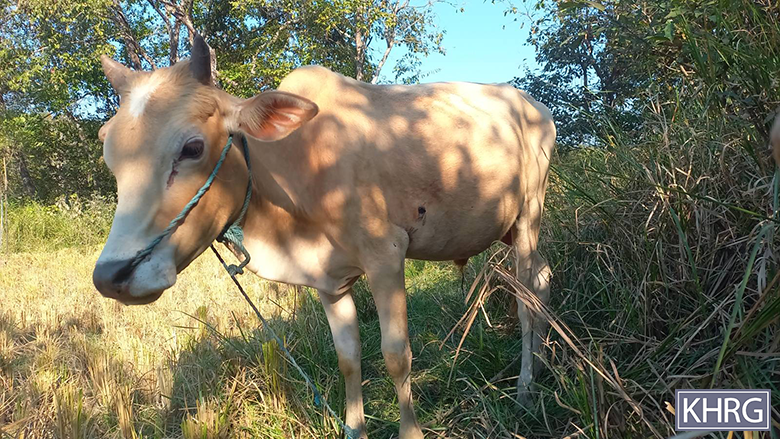
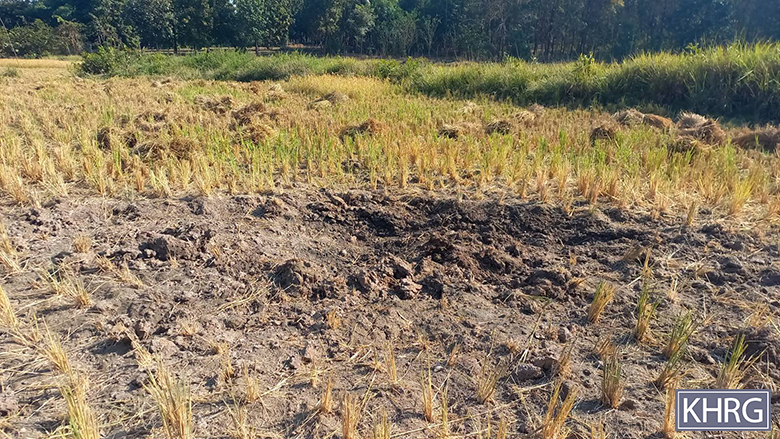


These photos were taken by a KHRG researcher in January 2026 on the farm of Naw J--- in Tz--- village, Ba Bway Kone (Noh M’Kweeh) village tract, Hpa-an Township, Doo Tha Htoo (Thaton) District. On 12 January 2026, at 4:16 pm, Burma Army Light Infantry Battalion (LIB) #202 fired one 122 mm mortar shell into Tz--- village. The mortar shell landed on a farm near the village. The photo on the left shows a cow owned by Naw J--- that was injured by the shrapnel of the mortar shell. The photo on the right shows the farm owned by Naw J---, which was damaged by the explosion of the mortar shell. [Photos: KHRG]
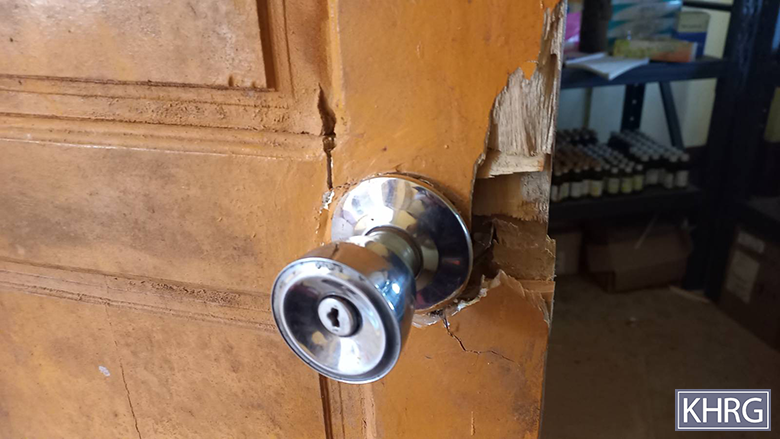
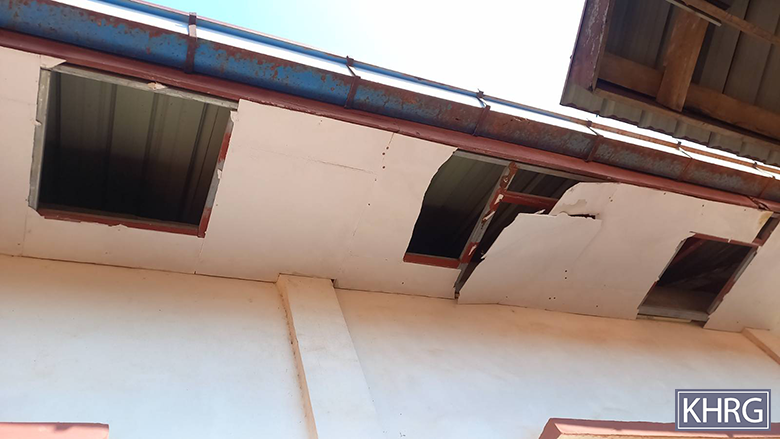
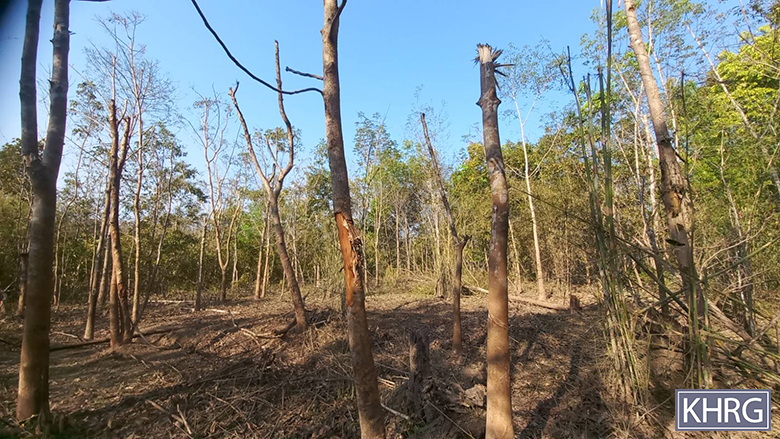
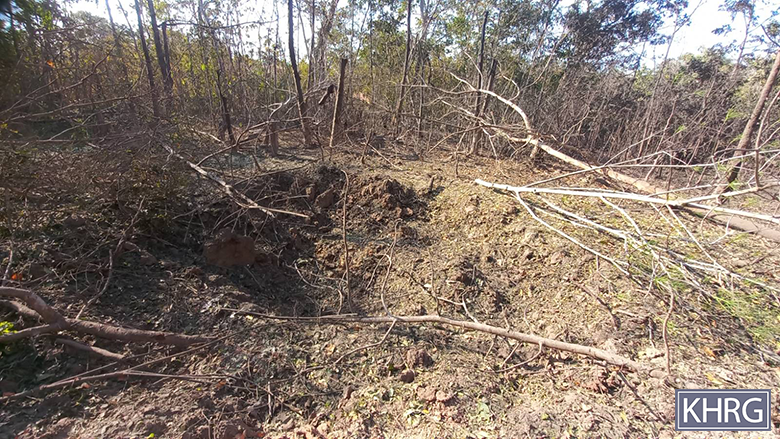
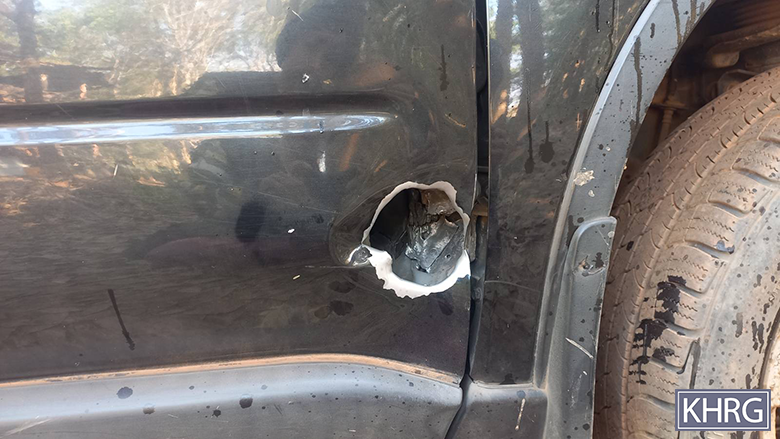
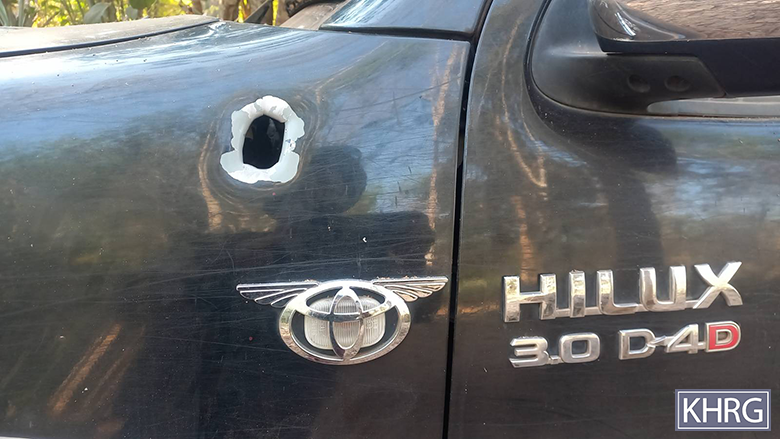
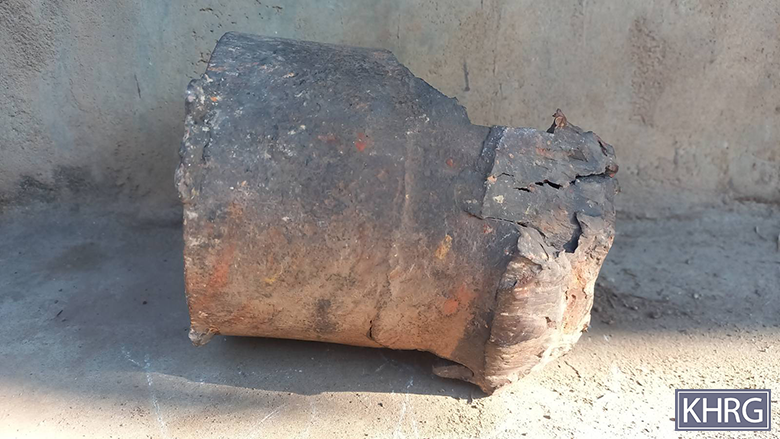
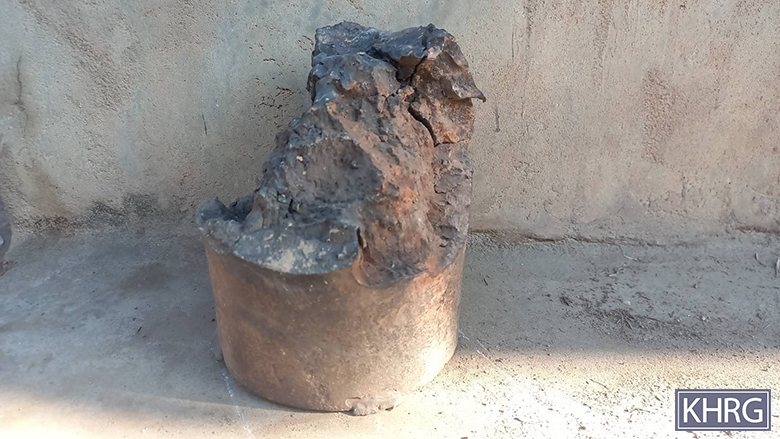


These photos were taken by a KHRG researcher in February 2026, on a rubber plantation owned by Saw H--- in the vicinity of Jv--- village, Ha T’Reh village tract, Hpa-an Township, Doo Tha Htoo District. On 2 February 2026, a Burma Army fighter jet dropped two 200-pounds bombs onto Jv--- village. The bombs landed on a rubber plantation owned by Saw H---. The two photos in the top row show a clinic that was damaged by the shrapnel of the bomb’s explosion. The photos in the second row show rubber trees that were damaged and destroyed by the explosion. The photos in third row show a car owned by a doctor that was damaged. The photos in the last row show the remnants of a bomb. [Photos: KHRG]
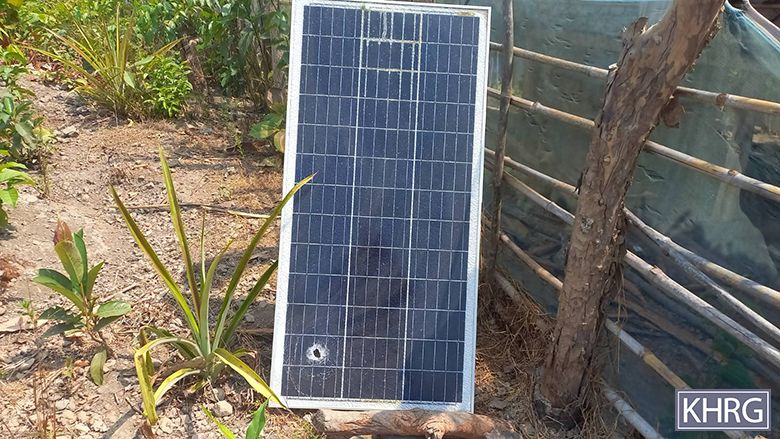
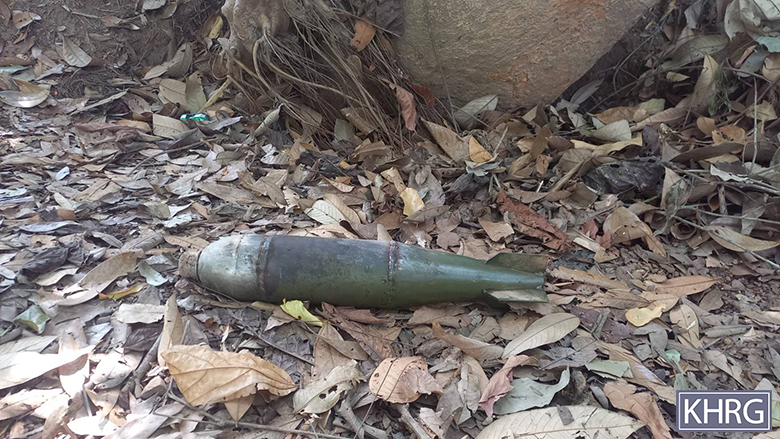
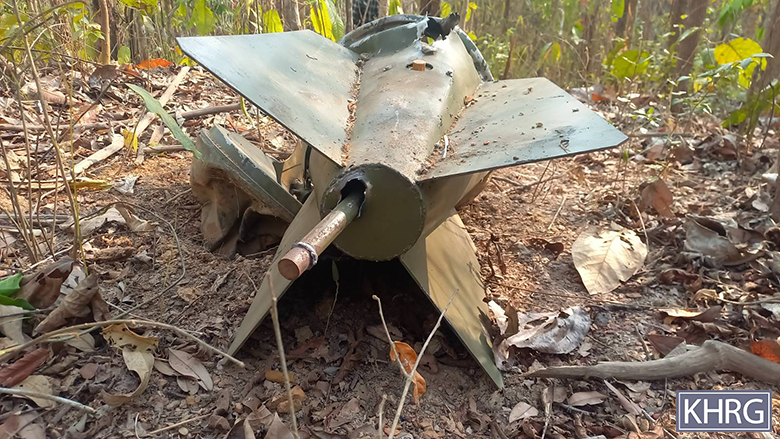
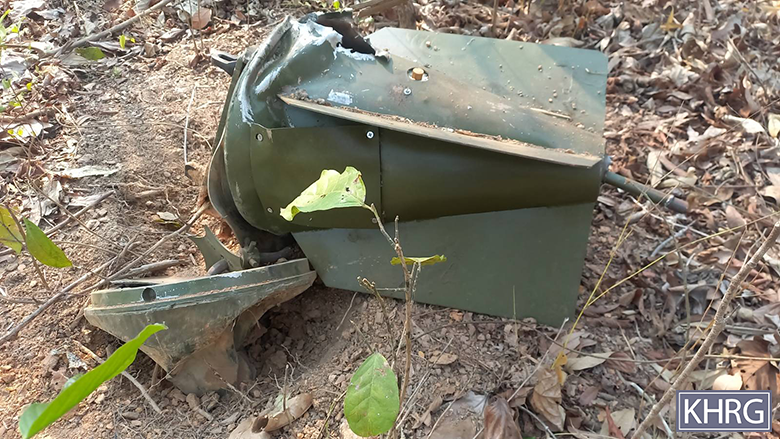
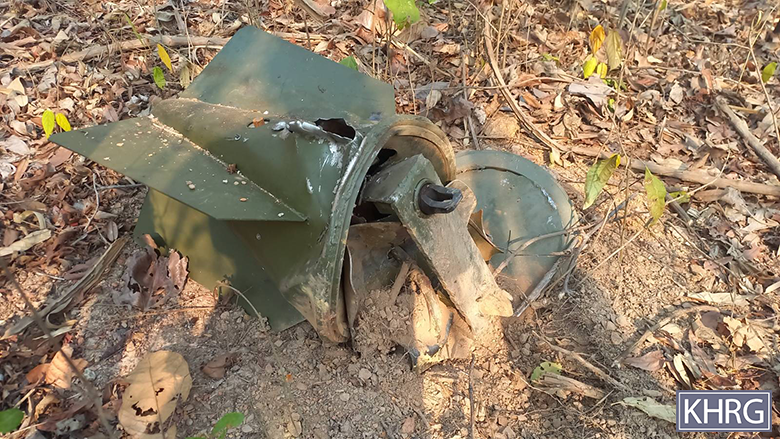


These photos were taken by a KHRG researcher in April 2026, in Zn--- village, Ba Bway Kone village tract, Hpa-an Township, Doo Tha Htoo District. On 16 April 2026, a Burma Army fighter jet dropped bombs onto Zn--- village. The bombs landed in the vicinity of the village. The photo on the top left shows a solar panel owned by Saw Z--- that was damaged by the shrapnel of the explosion. The photo on the top right shows one of the unexploded bombs. The three remaining photos show the remnants of bombs. [Photos: KHRG]
Footnotes:
[1] The present document is based on information received in January, March, April, and May 2026. It was provided by a community member in Doo Tha Htoo District who has been trained by KHRG as a researcher to monitor human rights conditions on the ground. The names of the victims, their photos and the exact locations are censored for security reasons. The parts in square brackets are explanations added by KHRG. This document combines several received reports with the following KHRG internal log numbers: #26-32-D1; #26-67-D1; #26-95-D1; #26-130-D1; #26-32-M1/P1; #26-67-M1/P1; #26-95-M1/P1; and #26-130-M1/P1.
[2] The terms Burma military, Burma Army, SAC, Tatmadaw, and junta are used interchangeably throughout this report to describe the Burma military regime’s armed forces. Villagers themselves commonly use Burma Army, Burmese soldiers, or alternatively the name adopted by the Burma military regime at the time —from the 2021 coup to July 2025, the State Administration Council (SAC). On 31 July 2025, the military junta changed its name to the State Security and Peace Commission (SSPC).
[3] A Light Infantry Battalion (LIB) comprises 500 soldiers. Most Light Infantry Battalions in the Tatmadaw are under-strength with less than 200 soldiers, yet up-to-date information regarding the size of battalions is hard to come by, particularly following the signing of the NCA. LIBs are primarily used for offensive operations, but they are sometimes used for garrison duties.
[4] A Light Infantry Division (LID) of the Tatmadaw is commanded by a brigadier general and consists of ten light infantry battalions specially trained in counter-insurgency, jungle warfare, search and destroy operations against ethnic insurgents. They were first incorporated into the Tatmadaw in 1966. LIDs are organised under three Tactical Operations Commands, commanded by a colonel, three battalions each and one reserve, one field artillery battalion, one armoured squadron and other support units. Each division is directly under the command of the Chief of Staff (Army).
[5] A village tract is an administrative unit of between five and 20 villages in a local area, often centred on a large village.
[6] ‘Naw’ is a S’gaw Karen female honorific title used before a person’s name.
[7] ‘Saw’ is a S’gaw Karen male honorific title used before a person’s name.
[8] The State Security and Peace Commission (SSPC) is the new name of the executive governing body created in the aftermath of the 1 February 2021 military coup. Formerly called the State Administration Council (SAC), it was renamed by Senior General Min Aung Hlaing on 31 July 2025.The chairperson serves as the de facto head of government of Burma/Myanmar and leads the Military Cabinet of Myanmar, the executive branch of the government. Min Aung Hlaing assumed the role of SAC chairperson following the coup and remained the head of the SSPC. The name State Security and Peace Commission (SSPC) is used interchangeably with military junta and Burma military regime.
[9] The Karen Department of Health and Welfare (KDHW) is the health department of the Karen National Union. It was established in 1956 to address the lack of public healthcare resources in rural Southeast Myanmar. It currently operates a network of community-based clinics in the region, but its capabilities remain limited due to funding constraints.
[10] A viss is a unit of weight equivalent to 1.6 kg or 3.52 lb.
[11] All conversion estimates for the kyat are based on the 13 July 2026 mid-market exchange rate of 1 USD to 2,100 MMK (taken from wise.com/gb/currency-converter/mmk-to-usd-rate)
 Print: