
 English
 ကညီကျိာ်
 မြန်မာ
 Print:
This Photo Set presents photographic evidence of various human rights violations primarily committed by the Burma Army in Southeast Burma from January to June 2026. Karen Human Rights Group (KHRG) received 1,701 photographs displaying the impacts of various human rights violations committed during the reporting period. The photographs of these violations cover air strikes, drone strikes, shelling, landmines, shoot-on-sight tactics, arbitrary arrests, and more. In parallel with the second and third phases of the Burma military regime’s undemocratic election in 2026, the Burma Army-perpetrated human rights violations escalated significantly between January and June 2026. KHRG’s documentation indicates that air strikes, drone strikes, and shelling have intensified in Southeast Burma, resulting in injuries; fatalities; destruction of homes, plantations and community infrastructure; and the widespread displacement of villagers. With the Burma Army forces militarising and the increasing deployment of ground troops throughout much of the region in 2026, local villagers were increasingly subjected to arrest, killing, torture, forced portering, forced navigation, forced recruitment, and enforced disappearance. These human rights violations, largely committed by the Burma Army, have caused local villagers to live in constant fear, while displacement has left them facing insecurity and limited access to essential services such as healthcare, education, and livelihoods.
Photo Set: Human rights violations committed by the Burma Army have resulted in injuries, deaths, destruction, loss of property, and displacement in Southeast Burma (January to June 2026)
In 2026, concurrent with and following the second and third phases of the undemocratic general elections[1] organised by the Burma military regime,[2] human rights violations perpetrated by the Burma Army intensified in Southeast Burma. Between January and June 2026,[3] these violations primarily consisted of air strikes and artillery shelling against local villagers, which often result in many civilian fatalities and injuries.[4] Civilians’ homes, plantations, and community infrastructure, including schools, monasteries, and churches, were destroyed, and displacement increased substantially.[5] During these attacks, the Burma Army increasingly deployed fighter jets, drones, paramotors, and suicide drones, and used a wide range of weapons, including 300- to 500-pound bombs, cluster bombs, mortars of various sizes, and machine guns, causing more destruction, injuries, and deaths across the seven districts of locally-defined Karen State[6]: Doo Tha Htoo (Thaton), Taw Oo (Toungoo), Kler Lwee Htoo (Nyaunglebin), Mergui-Tavoy, Mu Traw (Hpapun), Dooplaya, and Hpa-an.[7]
In the reporting period from January to June 2026, Karen Human Rights Group (KHRG) documented 56 air strikes, 26 drone strikes, 44 shelling incidents, and three landmine incidents in Southeast Burma. As a result of Burma Army air strikes, drone attacks, and shelling, 22 children (ten boys, 11 girls, one unknown) were killed and at least 25 children (ten boys, 15 girls) were injured. Among adults, 44 individuals (18 men, 25 women, one unknown) were killed and at least 102 individuals (39 men, 48 women, 15 unknown) were injured. In addition, eight schools, ten monasteries, five churches, and many houses were destroyed or damaged. During Burma Army military operations, local villagers were subjected to arrest, killing, torture, forced portering, forced navigation, forced recruitment, and enforced disappearance. KHRG documented 15 incidents of arbitrary arrest or deprivation of liberty perpetrated primarily by the Burma Army, but also by the Karen National Liberation Army (KNLA)[8] and Democratic Karen Benevolent Army (DKBA),[9] during the reporting period. KHRG also documented three incidents of shoot-on-sight in which 11 villagers were killed by the Burma Army and KNLA. Furthermore, one man was injured and two men were killed in landmine explosions.
Although some villagers occasionally received prior warnings from local Karen National Union (KNU)[10] authorities about imminent Burma Army attacks or impending fighting, in many cases, local KNU authorities could not provide warnings because the incidents occurred suddenly and without prior indication. Consequently, communities were compelled to remain constantly vigilant against Burma Army attacks and endure a persistent state of fear. As a result of widespread human rights violations, including indiscriminate and deliberate targeting of villages and community infrastructure, large numbers of villagers in Southeast Burma have fled their homes, seeking refuge in forests, caves, other towns, and border areas.
This photo set includes 76 photographs, selected from a total of 1,701 photographs received for the reporting period, documenting the impacts of widespread human rights violations in Southeast Burma following the Burma military regime’s elections and subsequent continuous attacks. 59 of the included photographs were taken by local community members trained by KHRG as researchers to monitor human rights conditions in their areas, and 17 were taken by local villagers and authorities. The photos show casualties, destruction, displacement, and the different types of weapons used by the Burma Army during air strikes, shelling, and military operations. The names of the victims, their photos, and the exact locations are censored for security and sensitivity reasons.
Further background reading on the situation on human rights abuses in Southeast Burma/Myanmar since January 2026 can be found in the following KHRG reports:
- “Dooplaya District Situation Update: Challenges related to livelihood, education, healthcare, militarisation, displacement, travel restrictions, and drug issues in Waw Ray Township (January to March 2026)”, July 2026.
- “Taw Oo District Situation Update: Burma Army activities caused livelihood, fuel, education, and healthcare challenges in Htaw Ta Htoo Township (January to March 2026)”, July 2026.
- “Kler Lwee Htoo District Incident Report: Burma Army ground operations, air strikes, and shelling killed at least 31 villagers including 15 children, injured many others, and caused extensive property destruction and displacement in Ler Doh Township (March 2026)”, July 2026.
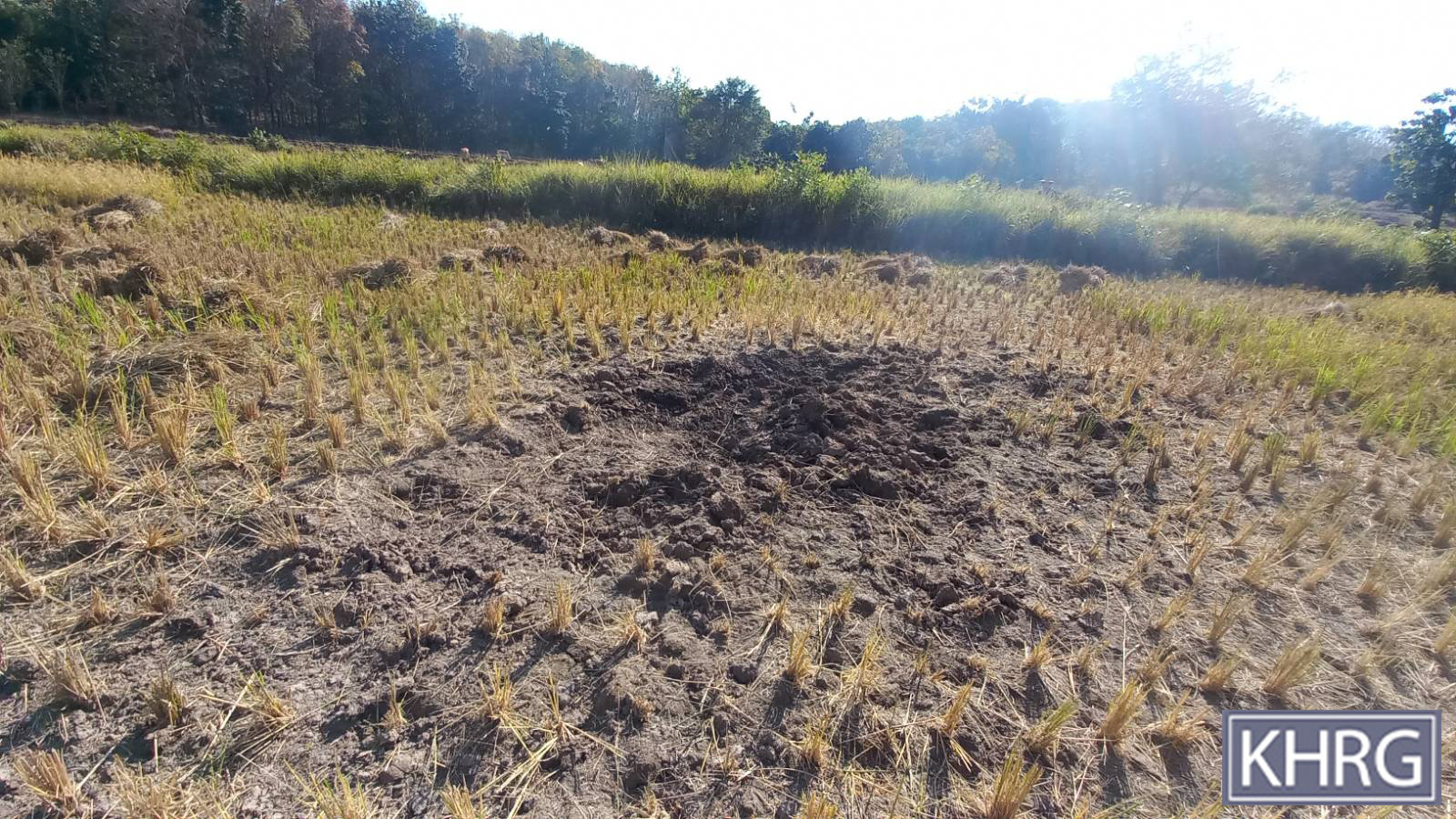
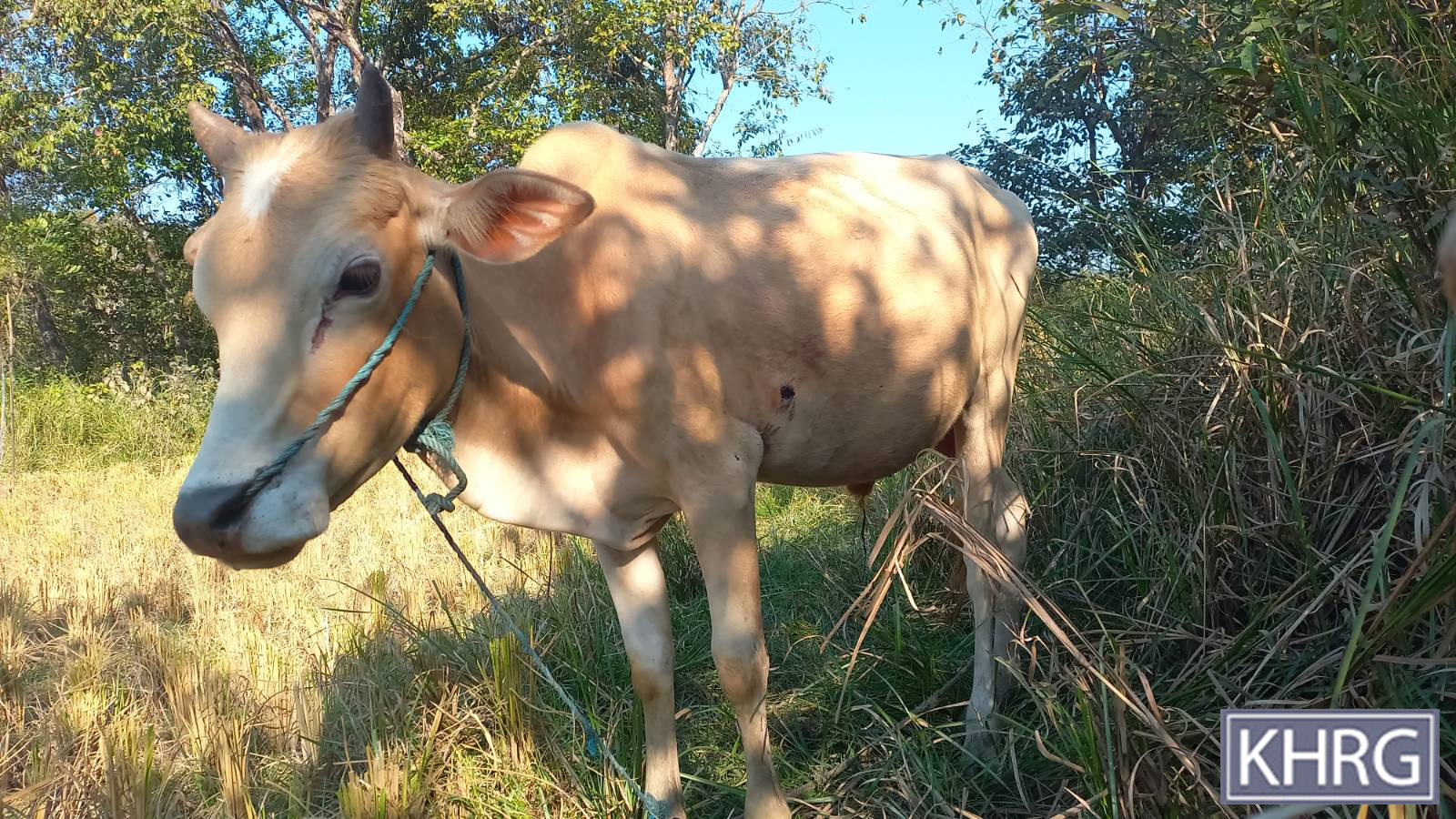


These photos were taken in January 2026 in a paddy field, located in Aa--- village, Noh M’Kweeh village tract,[11] Hpa-an Township, Doo Tha Htoo (Thaton) District. On 12 January 2026 at 4:16 pm, Burma Army Light Infantry Battalion (LIB)[12] #202 under Light Infantry Division (LID)[13] #22, based at Taung K’Lay army camp, indiscriminately shelled Aa--- village. The photo on the left shows a 122 mm mortar shell that landed and exploded in a paddy field near Aa--- village. The paddy field is owned by 88-year-old Naw[14] A--- from Ab--- village, Noh M’Kweeh village tract. As Naw A--- is 88 years old, she cannot work on the farm anymore. Therefore, her 69-year-old nephew, Saw[15] B---, works on the farm for her. Saw B--- was harvesting paddy when the mortar shell landed on the farm. The shrapnel of the mortar shell scattered around the surrounding area. Even though Saw B--- was not hit by the shrapnel of the mortar shell, he was hit by hard mud on his back. The photo on the right shows Saw B---’s cow that was hit and injured by the shrapnel of the mortar shell. [Photos: KHRG]
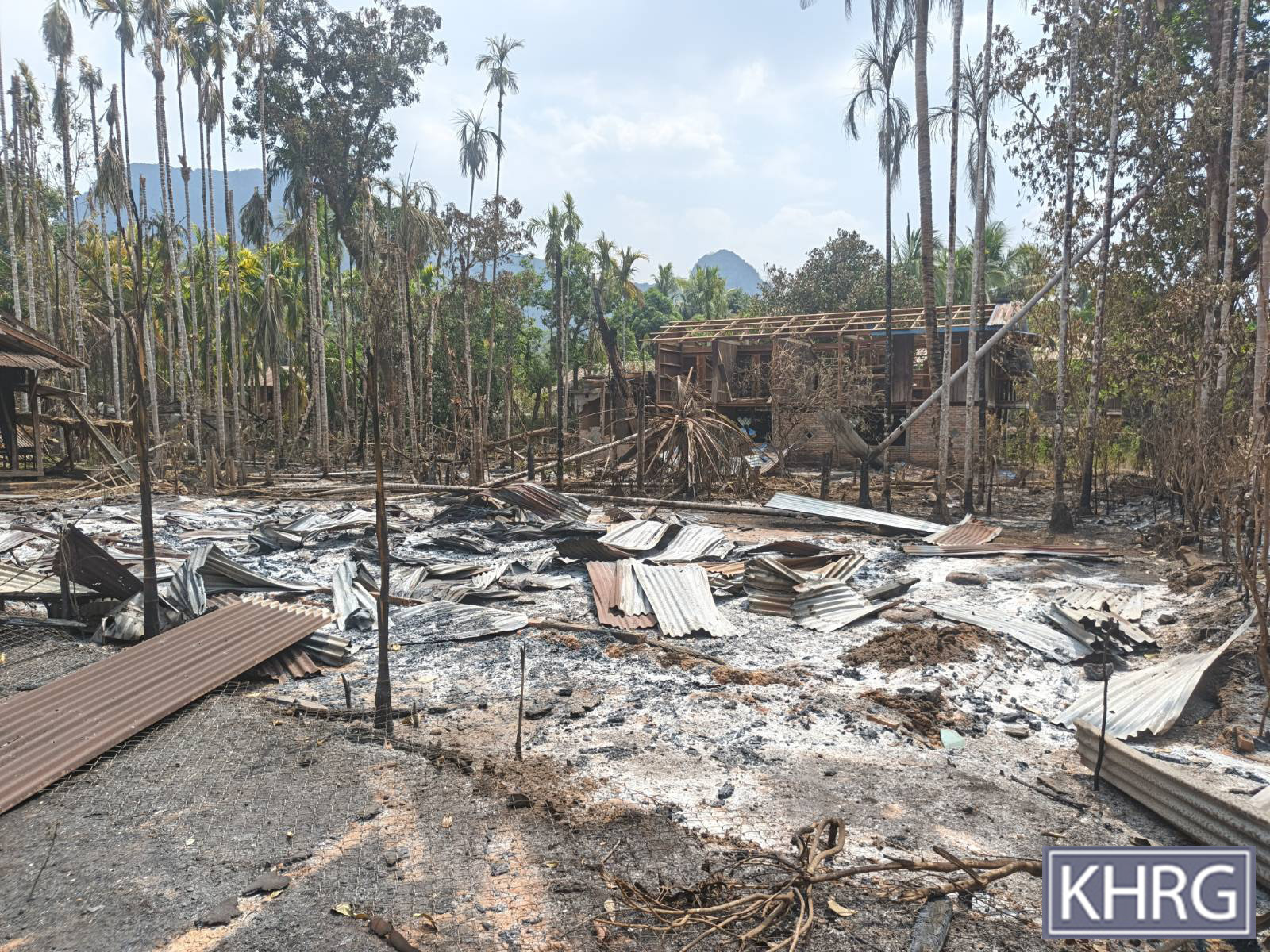
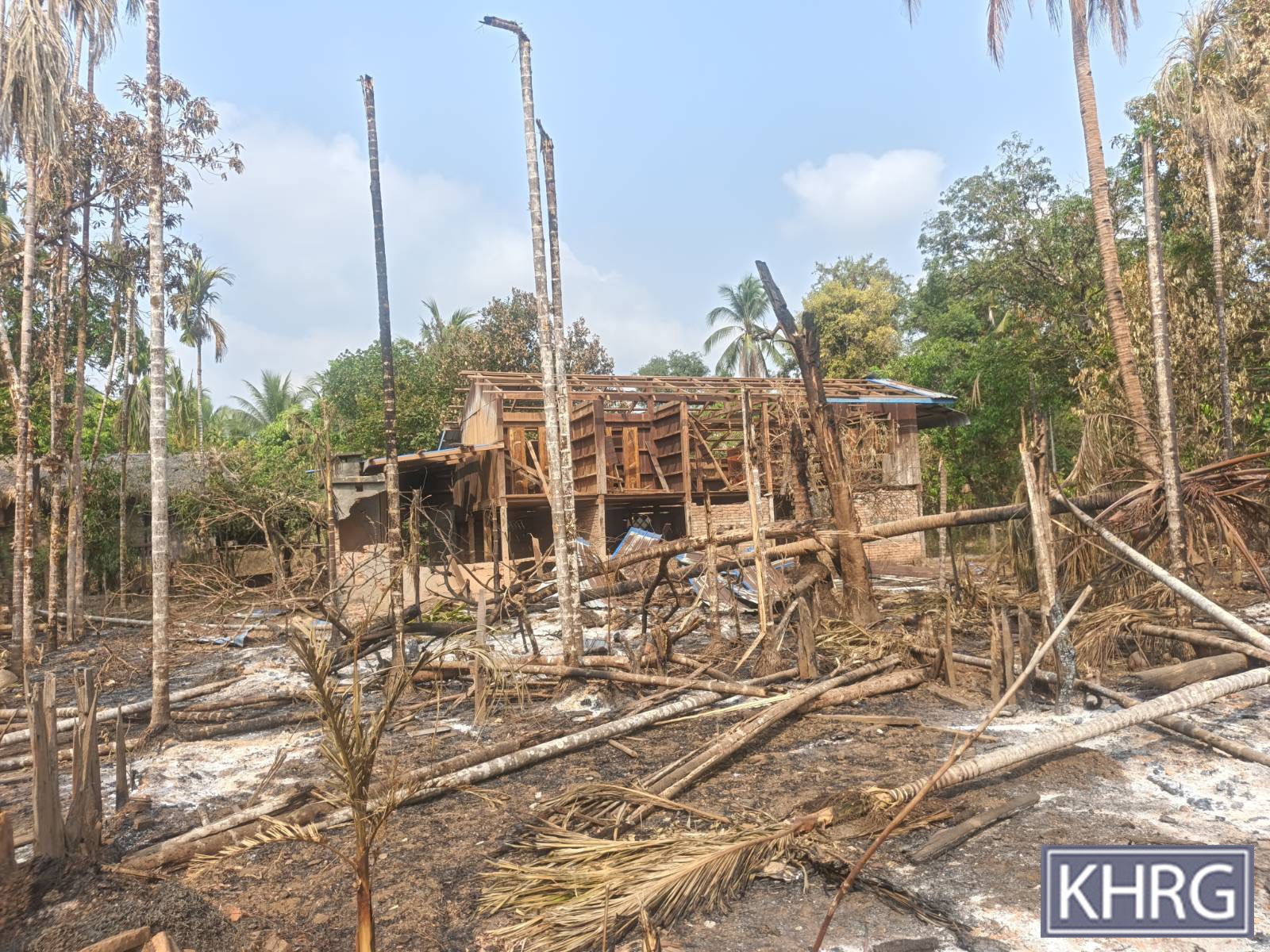
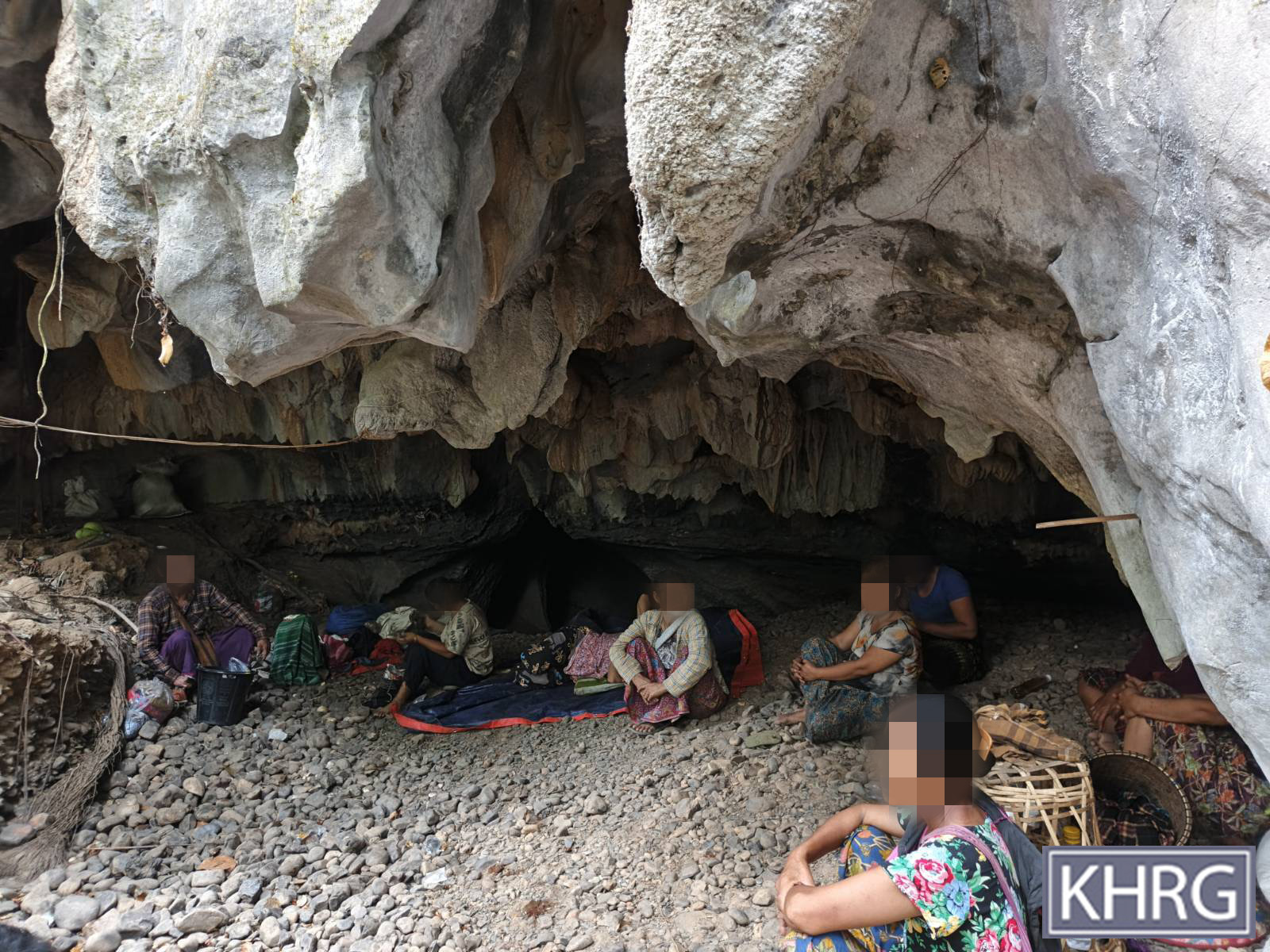
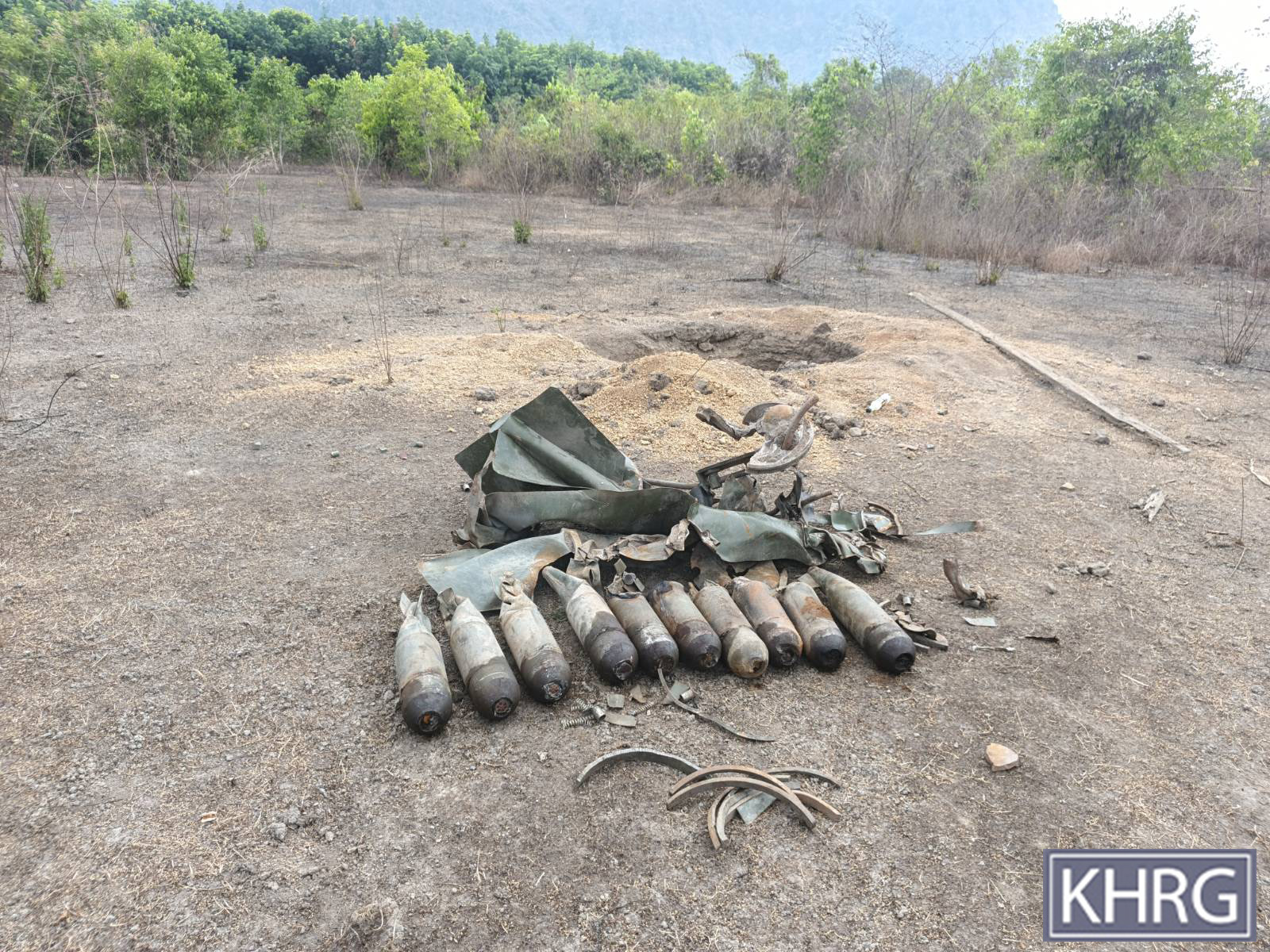


These photos were taken in April 2026 in Ac--- village, P’Yah Raw village tract, Bilin Township, Doo Tha Htoo District. From 2 April 2026 until 12 April 2026, following an attack of Lay Kay army camp by the KNLA and People’s Defence Force (PDF),[16] clashes occurred between the combined forces of the KNLA and PDF and Burma Army LIB #409 under the Military Operation Command (MOC)[17] #8. The Burma Army also carried out numerous daily air strikes on Ac--- village. In these air strikes, the Burma Army dropped more than ten 500-pound-bombs by fighter jet, as well as dropping over 100 mortar shells with a calibre of 120 mm by Y-12 aircraft. Due to the air strikes, more than 50 houses, as well as shops, a monastery, a dining hall, an ordination hall, and a school building were destroyed. The air strike and shelling also destroyed many rubber plantations. The two photos on the top show the destruction of villagers’ houses in Ac--- village. The bottom-left photo shows displaced villagers from Ac--- village taking refuge in the cave. The bottom-right photo shows fragments of exploded and unexploded mortars that landed in Ac--- village. Before the combined forces began the operation of occupying the Lay Kay army camp, villagers all displaced to rivers, the mountains, farm huts, caves, and hill farm huts. Some villagers were unable to bring their household items, food, and other properties. Thus, displaced villagers faced difficulties in accessing shelter, food, and medicine, with the rainy season compounding challenges. As of July 2026, the villagers did not dare to go back to live in the village and remained displaced. [Photos: KHRG]
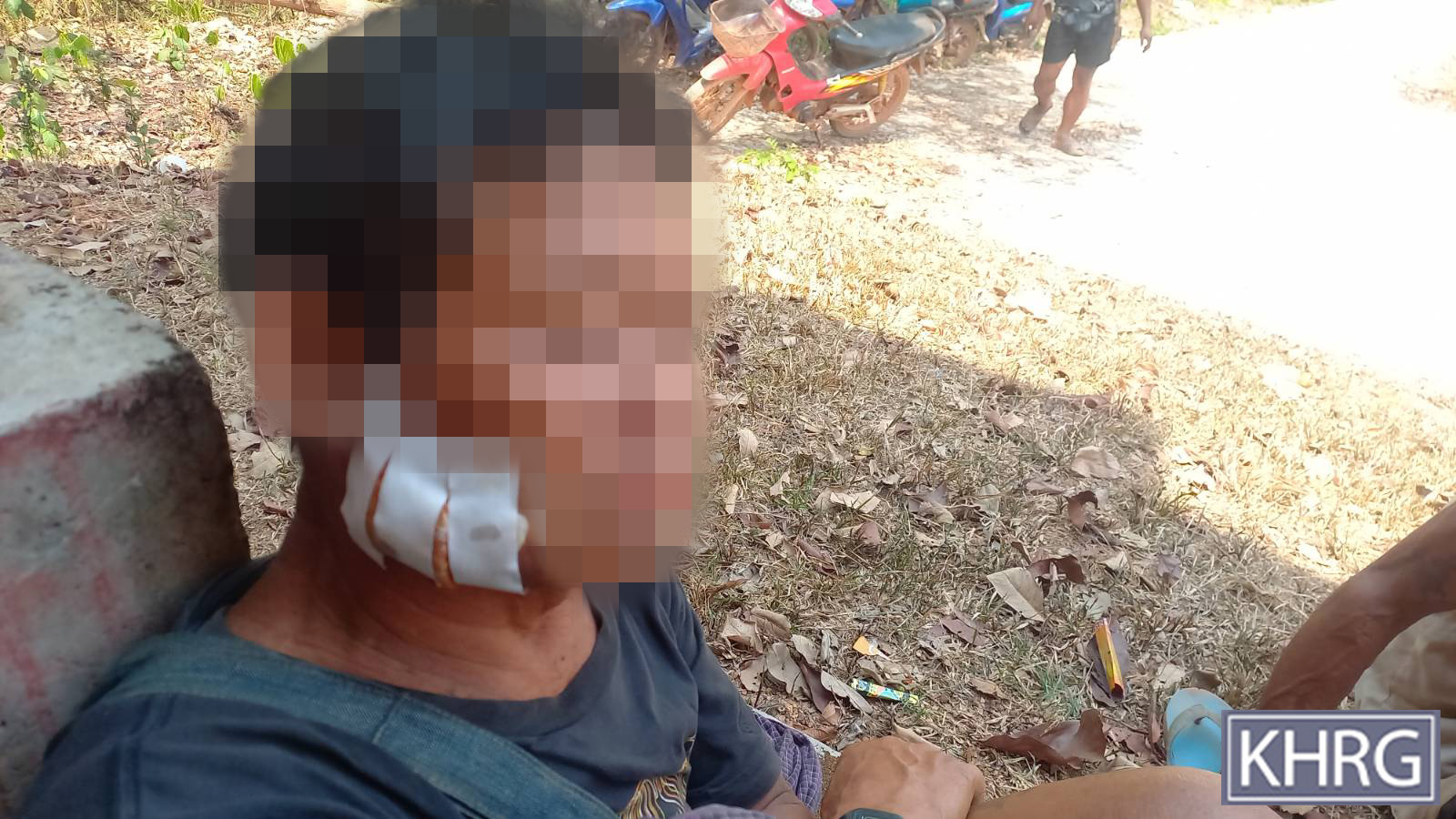
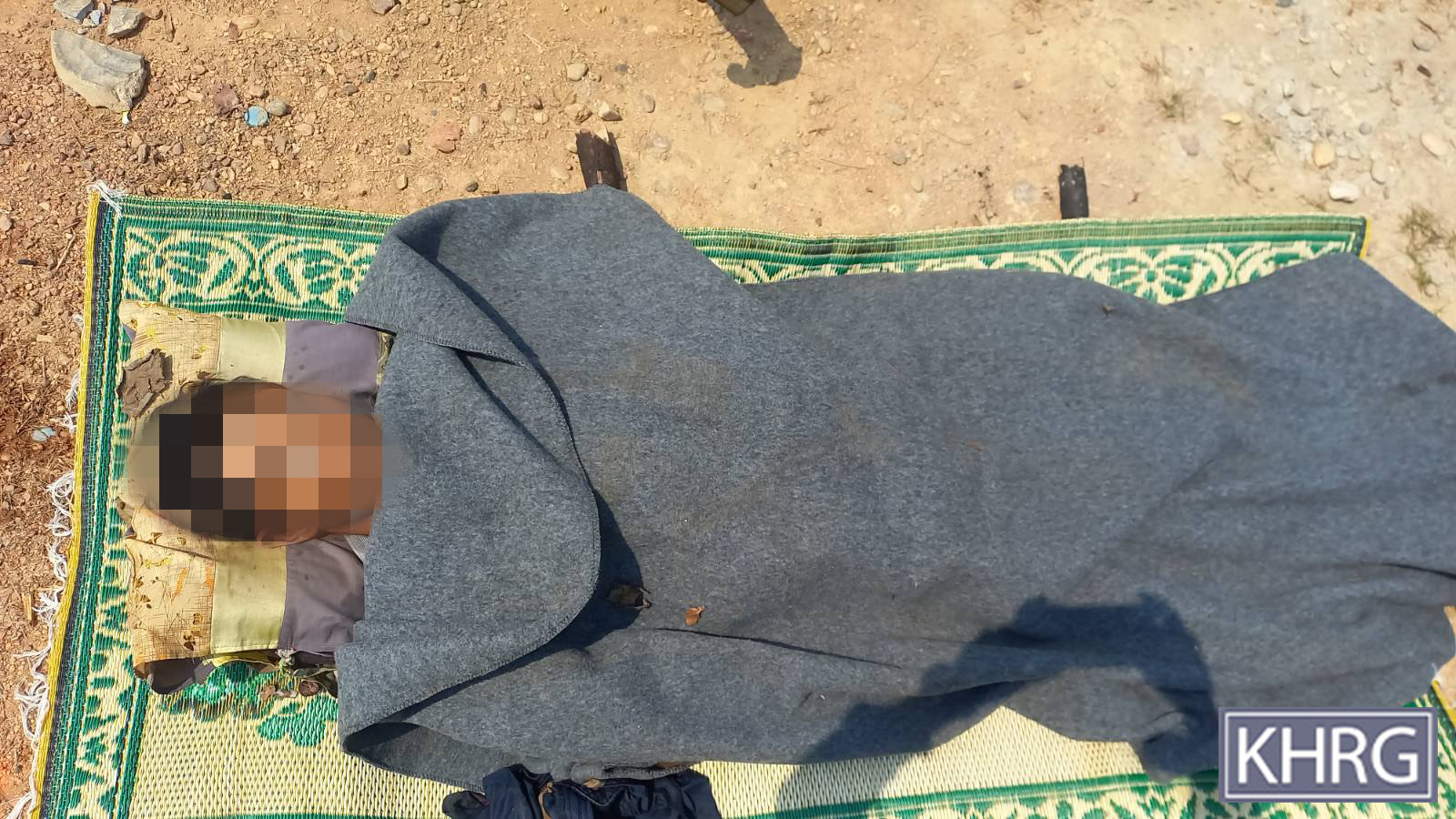
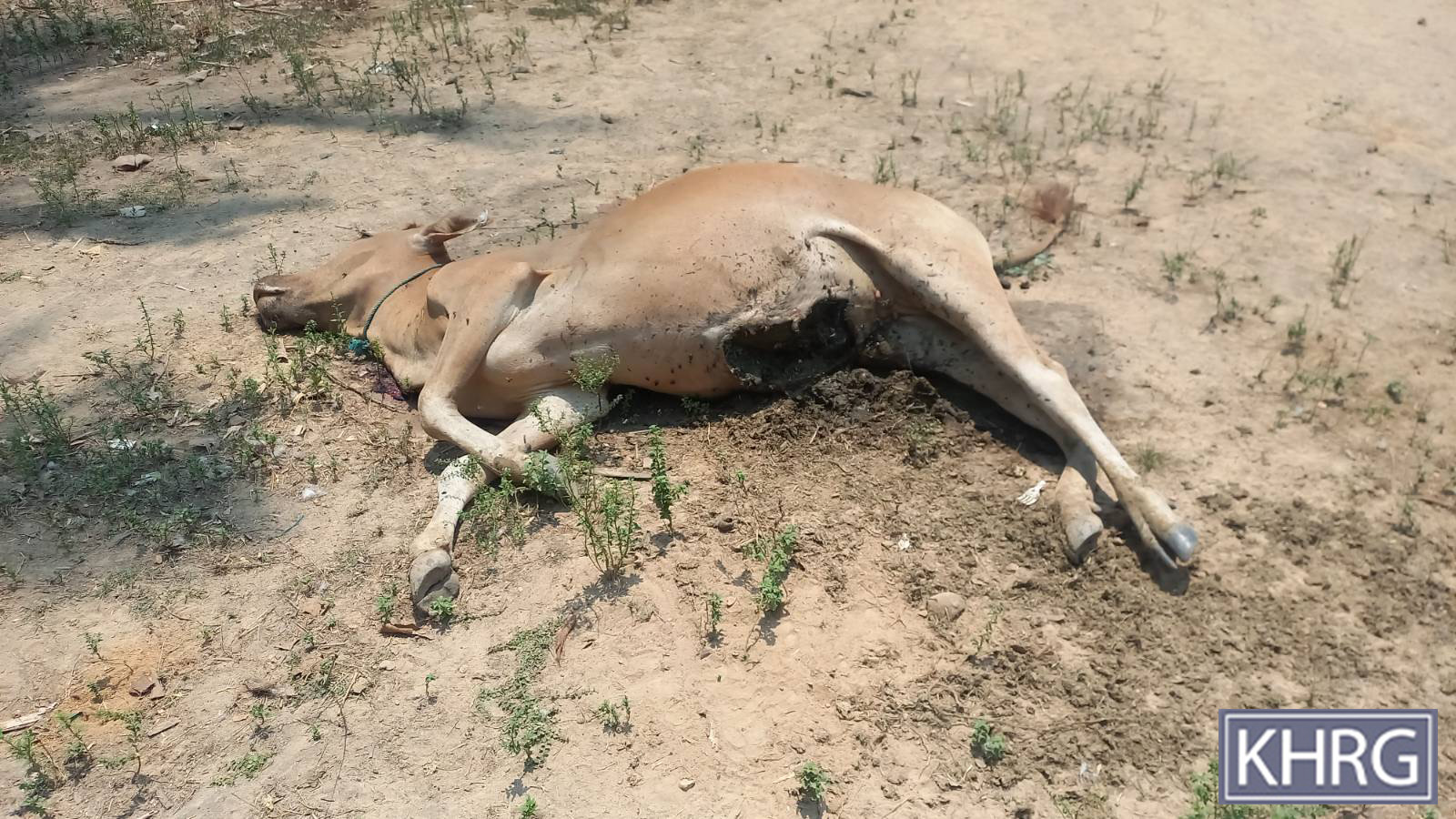


These photos were taken in April 2026 in Ad--- village, Ha T’Reh village tract, Hpa-an Township, Doo Tha Htoo District. On 12 April 2026, a Burma Army Y-12 fighter jet carried out an air strike on Ad--- village. One bomb exploded in front of Saw C---’s house, while another detonated behind Saw D---’s house. The air strike killed Saw C--- and injured Saw E---. Additionally, the blast behind Saw D---’s house damaged several homes, and the explosion in front of Saw C---’s house destroyed houses and killed livestock. The top-left photo shows Saw E---, who sustained injuries to both cheeks, and the top-right photo shows Saw C---, who was killed instantly by the blast. The bottom-left photo depicts a cow killed in the explosion. In total, 15 houses were damaged in the attack, leaving villagers fearful and constantly on alert. [Photos: KHRG]
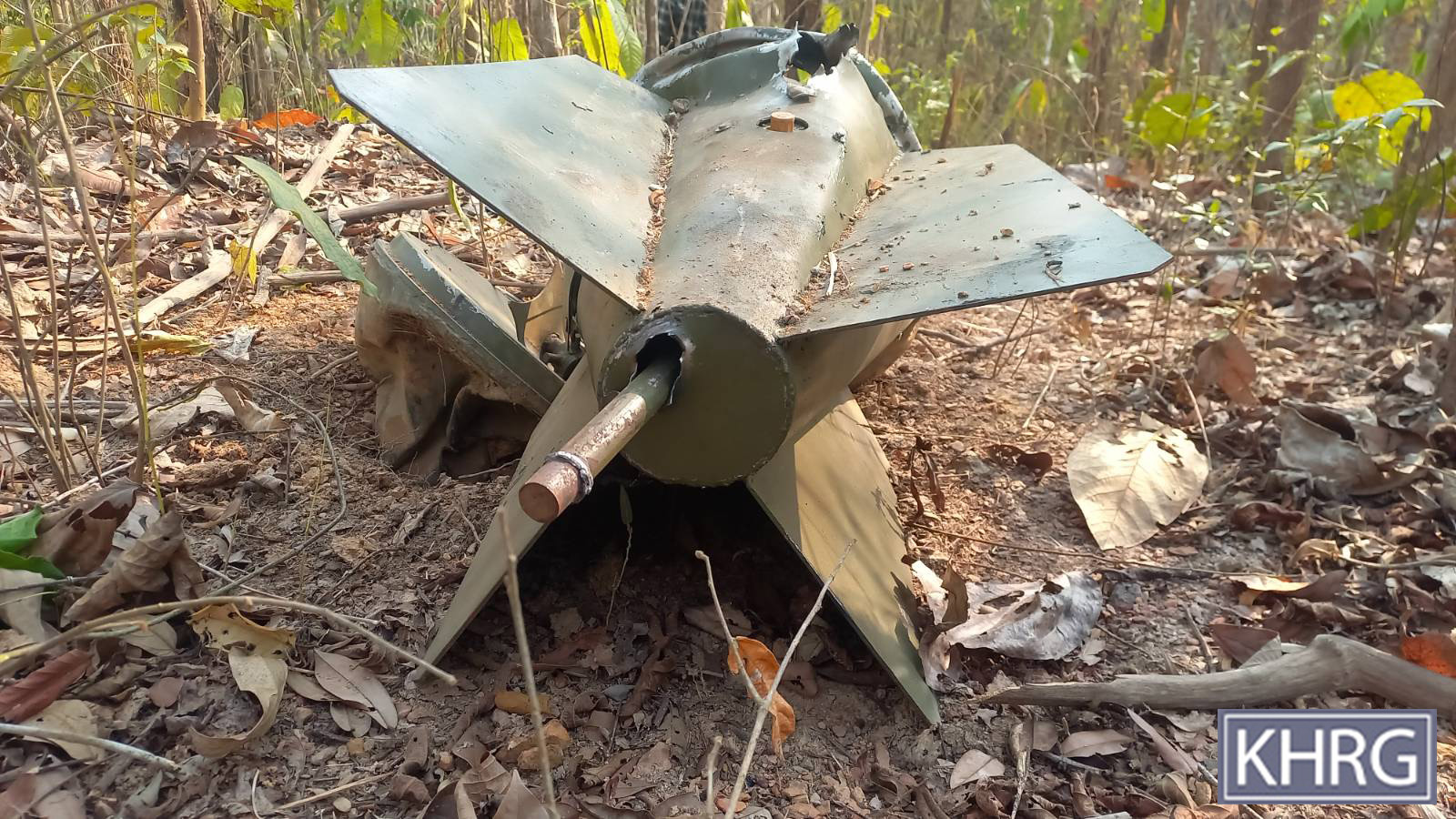
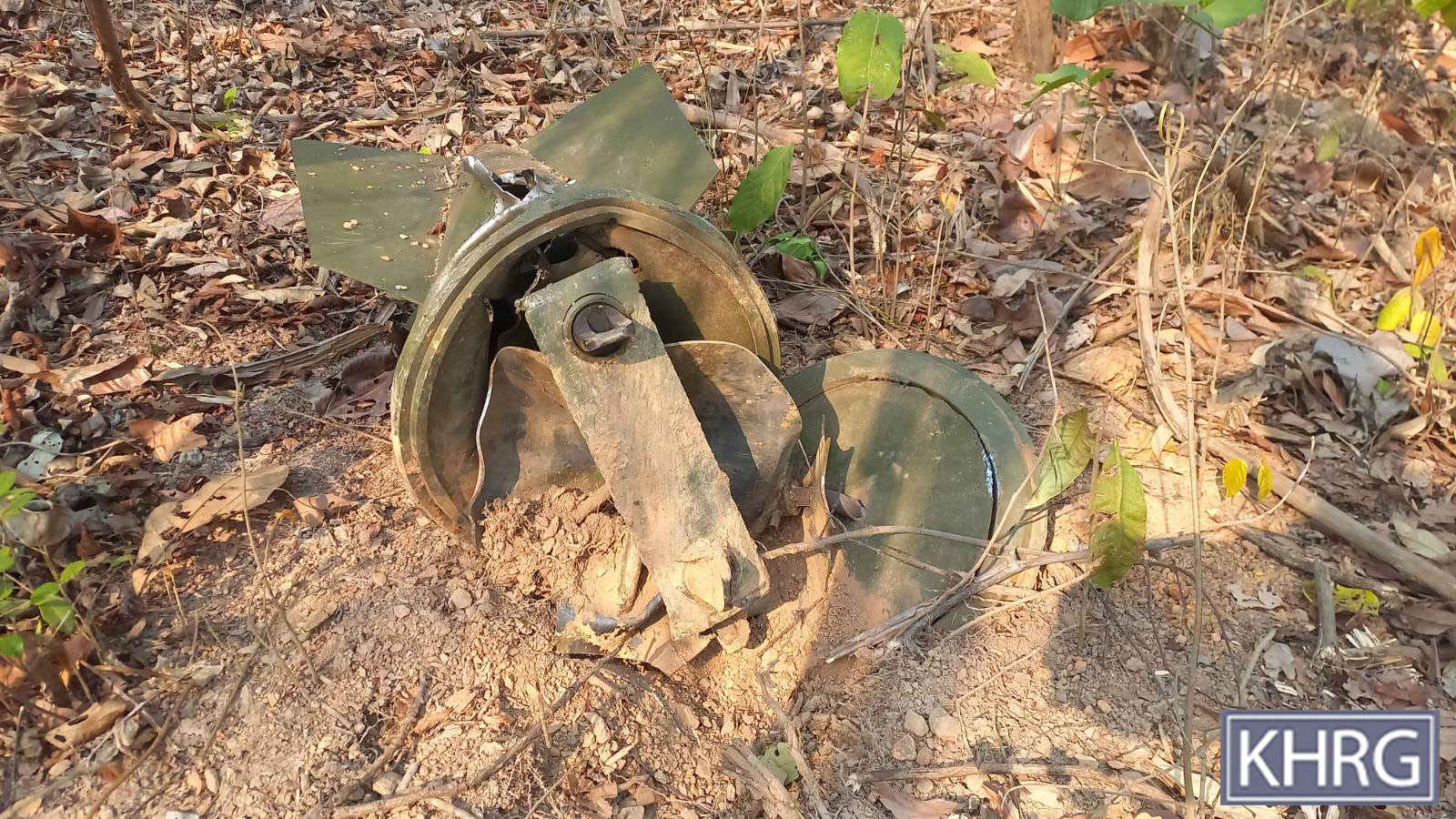


These photos were taken in April 2026 close to Ae--- village, Noh M’Kweeh village tract, Hpa-an Township, Doo Tha Htoo District. On 16 April 2026, at 4:50 pm, a Burma Army fighter jet conducted air strikes into Ae--- village, dropping six bombs onto the village. The photo on the left shows the tail of an exploded bomb and the photo on the right shows an unexploded bomb that landed inside an Ae--- villager’s rubber plantation. During the first air strike, the fighter jet dropped three bombs. Two exploded, causing damage to villagers’ property and belongings, while the third remained unexploded. After the first attack, the aircraft dropped three more bombs on Ae--- village and fired machine guns from the aircraft. The bombs landed in and around villagers’ rubber plantations, and the attack damaged hundreds of rubber plants. A few minutes after the Burma Army aircraft dropped bombs, LIB #202 soldiers also fired seven 122 mm mortar shells into Ae--- village, causing additional damage to houses and rubber plantations. Due to the air strikes and mortar shelling, all of the villagers from Ae--- village displaced. Villagers remained anxious about the ongoing threat of air strikes and shelling. They also feared that the Burma Army may carry out further military offensives. [Photos: KHRG]
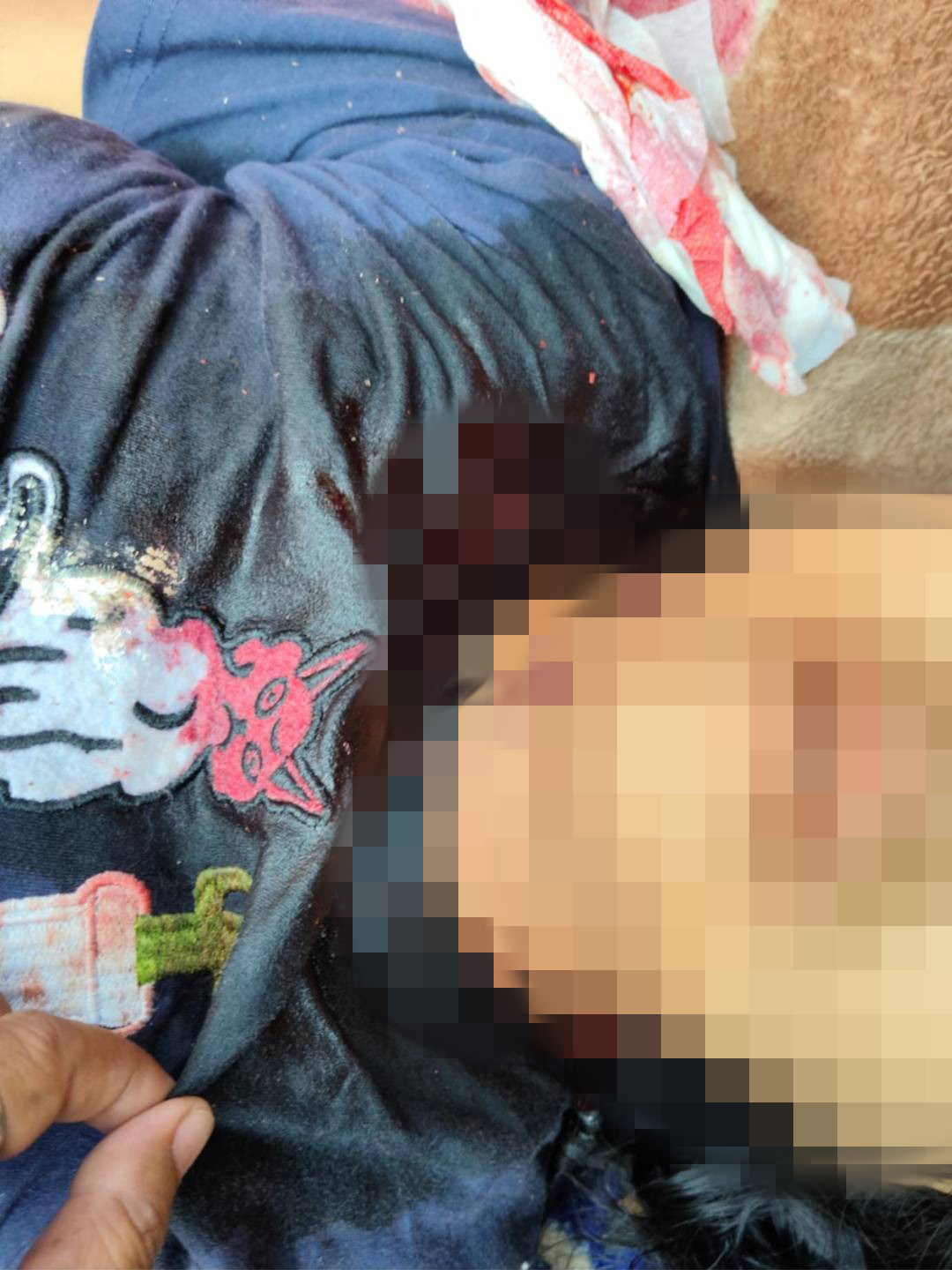
This photo was received on 3 February 2026 from a local villager from Af--- village, P’Shaw Loh village tract, Daw Hpah Hkoh (Thandaunggyi) Township, Taw Oo (Toungoo) District. On 3 February 2026, at 10:30 am, Burma Army Infantry Battalion (IB)[18] #26, based at Hto Bo Gyi Road, located in P’Shaw Loh village tract, fired two 60 mm mortar shells into Af--- village, killing one villager. The photo shows the body of Naw F---, the 38-year-old mother of three who was hit and subsequently killed by mortar shell shrapnel after two mortar shells exploded near her house. During the explosion, she attempted to run into a bunker but was struck in the throat and died instantly.[19] [Photo: Local villager]
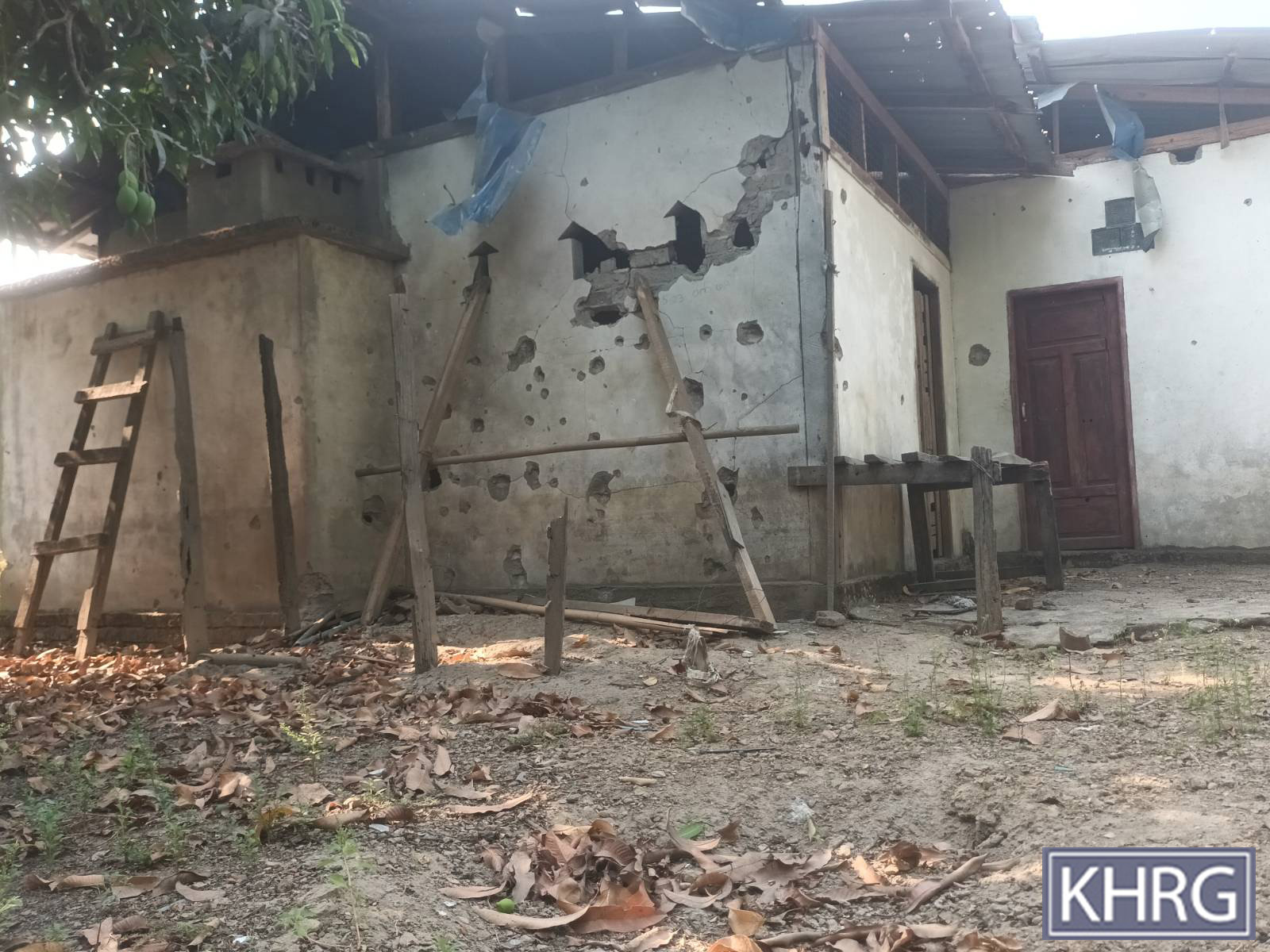
This photo was taken in March 2026 in Ag--- village, Zayat Gyi Taung Chan village tract, Htaw Ta Htoo (Htantabin) Township, Taw Oo District. On 9 January 2026, at 2:30 pm, Burma Army IB #73, based at Zayat Gyi army camp, fired two 120 mm mortar shells into Ag--- village. The photo shows a house that was damaged by the shelling. [Photo: KHRG]
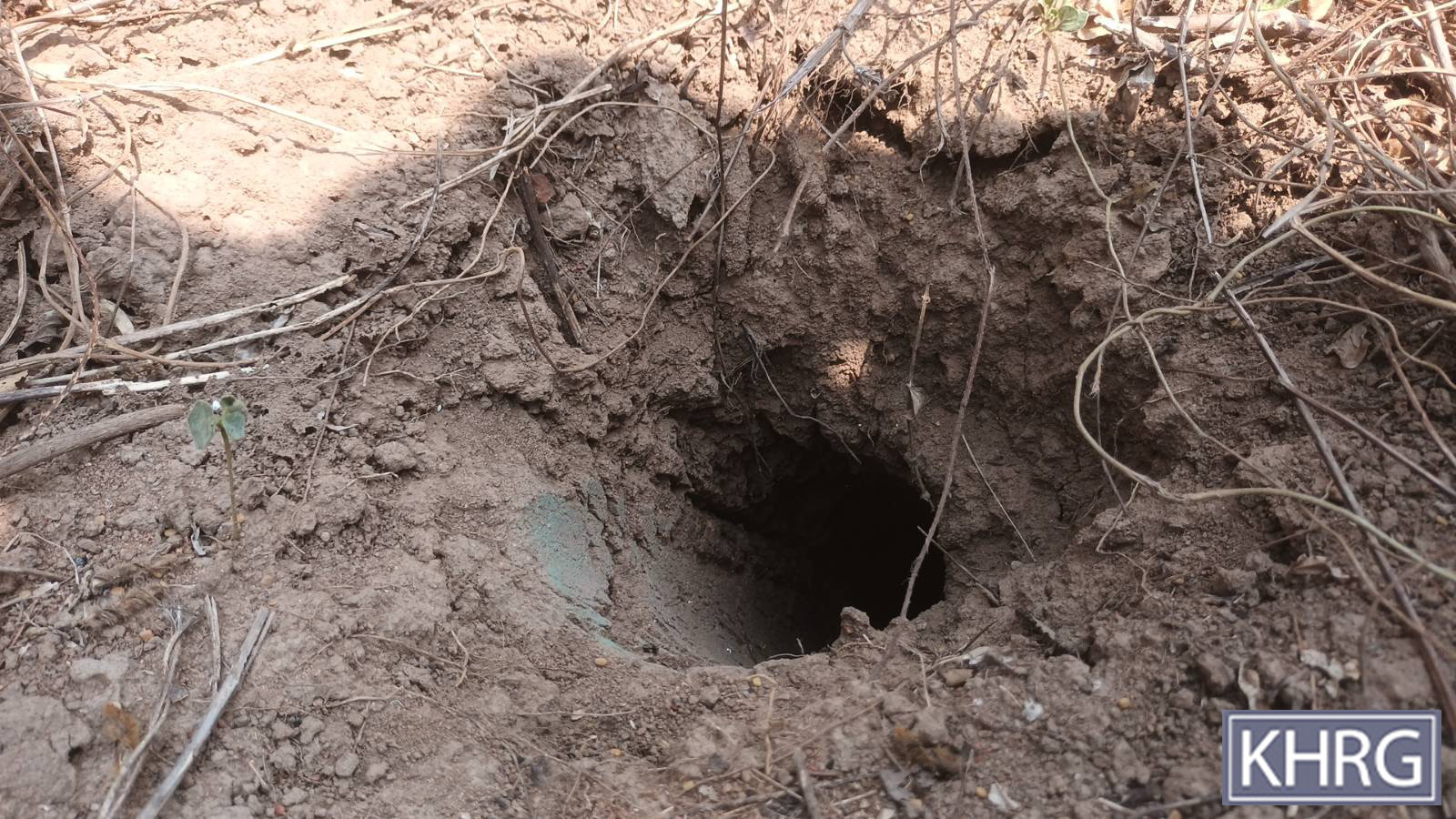
This photo was taken in March 2026, next to Ah--- village, near a displacement site in Zayat Gyi Taung Chan village tract, Htaw Ta Htoo Township, Taw Oo District. Previously, on 10 October 2025, Burma Army IB #73, based at Zayat Gyi army camp, conducted shelling towards Ah--- village, firing two Howitzer shells. The first shell landed and exploded in a forest further away from Ah--- village. The second shell landed near displacement shelters next to Ah--- village and remained unexploded. The photo shows the crater of the unexploded Howitzer shell, which drilled over three feet into ground softened by the rainy season and remained unexploded. In 2026, as the hot season began and the heat increased, the earth hardened, causing villagers to worry that the shell might explode. Local authorities were still trying to remove the shell as of March 2026. [Photo: KHRG]
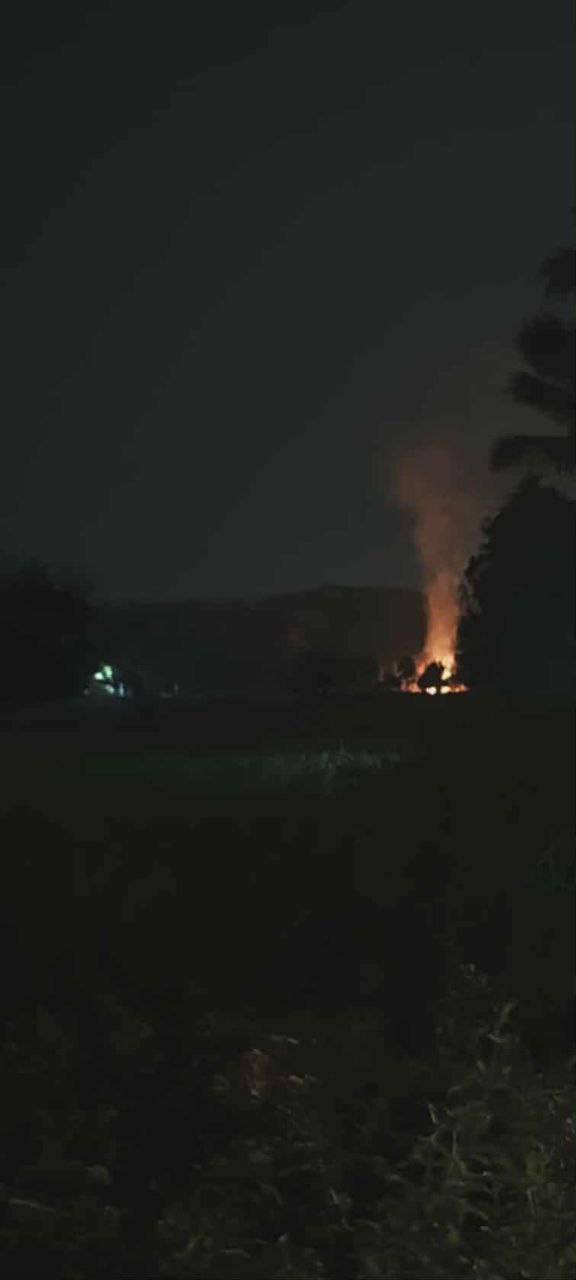
This photo was received from a local villager who lives in Ai--- village, Day Loh area, Htaw Ta Htoo Township, Taw Oo District, on 3 March 2026. The photo shows villagers’ houses burning after Burma Army soldiers from Hset Thon Maing (13 miles) set three houses on fire in February 2026. The attack on villagers’ homes came after Burma Army soldiers were attacked by the PDF near a school in Ai--- village, while they were traveling toward Hkon Na Maing (7 miles) with trucks and villagers’ cars. One brick house owned by U[20] G--- could not be burned, so the soldiers took belongings from the house and set them on fire outside. Later, at around 7 pm, the Burma Army fired seven shells towards Ai--- village. All shells landed and exploded outside the village, causing no injuries. Nevertheless, the villagers remained in fear. [Photo: Local villager]
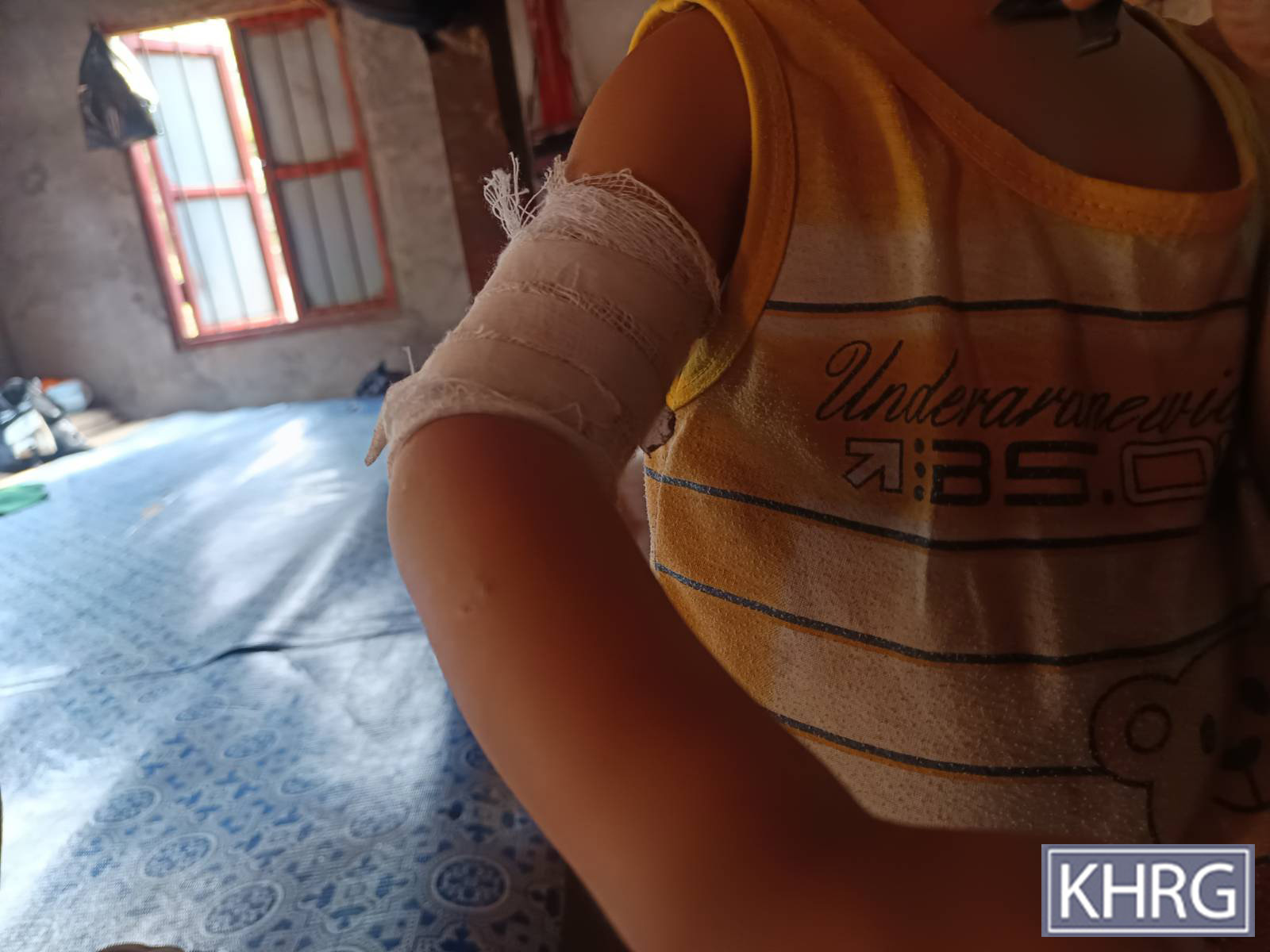
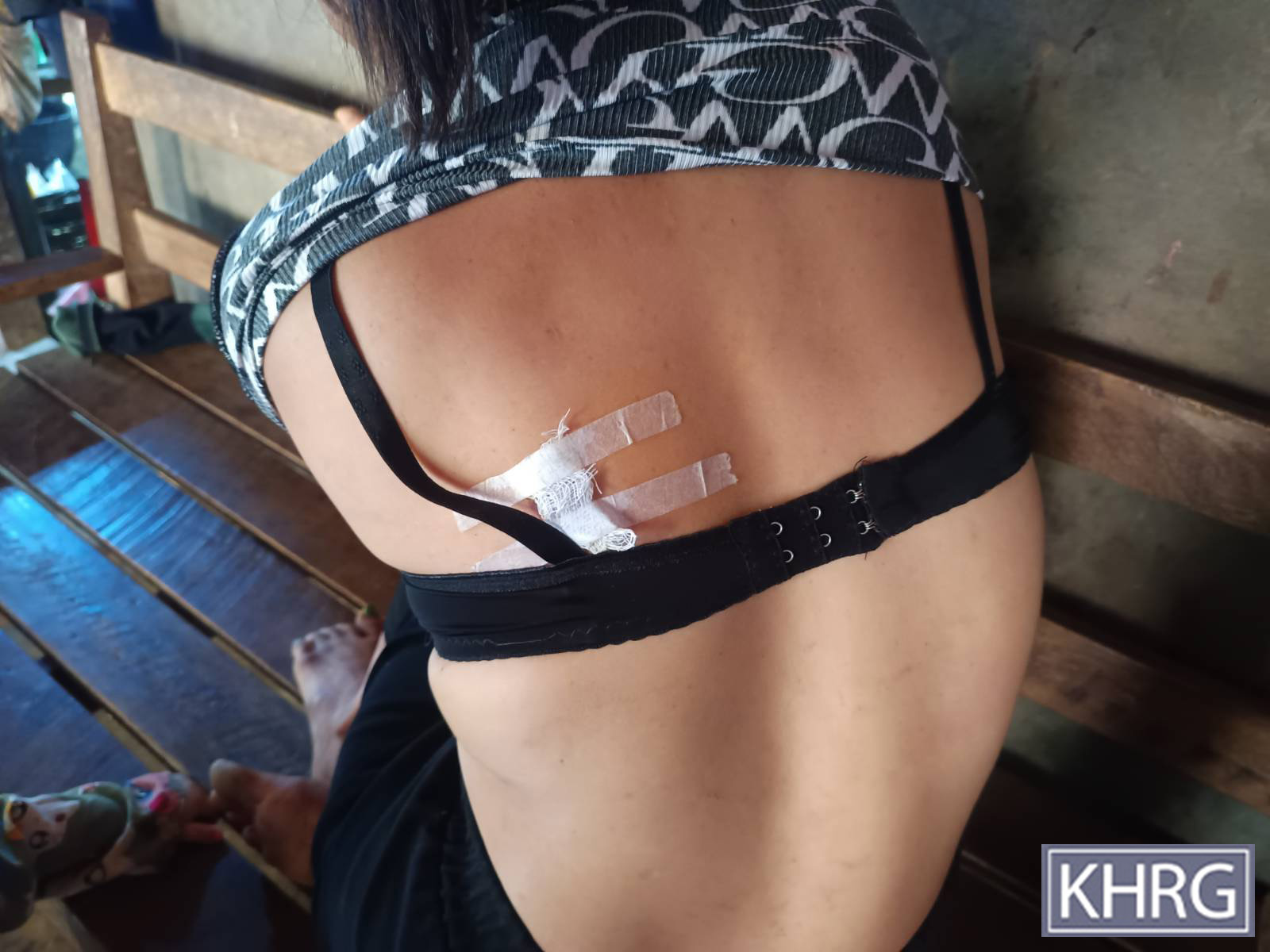


These photos were taken in March 2026 in Aj--- village, Day Loh area, Htaw Ta Htoo Township, Taw Oo District. On 10 March 2026, at 4:34 pm, the Burma Army, based at Hset Thon Maing (13 miles) army camp, conducted a shelling into Aj--- village, firing two mortar shells. Three villagers named Naw H--- (35 years old), Saw I--- (3 years old), and Saw J--- (7 years old) were injured when the first mortar shell exploded. The photo on the left shows Saw I---, who was injured on his right arm. The photo on the right shows Naw H---, who sustained injuries to her left shoulder blade. Saw J--- sustained injuries to his neck. The shelling also killed a dog. The second shell landed on a plantation and caused no injuries. [Photos: KHRG]
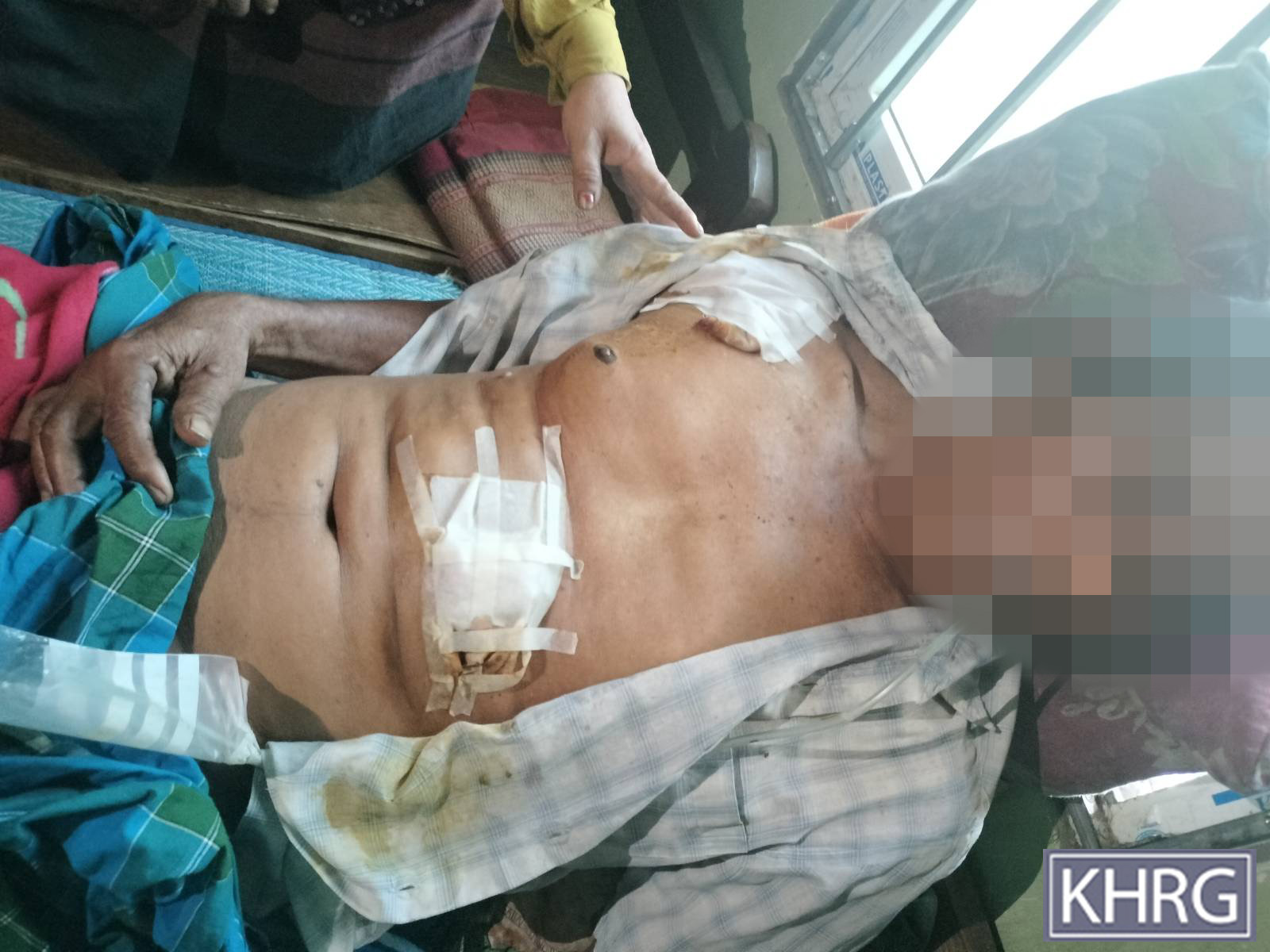
This photo was taken in March 2026 at a hospital administered by the Karen Department of Health and Welfare (KDHW)[21] in Ak--- village, Peh Htee village tract, Htaw Ta Htoo Township, Taw Oo District. On 15 March 2026, the Burma Army conducted a drone strike onto a tollgate. The photo shows U K--- (65 years old), from Al--- village, Zayat Gyi Taung Chan village tract, Htaw Ta Htoo Township, who was injured while working at the tollgate. U K--- was severely injured on his abdomen and right shoulder blade. He was first sent to a Burma military regime-administered hospital, which did not have sufficient equipment or medicines, and he later received treatment at Am--- hospital, administered by the KDHW, in Ak--- village. Another tollgate worker, U L---, sustained minor injuries due to the drone strike, but he did not require medical treatment at the clinic.[22] [Photo: KHRG]
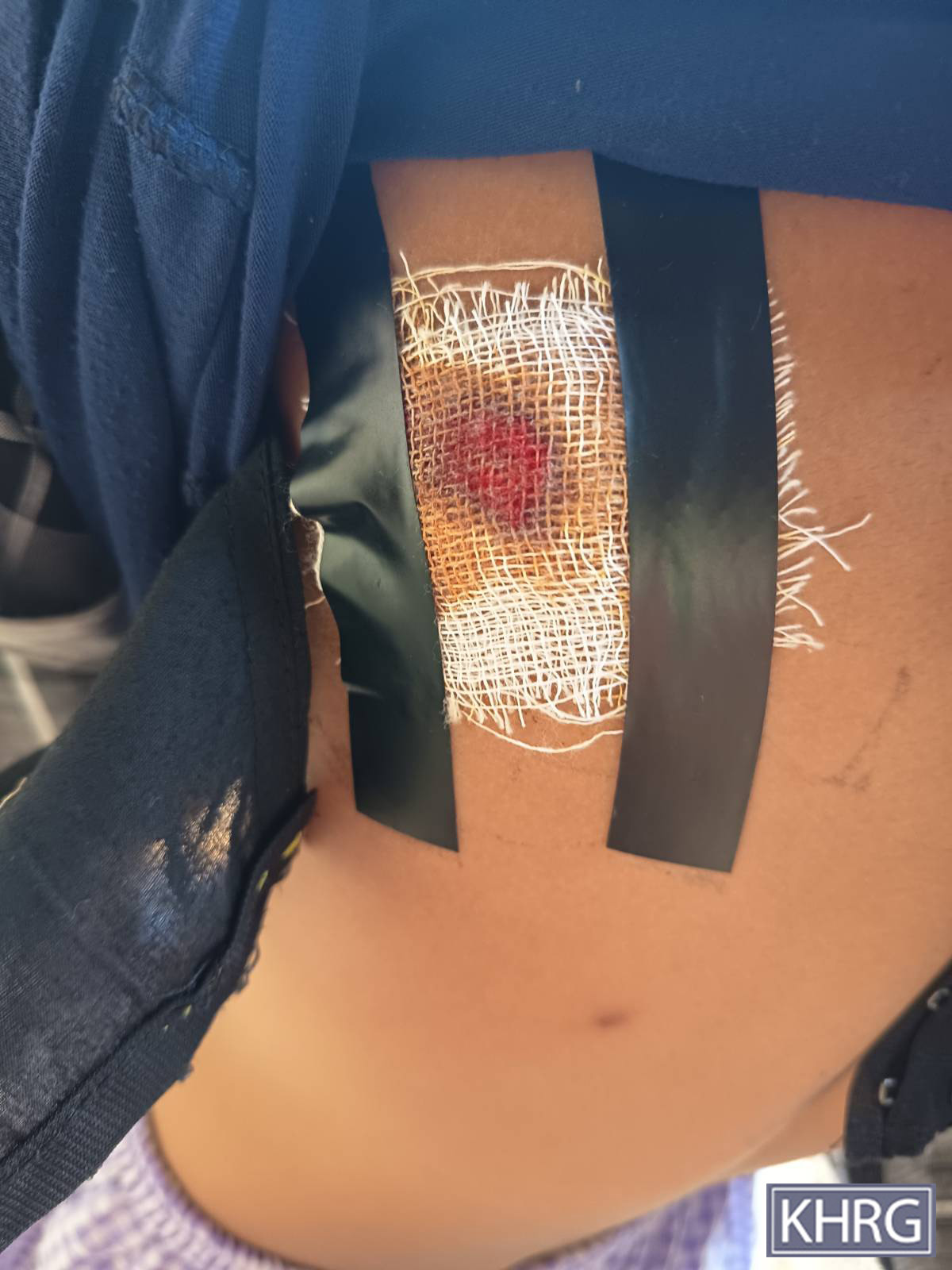
This photo was taken in March 2026 in An--- village, Way Htoo village tract, Daw Hpah Hkoh Township, Taw Oo District. On 28 March 2026, at around 12:30 pm, a Burma Army fighter jet dropped two 250-pound bombs into An--- village, injuring one child. One bomb landed on the ground behind the Seventh-day Adventist (SDA) Church in An--- village, while the other struck a tree. The photo shows Ma[23] M--- (16 years old), who sustained an injury to her left shoulder blade from the bomb’s shrapnel while she was picking leaves near a river and fishing. PDF soldiers transported the injured Ma M--- on a motorbike to their clinic, where they provided medical care.[24] [Photo: KHRG]
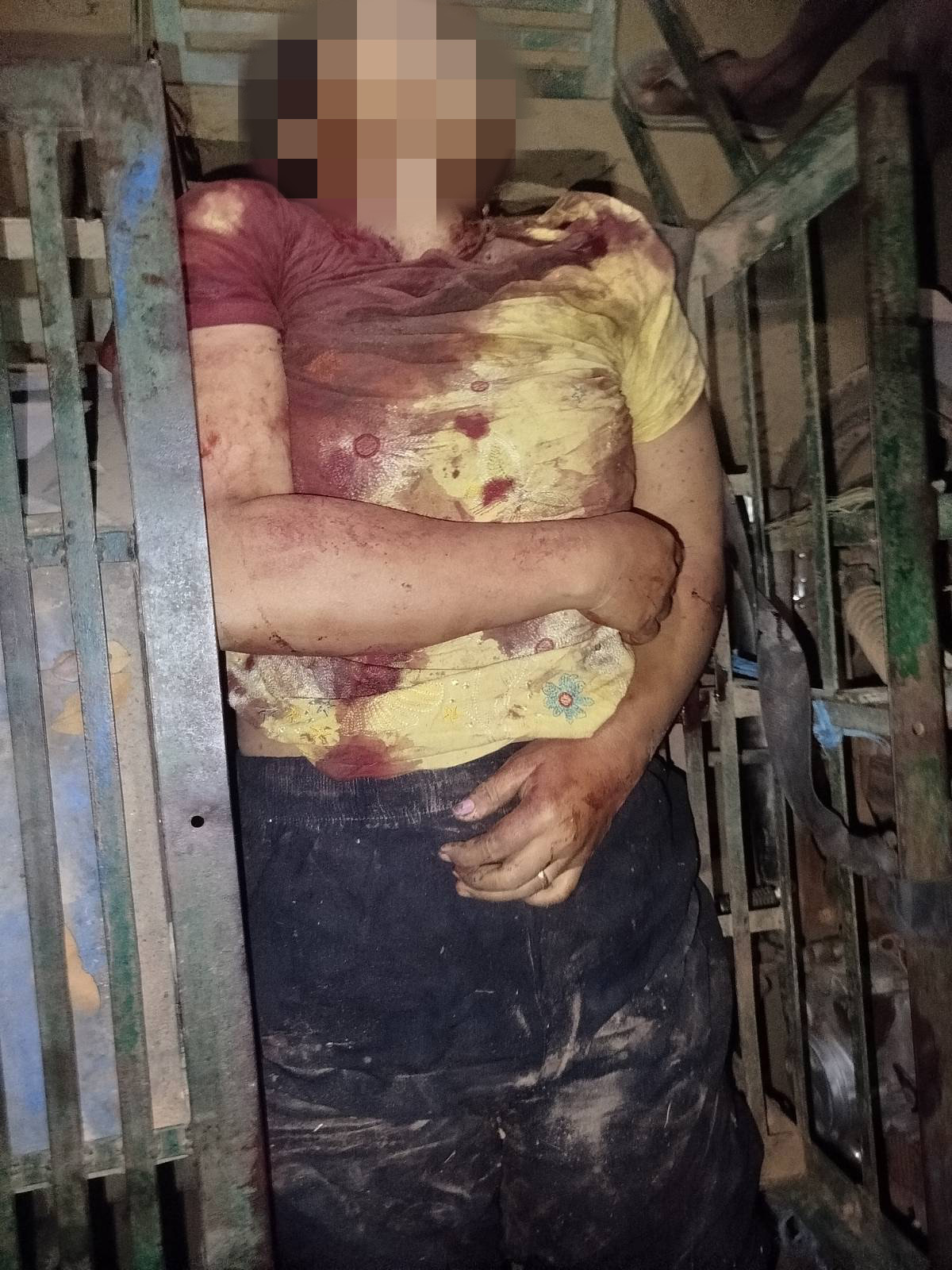
KHRG received this photo on 3 January 2026 from a villager in Ao--- village, Wine Pyin Yay Dine village tract, Hsaw Htee (Shwegyin) Township, Kler Lwee Htoo (Nyaunglebin) District. On 2 January 2026, around 4:30 pm, the Burma Army conducted a drone strike into Ao--- village, killing Daw[25] N--- (43 years old), a mother of two. Daw N--- was sitting outside of U O---’s house, another villager with whom she had been staying, when she was struck and killed by the shrapnel from the bomb explosion. The photo shows the body of Daw N---. U O--- (62 years old) also sustained injuries to his left wrist and left leg as a result of the drone strike. [Photo: Local villager]
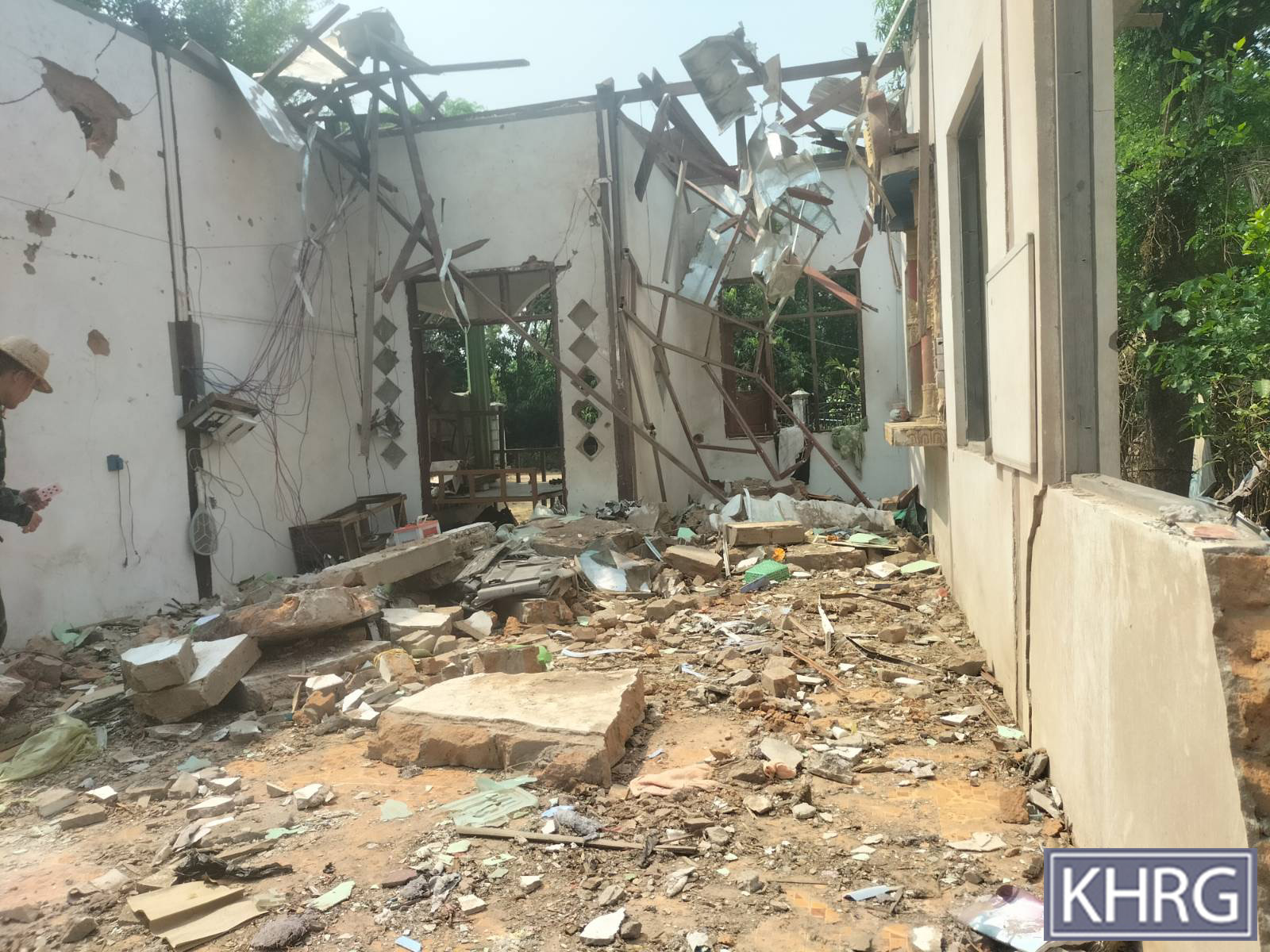
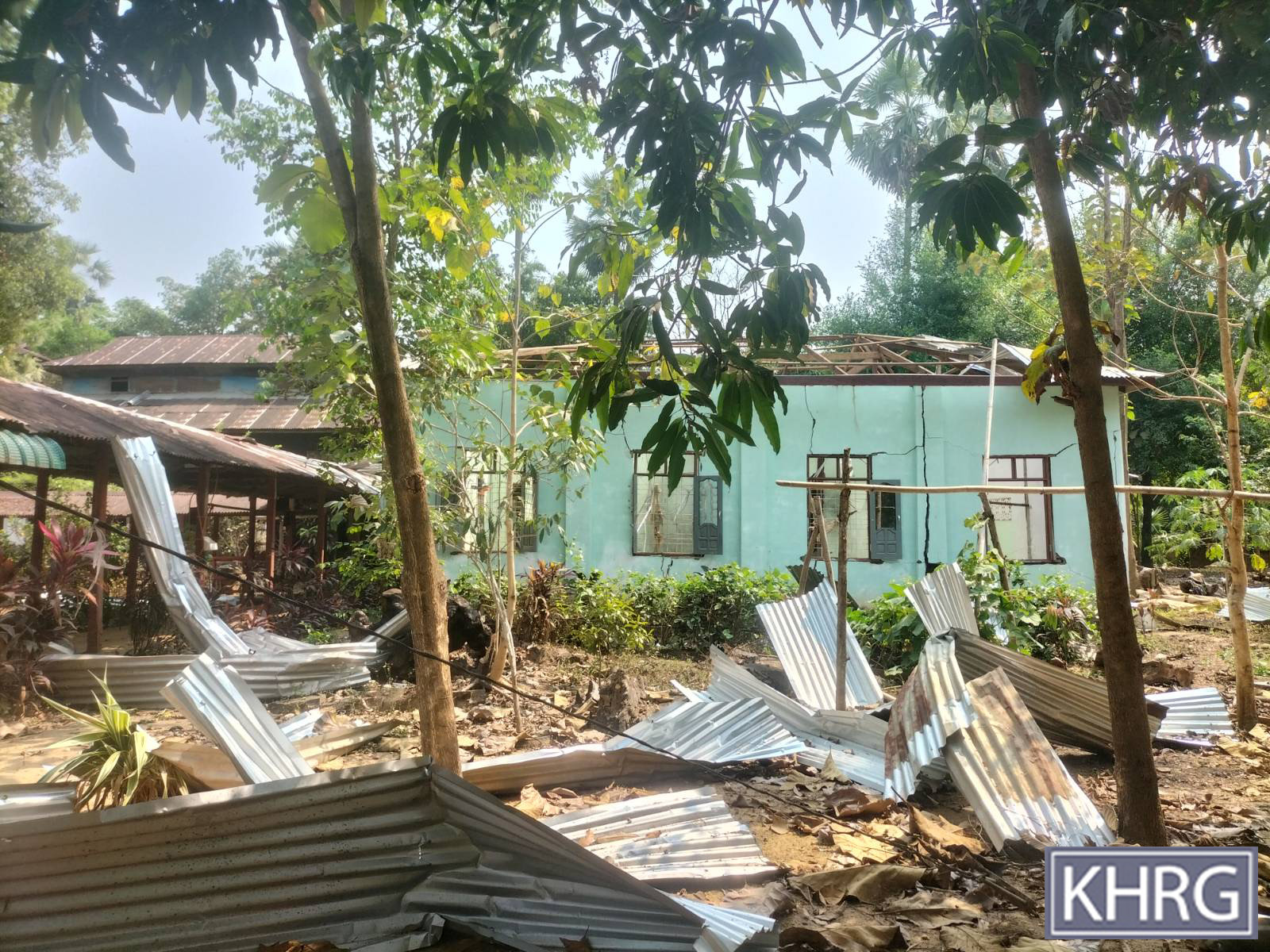


These photos were taken in March 2026 in Ap--- village, Kin Mon Chon village tract, Moo special area, Moo (Mone) Township, Kler Lwee Htoo District. The photos above show the destruction of villagers’ properties in Ap--- village as a result of numerous Burma Army shelling and drone strikes, which they conducted on 25 January 2026. The Burma Army attacks destroyed at least 17 villagers’ houses and a monastery. [Photos: KHRG]
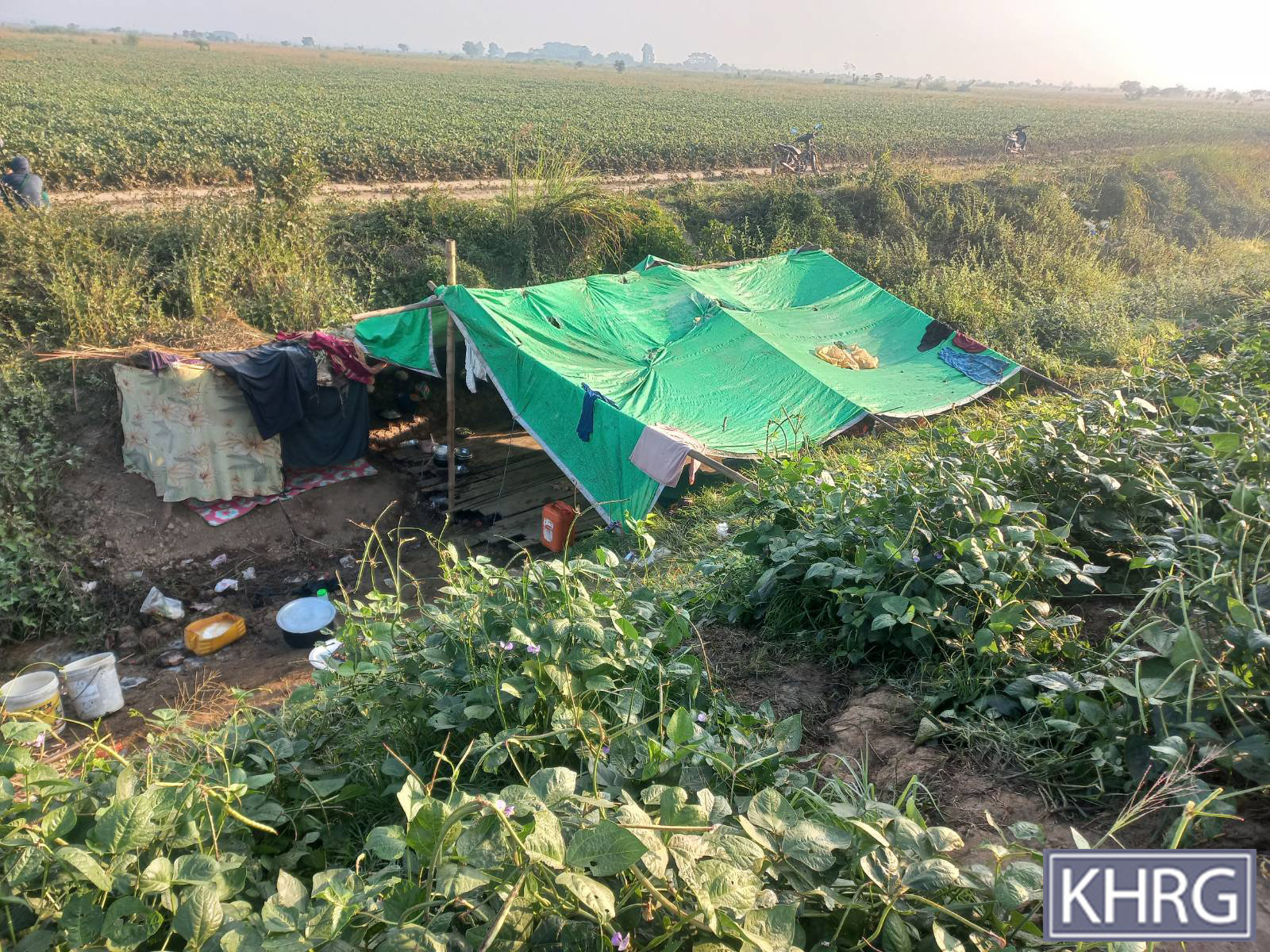
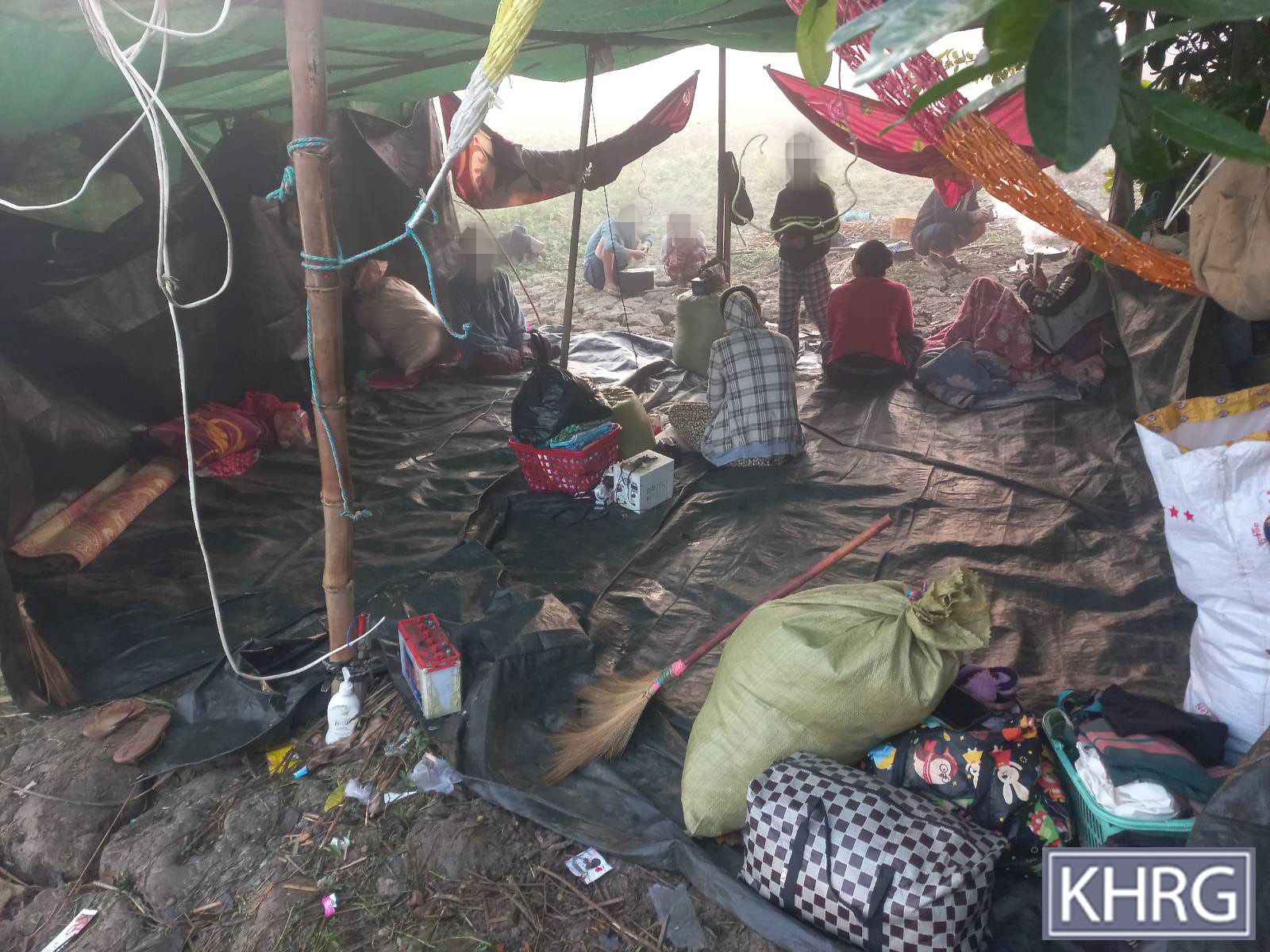


These photos were taken in January 2026 in a displacement site in Moo special area, Moo Township, Kler Lwee Htoo District. On 6 January 2026, at 11:30 am, Burma Army soldiers from LIB #307, based at Shwe Wa army camp, indiscriminately shelled Aq--- village, Z’Lok village tract, Moo special area. The shells hit the walls of a monastery building. U P--- (60 years old) was fatally struck by shrapnel from the bomb explosion. A few days later, on 8 January 2026, at 10:20 pm, a Burma Army fighter jet dropped two bombs onto Ar--- village, Lay Doh village tract, Moo special area, hitting a villager’s house and killing four family members: Daw Q--- (76 years old), Daw R--- (79 years old), Daw S--- (48 years old), and Maung[26] T--- (12 years old). Daw Q---, Daw R---, and Daw S--- were killed on the spot. Maung T--- sustained critical injuries to his head and was transported to As--- hospital, Kyaung Pyan village tract, but he died, as his injuries were too severe. The air strike damaged the houses of Daw Q--- and Daw R--- and killed the livestock of a villager named U Yc---. One of the bombs remained unexploded. Due to the two incidents, approximately 17,909 villagers from 25 villages fled their homes. Following their displacement, they faced food and shelter challenges. The photos above show the shelter of the displaced villagers from Ar--- village, Lay Doh village tract, and Aq--- village, Z’Lok village tract, following the Burma Army’s air strikes. [Photos: KHRG]
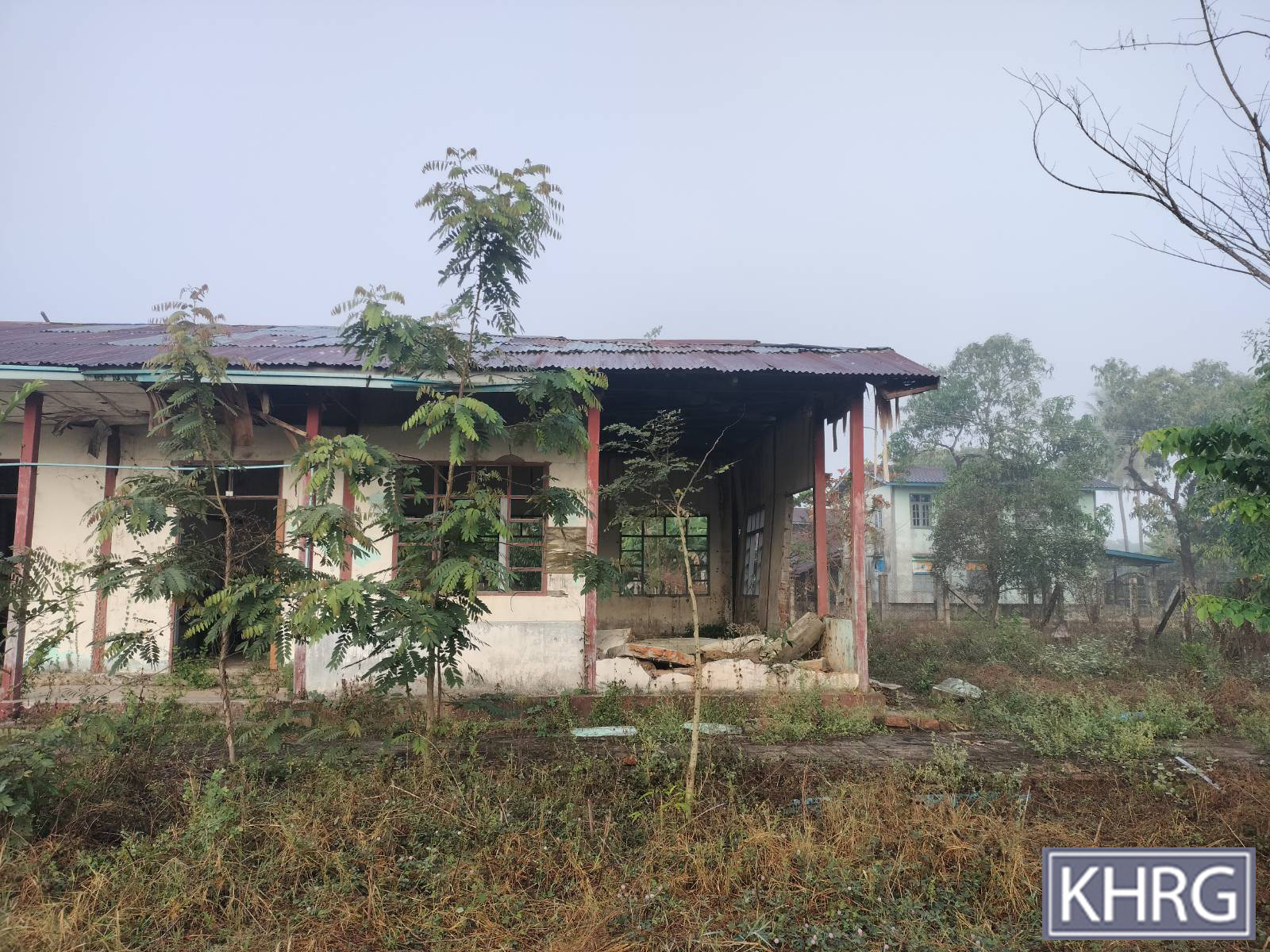
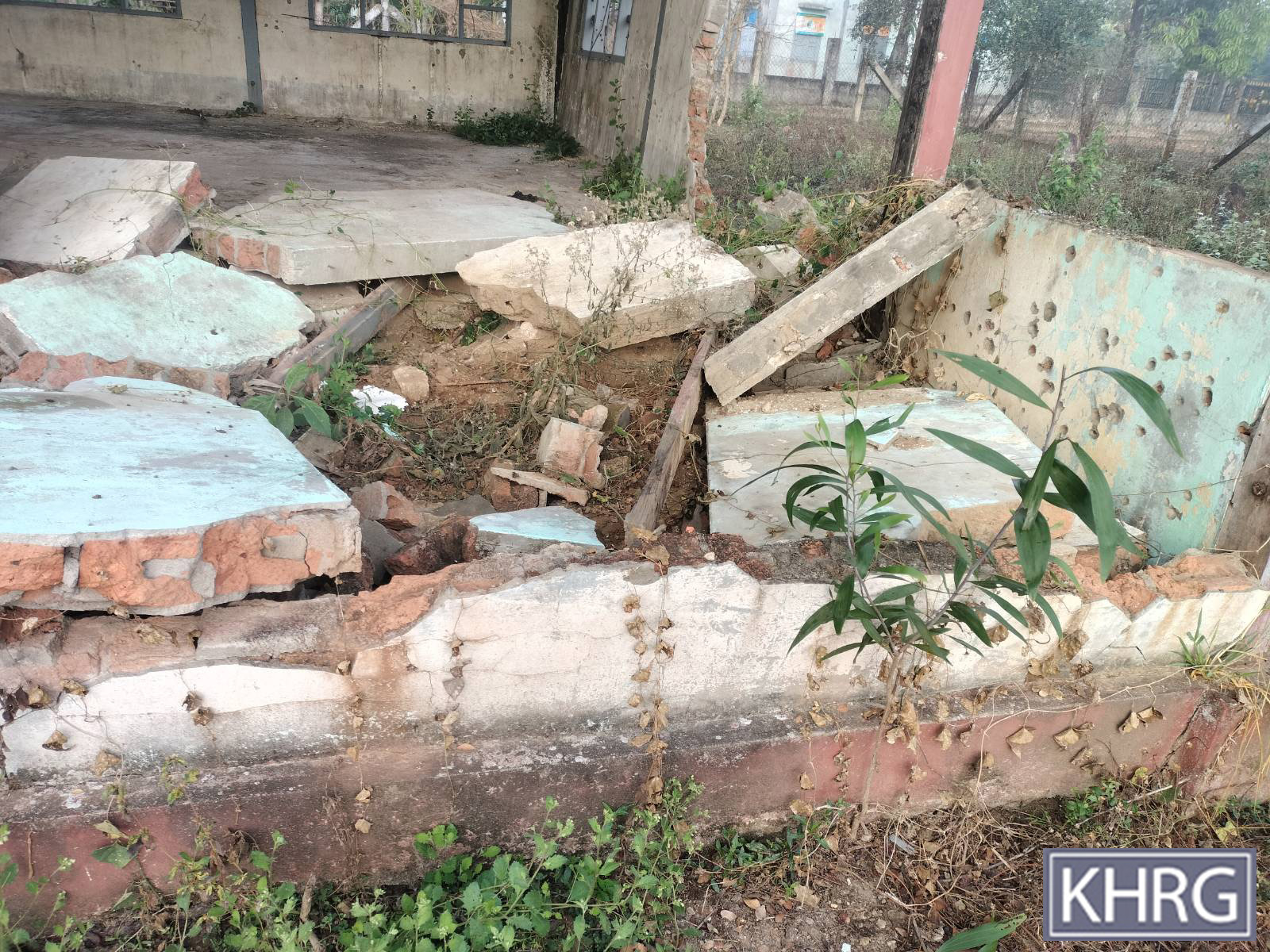


These photos were taken in February 2026 in At--- village, Taung Hkhin village tract, Hsaw Htee Township, Kler Lwee Htoo District. On 25 February 2026, at 8:20 pm, Burma Army LIB #254, based in Pein Z’Lok Town, indiscriminately fired mortar shells into At--- village. The photos show the partial destruction of At--- high school, damaged as a result of the shelling. [Photos: KHRG]
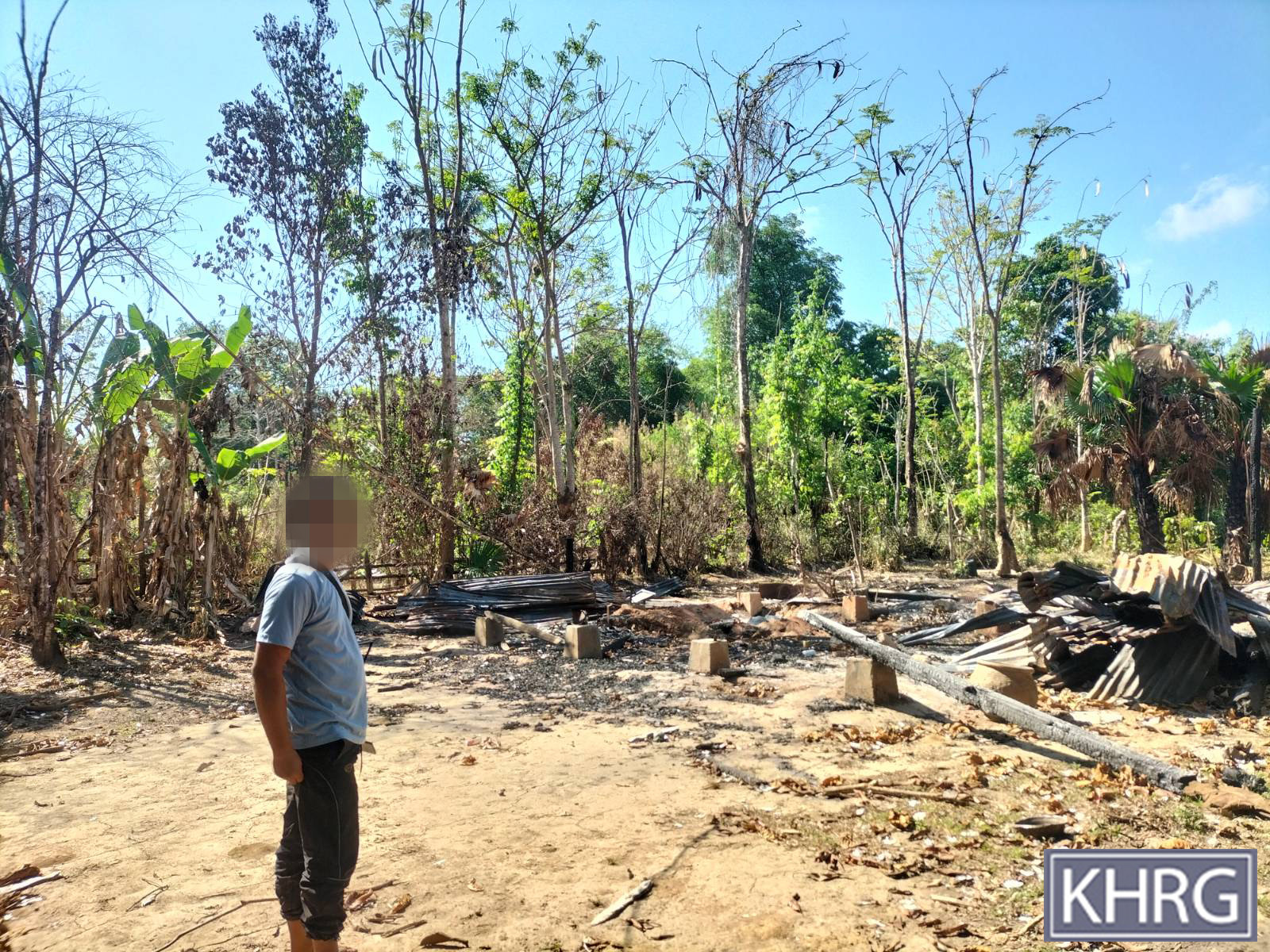
This photo was taken in March 2026 in Au--- village, Waw Kay village tract, Hsaw Htee Township, Kler Lwee Htoo District. On 9 February 2026, Burma Army LID #22 and its combined forces burned down houses in Au--- village following a military operation in the area. The photo shows a villager’s destroyed house following the burning. [Photo: KHRG]
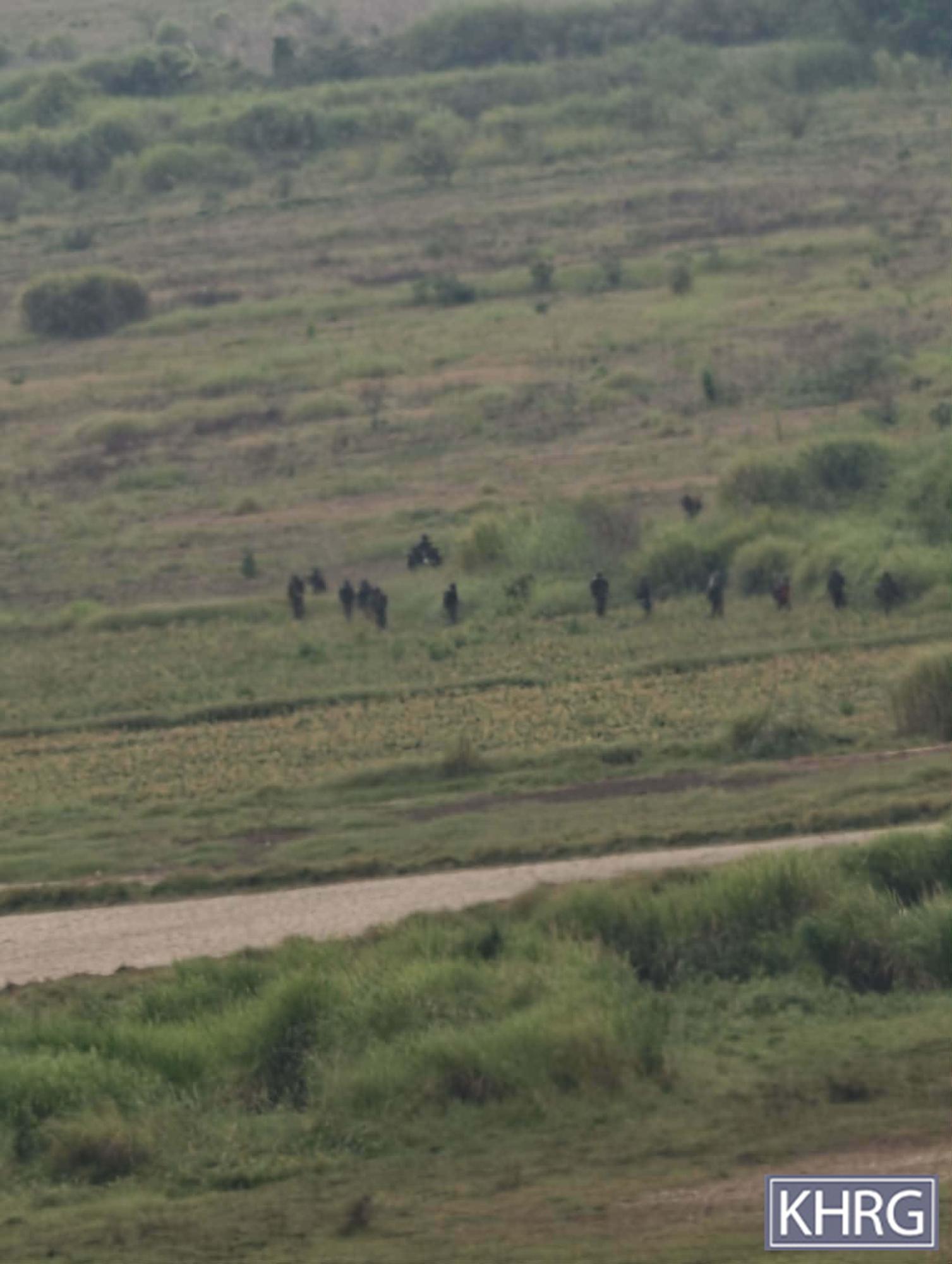
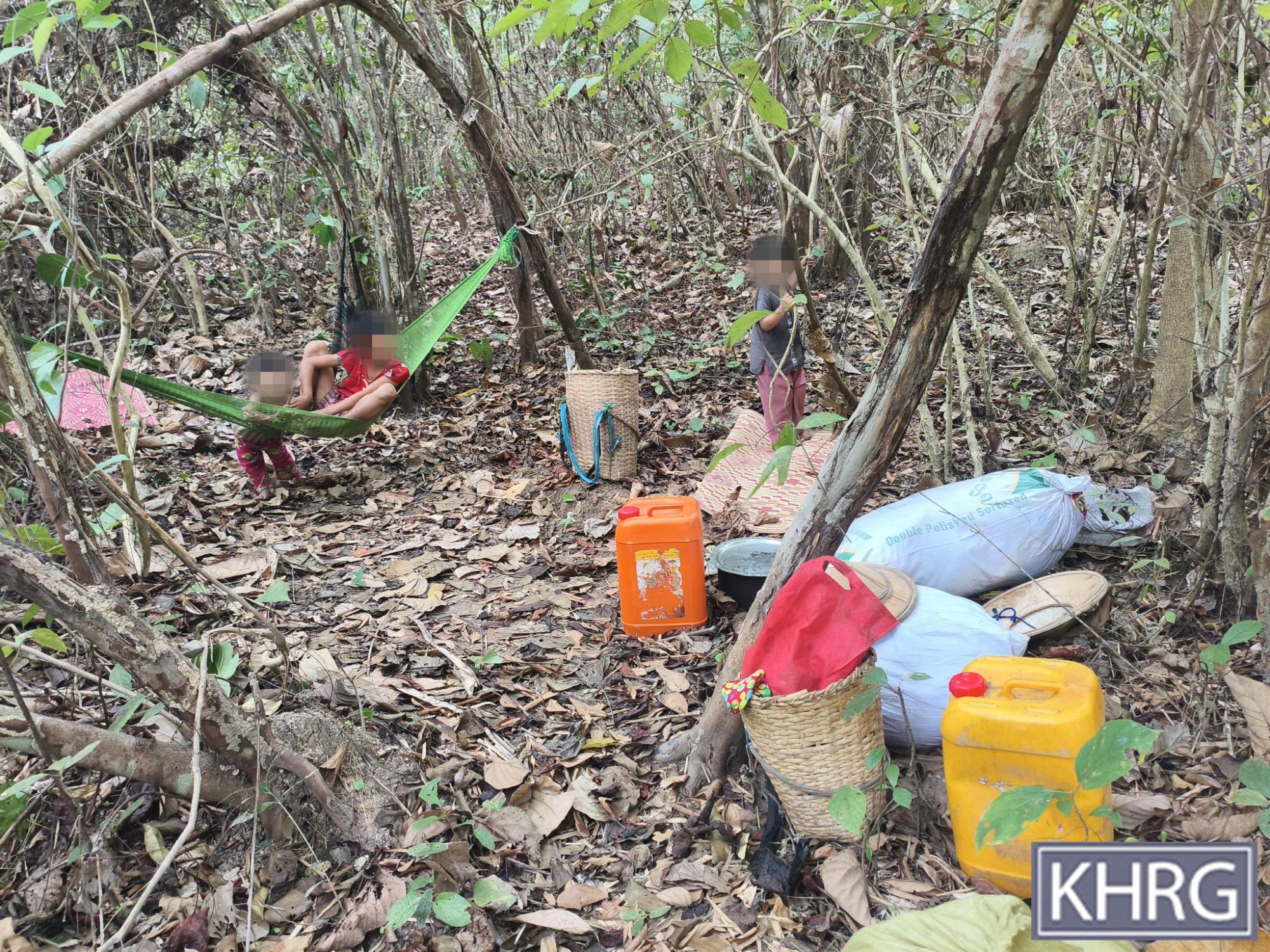


These photos were taken in February 2026 in Av--- village, Klaw Thoo Hkee village tract, Hsaw Htee Township, Kler Lwee Htoo District, following an increase in Burma Army militarisation in the region. The photo on the left shows personnel from Burma Army LID #22 and its combined forces carrying out a military operation in Aw--- place, Waw Kay village tract. The photo on the right shows Au--- villagers displaced in the forest following the military operation. [Photos: KHRG]
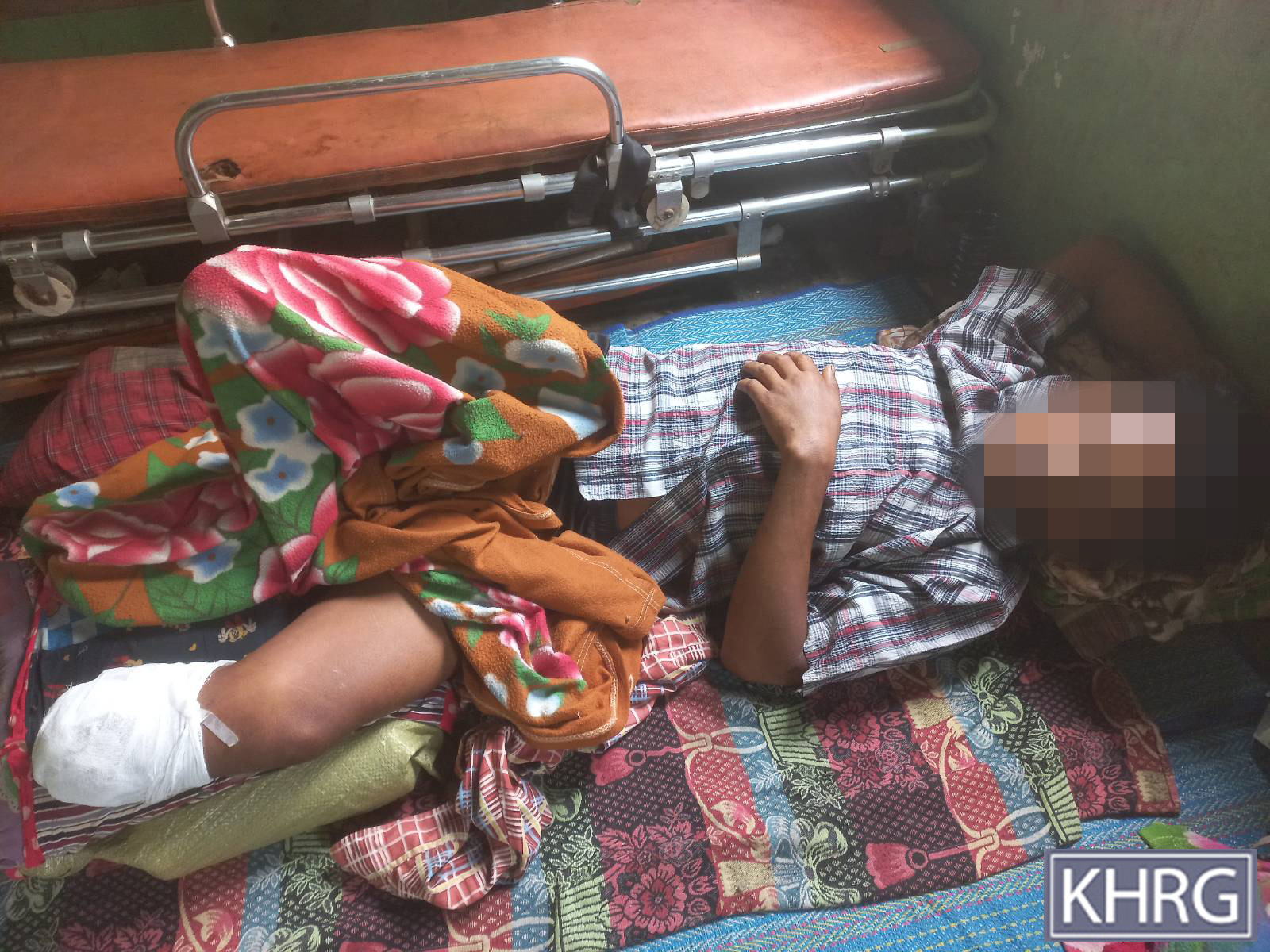
This photo was taken in March 2026 at Ax--- clinic, located in Ax--- village, Kyaung Pyan village tract, Moo Township, Kler Lwee Htoo District. The photo shows Maung V---, from Ay--- village, Lay Doe village tract, Moo Township, recovering at Ax--- clinic after his lower left leg was amputated due to a Burma Army landmine. Maung V---, who was displaced following Burma Army air strikes and shelling, was on his way back to Ay--- village to retrieve supplies when he stepped on a landmine on 4 March 2026. The landmine is believed to have been planted by the Burma Army as they were in Ay--- village prior to this incident. [Photo: KHRG]
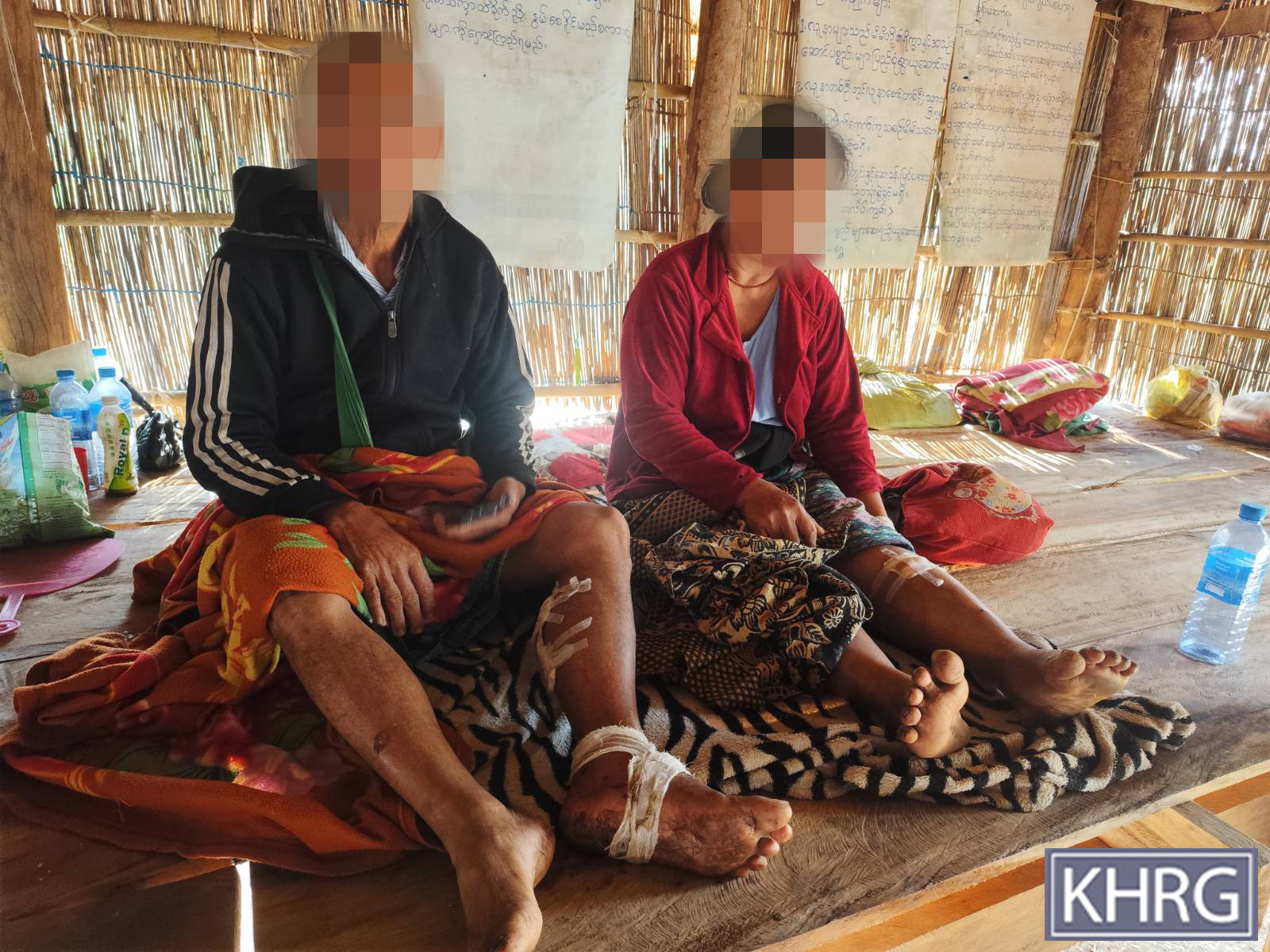
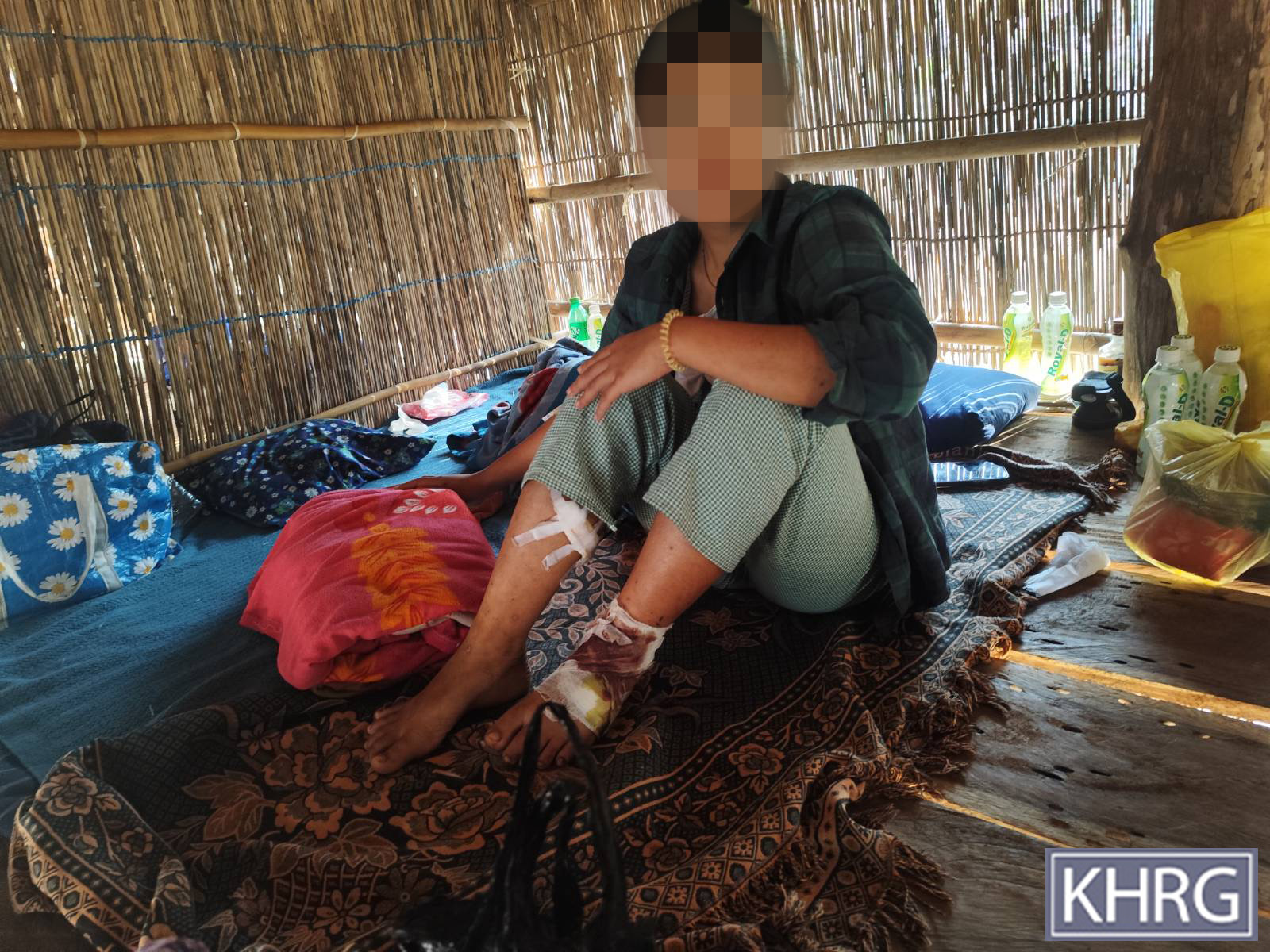


These photos were taken in March 2026 at Bc--- clinic, Kheh Ka Hkoh village tract, Ler Doh (Kyaukkyi) Township, Kler Lwee Htoo District. On 5 March 2026, Burma Army soldiers from LIB #264, LIB #349, IB #20, and a special commando force of LIB #264 entered Ba--- village and Bb--- village, Htee Poo Loo village tract, Ler Doh Township. As they entered the villages, the Burma Army conducted shelling and air strikes, which killed at least 26 villagers and injuring many more; fatally shot five villagers; detained hundreds of villagers; and looted and destroyed villagers’ properties. The Burma Army also planted landmines. Due to this incident, villagers from Bb--- village tract displaced to other towns and villages. The photos show Bb--- villagers who were injured by mortar shell shrapnel hospitalised in Bc--- clinic, which is administered by the KDHW.[27] [Photos: KHRG]
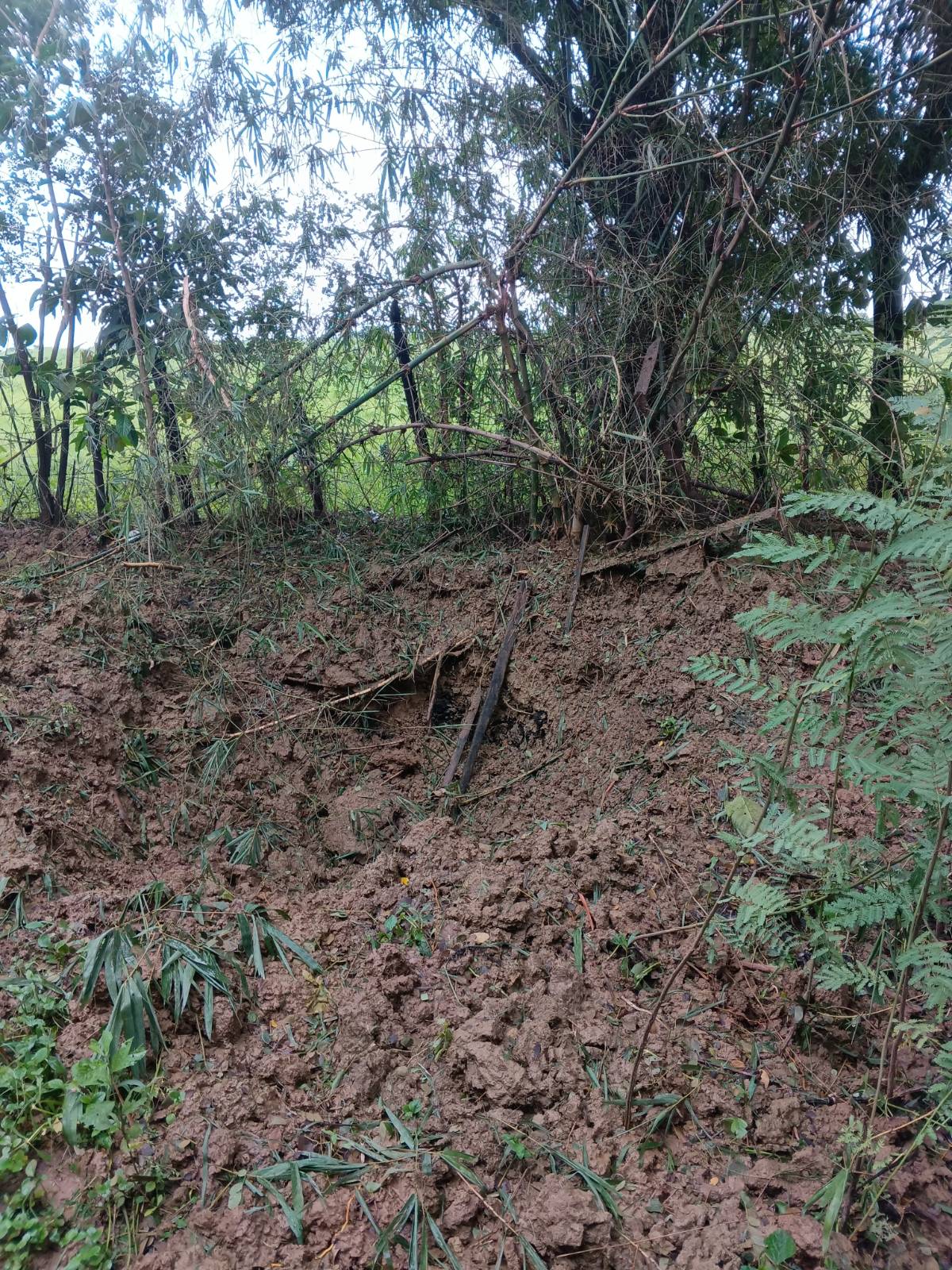
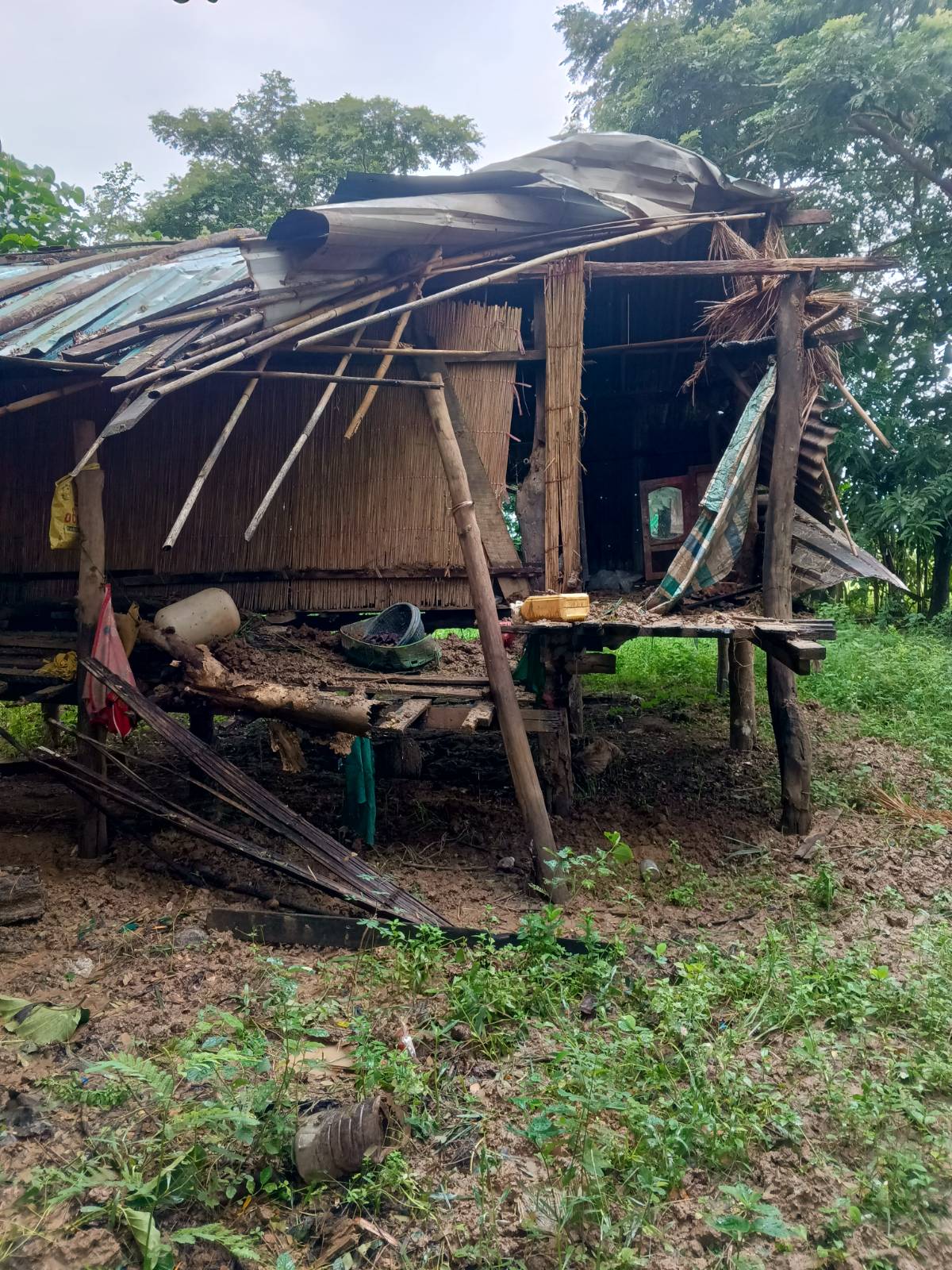
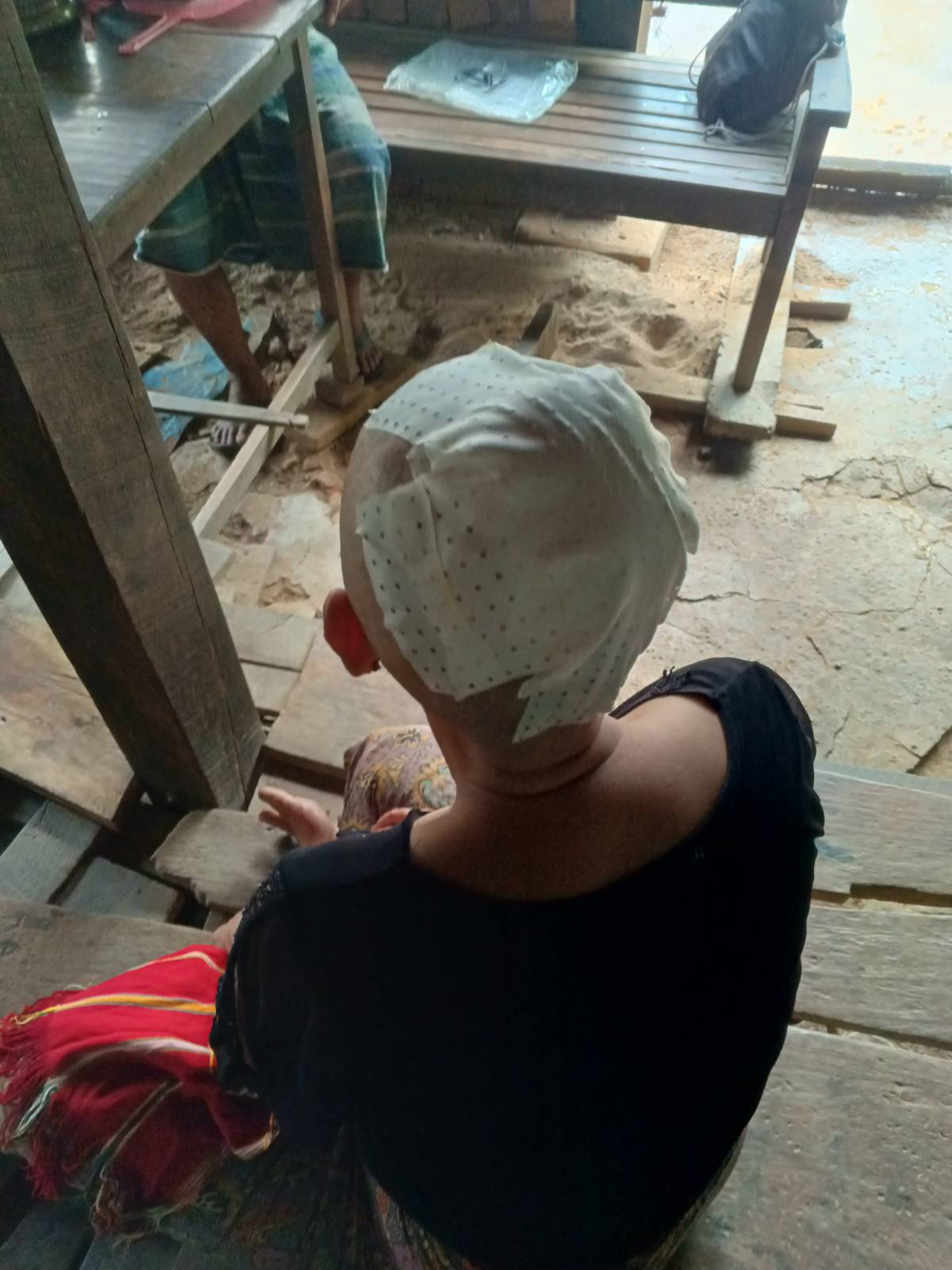


These photos were received on 25 June 2026 from an emergency relief organisation that operates in the local area. On 23 June 2026, Burma Army soldiers from LIB #264, based at Pein Z’Lok Town, fired 120 mm mortar shells that landed and exploded in Bd--- village, Kyoh Gyi village tract, Ler Doh Township, Kler Lwee Htoo District. This resulted in the injury of Daw W--- (48 years old). Additionally, the shells damaged villagers’ houses. Due to the Burma Army shelling, the villagers from Bd--- village displaced to other safer locations. Some villagers fled to the forest, some fled to their farms, and some fled to other villages. As of July 2026, the villagers felt increased levels of anxiety and dared not to return to their village because the Burma Army also entered their village and looted their belongings. The photos on the top left and top right show the places where the mortar shells landed and damaged houses, while the photo on the bottom shows the injury Daw W--- sustained to her head. [Photos: Local villager]
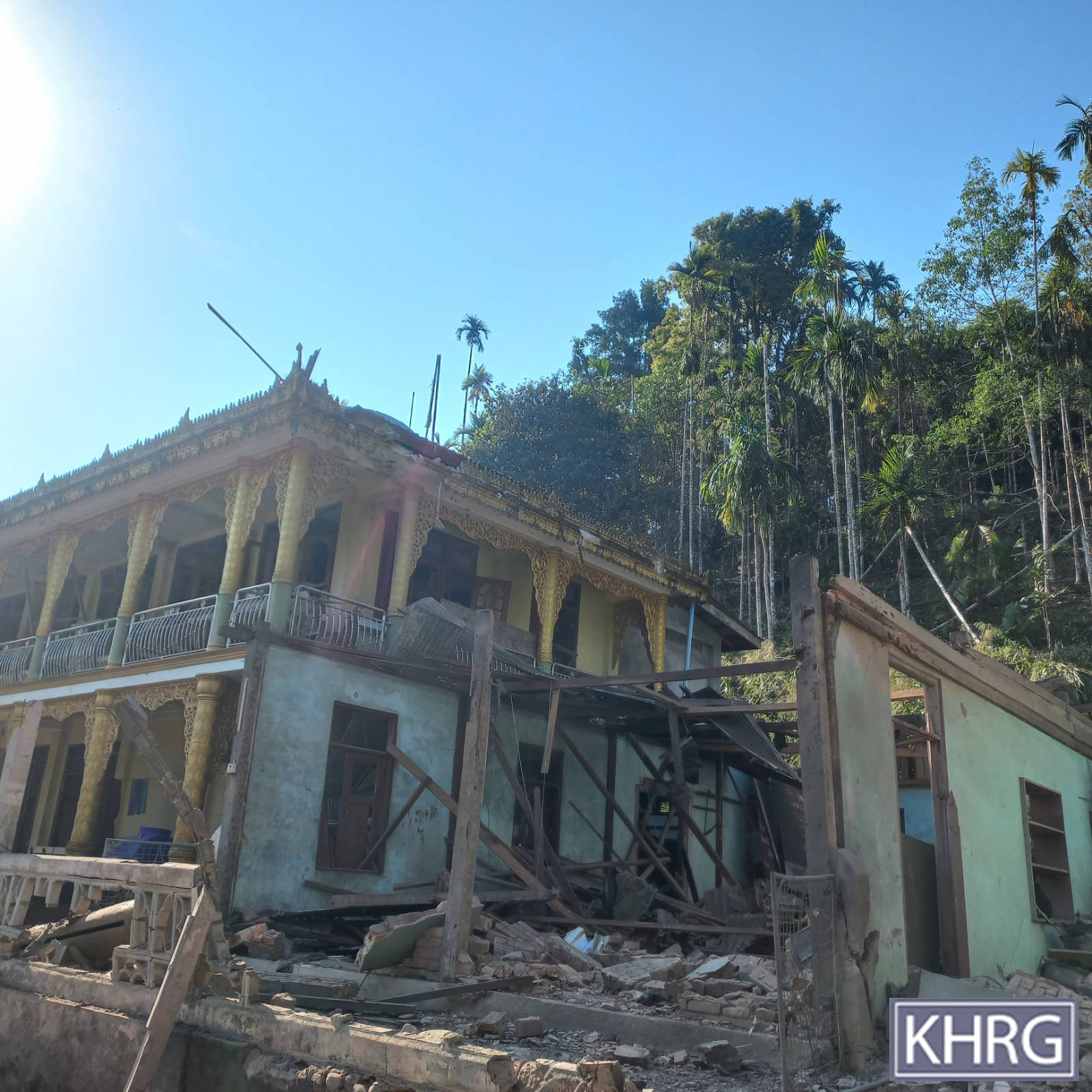
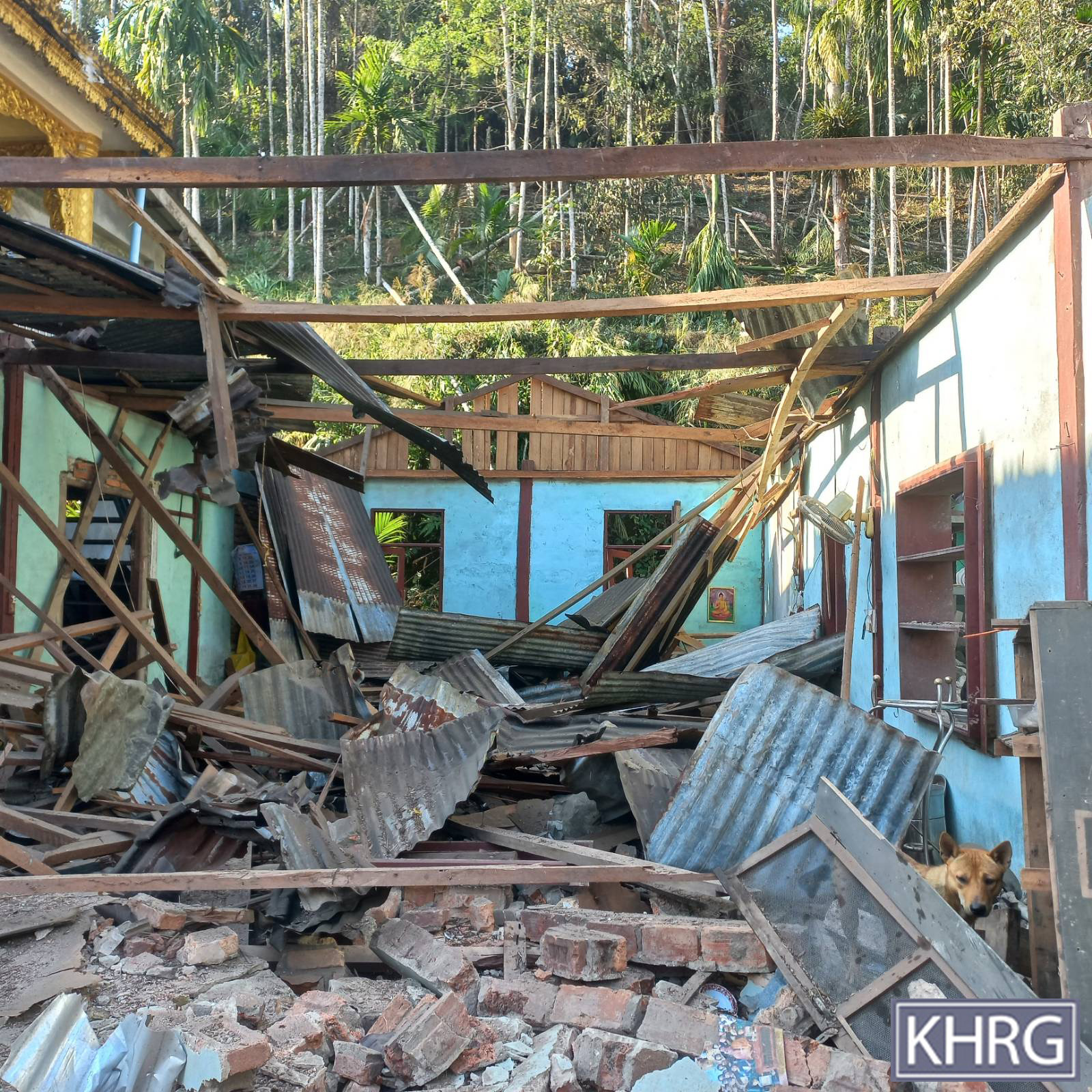
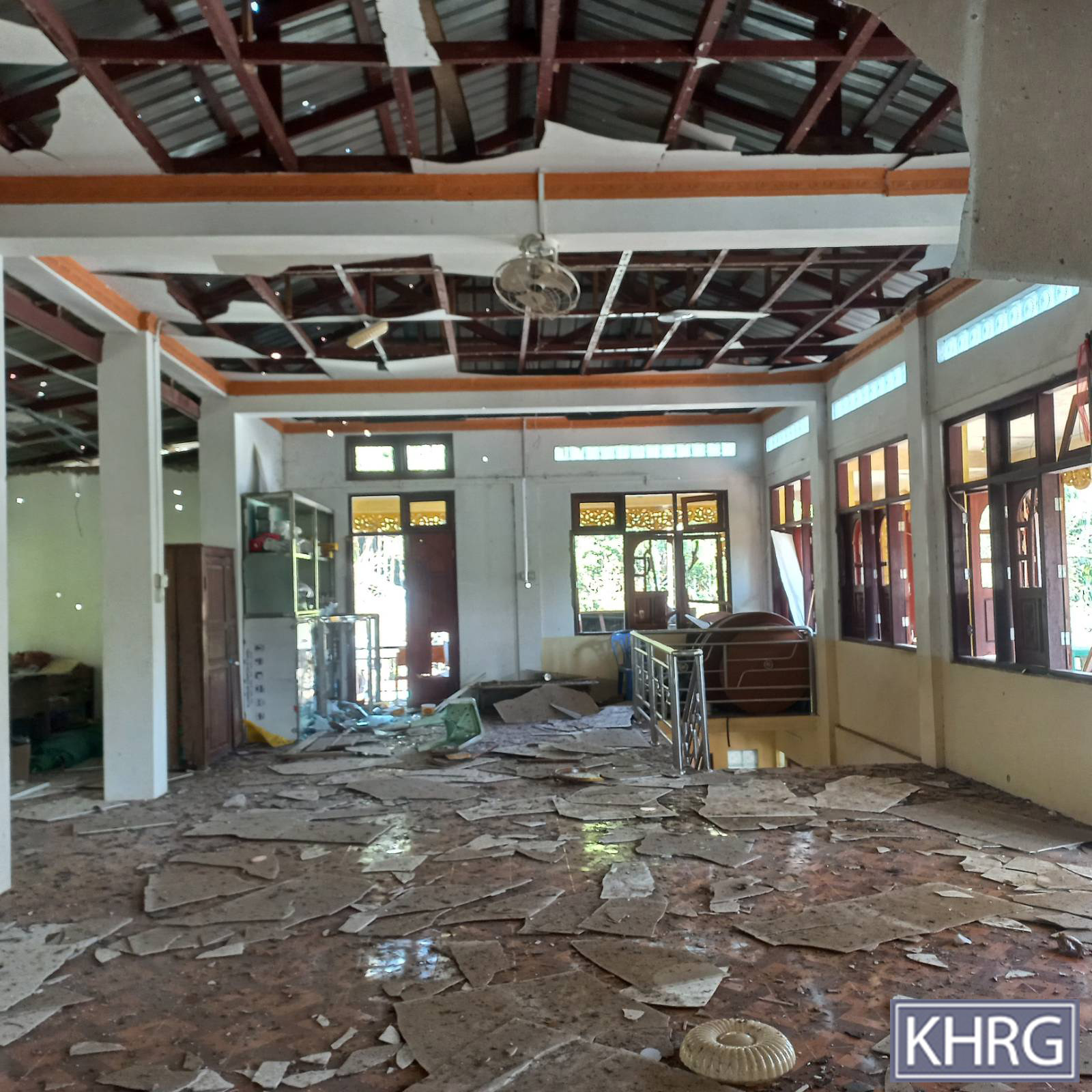


These photos were taken in February 2026 in Be--- village, Paw Kloh area, K’Ser Doh Township, Mergui-Tavoy District. On 4 February 2026, the Burma Army carried out air strikes and shelling in Be--- village, following clashes between the Burma Army and the KNLA as the Burma Army advanced into Be--- area. These photos show the destruction of houses, a monastery, and workplaces caused by the air strikes and Oerlikon shells. The attack also injured a monk. [Photos: KHRG]
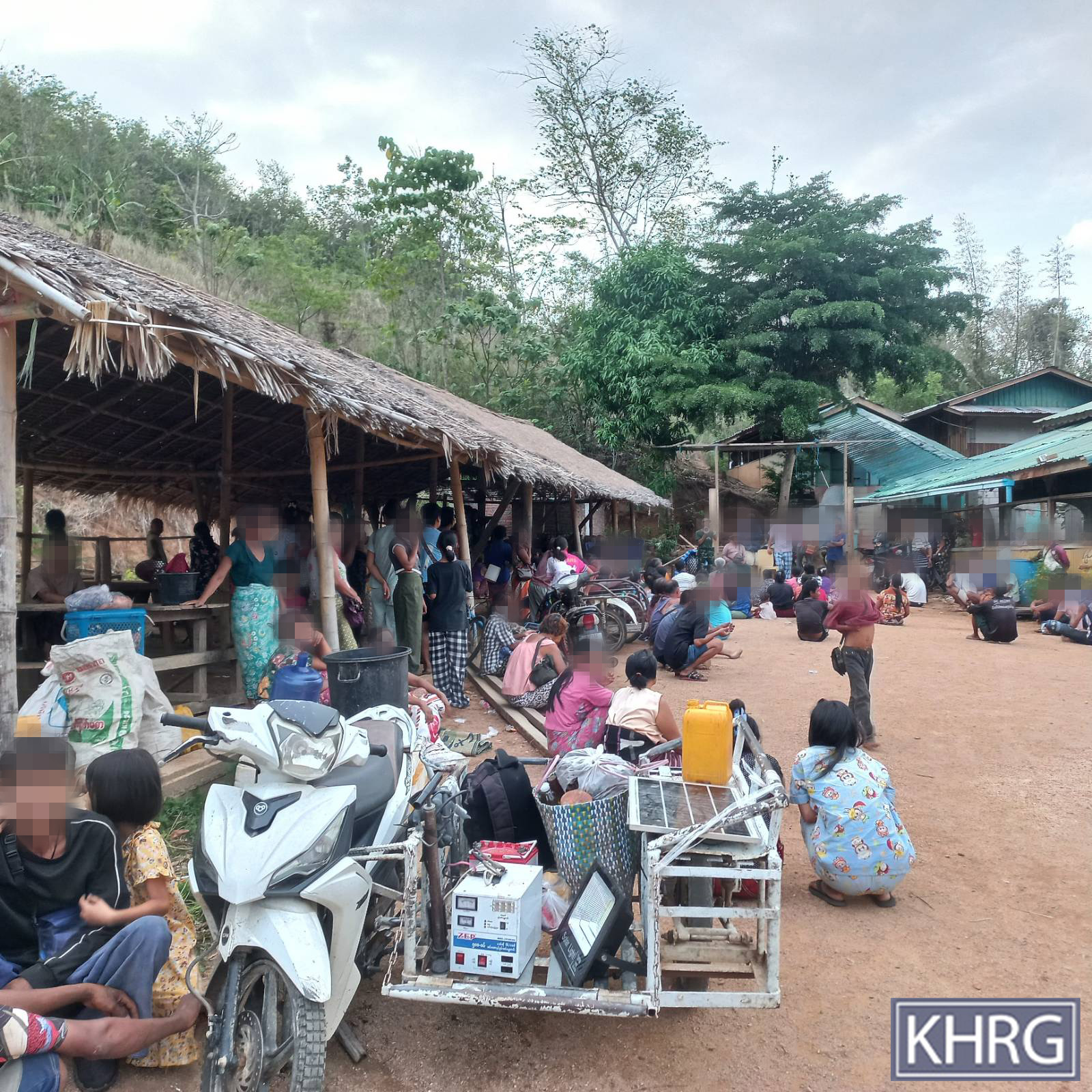
This photo was taken in May 2026 in Bf--- Town, T’Naw Th’Ree (Tanintharyi) Township, Mergui-Tavoy District. The photo shows villagers from Bf--- Town who displaced to the border area on 8 May 2026, as the combined forces of 11 Burma Army battalions with approximately 1,000 soldiers launched a military operation at Bf--- Town. When Burma Army soldiers marched to the town, they fired mortar shells and conducted air strikes and drone strikes into Bf--- Town. In addition, daily fighting occurred between the KNLA and the 11 Burma Army battalions. As of 27 May 2026, villagers remained displaced in the forest, near the border with Thailand. As it was rainy season, villagers faced challenges as they had inadequate shelter on top of shortages of foods, clothes, and medicines. [Photo: KHRG]
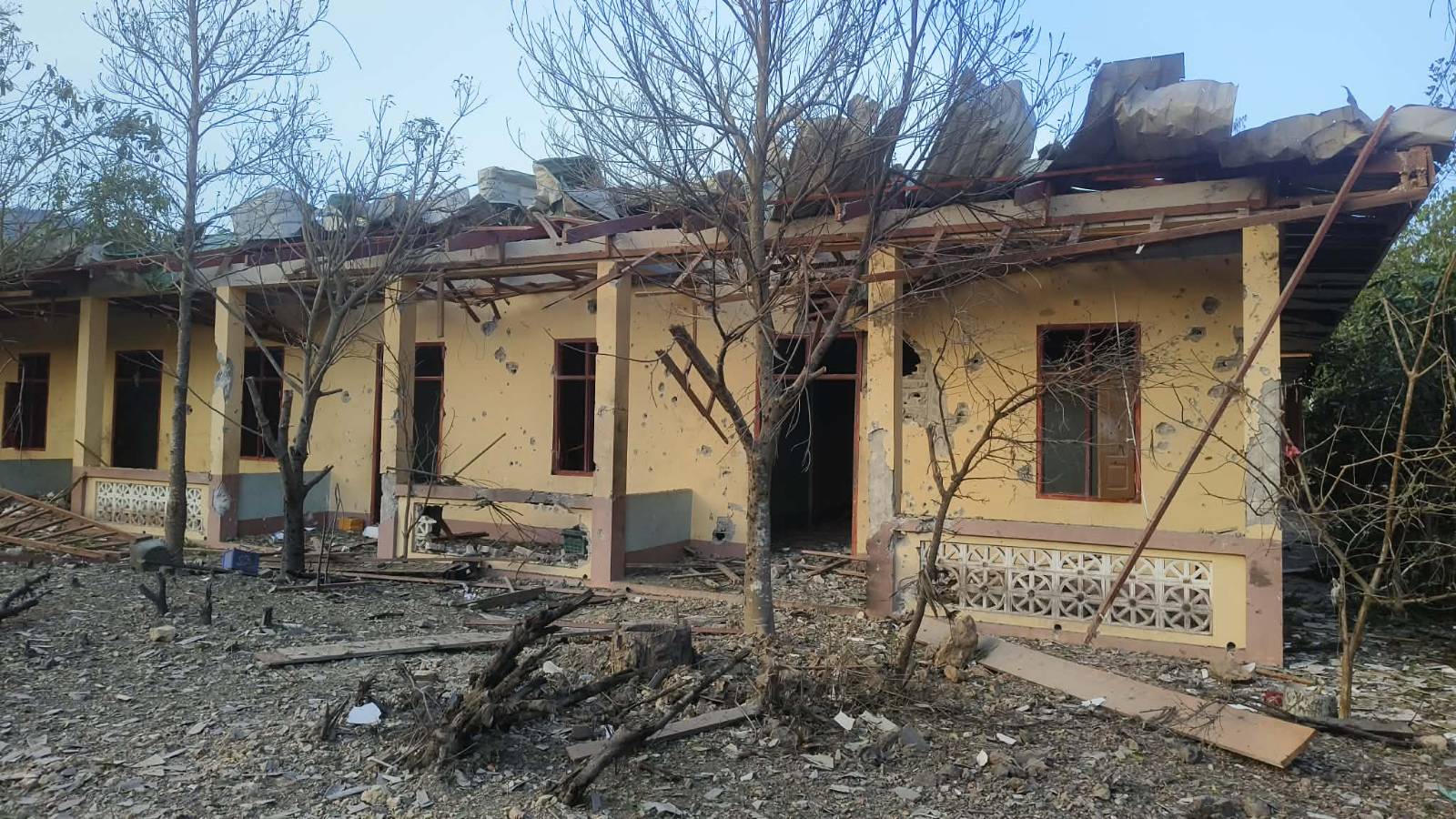
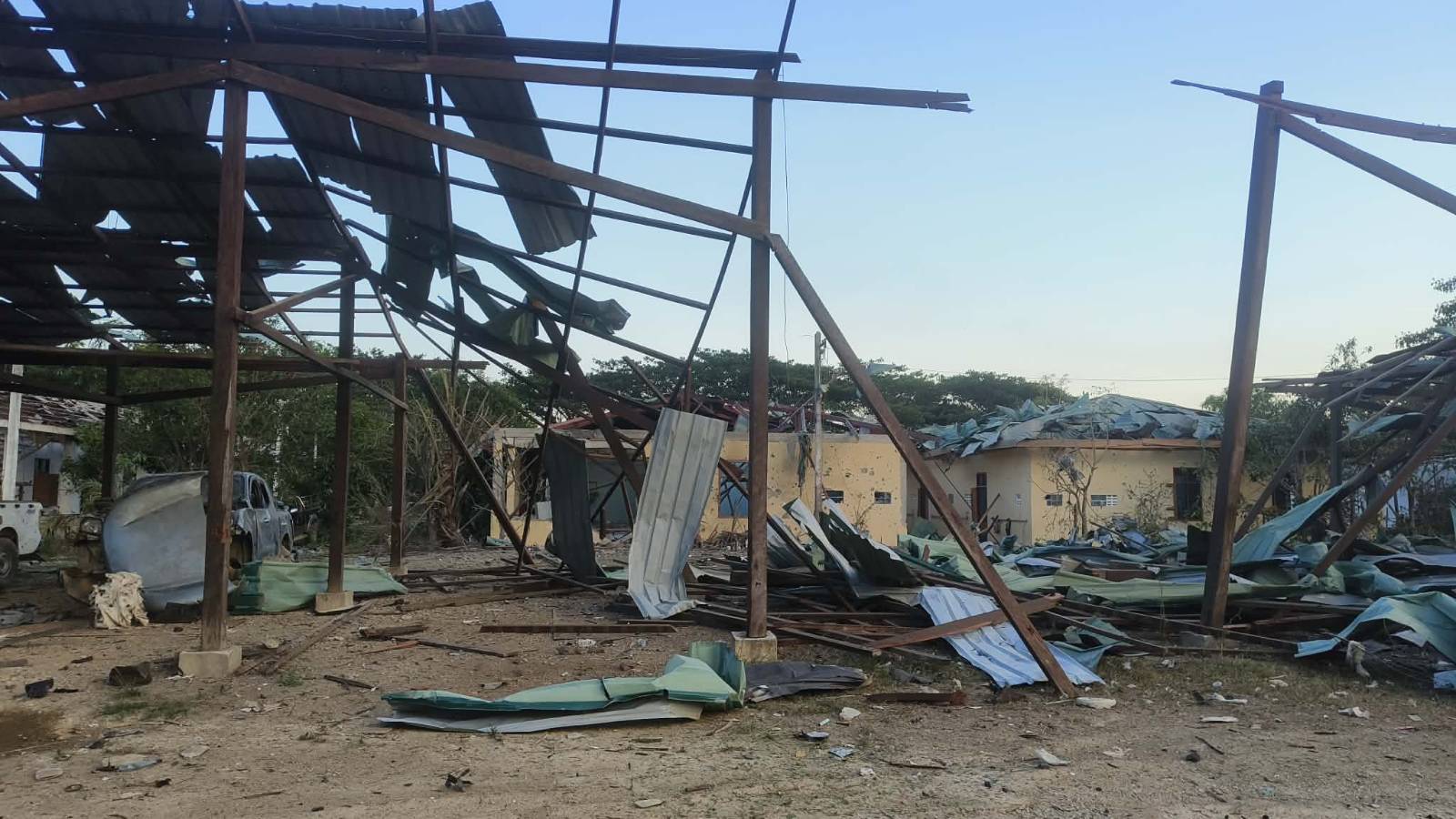
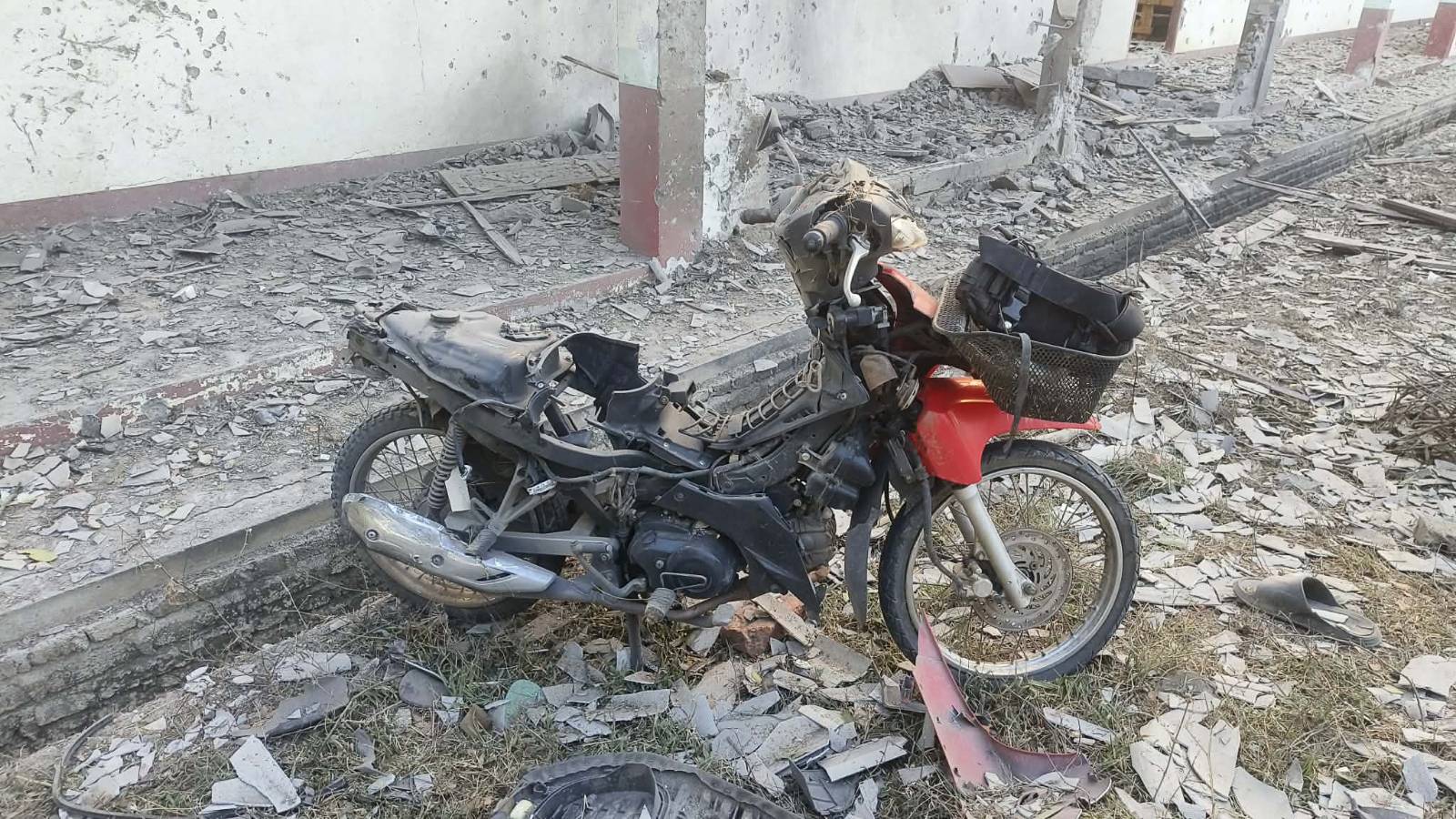
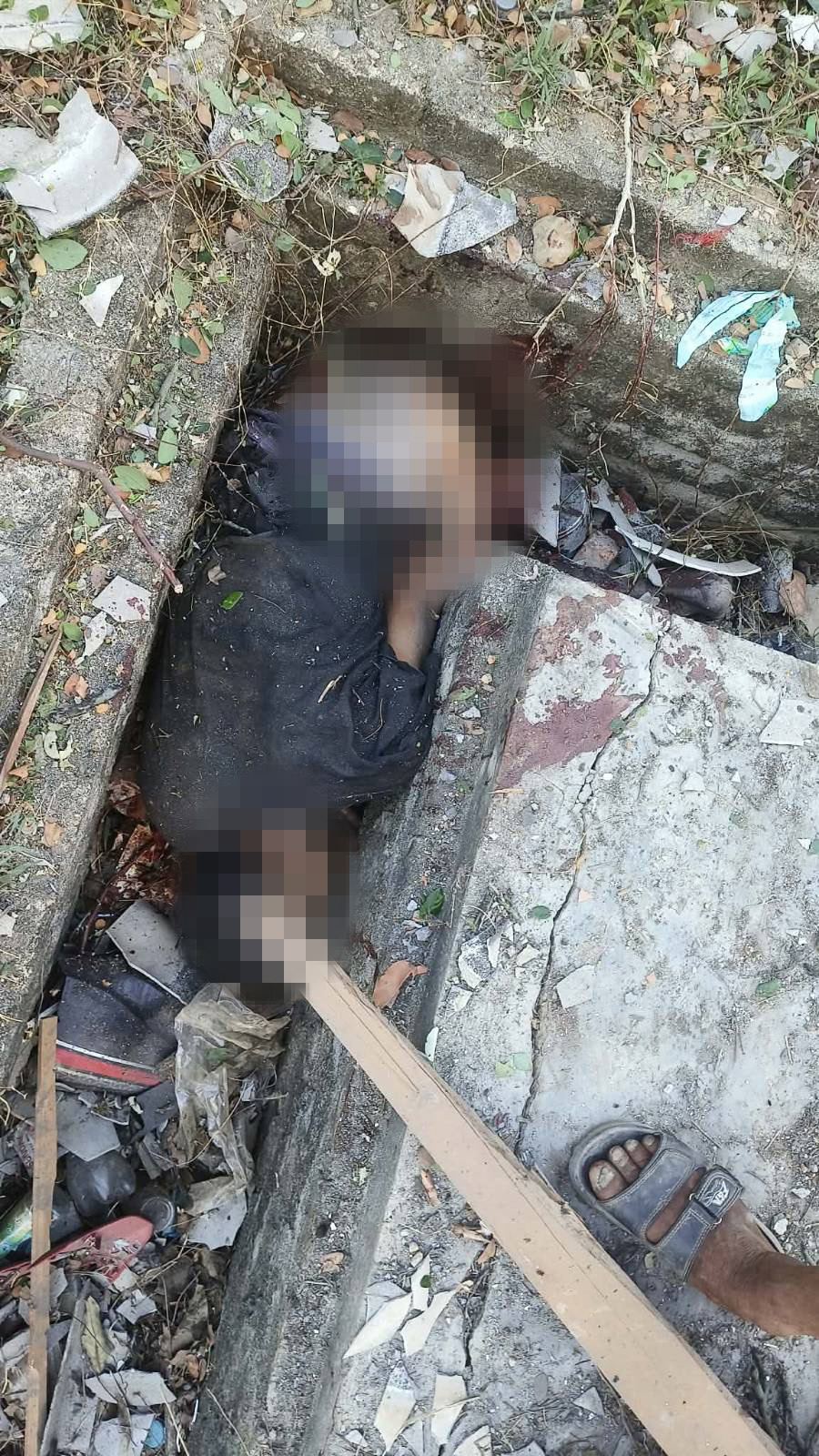


These photos were received on 15 May 2026 from a township leader. On 14 May 2026, in Bg--- village, Moh Taw area, T’Naw Th’Ree Township, Mergui-Tavoy District, a Burma Army fighter jet conducted an air strike, killing two villagers. These photos show the destruction of villagers’ houses and properties, and the bottom-right photo shows the body of one of the villagers killed. The KNLA combined forces buried the two people who were killed in the air strike. Because of the air strike and Burma Army militarisation in the area, some villagers displaced to the Thai-Burma border, while others fled into the forest. The displaced villagers faced difficulties in finding shelter, food, and medicine. [Photos: Local leader]
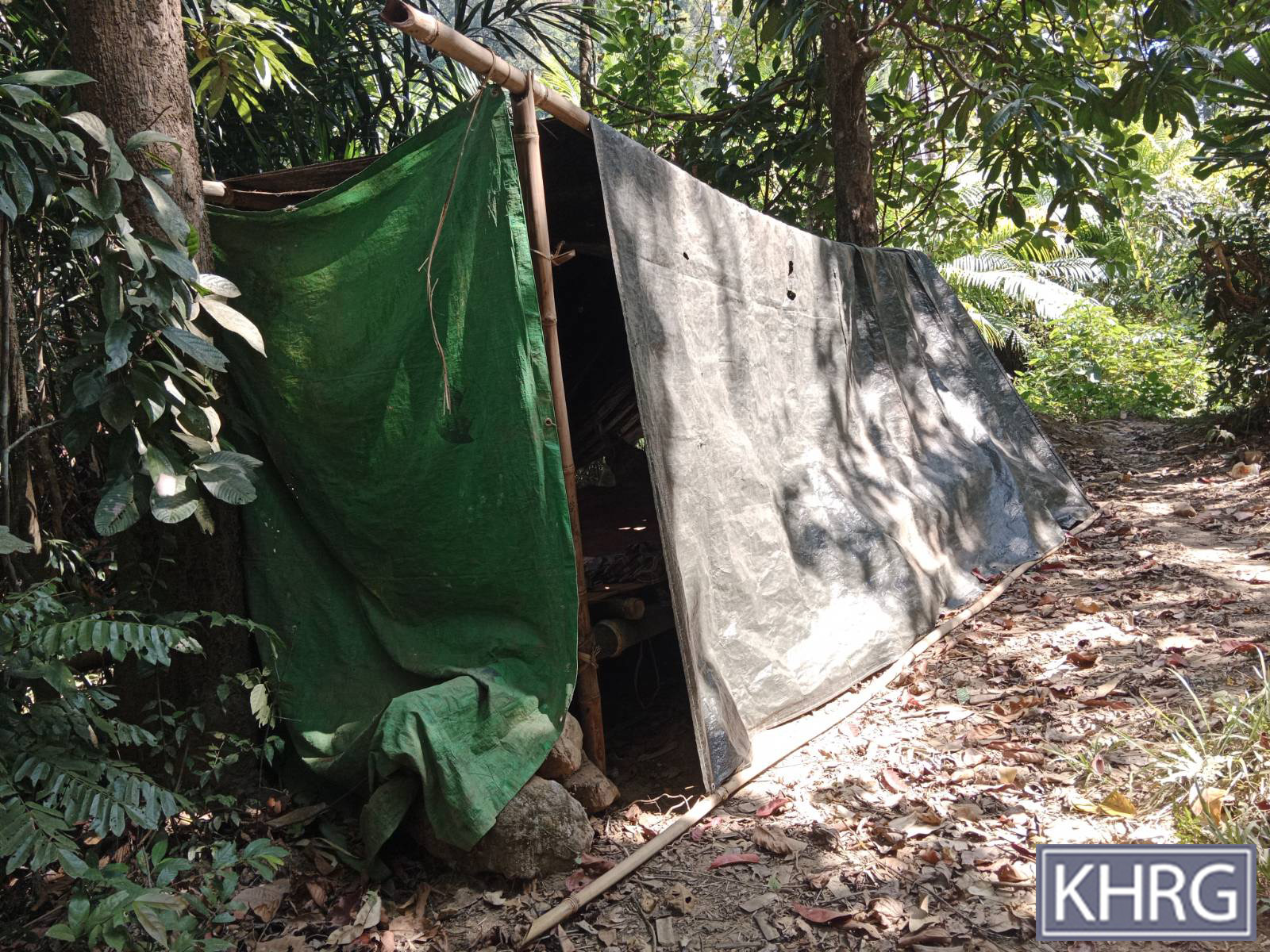
This photo was taken in January 2026 in Bh--- internally displaced person (IDP) site, Meh Klaw village tract, Bu Tho Township, Mu Traw (Hpapun) District. Villagers from Bi--- village, Meh Klaw village tract, were displaced here due to previous Burma Army air strikes and shelling conducted on Bi--- village. On 15 January 2026, at night, the Burma Army carried out a drone strike and dropped two bombs on Bh--- IDP site. Due to the drone strike, a villager named Saw X--- was injured on his left leg. He was transported to Bj--- clinic in Meh Klaw village tract, which is administered by the KDHW. As there was insufficient medicine in the clinic, he was then transported to another KDHW clinic in Bu Tho Township. After the incident, Saw X--- and his family faced livelihood challenges, causing distress for the family. The photo shows a recently built hut of a displaced family in Bh--- IDP site, located close to where the Burma Army drone strike occurred. [Photo: KHRG]
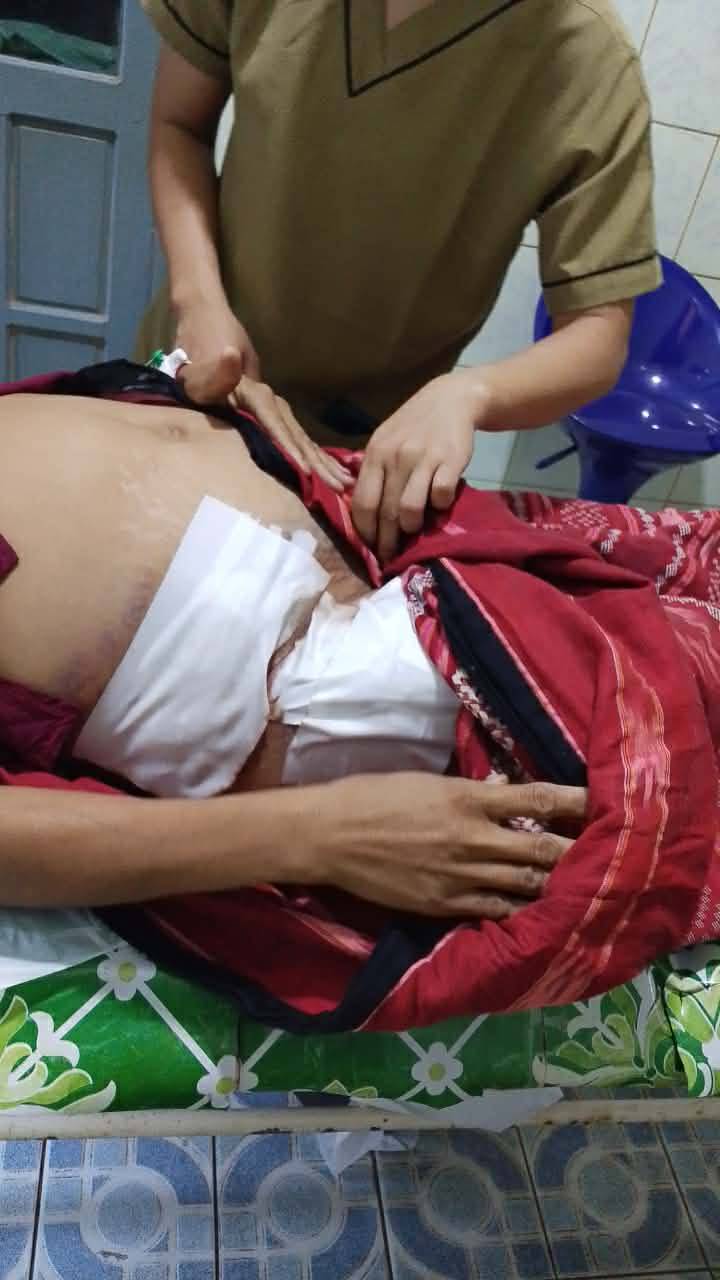
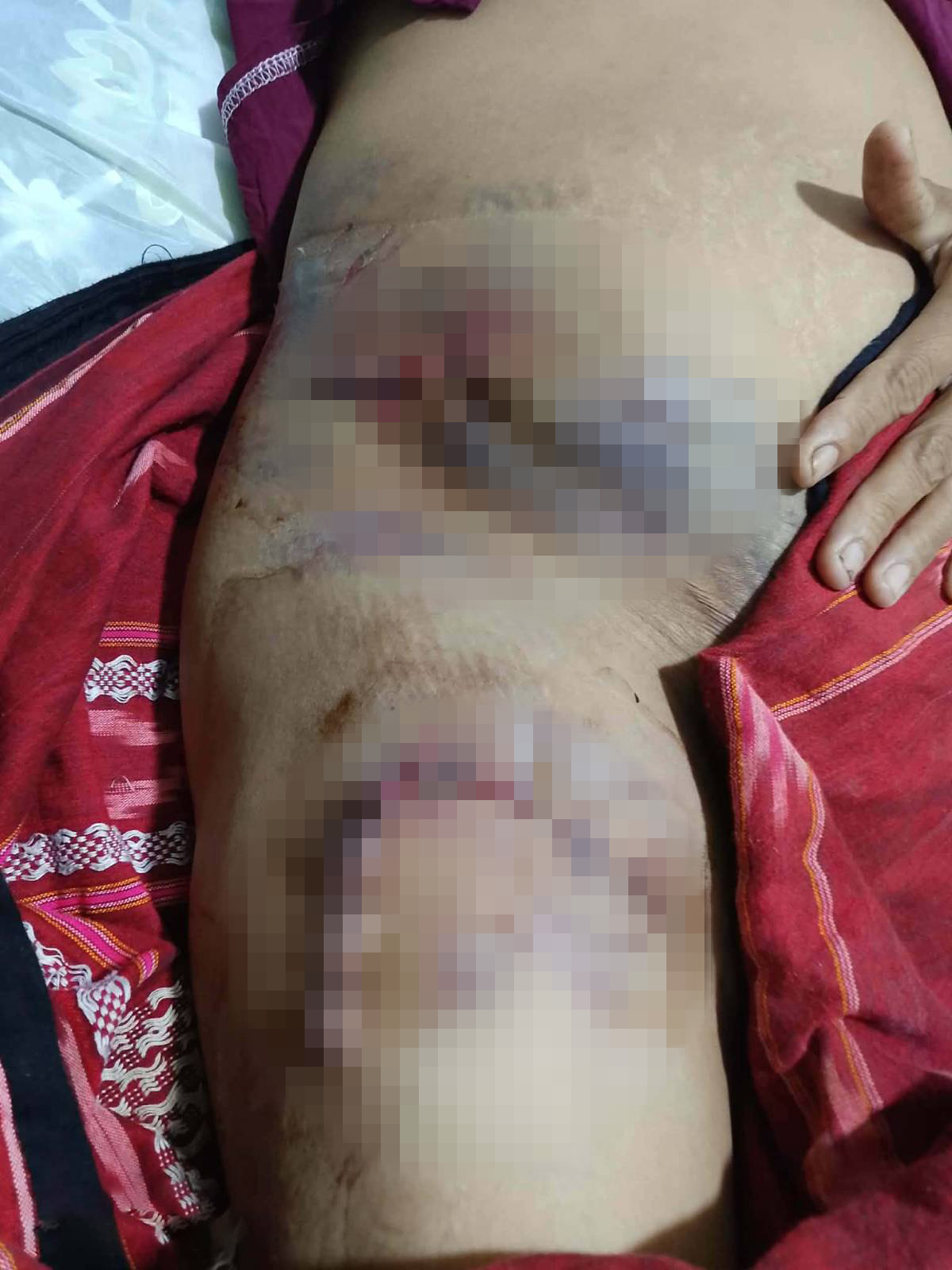


These two photos were received from a local villager on 12 January 2026, from Bl--- village, Htee Th’Daw Hta village tract, Bu Tho Township, Mu Traw District. On the morning of 12 January 2026, combined forces of the Burma Army and Border Guard Force (BGF)[28] Battalion #1014, based in Hpaw Htee Hkuh and Tha Ghaw Play army camps, Bu Tho Township, fired one 120 mortar shell into Bk--- place, injuring one villager named Naw Y--- (35 years old), who sustained injuries to her abdomen and thigh. According to a local villager, the reason the Burma Army and the BGF fired the mortar is because the KNLA attacked them with a drone the previous evening. The above photos show Naw Y--- receiving medical care from a KDHW healthcare worker in Htee Th’Daw Hta village tract. [Photos: Local villager]
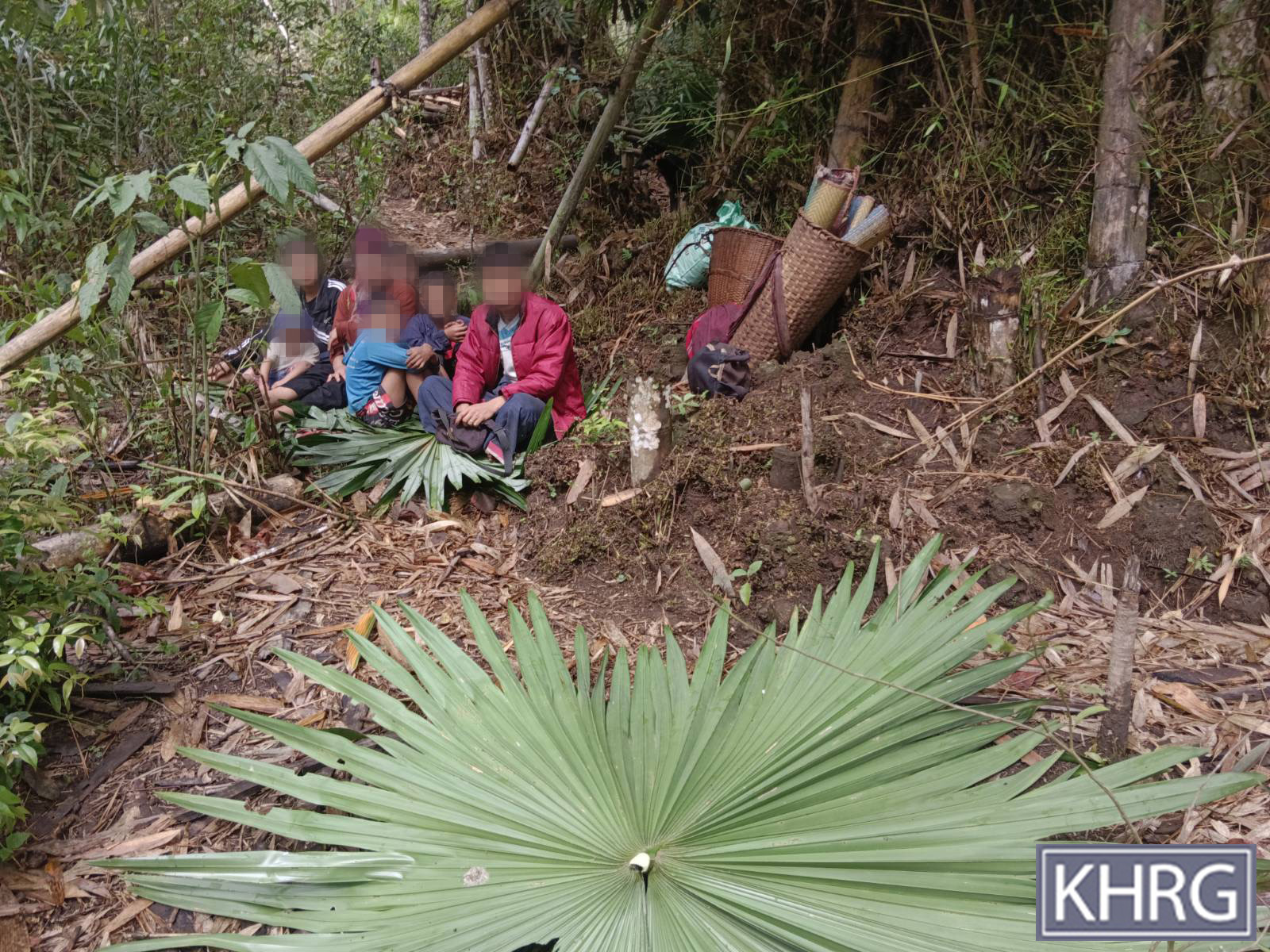
This photo was taken in February 2026 in Bm--- village, Hplah Hkoh village tract, Lu Thaw Township, Mu Traw District. In February 2026, the Burma Army conducted air strikes and shelling into multiple villages in Hplah Hkoh village tract. The photo shows a family from Bm--- village, Hplah Hkoh village tract, displaced in the forest in the Hplah Hkoh village tract area. The displaced villagers faced livelihood and healthcare difficulties. [Photo: KHRG]
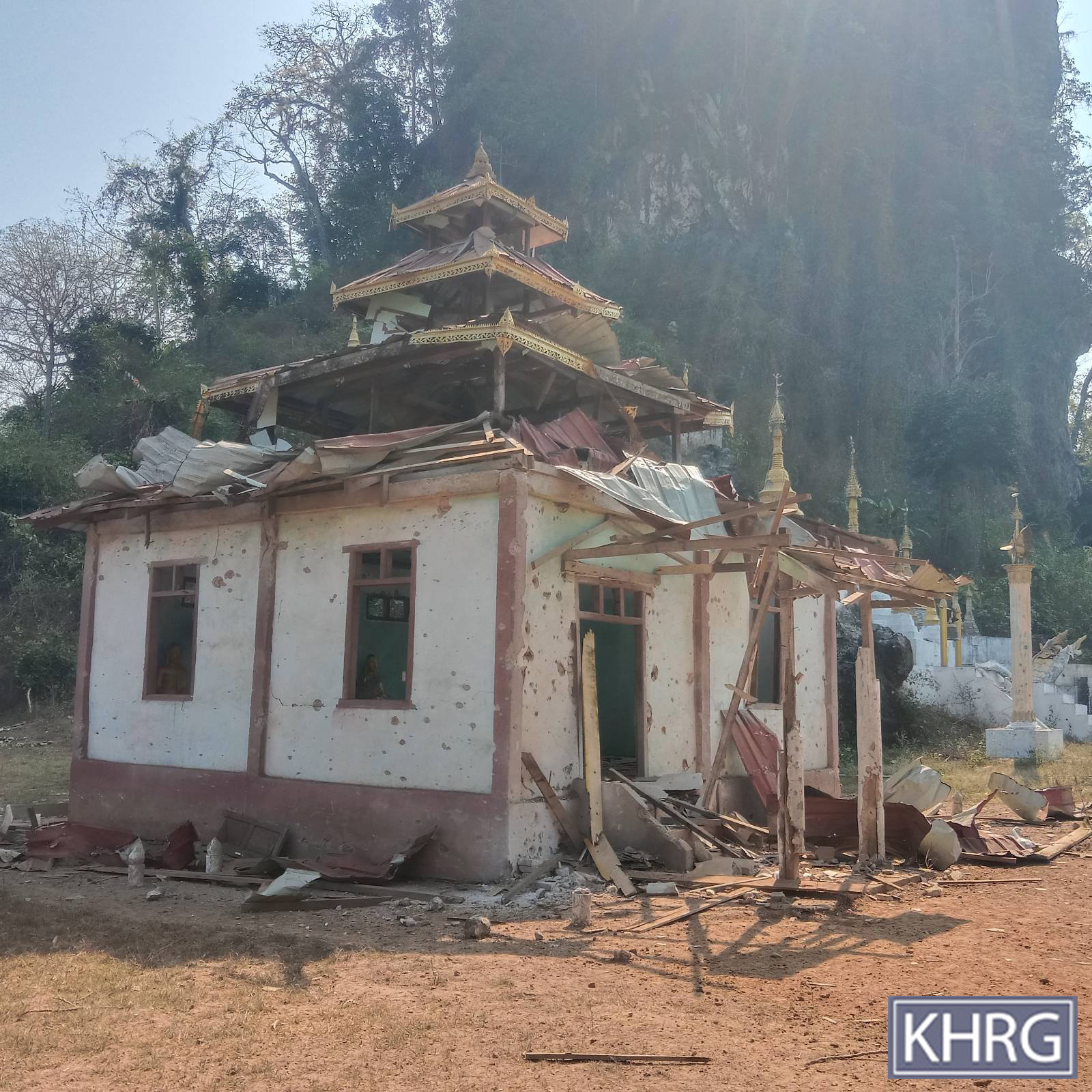
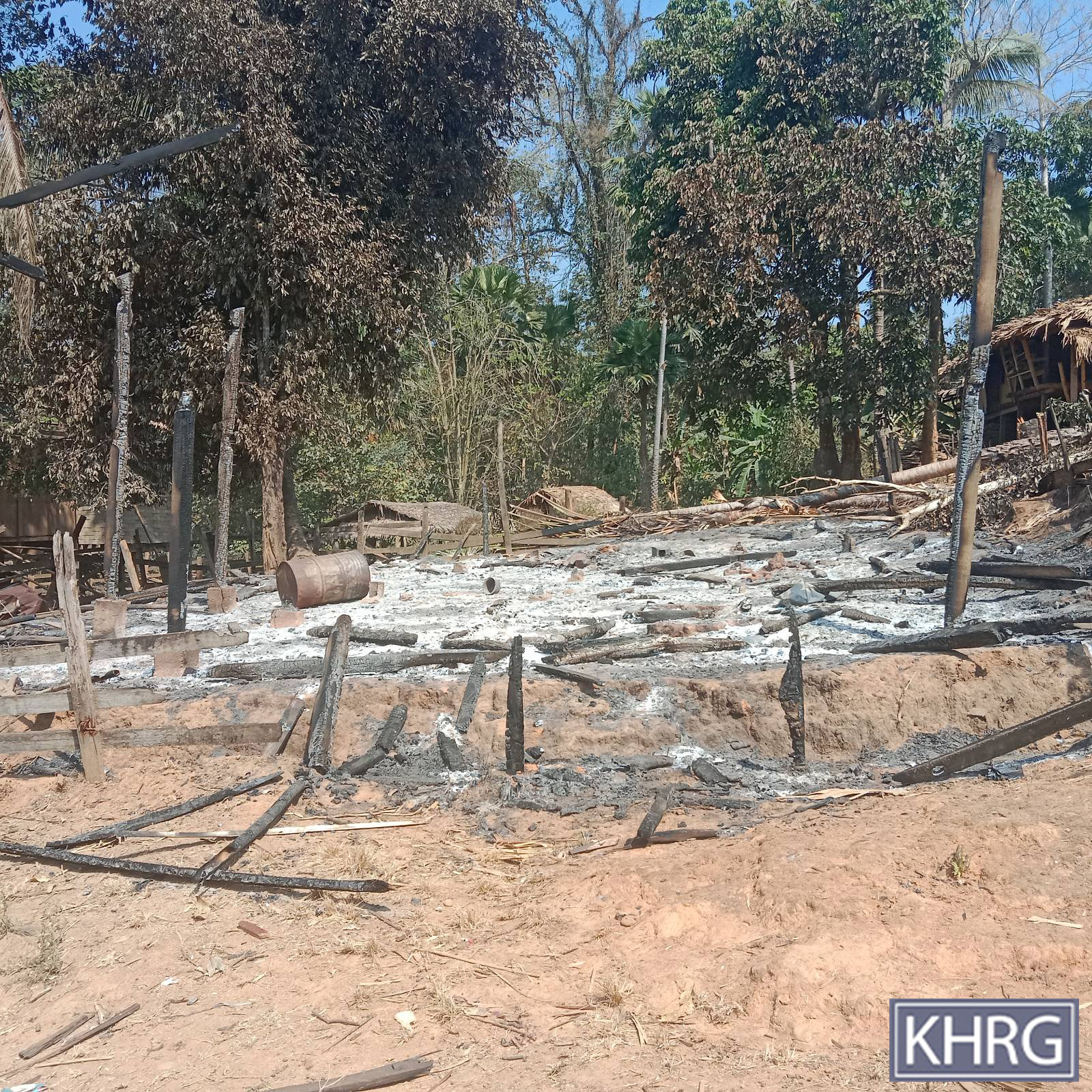


These photos were taken in March 2026 in Bn--- village, Law Hkaw Htee village tract, Dwe Lo Township, Mu Traw District. On 7 March 2026, shortly after 11 am, a Burma Army fighter jet dropped two 500-pound bombs on Bn--- village. One of the bombs landed inside the Bn--- monastery compound, destroying and damaging multiple roofs and walls. The other bomb destroyed four villagers’ houses, belonging to Saw Z---, Saw Za---, Saw Zb---, and Saw Zc---. The photo on the left shows the damage and destruction inside the monastery compound, and the photo on the right shows the burned-down houses of Bn--- villagers following the Burma Army air strike. [Photos: KHRG]
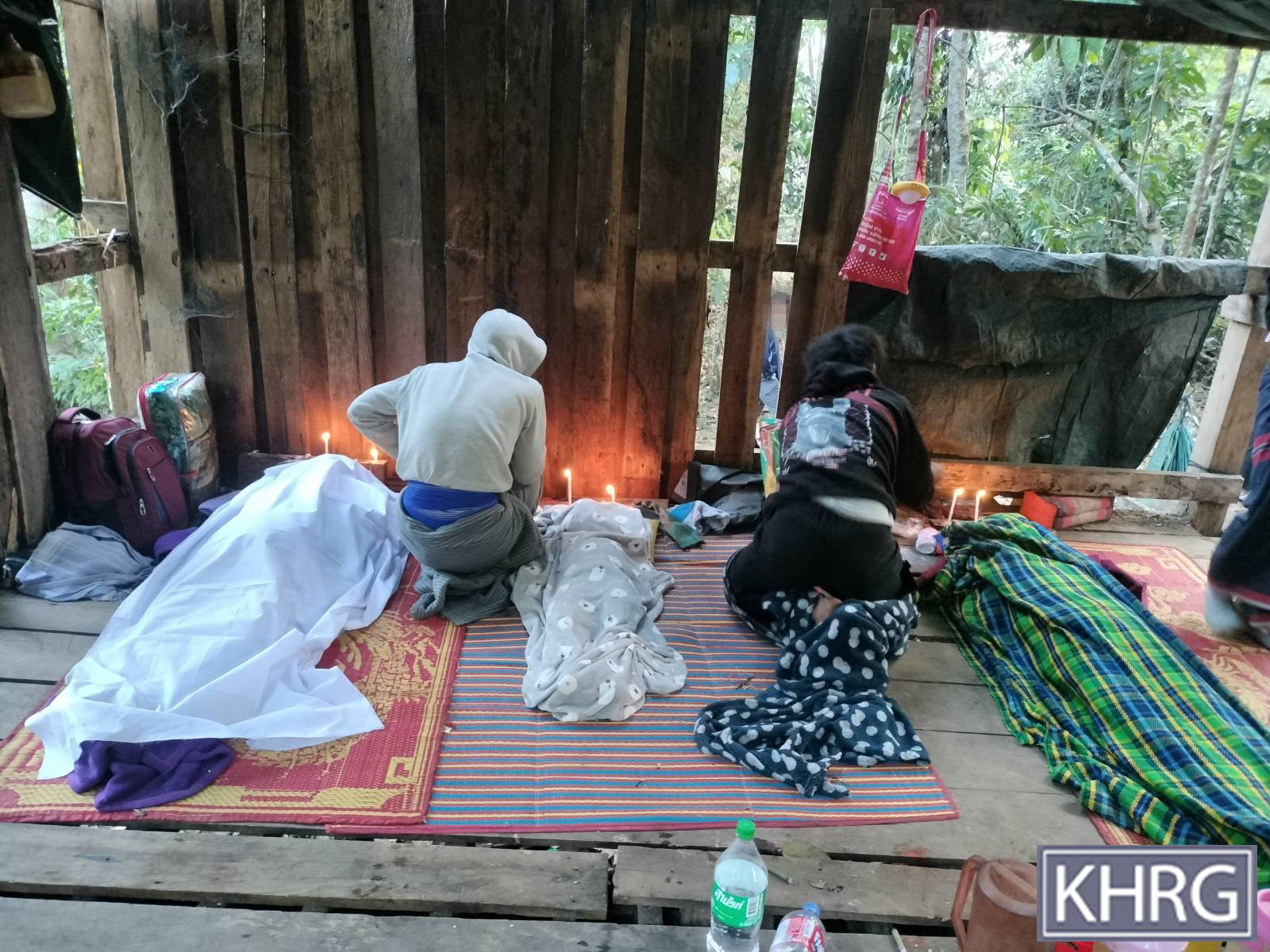
This photo was taken in March 2026 in Bo--- village, Tay Muh Der village tract, Lu Thaw Township, Mu Traw District. On 9 March 2026, at 1:15 pm, a Burma Army fighter jet dropped one 500-pound bomb on villagers’ houses in Bo--- village, killing three villagers and injuring five others. The villagers who were killed were 70-year-old Naw Zd---, who was hit by the shrapnel on her chest and her right leg; her granddaughter, 4-year-old Naw Ze---, who was hit by shrapnel on her right arm; and 57-year-old Naw Zf---, who sustained injuries to her head. While Stronghold Rescue & Relief transported Naw Zf--- for medical treatment, she died before reaching the hospital, and they took her body back to Bo--- village for burial that same night. Two of Naw Zf---’s daughters, Naw Zg--- and Naw Zh--- (21 years old), who was also pregnant, were injured, with Naw Zg--- sustaining minor injuries to her head, and Naw Zh--- sustaining injuries to her chest. Naw Zf---’s son-in-law, Saw Zi--- (28 years old), sustained injuries to his abdomen, shoulders, and thighs. Saw Zj--- (72 years old) sustained injuries to his head, back, and legs. Saw Zk--- (18 years old) sustained injuries to his thigh. The air strike destroyed seven villager houses belonging to Naw Zd---, Naw Zf---, Naw Zl--- (48 years old), Saw Zj---, Naw Zm--- (38 years old), Naw Zn--- (52 years old), and Naw Zo--- (43 years old). Livestock were also killed in the air strike. The photo shows villagers preparing the bodies of Naw Zd---, Naw Ze---, and Naw Zf--- for burial. [Photo: KHRG]
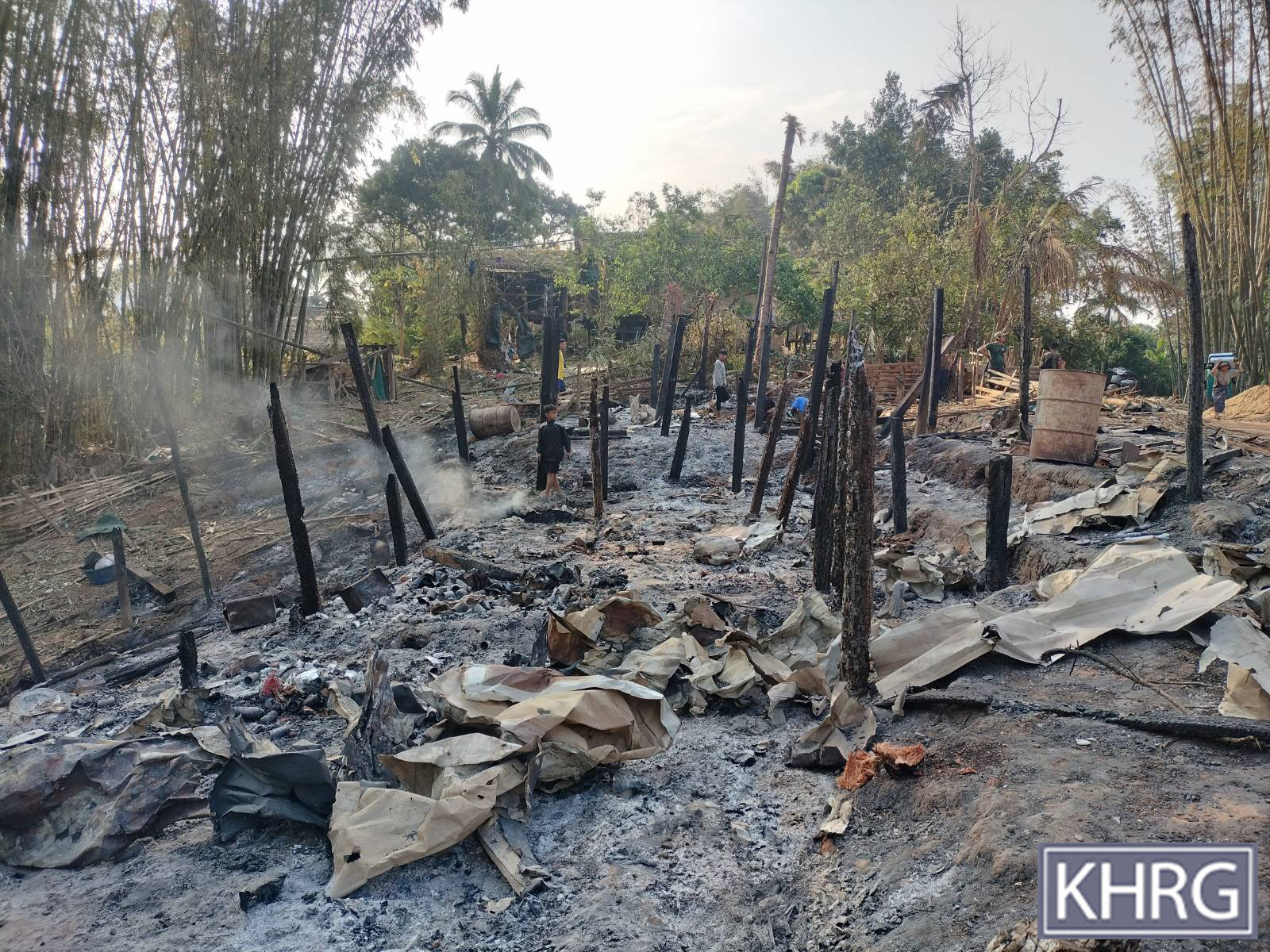
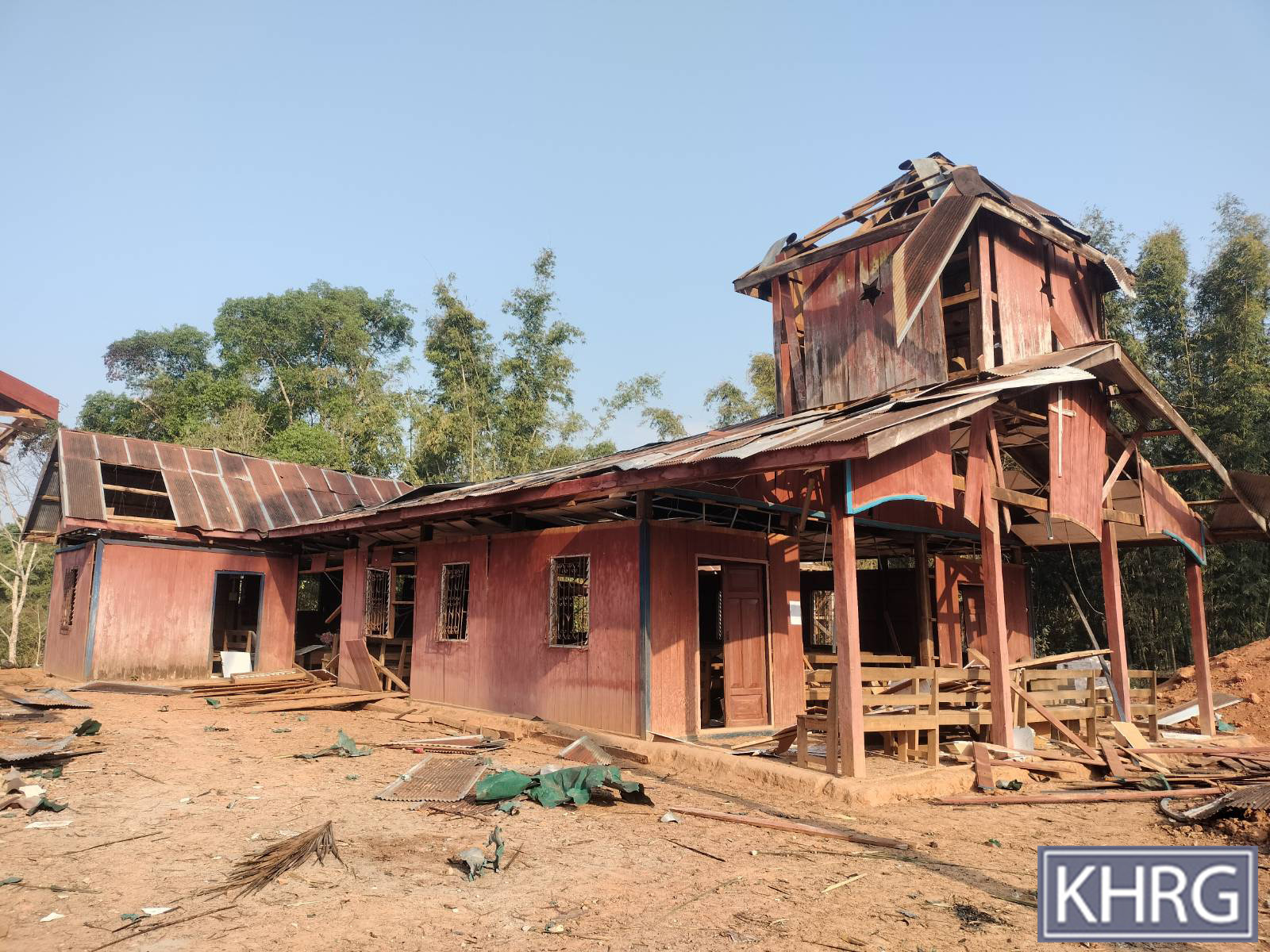


These photos were taken in March 2026 in Bp--- village, Tay Muh Der village tract, Lu Thaw Township, Mu Traw District. On 9 March 2026, at 1:10 pm, a Burma Army aircraft dropped a bomb onto Bp--- village, and the bomb landed on Ma Zp---’s palm hill farm. Then, at 1:20 pm, the Burma Army conducted another air strike onto Bp--- village. The house of a villager named Saw Zq--- (50 years old) was burned, including his shop, and seven of his dogs and one pig were killed. The houses of Naw Zr--- (55 years old), Naw Zs--- (40 years old), Saw Zt--- (76 years old), Saw Zu--- (50 years old), and Naw Zv--- (32 years old) were destroyed, and Naw Zv---’s pig was injured. In addition, one church, one dining room, and one church house were all destroyed. Villagers said that the Burma Army fighter jet dropped four 500-pound bombs in total onto the village. Following the incident, villagers fled Bp--- village and displaced into the forest. The photo on the left shows the destroyed villagers’ houses. The photo on the right shows the destroyed church. [Photos: KHRG]
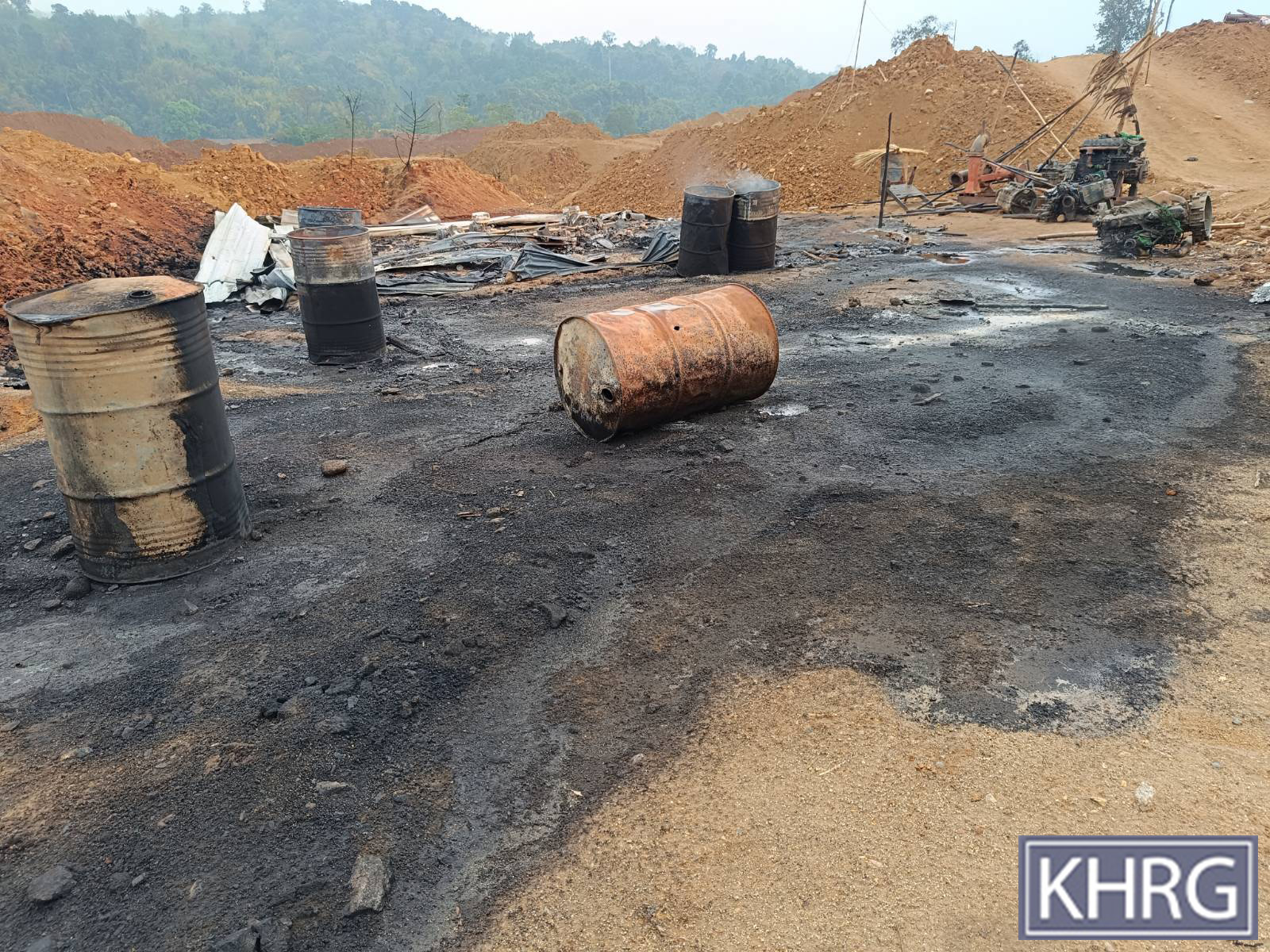
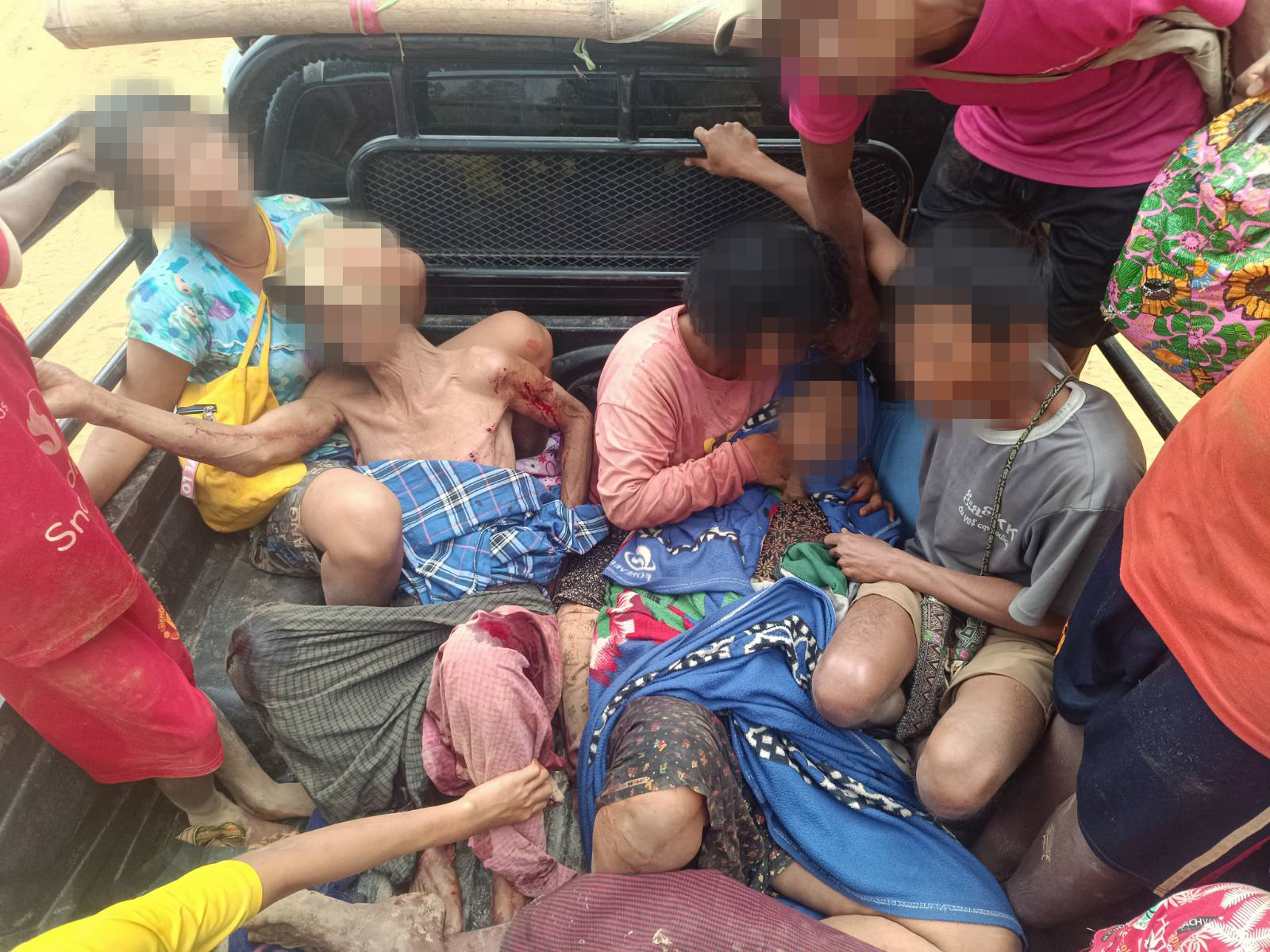


These photos were taken in March 2026 at Bq--- gold-mining site in Br--- village, Mah Lay Ler village tract, Dwe Lo Township, Mu Traw District. On 11 March 2026, at 3:10 pm, a Burma Army fighter jet conducted an air strike, dropping two 300-pound bombs on Bq--- gold-mining site. The air strike killed two workers on the spot: Ko[29] Zw--- (16 years old) from Bilin Township, Doo Tha Htoo District, and U Zx--- (52 years old) from Ayeyarwady Region. 13 other workers were injured: U Zy---, Daw Zz---, Maung Ya---, Ma Yb---, Ma Yc---, Daw Yd---, Daw Ye---, Ma Yf---, Yg---, Ma Yh---, Yi---, Yj---, and Yk---. The air strike also destroyed four huts, four water-pumping machines, 20 petrol barrels, and other mining machinery. The photo on the left shows the gold-mining area that was struck by the air strike. The photo on the right shows injured gold-mining workers being transported from the site. [Left photo: KHRG; Right photo: Local authority]
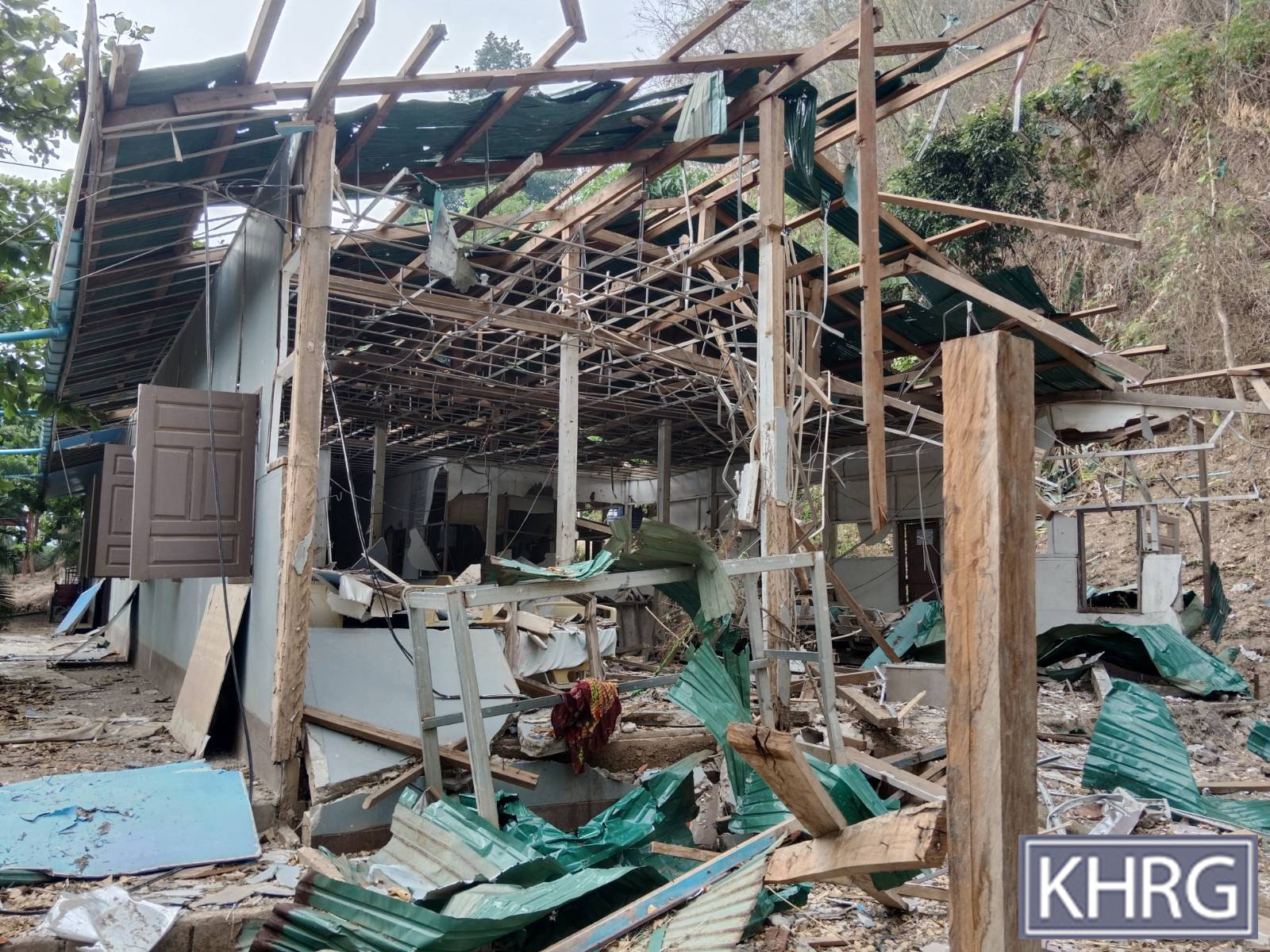
This photo was taken in May 2026 in Bs--- village, Htee Ler Poo village tract, Bu Tho Township, Mu Traw District. On the night of 11 April 2026, a Burma Army fighter jet carried out an air strike and dropped two bombs on Bs--- village. The bombs hit the compounds of a clinic and a church. Due to the air strike, the hospital, shelters for healthcare workers, a church, and a church dining hall were completely destroyed. The photo shows the destroyed Bs--- clinic. [Photo: KHRG]
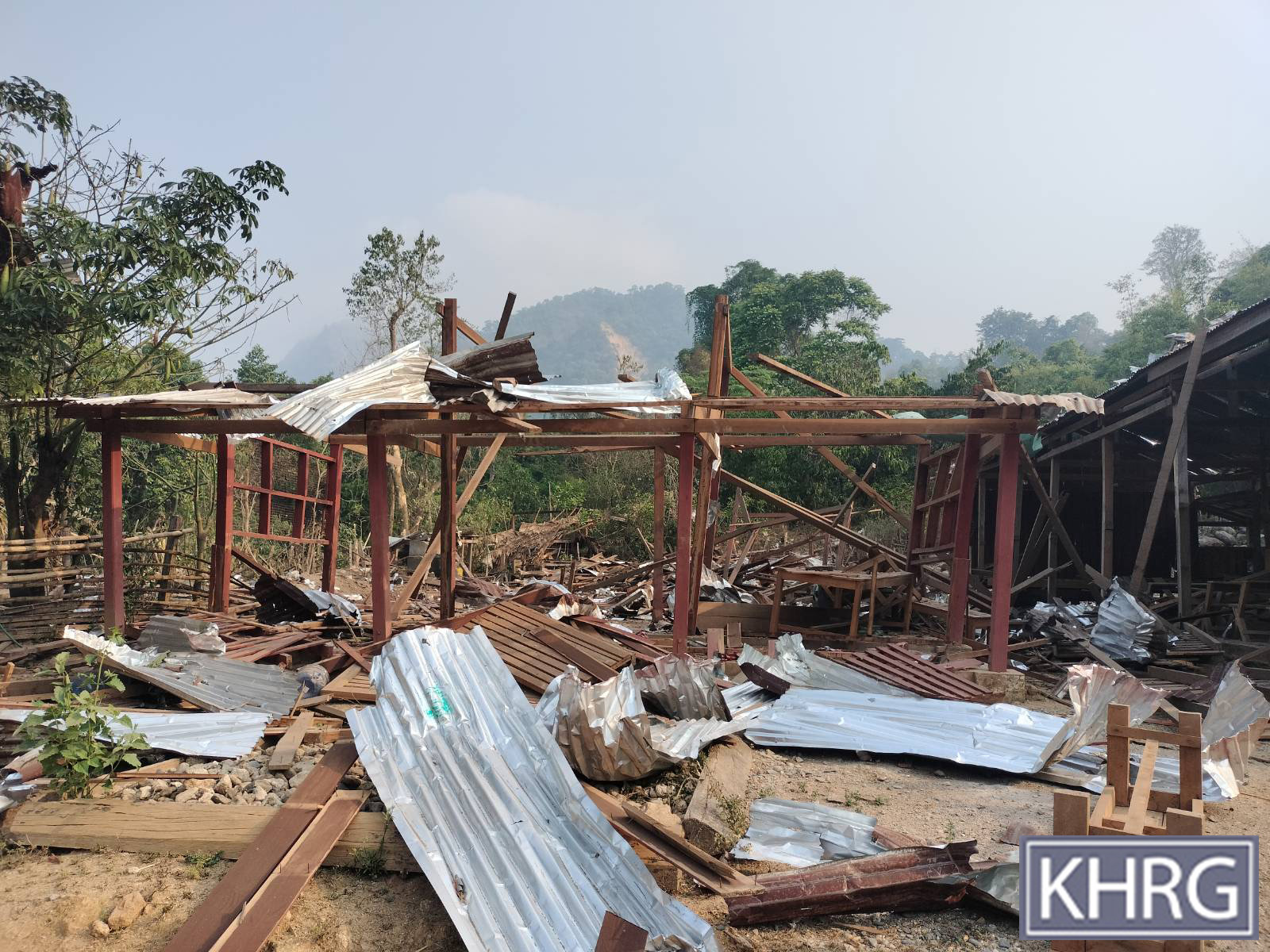
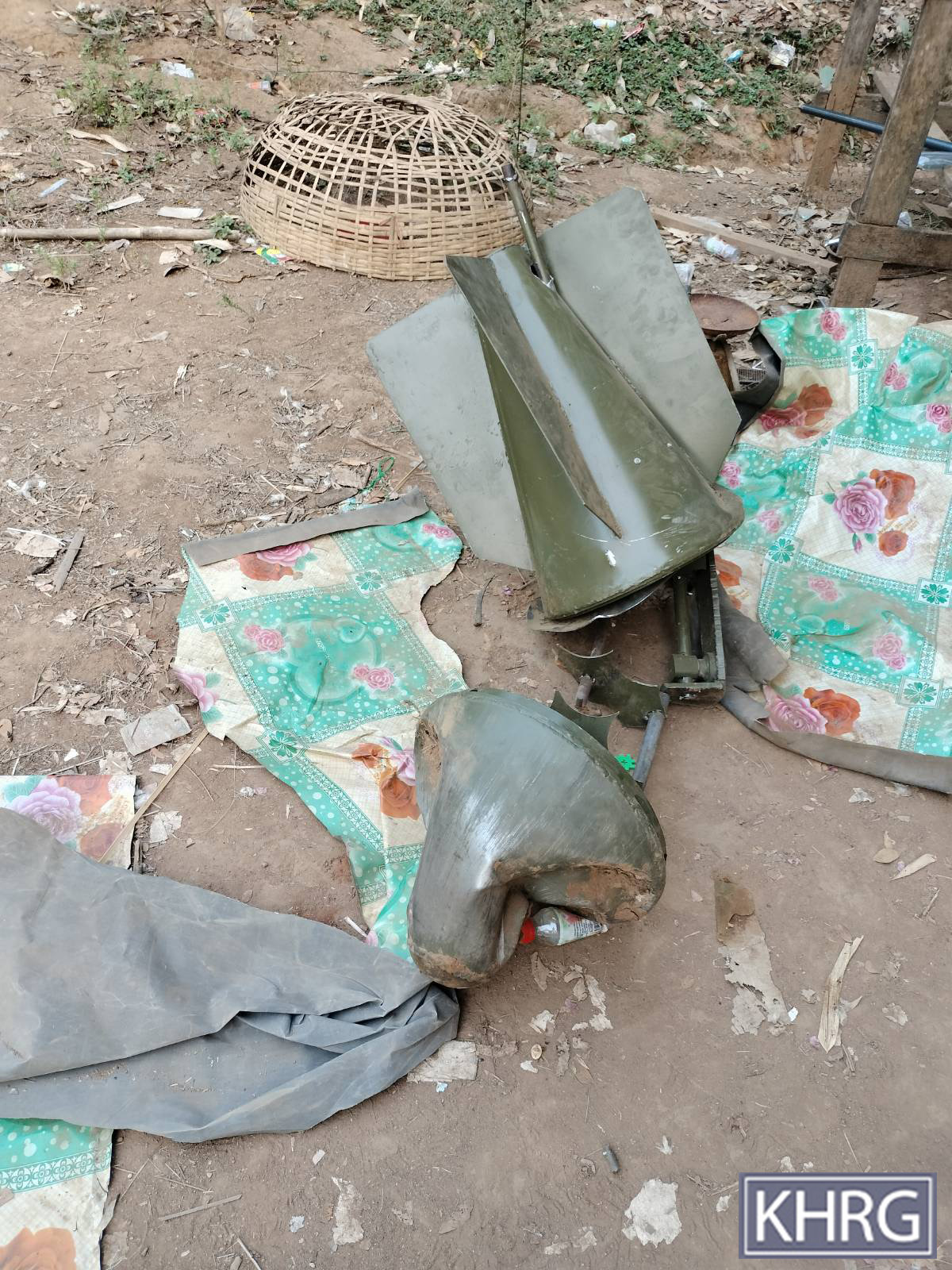


These two photos were taken in April 2026 in Bt--- village, Kheh Pa Hta village tract, Lu Thaw Township, Mu Traw District. On 15 April 2026, from 4 pm until 5:30 pm, the Burma Army conducted continuous air strikes by fighter jet and Y-12 aircraft on Bt--- village, killing three villagers and injuring 11 others. The three villagers who were killed were Saw Yl--- (63 years old), Saw Ym--- (28 years old), and Saw Yn--- (43 years old). According to local villagers, the Burma Army dropped approximately 110 bombs on the village, including cluster bombs, 500-pound bombs, and 300-pound bombs. The aircraft also fired rockets and Oerlikon shells, and the Y-12 shot at the village with machine guns. As a result of the air strikes, school, clinic, and church buildings were destroyed; at least 20 villagers’ houses were burnt; almost all houses in the villages were damaged; and numerous vehicles, machines, and belongings were destroyed. There was no fighting happening in or near the village when the attacks occurred. On 16 April 2026, the Burma Army conducted another air strike on Bt--- village, injuring a villager named Saw Yo--- (54 years old). After the air strikes, villagers in the village and nearby villages fled to the forest, and a few fled to Thailand. The displaced villagers faced food, shelter, education, and healthcare challenges. The photo on the left shows the destruction caused by Burma Army air strikes conducted on Bt--- village. The photo on the right shows the remnants of one of the bombs.[30] [Photos: KHRG]
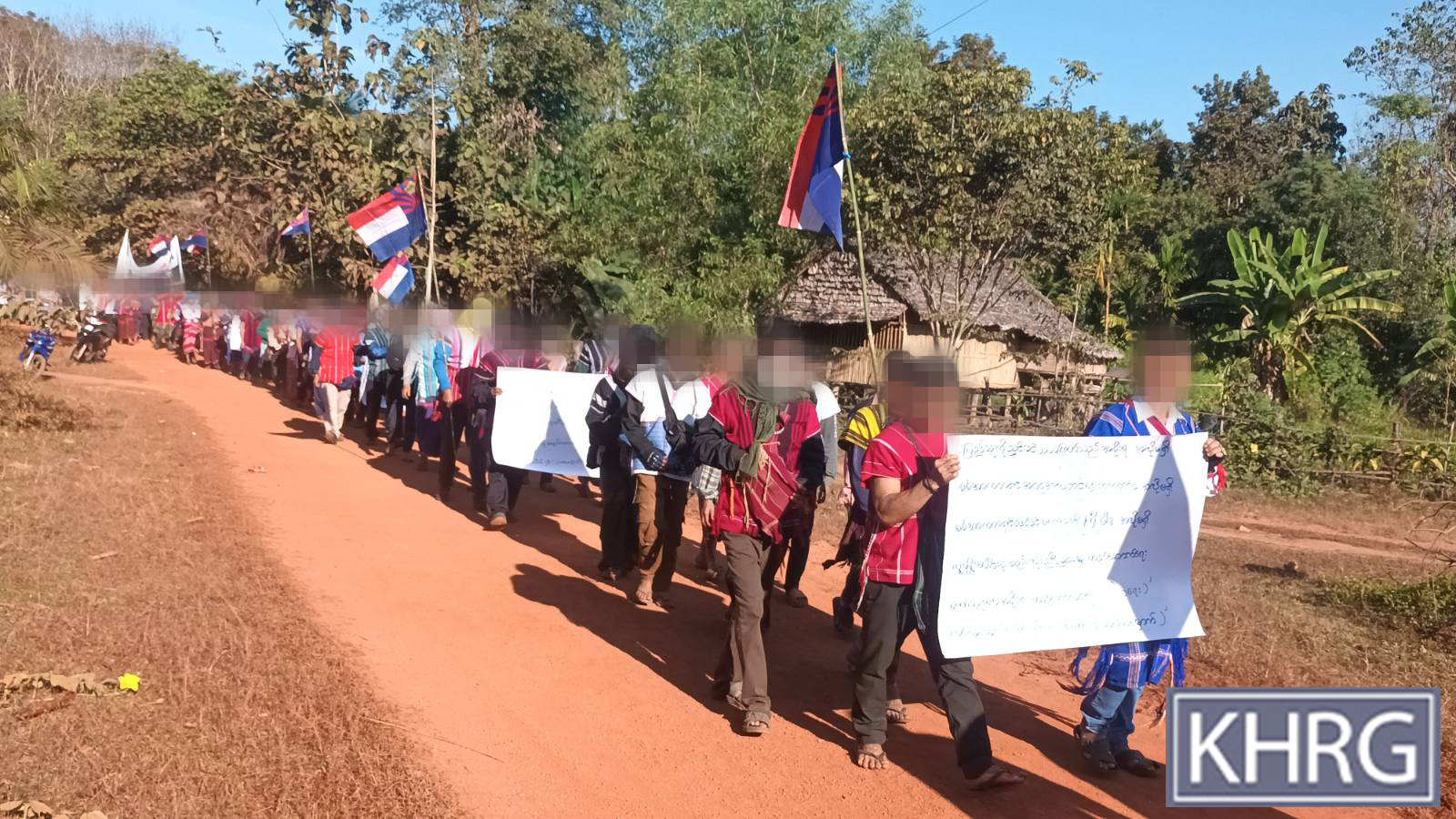
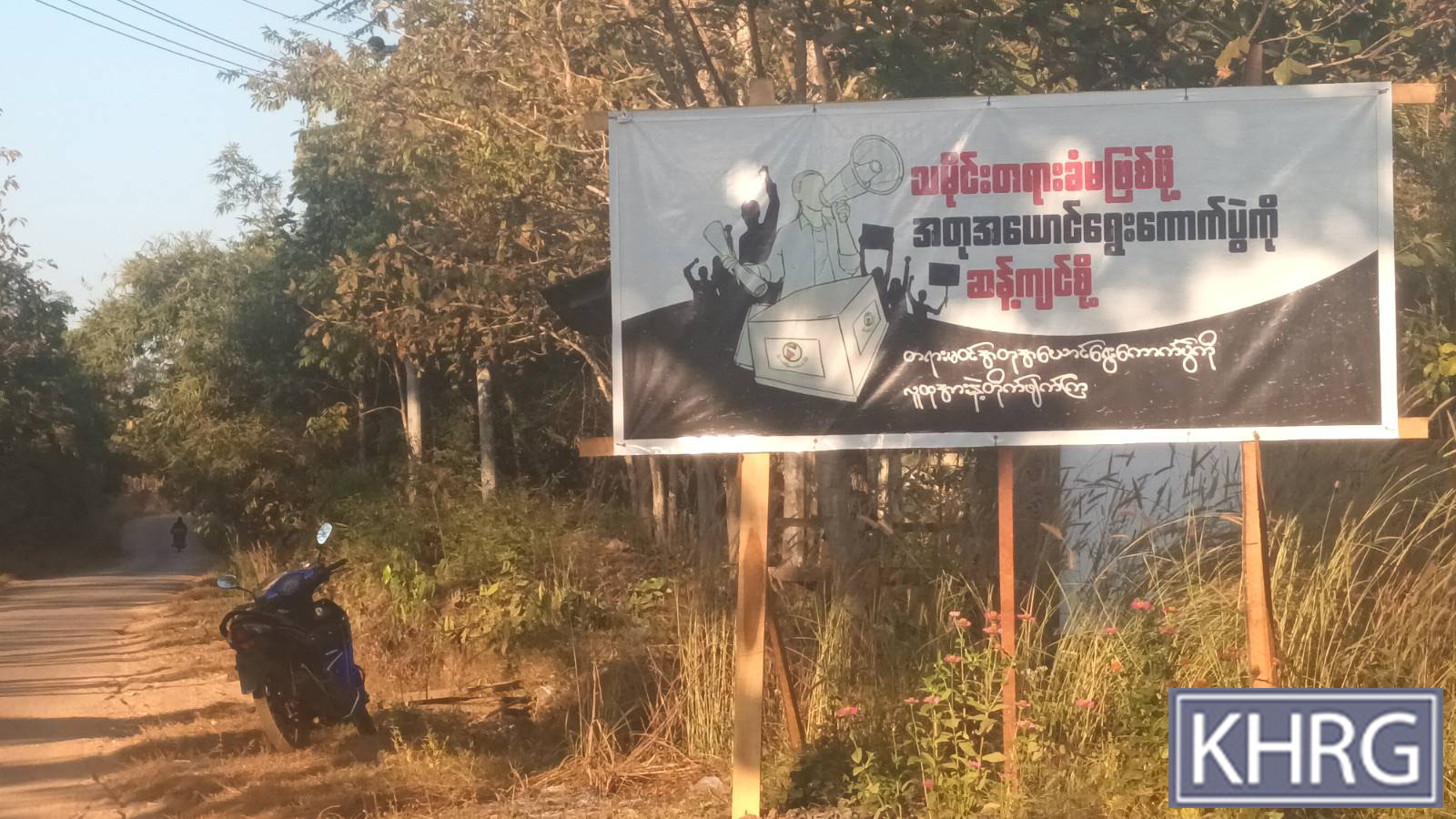


These photos were taken in January 2026 in Bu--- village, Noh Taw Plah village tract, Noh T’Kaw (Kyainseikgyi) Township, Dooplaya District. On 9 January 2026, at 9 am, around 600 villagers from Noh T’Kaw Township protested against the second and third phases of the Burma military regime’s elections that were being held on 11 and 25 January 2026. Protests took place in all four townships of Dooplaya District. During the protest, they expressed six calls: “(1) We do not need a government that tortures and kills civilians; (2) We do not want the sham election held by the military regime; (3) We do not want military regimes and ethnocentrism; (4) It is our right to build multiracial unity; (5) It is our right to build a Kaw Thoo Lei government; and (6) Do not give votes to the Burma military regime’ and protest against it.” The protest lasted for about an hour. The photos above show villagers’ protesting the Burma military regime’s elections.[31] [Photos: KHRG]
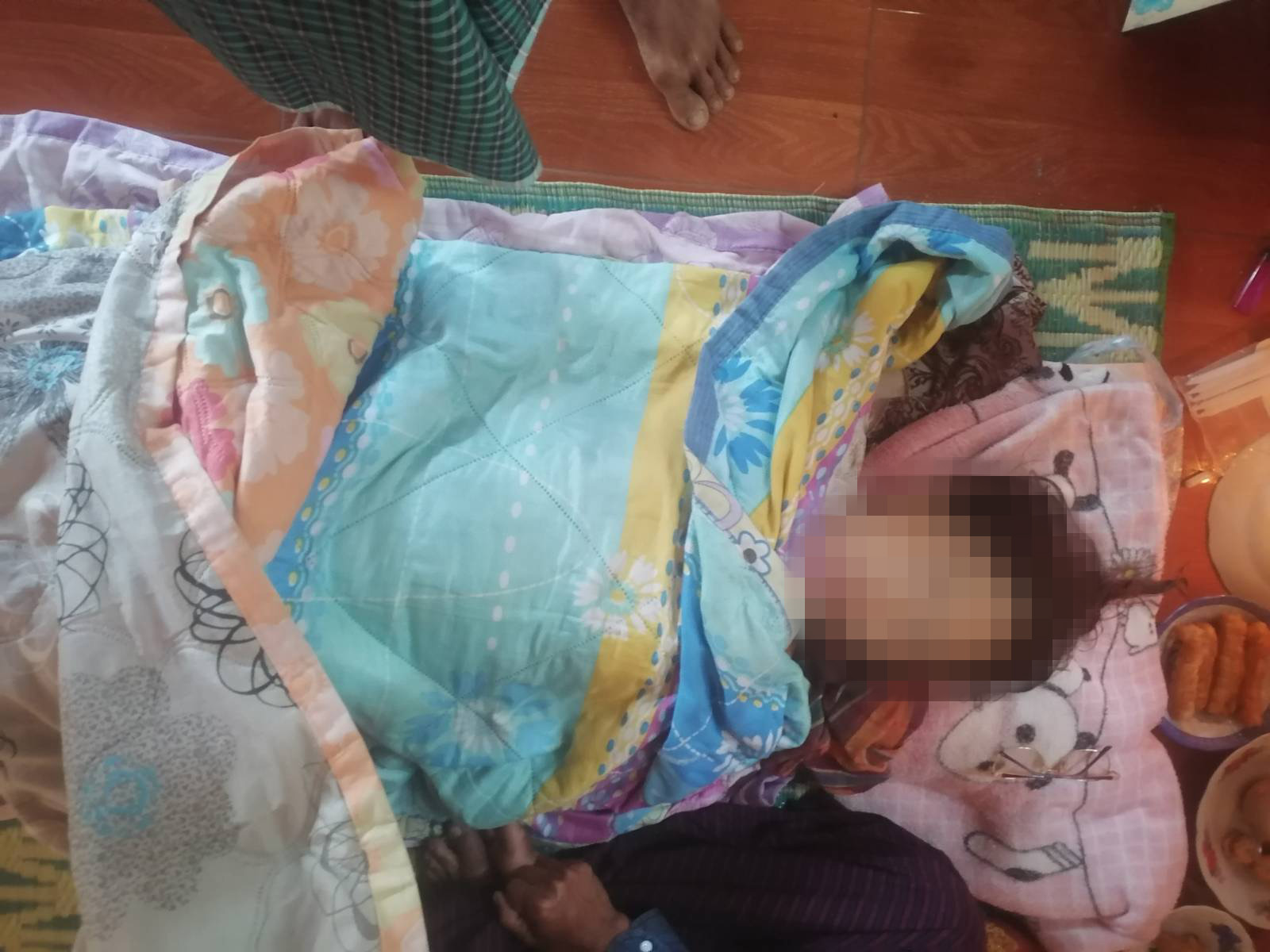
KHRG received this photo from a local leader on 21 January 2026, taken in Bv--- village, T’Hka Klo (Kya Hka Chaung) village tract, Noh T’Kaw Township, Dooplaya District. The photo shows the body of Ma Yp--- (41 years old), who was killed on 20 January 2026, around 7 pm, when soldiers from Burma Army IB #284 shot her with a machine gun while she was on her rubber plantation in Bv--- village. Ma Yp--- was struck below her left ear and died immediately. Following the incident, some villagers from Bv--- fled their homes.[32] [Photo: Local leader]
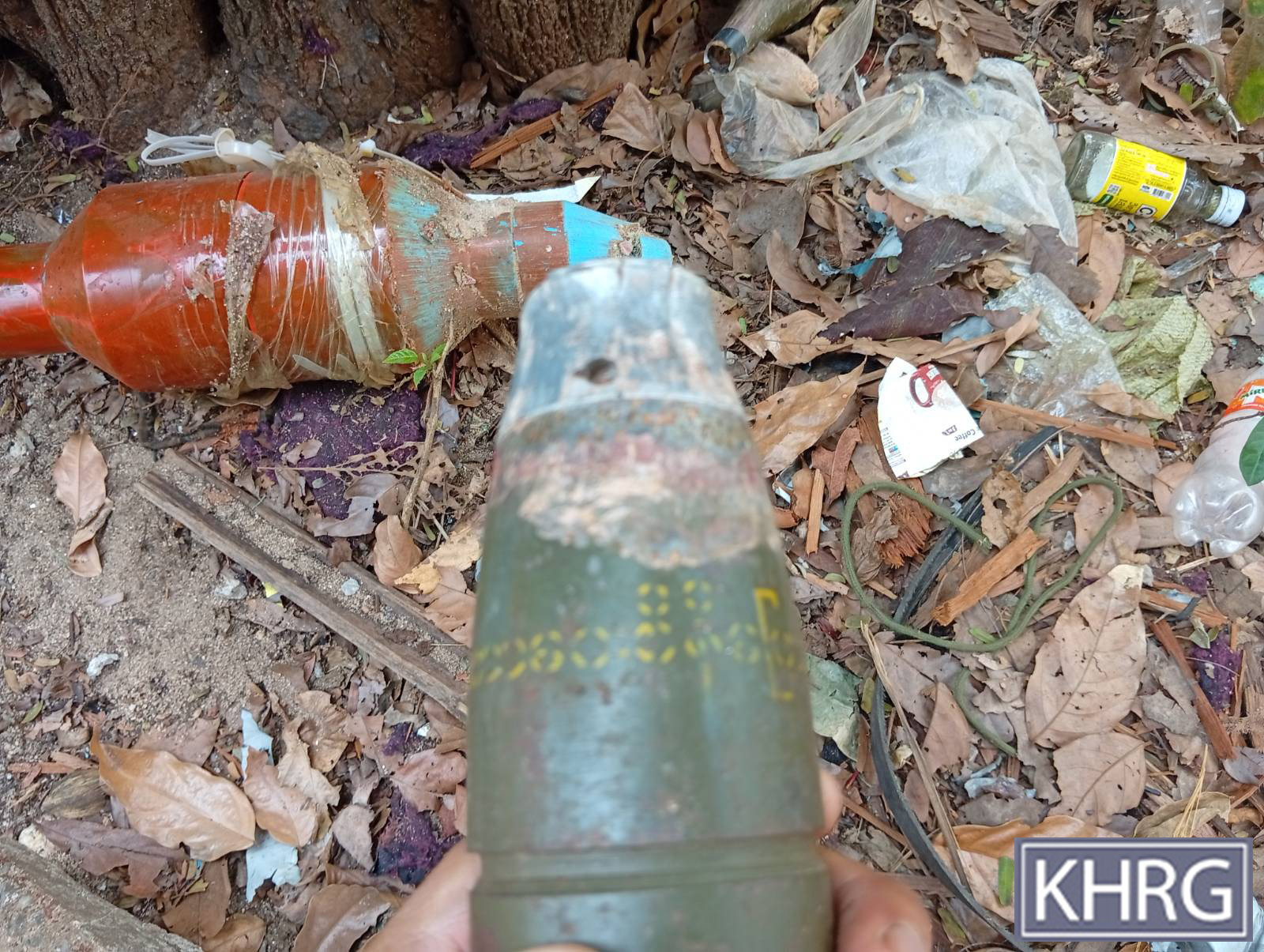
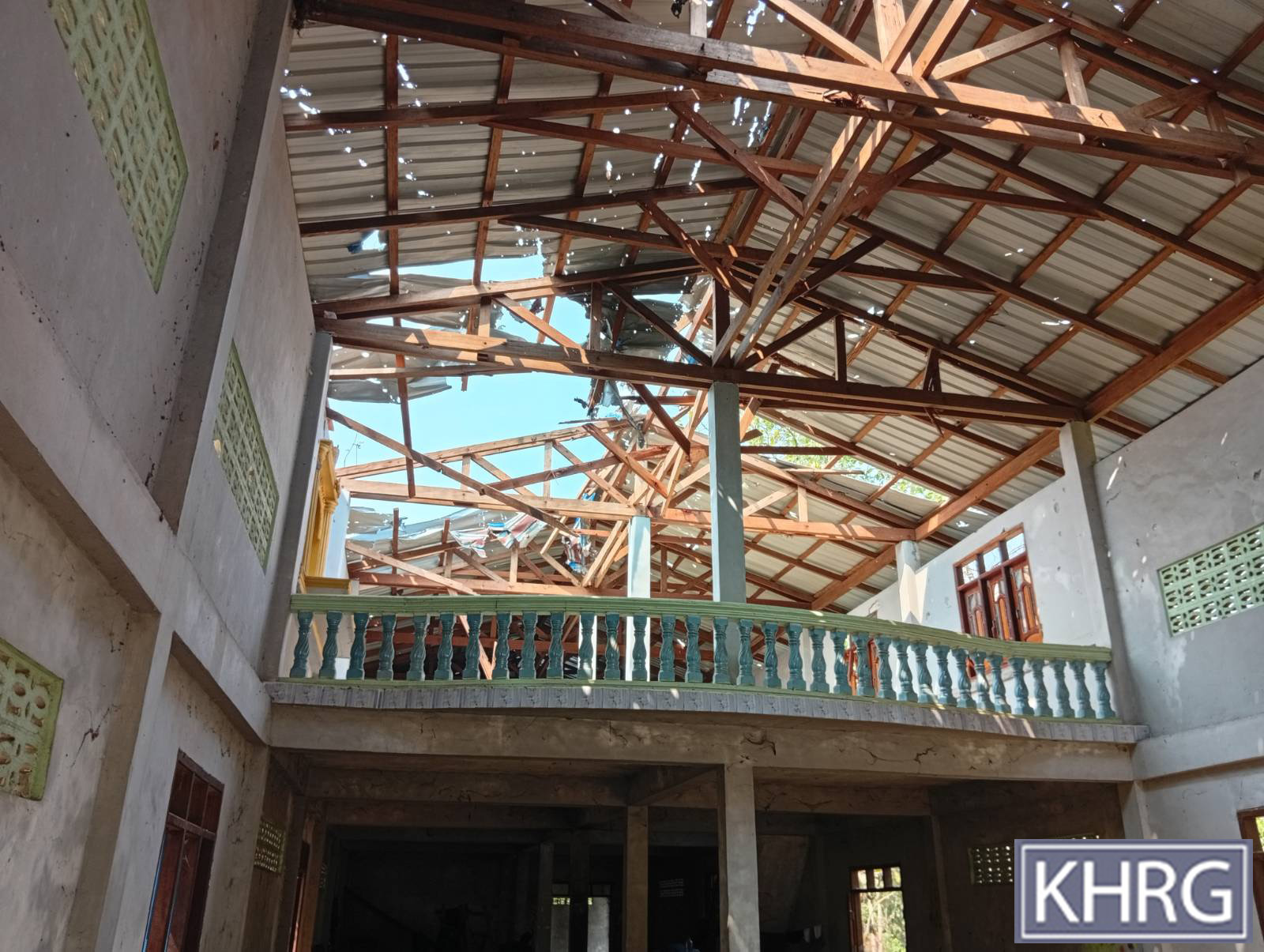


These photos were taken in February 2026 in Bw--- village, Thar Yar Kone village tract, Kaw T’Ree (Kawkareik) Township, Dooplaya District. In January 2026, the Burma Army carried out a drone strike in Bw--- village. The drone strike destroyed multiple villager houses and belongings. According to villagers, the Burma Army carried out the drone strike following fighting with resistance forces. The photo on the left shows an unexploded ordnance (UXO) and the photo on the right shows the destroyed roof of a villager’s house. [Photos: KHRG]
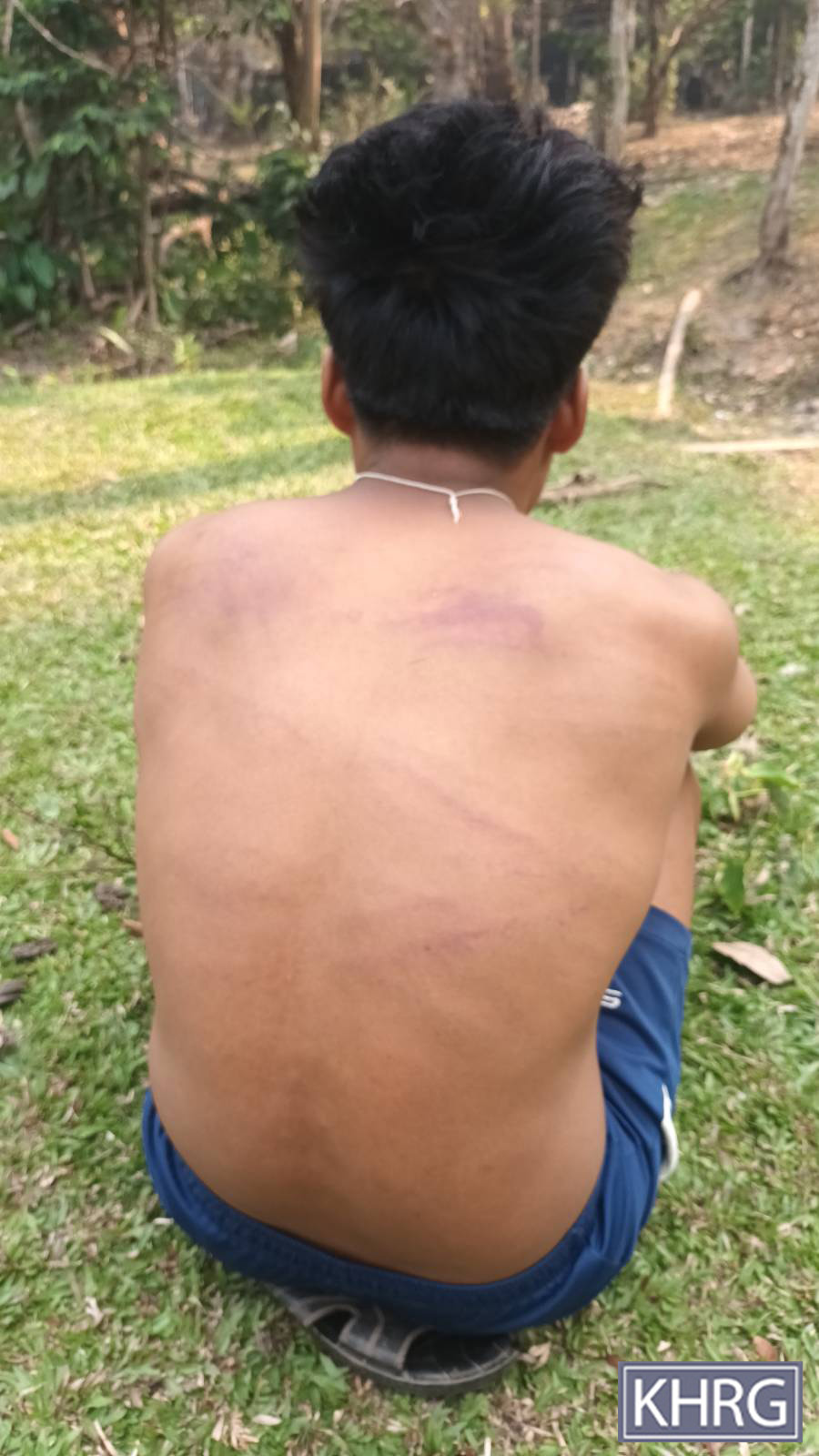
This photo was taken in March 2026 in Bx--- village, Lay Wah Hka village tract, Noh T’Kaw Township, Dooplaya District. On 20 March 2026, around 10 am, the Burma Army arrested and severely beat four young people at a checkpoint in Kyainseikgyi Town, Noh T’Kaw Township. The four villagers, Saw Yq--- (22 years old), Saw Yr--- (18 years old), Saw Ys--- (16 years old), and Saw Yt--- (19 years old) were arrested at the checkpoint after the Burma Army accused them of being part of an armed resistance group. The four young people were accompanying two friends, both women, who were traveling to another village via Kyainseikgyi Town. The two women were not arrested and sought help from a local BGF authority, who convinced the Burma Army that the four detained villagers had no relation to any armed resistance group. They were released the following hour, at 11 am, on 20 March 2026. The photo shows the welts on the back of Saw Yq--- after he was beaten with a stick by Burma Army soldiers.[33] [Photo: KHRG]
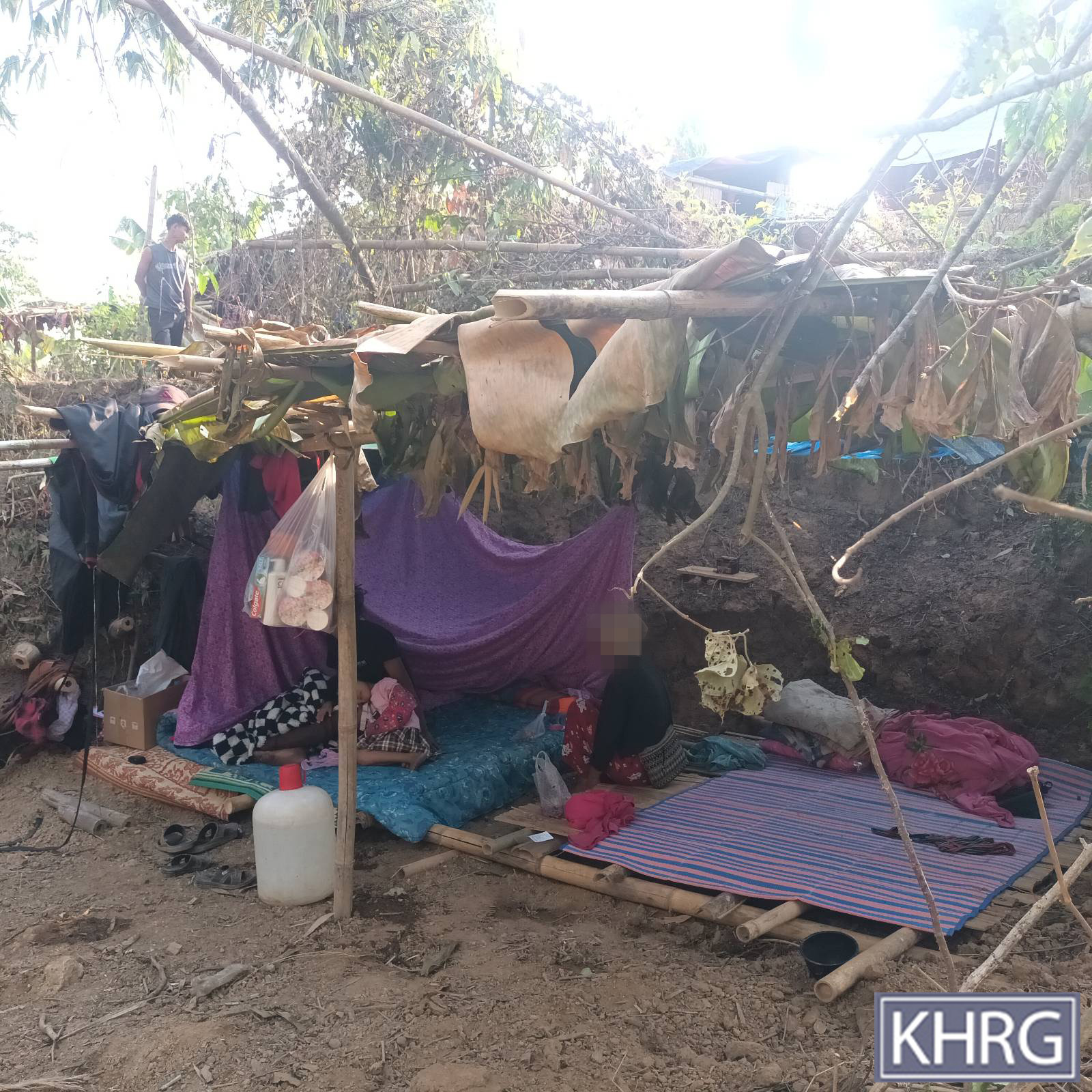
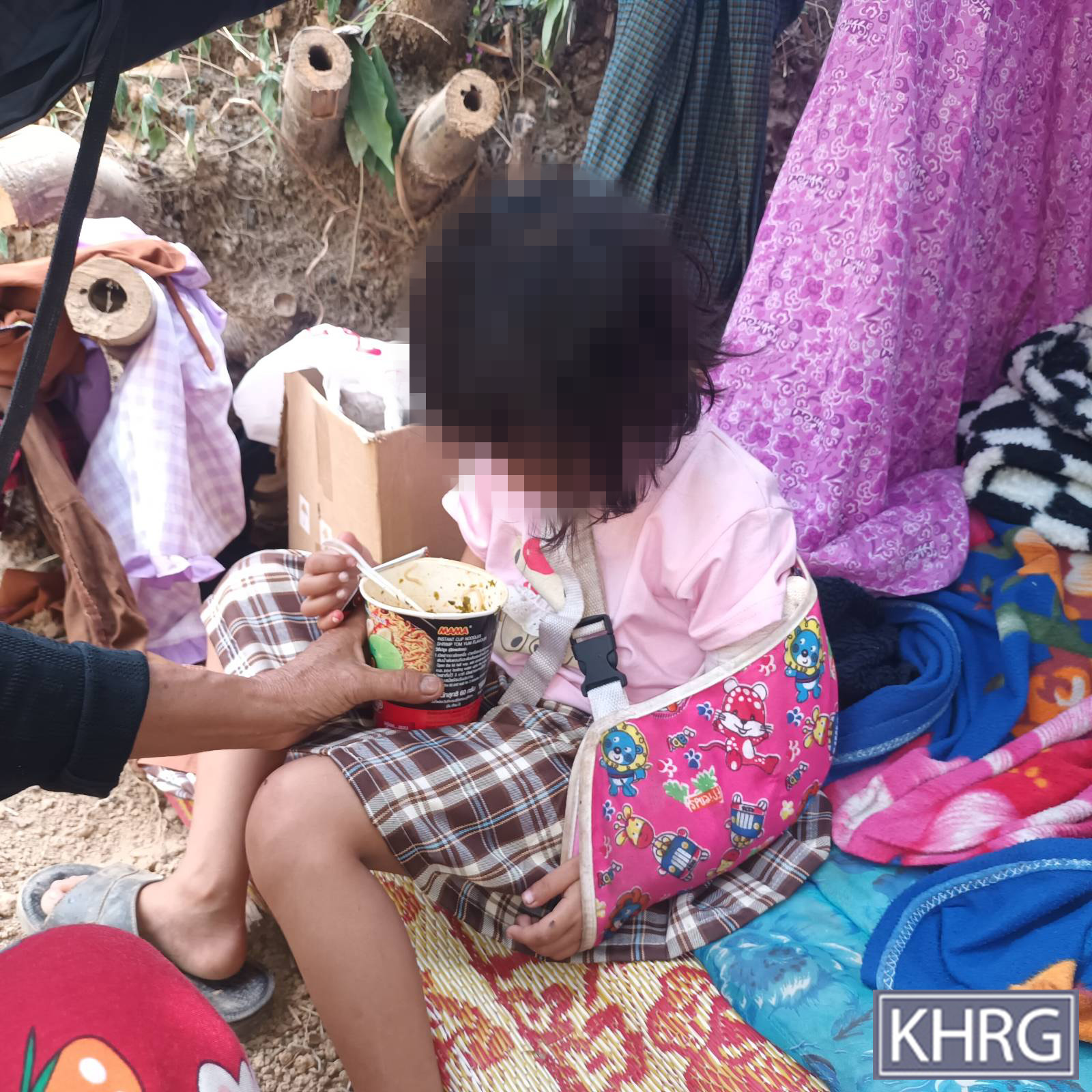


These two photos were taken in April 2026 in By--- village, Meh Ka Tha village tract, Noh T’Kaw Township, Dooplaya District. On 31 March 2026, the Burma Army carried out a drone strike on By--- village, killing Naw Yu--- (31 years old) and Naw Yv--- (33 years old), and injuring Naw Yw--- (6 years old). The drone dropped two 200-pound bombs near a shop owned by Naw Yu---, who sustained injuries from the bomb shrapnel across her entire body. She was transported to a DKBA clinic, but she died within an hour. Naw Yv--- was also hit by bomb shrapnel and sustained fatal injuries to her left shoulder blade and died while on the way to the clinic. The shrapnel also hit her daughter, Naw Yw---, injuring her left arm. Naw Yw--- was transported to a DKBA clinic and got a metal implant inserted into her arm. Following the incident, the victims’ family members were too scared to sleep in their houses at night, so they slept in a ditch behind their houses. Similarly, other villagers also temporarily slept in other places away from their houses. The photos above show Naw Yw--- and her family’s living conditions following the death of her mother, Naw Yv---.[34] [Photos: KHRG]
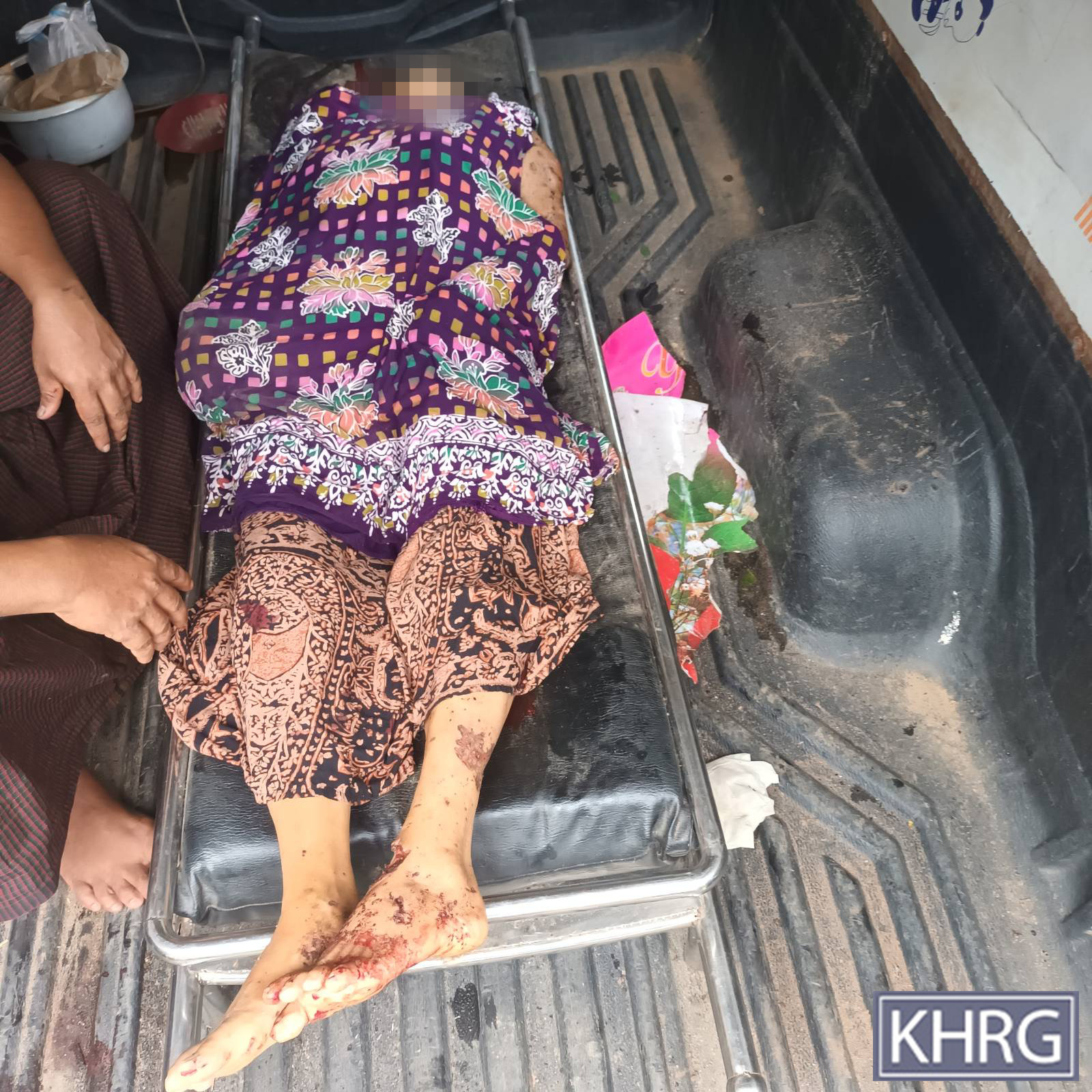
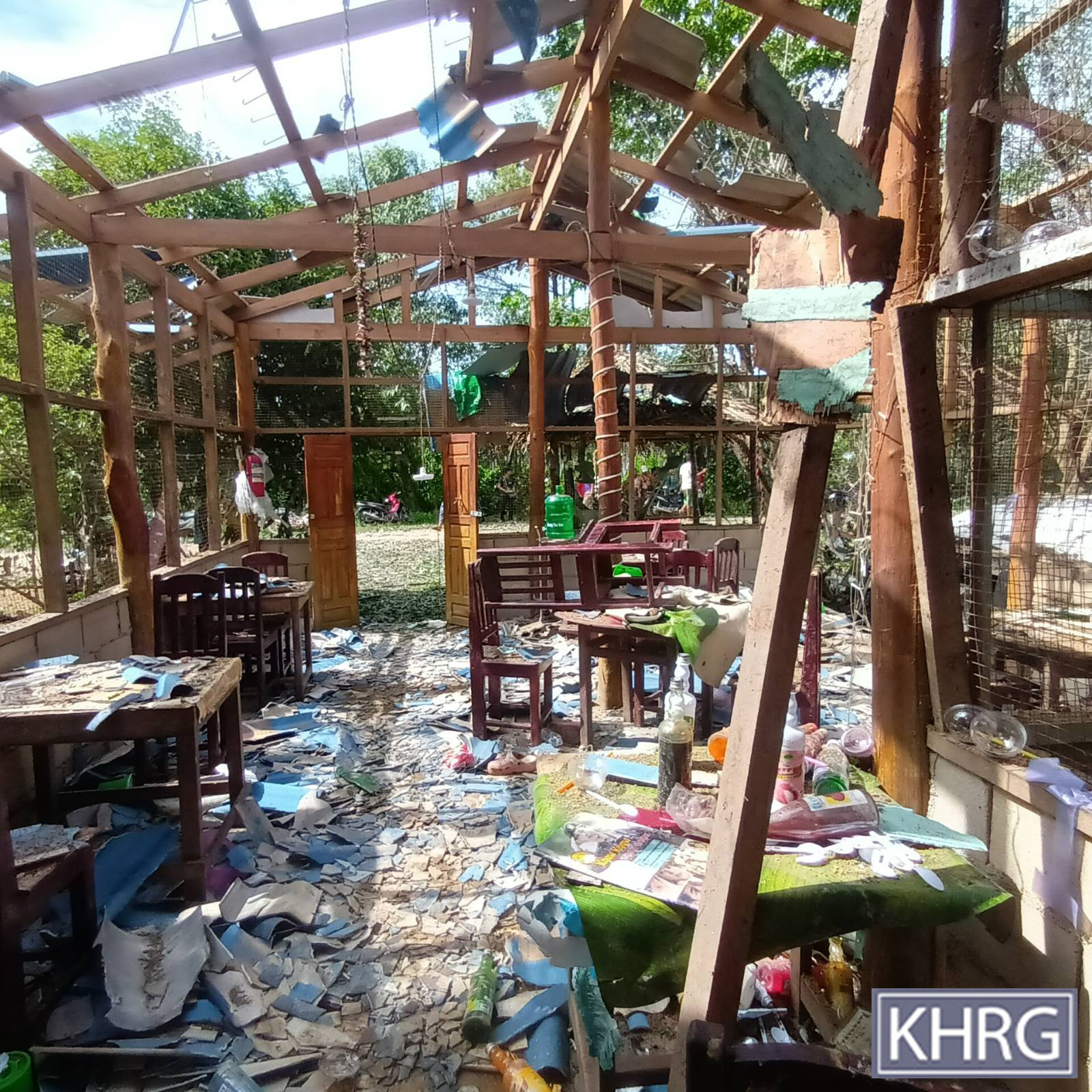
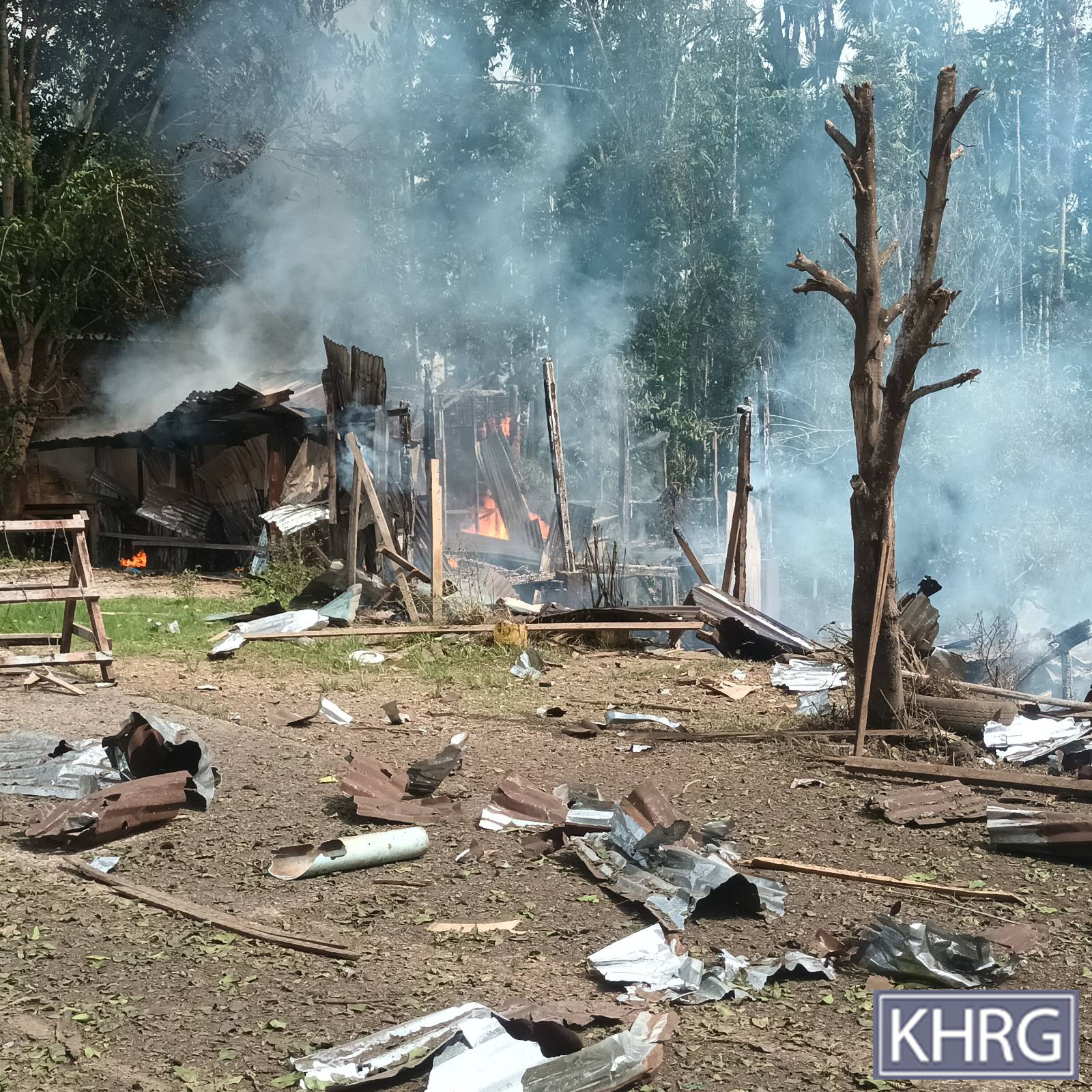


These photos were taken in May 2026 in Bz--- village, Noh T’Kaw village tract, Noh T’Kaw Township, Dooplaya District. On 24 May 2026, around 12:30 pm, a Burma Army fighter jet dropped two 500-pound bombs on Bz--- village. One bomb landed on a restaurant and house owned by Daw Yx--- (45 years old), killing three villagers and injuring two others. The shop owner, Daw Yx---, one of her employees, Yy--- (39 years old), and a visitor named Daw Yz--- (49 years old) were all killed by the air strike. Yy---’s daughter, Ma Xa--- (16 years old), who was also working at the restaurant, sustained severe injuries to her right leg. Later that day, she was sent to Ca--- clinic, before being transferred to Cb--- Hospital in Thailand the following day due to the severity of her injuries. Another villager, U Xb--- (62 years old), sustained minor injuries to his head. The air strike also destroyed two other villagers’ houses and one car. As the air strike happened close to a self-funded middle school, the school closed out of precaution. Following the incident, some villagers fled and slept in a safer place. The photo on the top left shows the body of Daw Yz---, while the photo on the top right and the photo on the bottom show the destroyed shop and house of Daw Yx---. [Photos: KHRG]
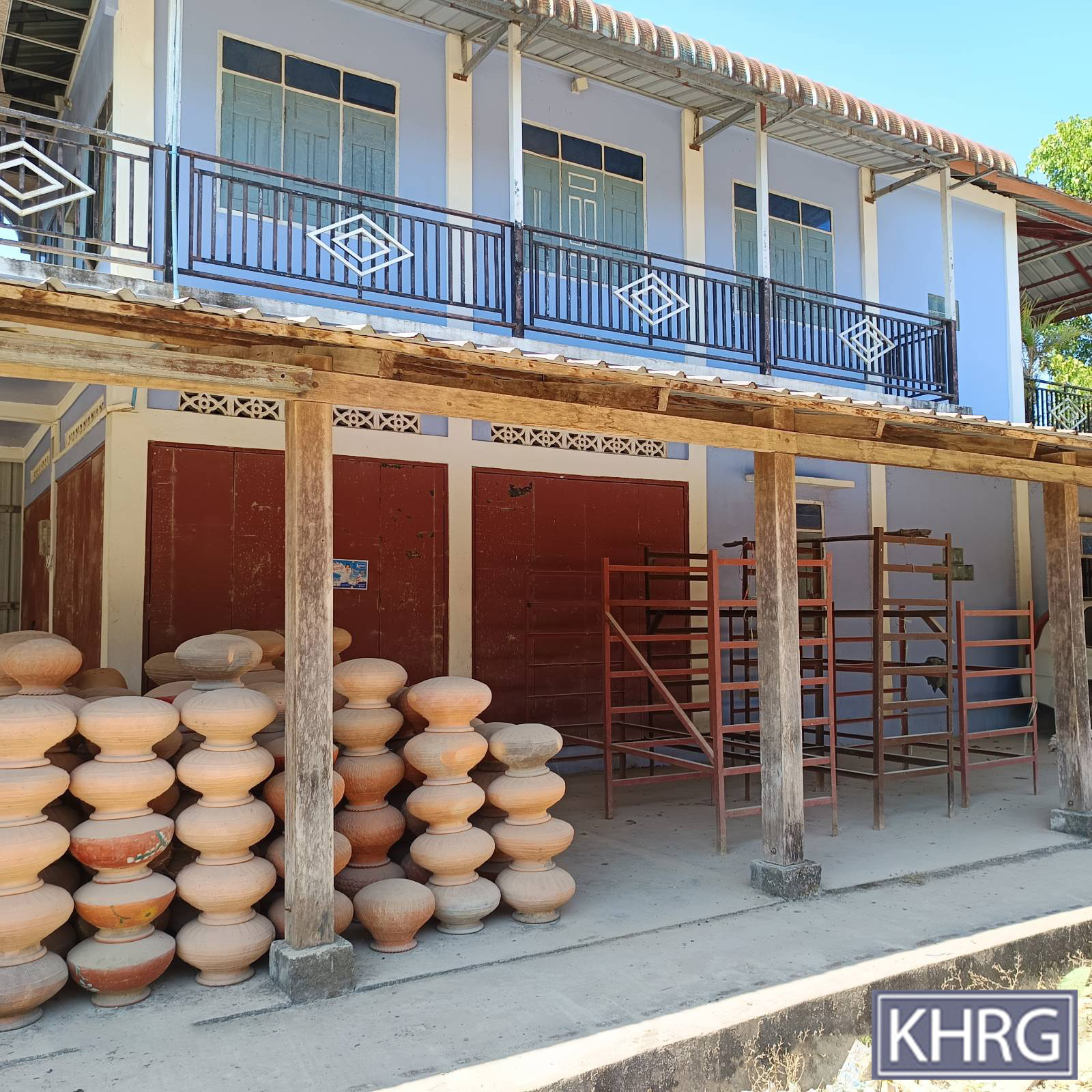
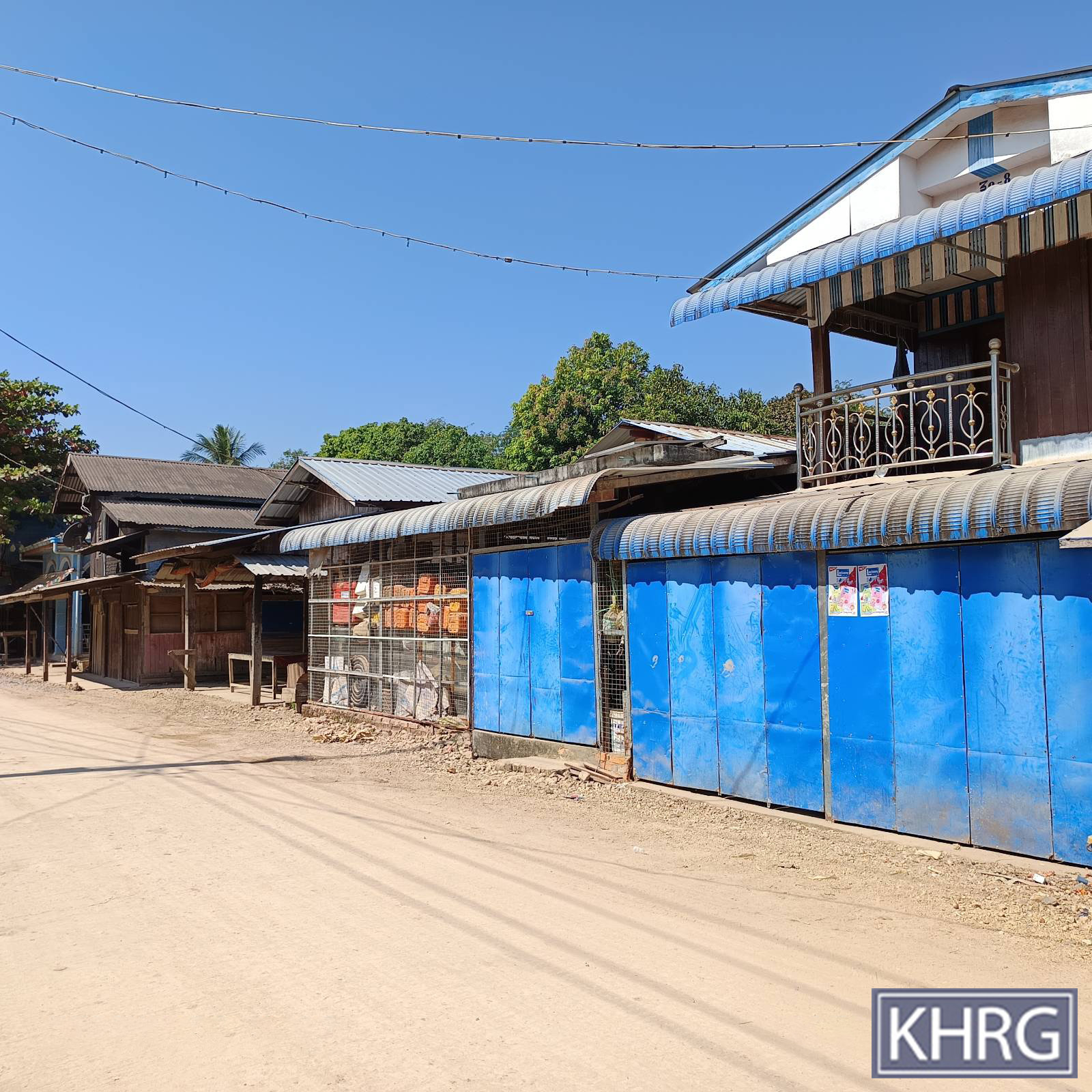
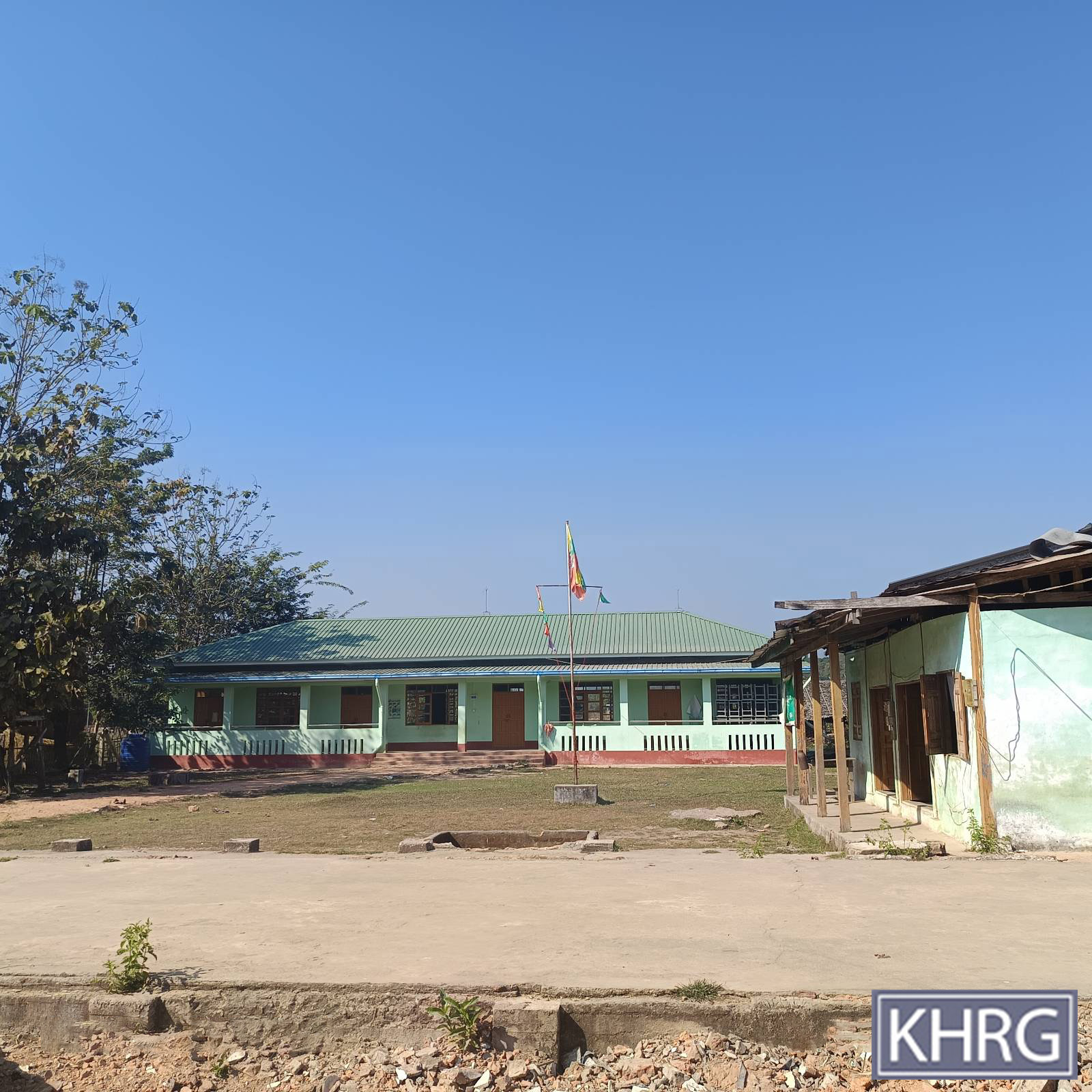


These photos were taken on 12 January 2026. In preparation for the second phase of the Burma military regime’s elections on 11 January 2026, the Burma Army increased militarisation and deployed soldiers to Cc--- Town, Hpa-an District. Due to the increased military presence, local villagers fled to safer places, fearing that fighting might break out. The top-left photo, showing closed village shops, was taken in Cd--- village, Moe Nine Taung village tract, Ta Kreh (Paingkyon) Township, Hpa-an District. The top-right photo was taken in Ce--- village, Meh P’Rah village tract, Ta Kreh Township, and shows the closed-down houses of villagers who displaced due to the militarisation. The bottom-left photo shows a school in Ce--- village that similarly closed due to the Burma Army’s presence. [Photos: KHRG]
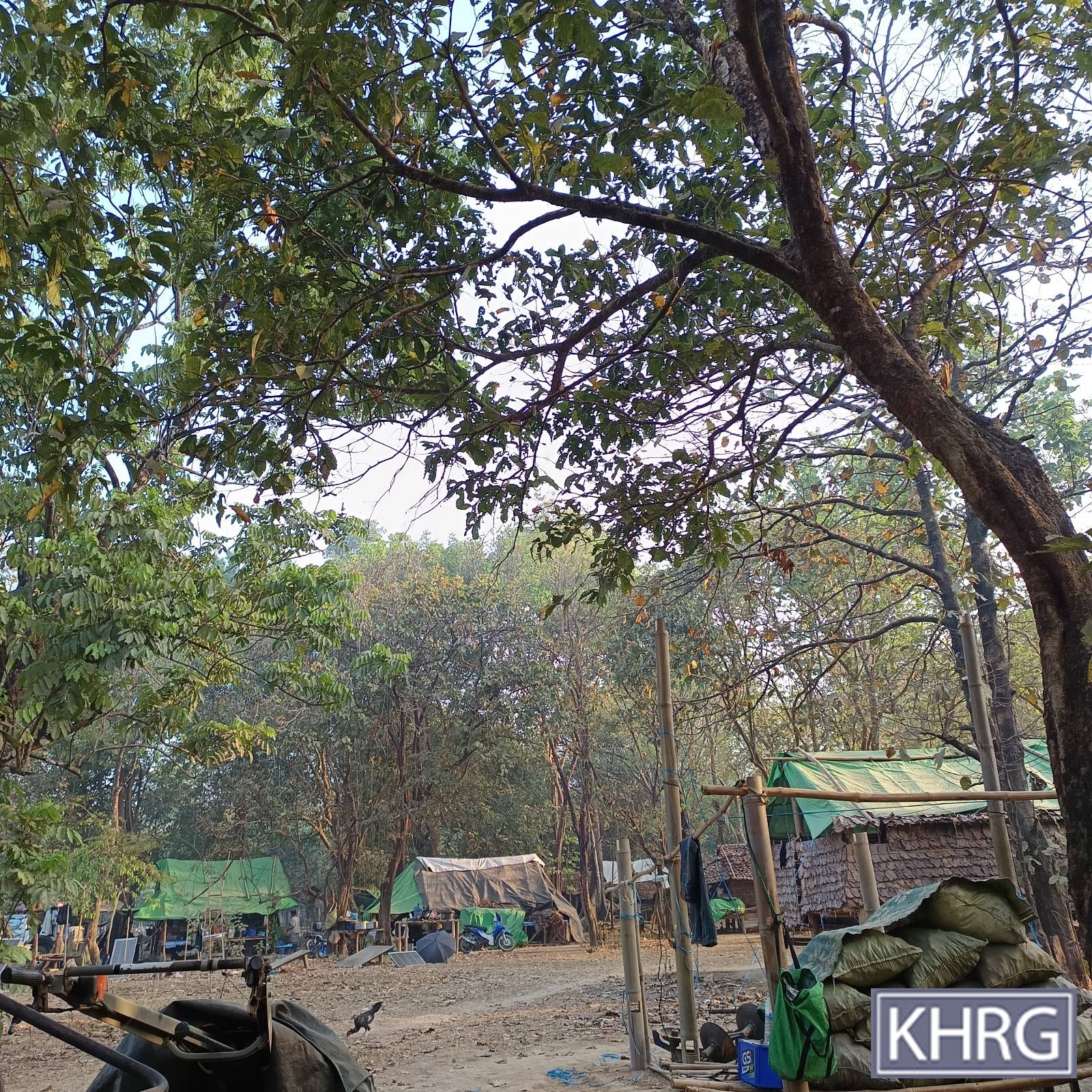
This photo was taken in March 2026 in Cf--- village, Toh Kaw Koe village tract, T’Nay Hsah (Nabu) Township, Hpa-an District. This photo shows huts built by twenty households from Cg--- village and Ch--- village that displaced in Cf--- village. From January 2026 to at least late March 2026, villagers were displaced to different areas due to Burma Army air strikes in their villages. Some villagers fled to the forest, while most of them fled to Ci--- village and Cf--- village. [Photo: KHRG]
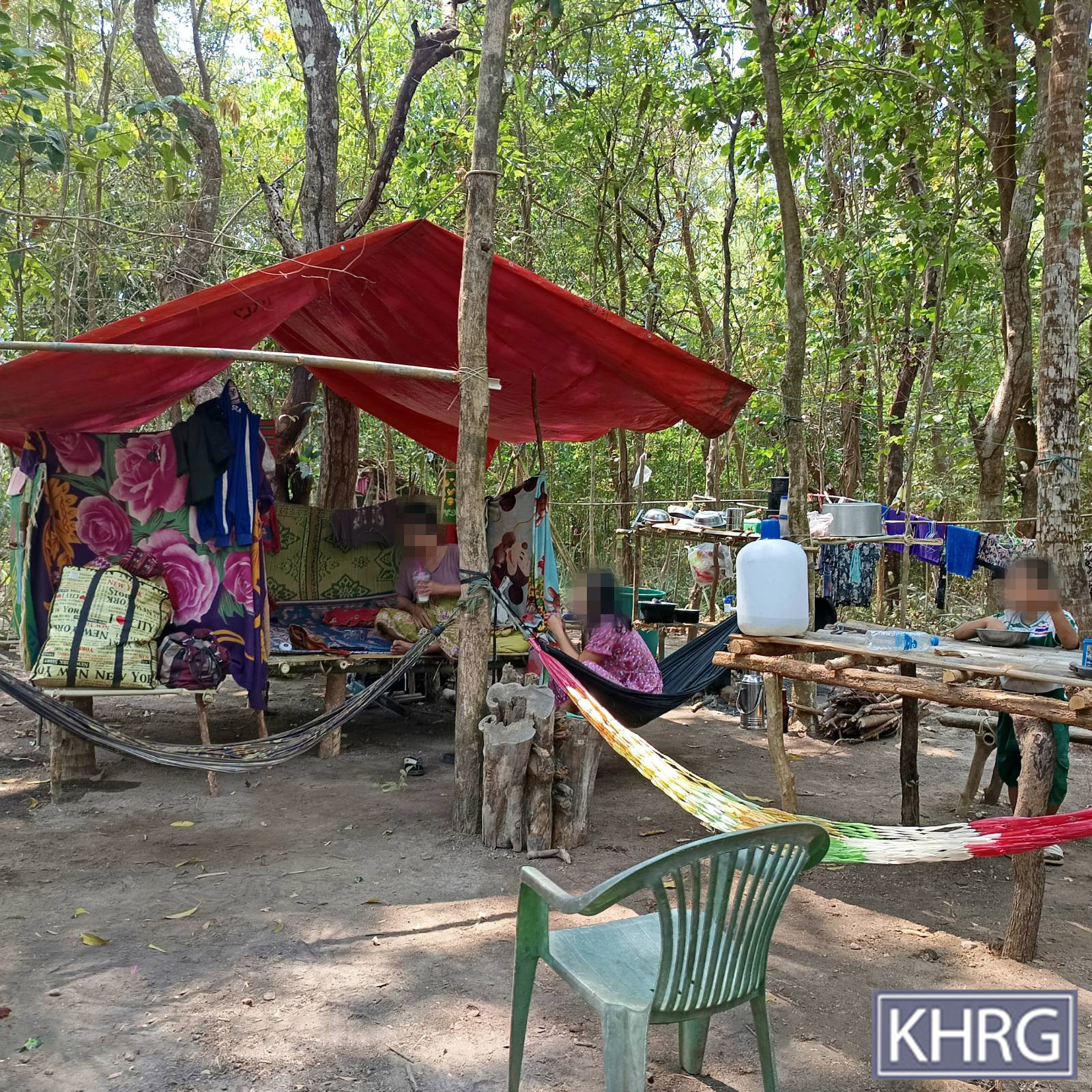
This photo was taken in March 2026 in Cj--- village, Htee Poh Kain village tract, Ta Kreh Township, Hpa-an District. The photo shows villagers from Cc--- Town displacing in the forest nearby. Since the beginning of January, when Burma Army soldiers arrived in Cc--- Town, local villagers were afraid and fled temporarily. According to local villagers from Cc--- Town and nearby villages, in February 2026, the Burma Army started to conduct militarisation and military activities, with fighting taking place on 23 February 2026. According to local villagers from Cc--- Town, during the temporary displacement when the fighting was happening, some of the villagers’ houses were looted and their pigs and chickens were stolen. As a result, the villagers felt worried when they were traveling or going for work for their livelihoods. [Photo: KHRG]
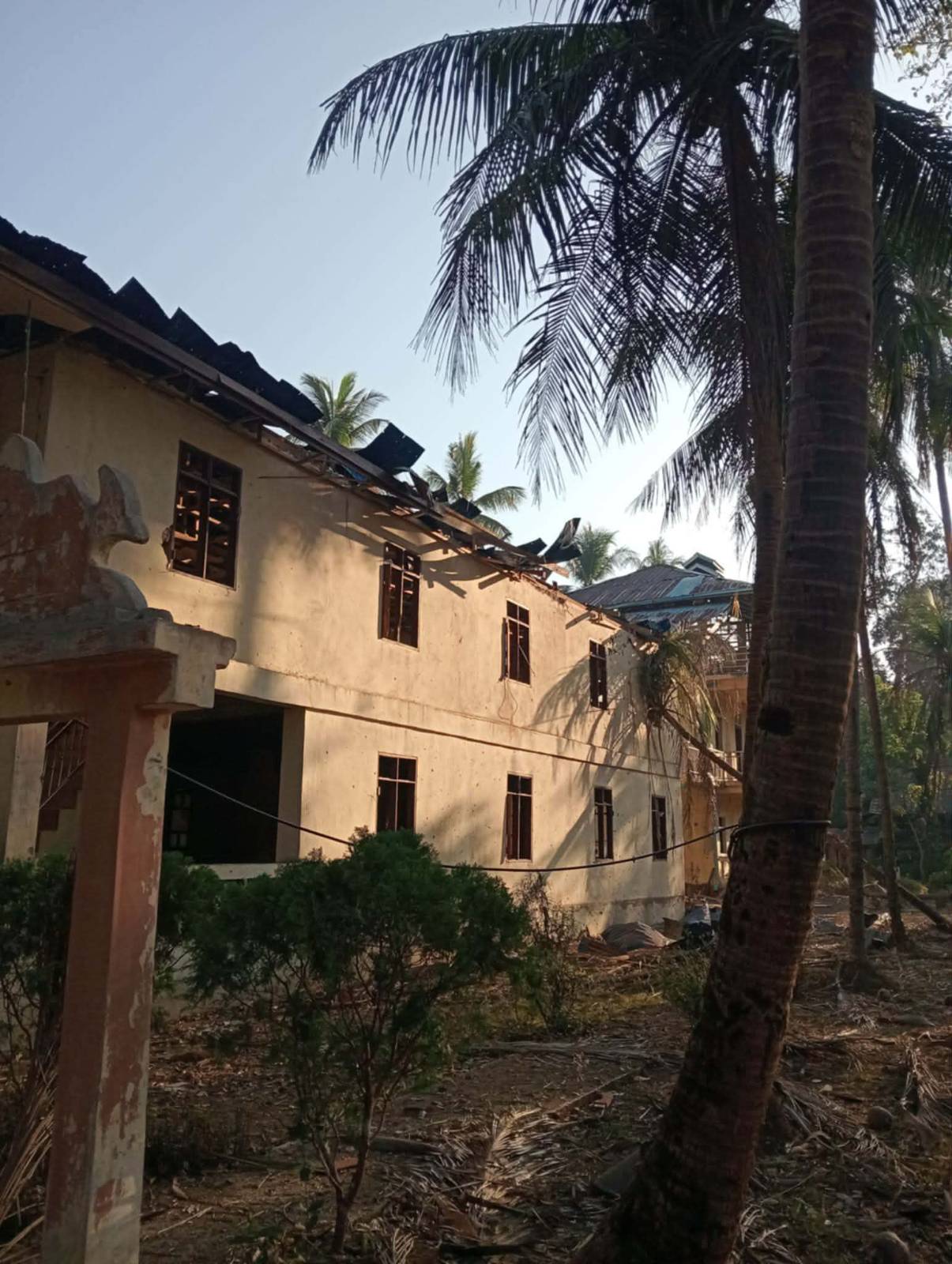
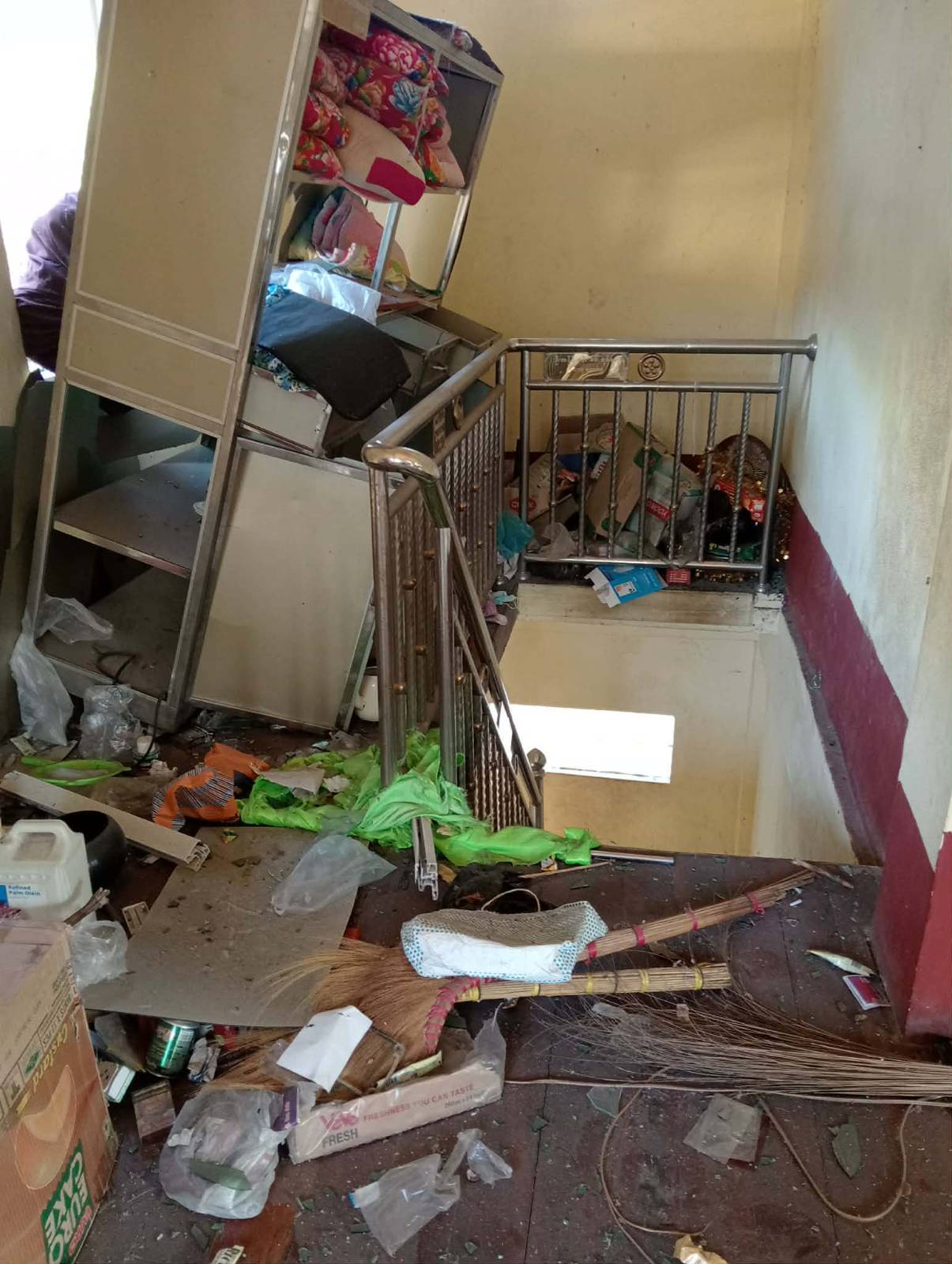


These photos were received from a local villager from Cg--- village, Noh Kay village tract, T’Nay Hsah Township, Hpa-an District, on 27 March 2026. These photos show the monastery buildings in Cg--- village, which were destroyed when a Burma Army fighter jet dropped bombs into Cg--- village on 20 March 2026. The first bomb destroyed the second and third floors of the monastery building. There were no injuries, as the villagers and religious leaders had already fled from the village out of fear. Moments later, the aircraft flew over the area and dropped more bombs on the road in Cg--- village, burning a hut and a shop. [Photos: Local villager]
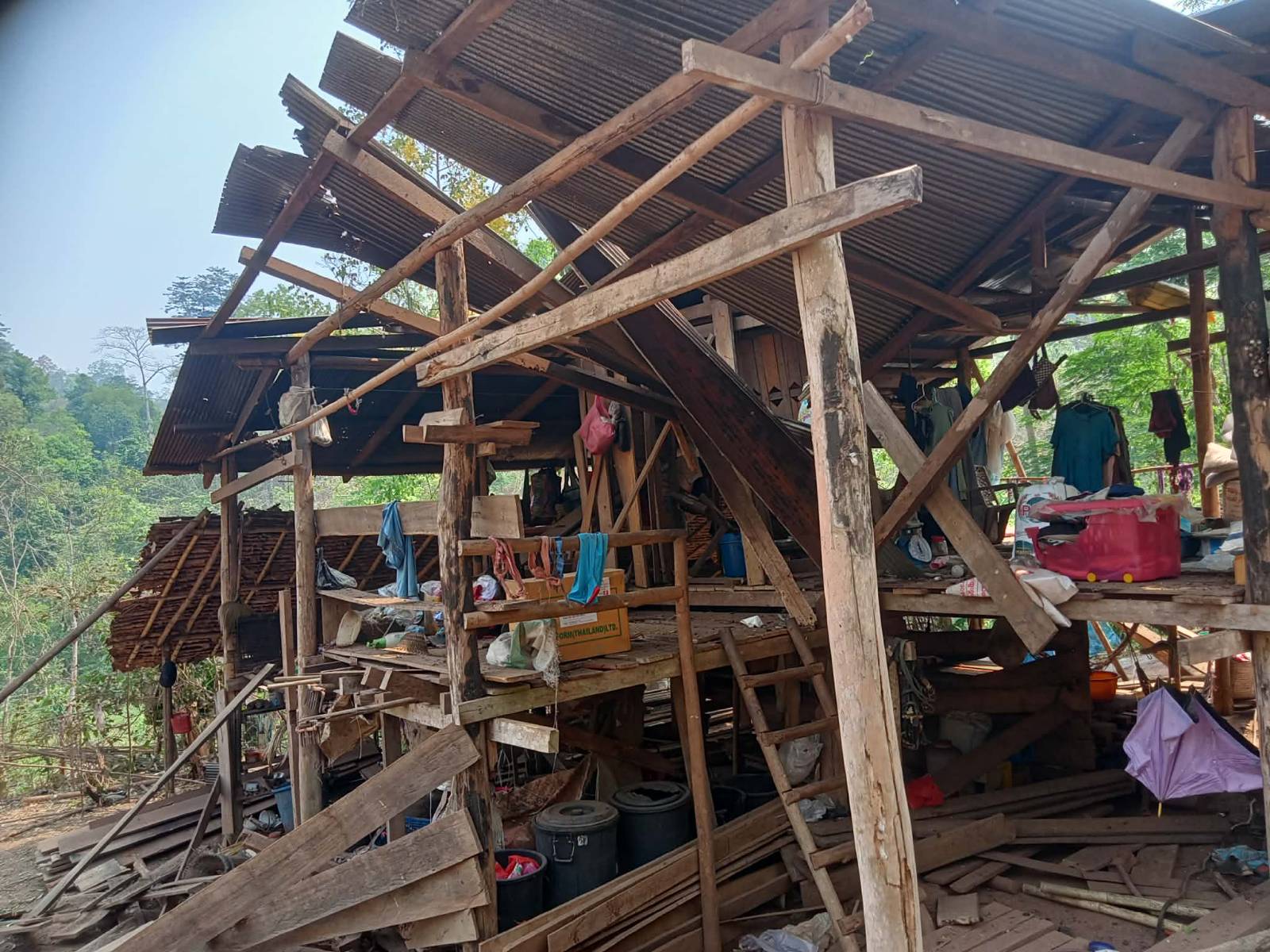
This photo was received from a local villager from Ck--- village, Wa Mee Klah village tract, Ta Kreh Township, Hpa-an District, in April 2026. The photo shows the destruction of a hut that occurred when the Burma Army conducted an air strike on 22 April 2026 at 10 pm in Ck--- village. Due to the air strike, a clinic was also destroyed and a chicken was killed. [Photo: Local villager]
Footnotes:
[1] From December 2025-January 2026, the Burma military regime held non-democratic elections amidst widespread reports of non-participation of opposition parties, voter exclusion, coercion, and intimidation.
[2] The terms Burma military regime, Burma Army, junta, and SAC are used interchangeably throughout this report to describe Burma’s armed forces. Villagers themselves commonly use Burma Army, Burmese soldiers, or alternatively the name adopted by the Burma military regime at the time –from the 2021 coup to July 2025, the State Administration Council (SAC). On 31 July 2025, the military junta changed its name to State Security and Peace Commission (SSPC).
[3] The present document is based on information received from January to June 2026. It was provided by community members in seven districts of Karen State who have been trained by KHRG as researchers to monitor human rights conditions on the ground. The names of the victims, their photos, and the exact locations are censored for security reasons.
[4] See, for instance: KHRG, Aircraft coming! : Impacts of air strikes on local communities and villagers’ protection strategies in Southeast Burma since the 2021 coup, November 2024; KHRG, “Photo Set: SAC air strikes on civilian areas, resulting in casualties, destruction, and displacement (January to December 2024)”, December 2025.
[5] See, for instance: KHRG, “Photo Set: Shelling of villages in Southeast Burma by the Burma Army, the BGF, and other affiliated armed groups, and its impacts (January to November 2025)”, December 2025.
[6] Karen State, defined locally, includes the following areas: Kayin State, Tanintharyi Region and parts of Mon State and Bago Region. Karen State, located in Southeastern Burma, is primarily inhabited by ethnic Karen people. Most of the Karen population resides in the largely rural areas of Southeast Burma, living alongside other ethnic groups, including Bamar, Shan, Mon and Pa’O.
[7] KHRG operates in seven areas in Southeast Burma: Doo Tha Htoo (Thaton), Taw Oo (Toungoo), Kler Lwee Htoo (Nyaunglebin), Mergui-Tavoy, Mu Traw (Hpapun) and Dooplaya and Hpa-an. When KHRG receives information from the field, it organises data according to these seven areas. These are commonly referred to as ‘districts’ and are used by many local Karen organisations. KHRG’s use of the district designations in reference to our research areas does not imply political affiliation. For clarity, the Burmese terms for these districts are provided in brackets but do not correspond with the Burma (Myanmar) government administrative divisions.
[8] The Karen National Liberation Army is the armed wing of the Karen National Union.
[9] The Democratic Karen Benevolent Army (DKBA Benevolent) was formed in 2010 as a breakaway group following the transformation of the majority of the original Democratic Karen Buddhist Army (1994 – 2010) into Border Guard Forces (BGF). This group was originally called the Democratic Karen Buddhist Army, until it changed its name to the Democratic Karen Benevolent Army in April 2012, in order to reflect its secularity. This DKBA (Benevolent) (2010 – present) should not be confused with either the original DKBA (Buddhist) (1994-2010) which was transformed into the BGF in 2010, or with the DKBA (Buddhist) (2016 – present) which was formed in 2016 as a splinter group of the DKBA (Benevolent). Importantly, the DKBA (Benevolent) has signed both the preliminary and nationwide ceasefire agreements with the Burma/Myanmar government, whereas the DKBA (Buddhist) has not signed either agreement.
[10] The Karen National Union (KNU) is the main Karen political organisation. It was established in 1947 and has been in conflict with the government since 1949. The KNU wields power across large areas of Southeast Myanmar and has been calling for the creation of a democratic federal system since 1976. Although it signed the Nationwide Ceasefire Agreement (NCA) in 2015, following the 2021 coup staged by Burma Army leaders, the KNU officially stated that the NCA has become void.
[11] A village tract is an administrative unit of between five and 20 villages in a local area, often centred on a large village.
[12] A Light Infantry Battalion (LIB) comprises 500 soldiers. Most Light Infantry Battalions in the Tatmadaw are under-strength with less than 200 soldiers, yet up-to-date information regarding the size of battalions is hard to come by, particularly following the signing of the NCA. LIBs are primarily used for offensive operations, but they are sometimes used for garrison duties.
[13] A Light Infantry Division (LID) of the Tatmadaw is commanded by a brigadier general and consists of ten light infantry battalions specially trained in counterinsurgency, jungle warfare, search and destroy operations against ethnic insurgents. They were first incorporated into the Tatmadaw in 1966. LIDs are organised under three Tactical Operations Commands, commanded by a colonel, three battalions each and one reserve, one field artillery battalion, one armoured squadron and other support units. Each division is directly under the command of the Chief of Staff (Army).
[14] ‘Naw’ is a S’gaw Karen female honorific title used before a person’s name.
[15] ‘Saw’ is a S’gaw Karen male honorific title used before a person’s name.
[16] The People’s Defence Force (PDF) is an armed resistance established independently as local civilian militias operating across the country. Following the 1 February 2021 military coup and the ongoing brutal violence enacted by the junta, the majority of these groups began working with the National Unity Government (NUG), a body claiming to be the legitimate government of Burma/Myanmar, which then formalized the PDF on 5 May 2021 as a precursor to a federal army.
[17] Military Operations Command (MOC) is comprised of ten battalions for offensive operations. Most MOCs have three Tactical Operations Commands (TOCs) made up of three battalions each.
[18] An Infantry Battalion (IB) comprises 500 soldiers. However, most Infantry Battalions in the Tatmadaw are under-strength with less than 200 soldiers. Yet up to date information regarding the size of battalions is hard to come by, particularly following the signing of the NCA. They are primarily used for garrison duty but are sometimes used in offensive operations.
[19] KHRG, “Taw Oo District Short Update: Burma Army shelling killed one villager, injured a pregnant woman, and caused damage in Daw Hpah Hkoh Township (December 2025 and February 2026)”, April 2026.
[20] ‘U’ is a Burmese title used for elder men, used before their name.
[21] The Karen Department of Health and Welfare (KDHW) is the health department of the Karen National Union. It was established in 1956 to address the lack of public healthcare resources in rural Southeast Myanmar. It currently operates a network of community-based clinics in the region, but its capabilities remain limited due to funding constraints.
[22] KHRG, “Taw Oo District Short Update: Burma Army drone strike injured two villagers in Htaw Ta Htoo Township (March 2026),” April 2026.
[23] ‘Ma’ is a Burmese female honorific title used before a person’s name.
[24] KHRG, “Taw Oo District Short Update: Burma Army air strikes injured a 16-year-old girl and damaged six houses in Daw Hpah Hkoh Township (February to March 2026)”, May 2026.
[25] ‘Daw’ is a Burmese female honorific title used before a person’s name.
[26] ‘Maung’ is a Burmese male honorific title used before a person’s name.
[27] KHRG, “Kler Lwee Htoo District Incident Report: Burma Army ground operations, air strikes, and shelling killed at least 31 villagers including 15 children, injured many others, and caused extensive property destruction and displacement in Ler Doh Township (March 2026)”, July 2026.
[28] Border Guard Force (BGF) battalions of the Tatmadaw were established in 2010, and they are composed mostly of soldiers from former non-state armed groups, such as older constellations of the Democratic Karen Buddhist Army (DKBA), which have formalised ceasefire agreements with the Burma/Myanmar government and agreed to transform into battalions within the Tatmadaw. Some of the BGF battalions transformed into the Karen National Army (KNA) in January 2026.
[29] ‘Ko’ is a Burmese title meaning older brother. It can be used for relatives as well as non-relatives.
[30] KHRG, “Mu Traw District Incident Report: Burma Army air strikes killed three villagers, injured 12 villagers including a child, and caused destruction to villagers’ buildings in Lu Thaw Township (April 2026)”, July 2026.
[31] KHRG, “Dooplaya District Short Update: Burma Army shelling, fighting, and villagers’ protest against the Burma military regime’s election in Noh T’Kaw Township (December 2025 to January 2026)”, May 2026.
[32] KHRG, “Dooplaya District Short Update: The Burma Army fatally shot a villager in Noh T’Kaw Township (January 2026)”, February 2026.
[33] KHRG, “Dooplaya District Incident Report: Burma Army soldiers arrested and beat four villagers, including a 16-year-old, in Noh T’Kaw Township (March 2026)”, July 2026.
[34] KHRG, “Dooplaya District Incident Report: Burma Army drone strike killed two villagers, injured one child, and destroyed property in Noh T’Kaw Township (March 2026)”, June 2026.

