
 English
 ကညီကျိာ်
 မြန်မာ
 Print:
This Photo Set presents photographic evidence of the impacts of shelling into villages and community areas conducted by the Burma Army and affiliated armed groups, including the Border Guard Force (BGF) and the Pyu Saw Htee, from January to November 2025. During this period, the Karen Human Rights Group (KHRG) documented extensive evidence of human rights violations committed by soldiers, primarily the Burma Army under the command of the Burma military regime, through repeated attacks in civilian areas. The SAC’s indiscriminate shelling, intensified since the 2021 coup, has continued in 2025, killing and injuring villagers; destroying homes, farmlands, properties, and community buildings; causing fear of unexploded ordnance (UXOs); restricting villagers’ freedom of movement to pursue their livelihoods; and causing widespread displacement. Despite the challenges, villagers employed coping strategies to secure their livelihoods, including sending injured community members to receive treatment and relocating to safer areas.
Photo Set: Shelling of villages in Southeast Burma by the Burma Army, the BGF, and affiliated armed groups, damaging homes, community buildings, farmland, and infrastructure (January–November 2025)
In 2025, as the Burma military regime[1]’s shelling into civilian areas has continued, villagers have increasingly faced loss of life and injury, and the destruction of their homes and farmlands. Between January and November 2025, the Karen Human Rights Group (KHRG) documented 1,308 evidentiary photographs showing the impacts of the State Administration Council (SAC)[2]’s shelling, including casualties among villagers and damage to villagers’ houses, community buildings, and farmlands.[3] Such attacks have caused suffering to villagers and long-term impacts on their lives. In addition, shelling has also been carried out by the Border Guard Force (BGF)[4] and Pyu Saw Htee[5] groups.
In some incidents, the Burma Army launched artillery fire indiscriminately into villages after receiving attacks by the Karen National Liberation Army (KNLA)[6] and the People’s Defence Force (PDF)[7], while in other cases the Burma Army shelled villages even when no fighting was taking place. These attacks have caused civilian casualties (including children) and the destruction or damage of key livelihood assets, including homes, rice barns, household items, savings, livestock, farms and plantations, agricultural equipment, vehicles, and businesses and workplaces. Due to such attacks, villagers are forced to live under insecurity and constant danger: whether they are at home, in schools, churches, monasteries, working in their farmlands, or traveling, they remain exposed to risk and live in a state of fear. Villagers draw on their agency and resilience by seeking refuge in the forest and building shelters in displacement sites.
This Photo Set includes a selection of 64 photos from all seven districts of the locally-defined Karen State[8]: Doo Tha Htoo (Thaton), Taw Oo (Toungoo), Kler Lwee Htoo (Nyaunglebin), Mergui-Tavoy, Mu Traw (Hpapun), Dooplaya, and Hpa-an districts. These photos were taken by local villagers, as well as by community members who have been trained by KHRG to monitor the human rights situation in their respective local areas. The names of the victims, their photos, and the exact locations are censored for security and sensitivity reasons.
Further background reading on the situation on attacks on livelihoods in Southeast Burma/Myanmar can be found in the following KHRG reports:
- Stolen Childhoods: Violations of children’s rights, urgent needs, and local agency in rural Southeast Burma during the conflict, October 2025.
- Defying Hunger : State Administration Council (SAC)’s systematic destruction of civilian livelihoods and food systems in Southeast Burma (January - December 2024), May 2025.
- Photo Set: SAC indiscriminate shelling in Southeast Burma, and its impacts on villagers, January 2023 to February 2024, June 2024.
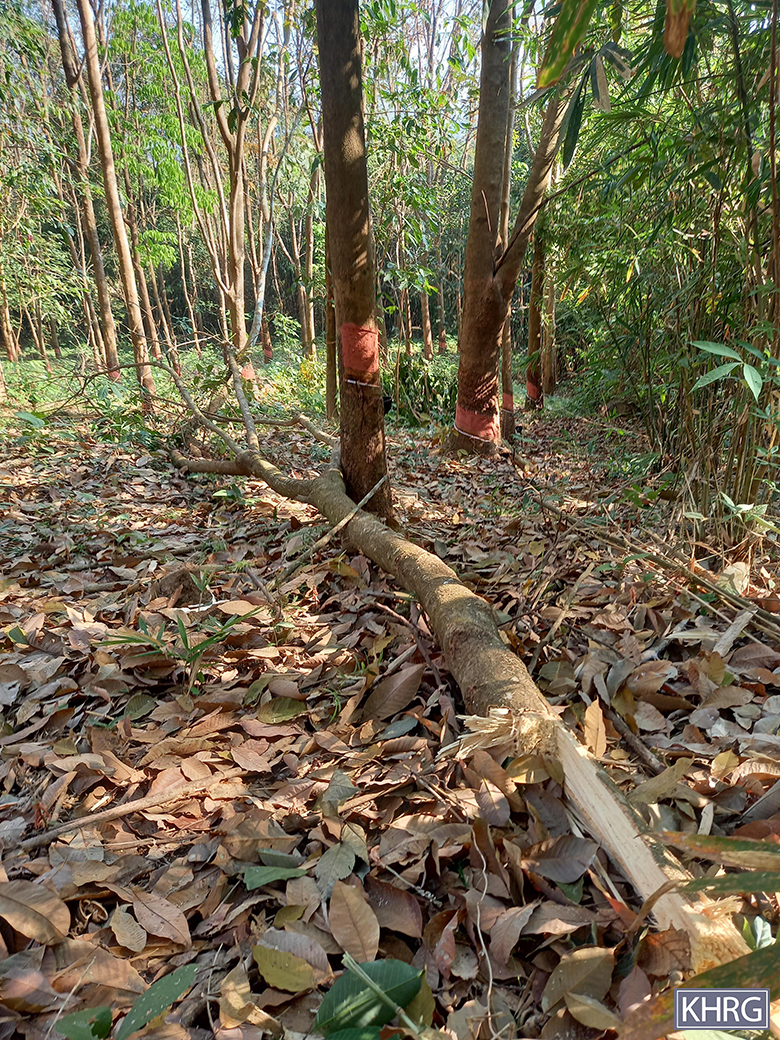
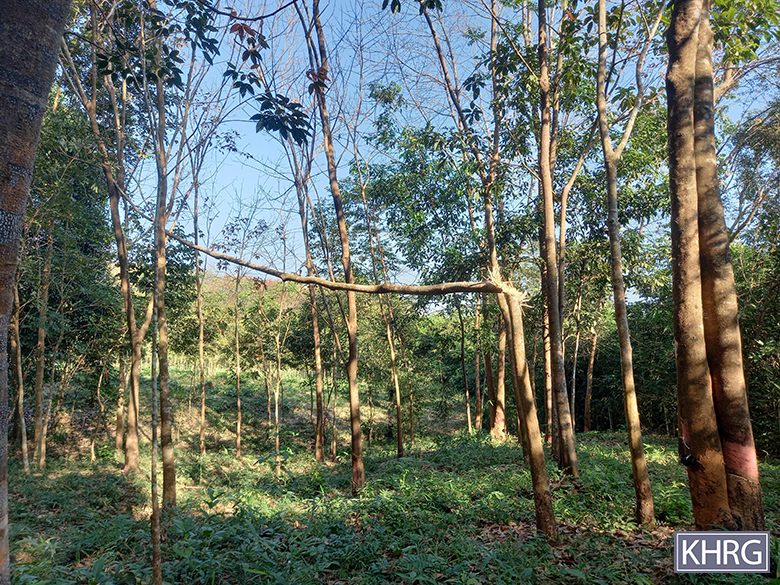


These photos were taken in January 2025 near Bb--- village, D’Nu village tract, Tha Htoo Township, Doo Tha Htoo District. These photos show the aftermath of an indiscriminate shelling carried out on January 13th 2025, at 12 pm, by the SAC Light Infantry Battalion (LIB)[9] #9, based in Win Pa village near Kyaik Kaw Town, Tha Htoo Township. Villagers heard the sounds of three mortars being fired. Two 120 mm shells landed and exploded in plantations in Bb--- village, while the third shell did not explode and has not yet been found. The two shells that exploded struck the rubber plantation of two Bb--- villagers (both aged 66), destroying many rubber trees. [Photos: KHRG]
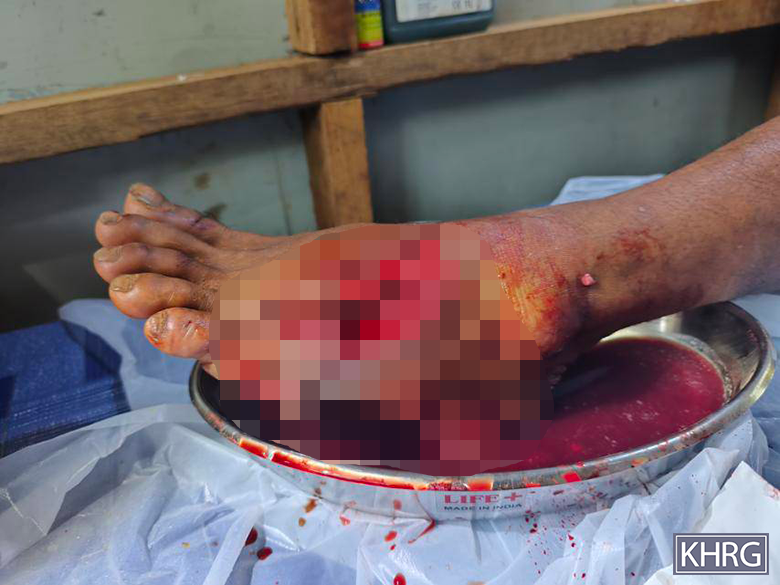
This photo was taken in April 2025, at Aa--- clinic in Kyauk Pyar village tract, Kyeh Htoh Township, Doo Tha Htoo District, and shows the injury of a local villager, named Ko[10] A---, receiving treatment. On April 24th 2025, at 2 pm, the SAC Artillery Unit #310 fired two 120 mm mortar shells that landed in Ab--- village, Hka Ywel village tract, Kyeh Htoh Township, Doo Tha Htoo District. The mortar landed in the village and hit Ko A--- while he was taking a bath. He was severely injured on his left foot, and local leaders from Ab--- village sent him to a clinic supported by the National Unity Government (NUG)[11] in Kyeh Hto Town for treatment. He is not fully recovered yet (as of November 2025), as his injury is severe. Several houses were also damaged due to the indiscriminate shelling. [Photo: KHRG]
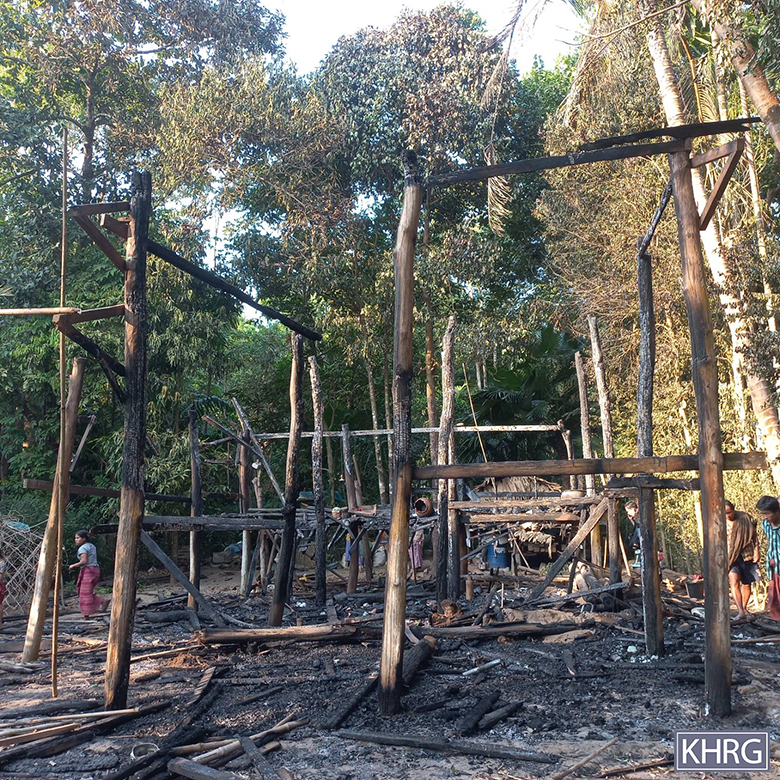
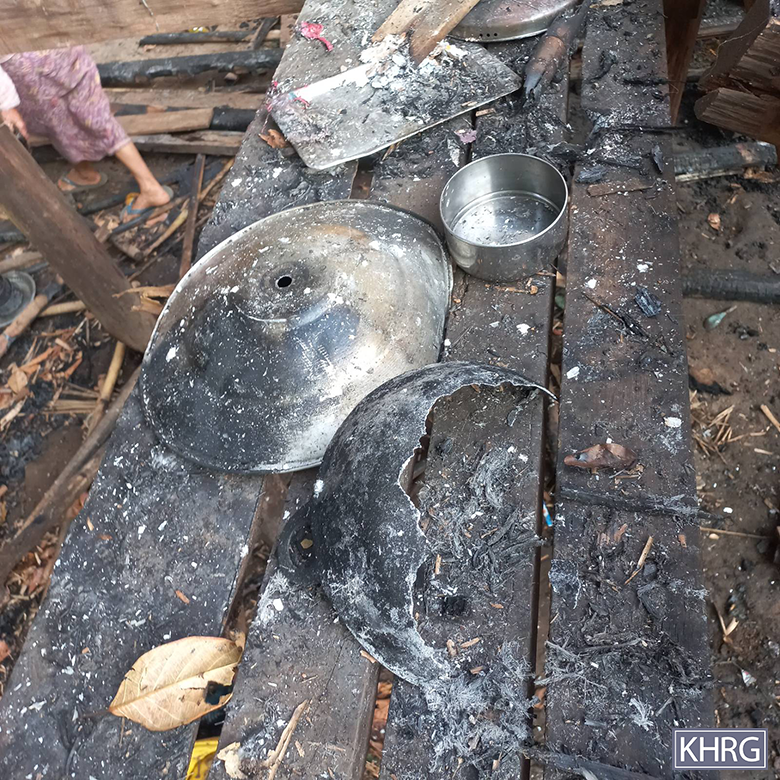


These photos were taken in March 2025 in Aq--- village, Nga Pyaw Taw village tract, Kyeh Hto Township, Doo Tha Htoo District, and Ar--- village, Ah Loo village tract, Kyeh Hto Township, Doo Tha Htoo District. These photos show houses belonging to local villagers in Aq--- village (left) and Ar--- village (right) that were destroyed due to shelling conducted by the SAC Artillery Unit #602 in March 2025. No casualties were reported. [Photos: KHRG]
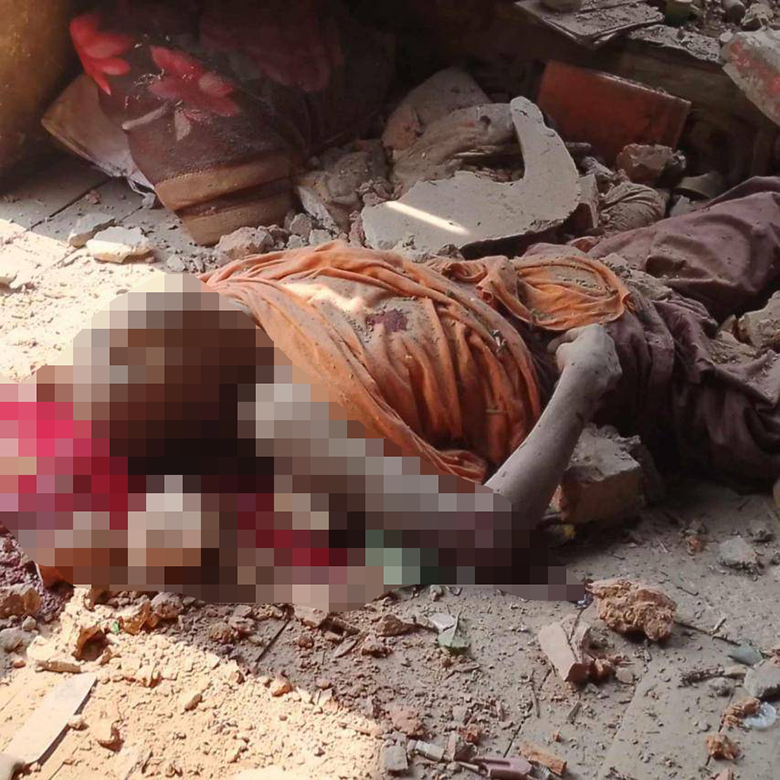
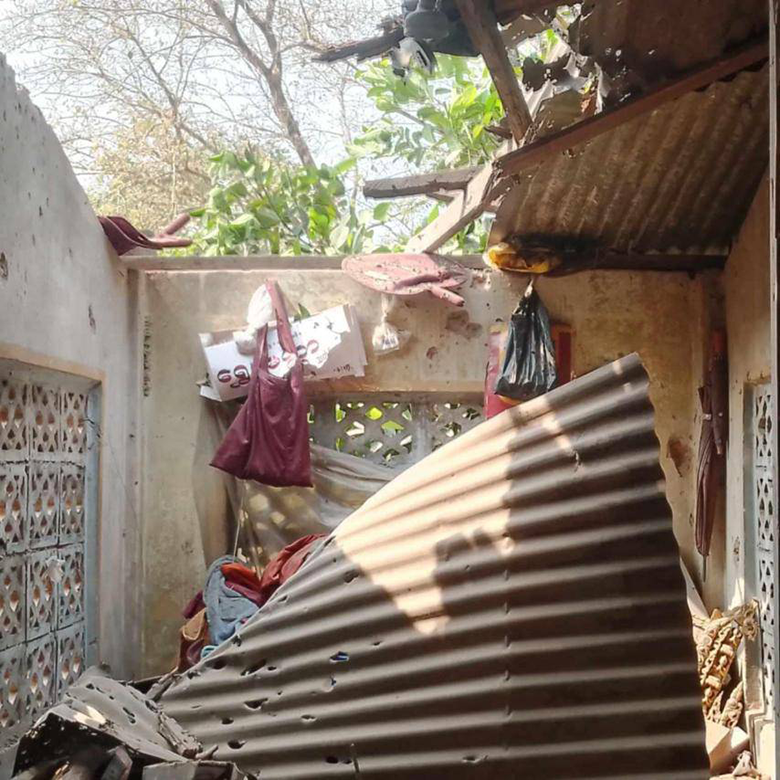


The two photos above were received from a local villager on March 21st 2025, taken at a monastery in Ab--- village, Hka Ywel village tract, Kyeh Htoh Township, Doo Tha Htoo District. The photo on the left shows a monk who was killed after Pyu Saw Htee troops fired an 81 mm mortar on March 21st 2025, at 8:33 am, which landed on a monastery. This Pyu Saw Htee is under the local leadership of Aung Gyi, from Leh Pa village, Hsaw Htee Township, Kler Lwee Htoo District. Due to that shelling, two other monks were also injured, and the monastery was destroyed, as shown in the photo on the right. [Photos: Local villager]
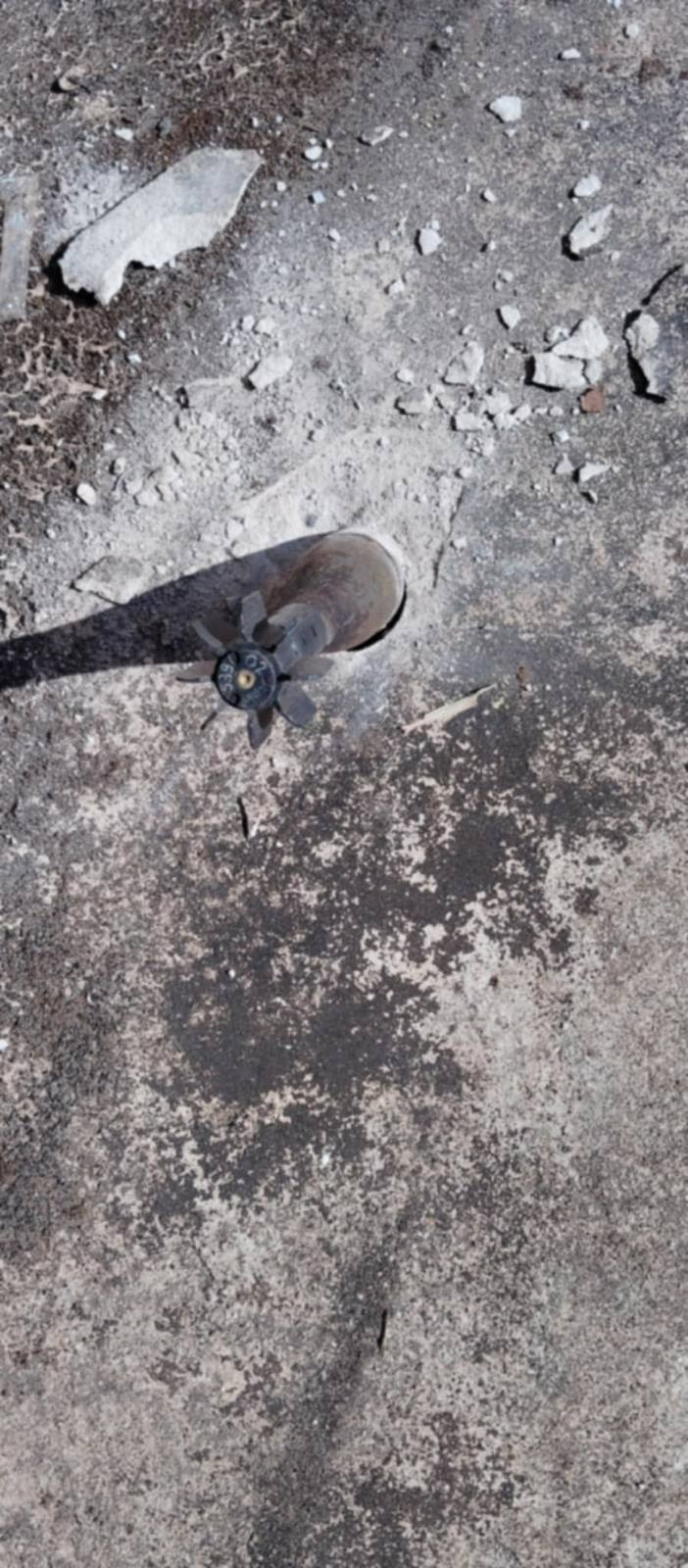
This photo was received on February 9th 2025 from a local villager in Aw--- village, Teh K’Leh Doe village tract, Daw Hpah Hkoh Township, Taw Oo District. It shows an unexploded mortar fired by the SAC LIB #603, based at Shwe Nan K’Lay army camp in Leik Tho Town, onto Aw--- village on February 9th 2025. The unexploded mortar was not cleared and remained in the incident place. [Photo: Local villager]
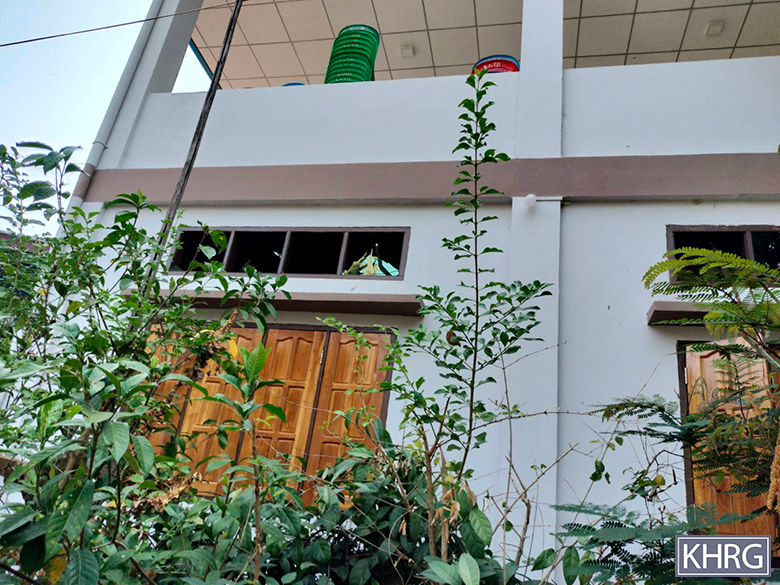
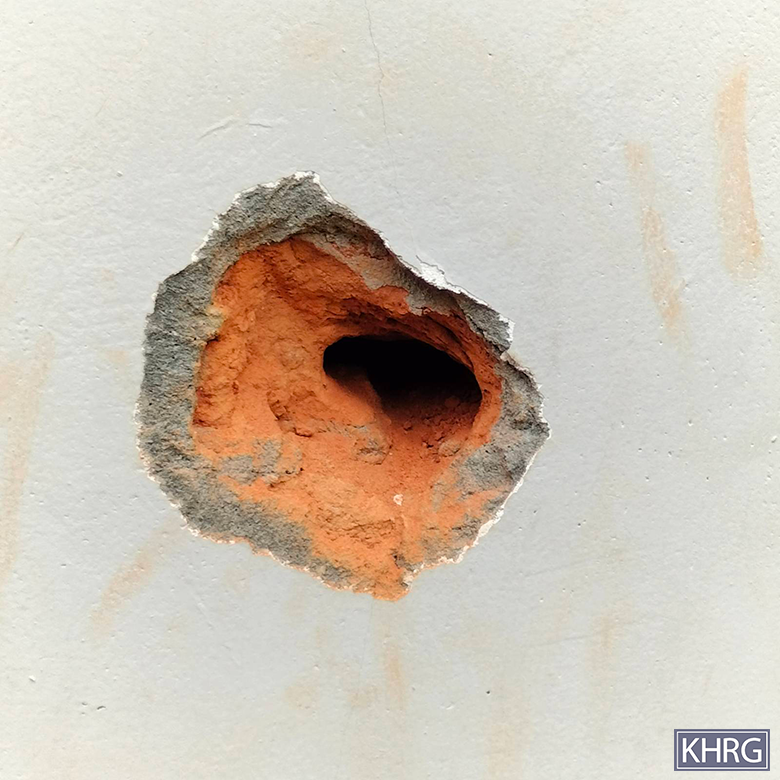


These photos were taken in March 2025, in Av--- village, P’Shaw Loh village tract, Daw Hpah Hkoh Township, Taw Oo District. These photos show a church in Av--- village that was damaged by indiscriminate shelling conducted by SAC soldiers based at the Shel Tho Maing (13 Miles) army camp, near Thandaunggyi Town, Taw Oo District, on March 13th 2025. [Photos: KHRG]
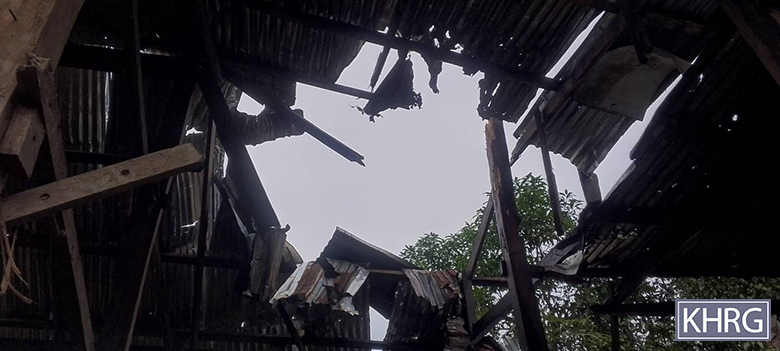
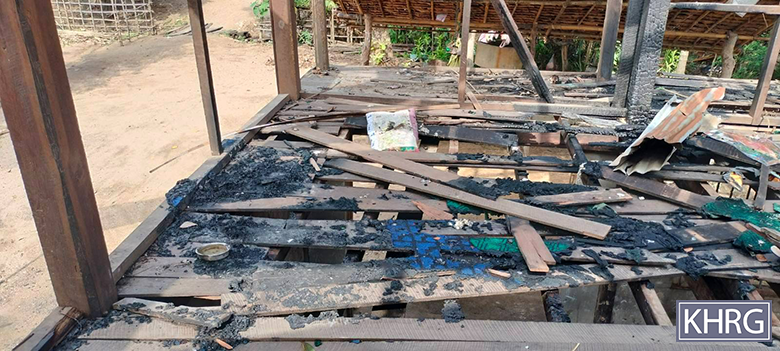
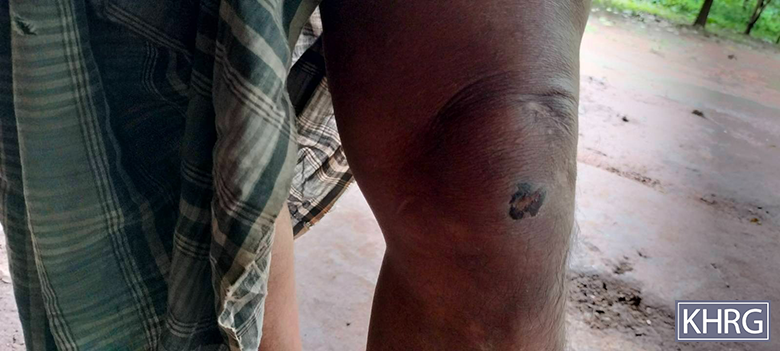
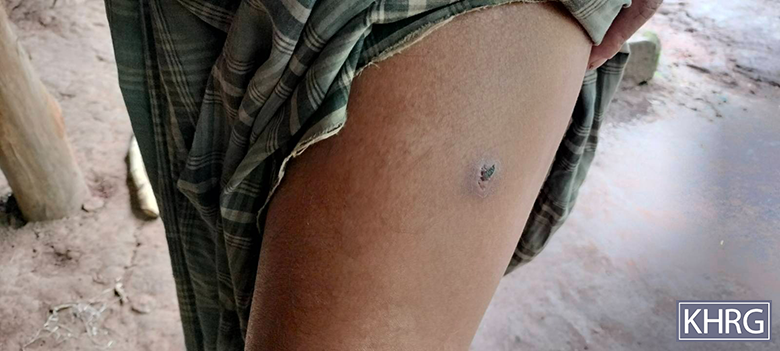
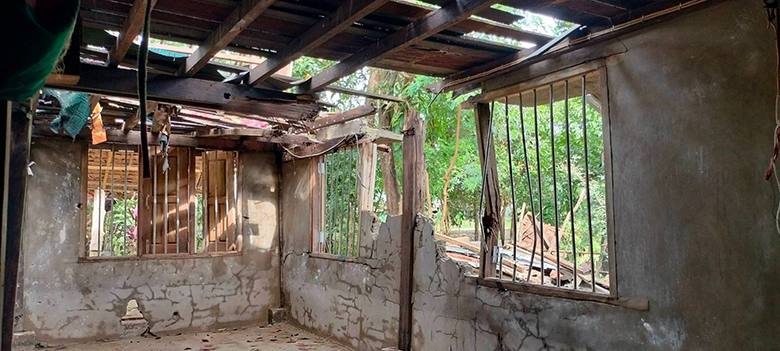
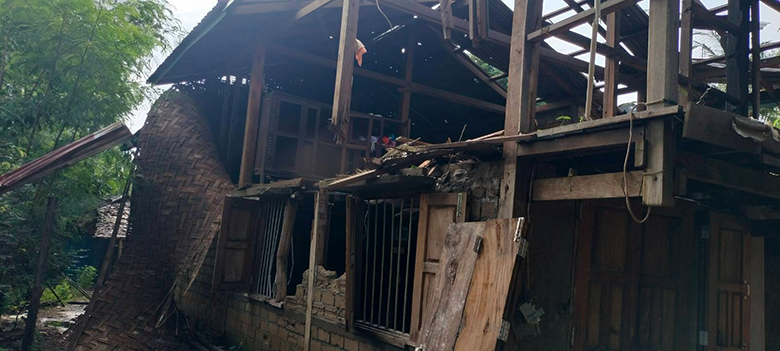


The photos above were taken in July 2025, in At--- village, Z’Yat Gyi Taung Chan village tract, Htaw Ta Htoo Township, Taw Oo District. On June 24th 2025, at around 9 pm, the SAC Infantry Battallion (IB)[12] #73 carried out multiple shellings on At--- village. The top two photos show the aftermath of a mortar shell, which landed on the house of Ko N--- and Ma[13] O---. As a result of the shelling, both Ko N--- and Ma O--- were killed while inside their home, which was destroyed. The next two photos show a villager named U[14] K--- (54 years old), who was injured by one of the mortar shell explosions. He was wounded on his left thigh and knee, and his house was destroyed during the shelling. The two photos at the bottom were received on July 8th 2025 from a local villager. These two photos show U K---’s destroyed house. [Photos: KHRG/Local villager]
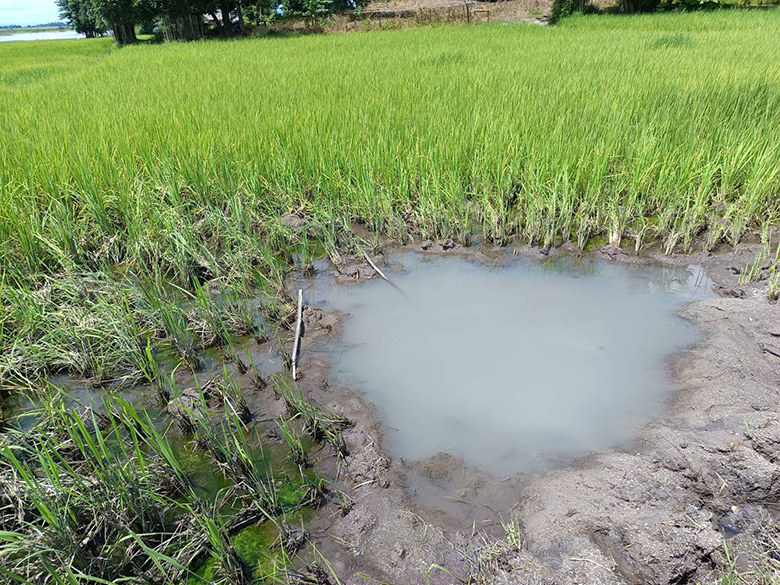
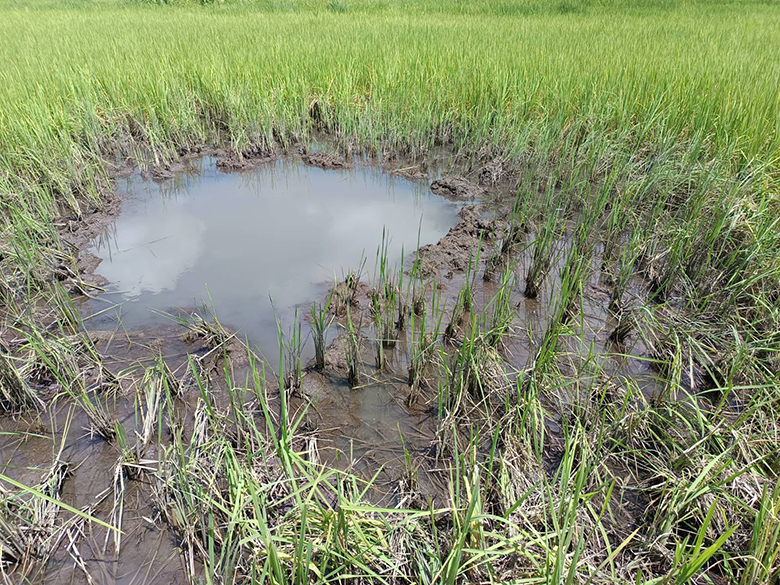


These photos were received from a local villager on September 9th 2025, near Bg--- village, Per Htee area, Htaw Ta Htoo Township, Taw Oo District. On September 5th 2025, at 5 pm, the Burma Army’s IB #73, based at Z’Yat Gyi Taung Chan village tract, Htaw T’Htoo Township, fired three mortar rounds into Bg--- village. These photos show the resulting damaged rice paddy plants owned by a local villager. [Photos: Local villager]
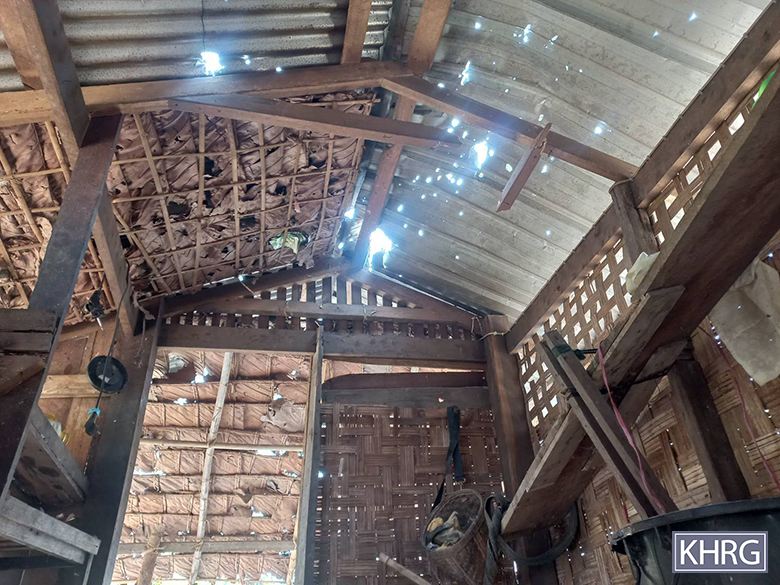
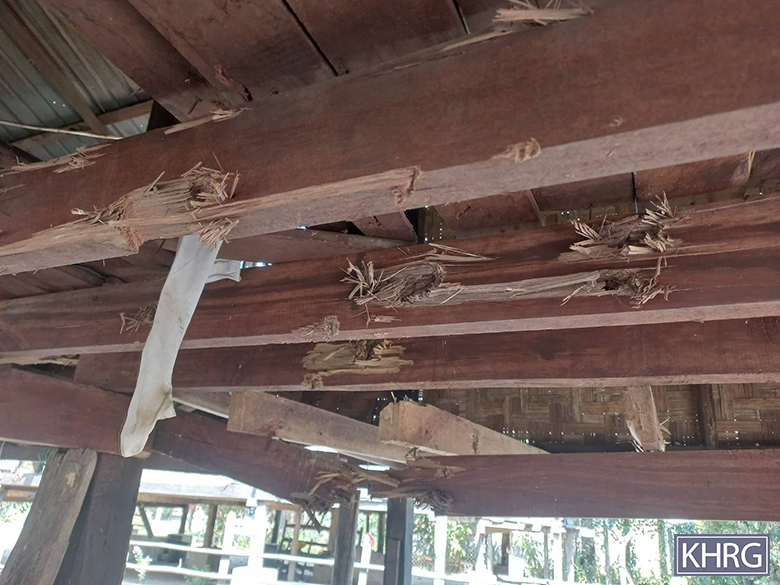
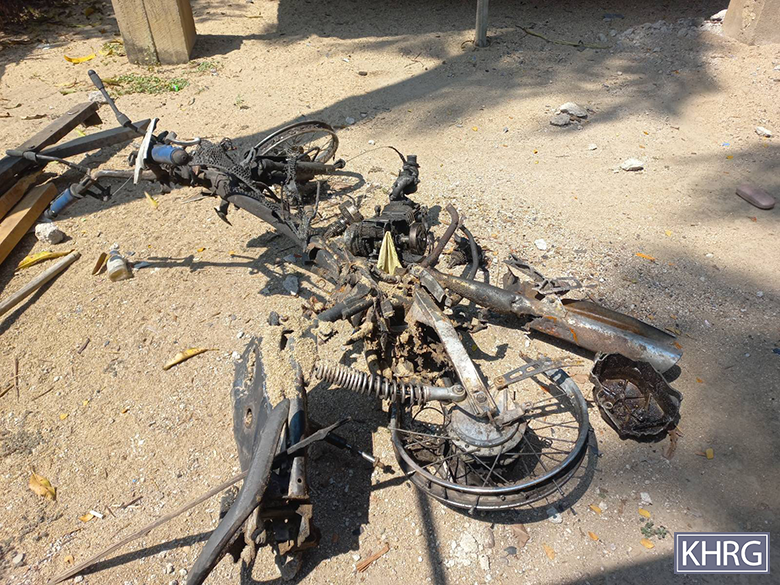


These photos were taken in February 2025 in Am--- village, Nyaung Pin Thar village tract, Moo Township, Kler Lwee Htoo District. These photos show the properties of a villager named U K---, his house and a motorcycle, that were damaged and destroyed by the SAC’s LIB #72 indiscriminate shelling on February 18th 2025. This LIB is based in Z’Yat Gyi Town. [Photos: KHRG]
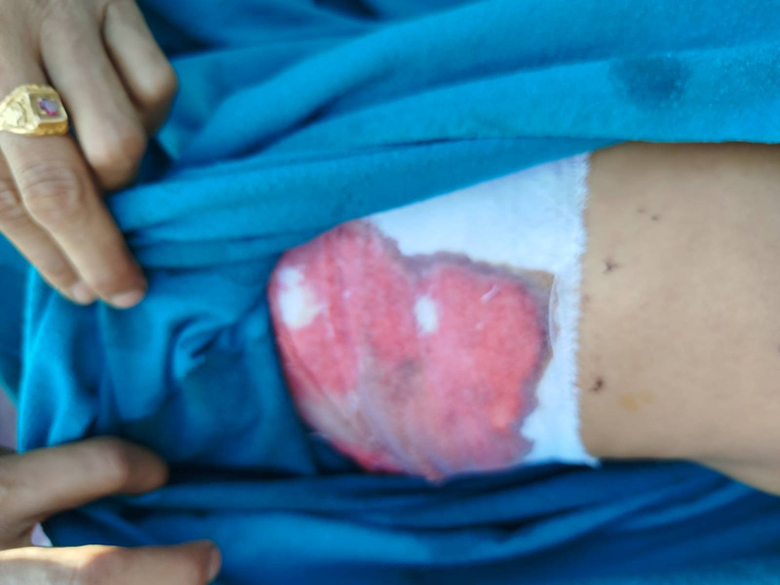
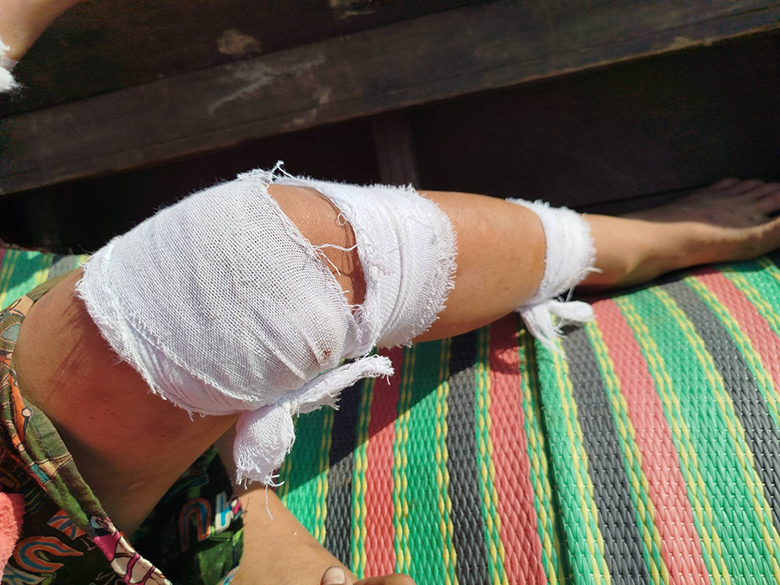
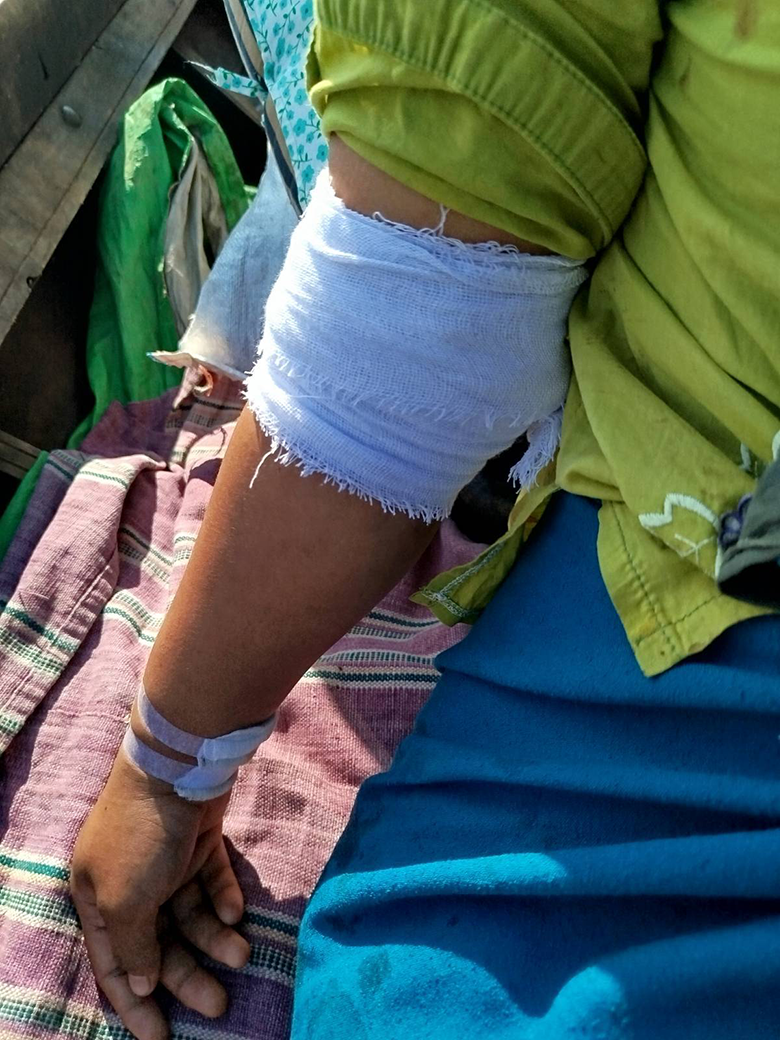


These photos were received from a local leader on January 28th 2025, in Ad--- village, Hsaw Htee Township, Kler Lwee Htoo District. These three photos show local villagers, Maung[15] B--- (12 years old) and Ma C--- (16 years old), who were injured by the explosion of a 120 mm mortar shell fired by the SAC LIB #20, based at Kler Lwee Htoo Town, on January 24th 2025, at 9:30 am, in Ad--- village,, while the villagers were in their houses. After they were injured, local leaders and the village head sent them to a hospital in Kler Lwee Htoo Town for treatment. [Photos: Local villager]
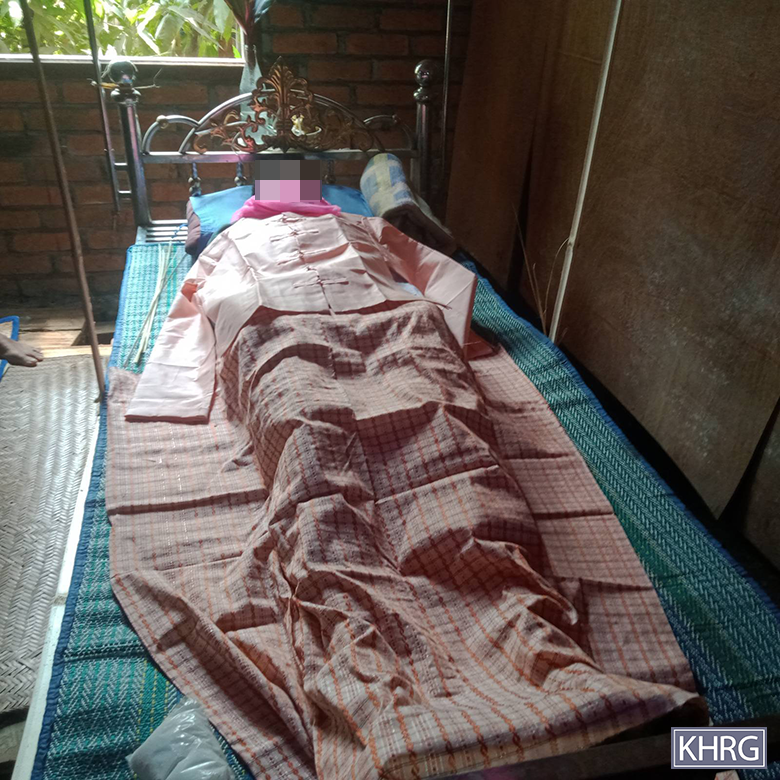
This photo was taken in March 2025, in Ah--- village, P’Ya L’Ha village tract, Moo Township, Kler Lwee Htoo District. On March 27th 2025, at around 4:30 pm, SAC soldiers from the LIB #439, based in K’Nyoo Kyaw (Ka Nyut Kwin) Town, Kler Lwee Htoo District, fired two 120 mm mortar rounds. One of the rounds landed in Ah--- village and injured a villager, Maung F--- (29 years old). He was wounded on his left hand, and shrapnel entered his rib area, causing severe injury to his heart, which led to his death. This photo shows Maung F---’s body. [Photo: KHRG]
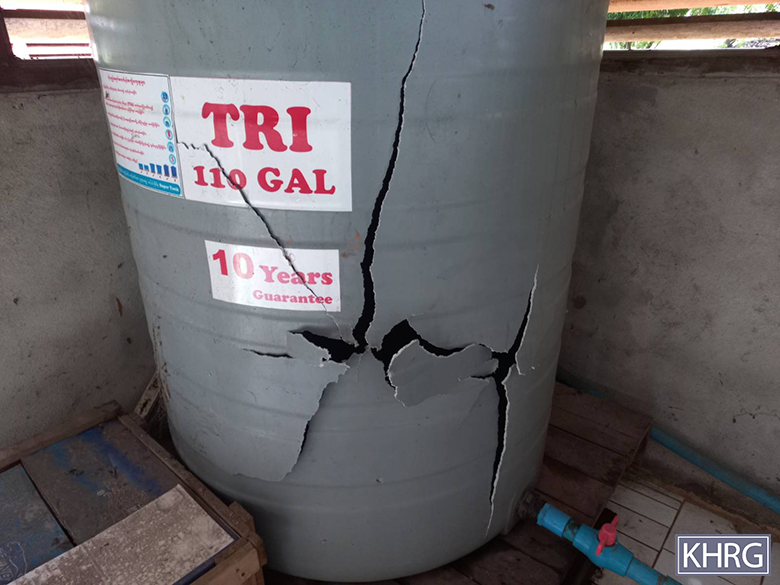
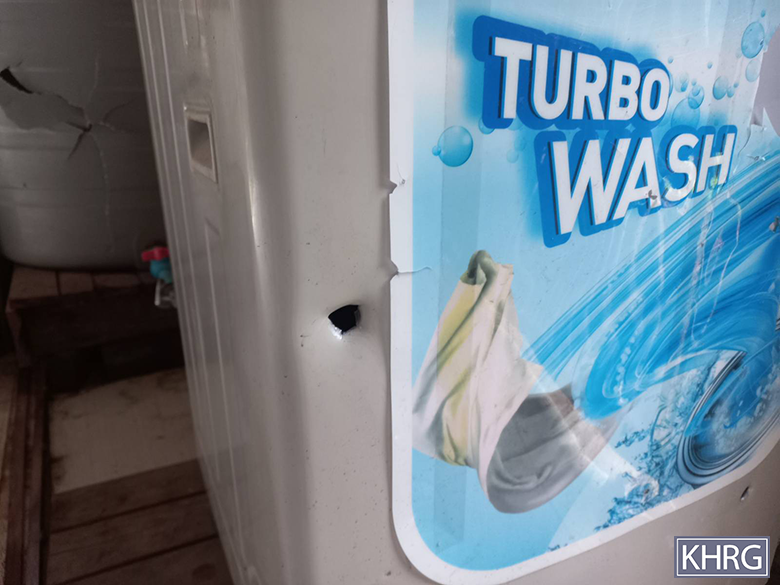


These photos were taken in July 2025, in Bh--- village, Mee Tel Taw village tract, Moo Township, Kler Lwee Htoo District. They show water tanks that were damaged by the SAC LIB #590, when soldiers indiscriminately fired 60 mm mortars on June 28th 2025, at 10 am. This LIB is based in Yay Aoh See army camp, Mee Tel Taw village tract, Moo Township. Villagers were forced to relocate because SAC soldiers continue to shell the village indiscriminately. Due to the constant shelling, villagers are displaced to the forest and other places. [Photos: KHRG]
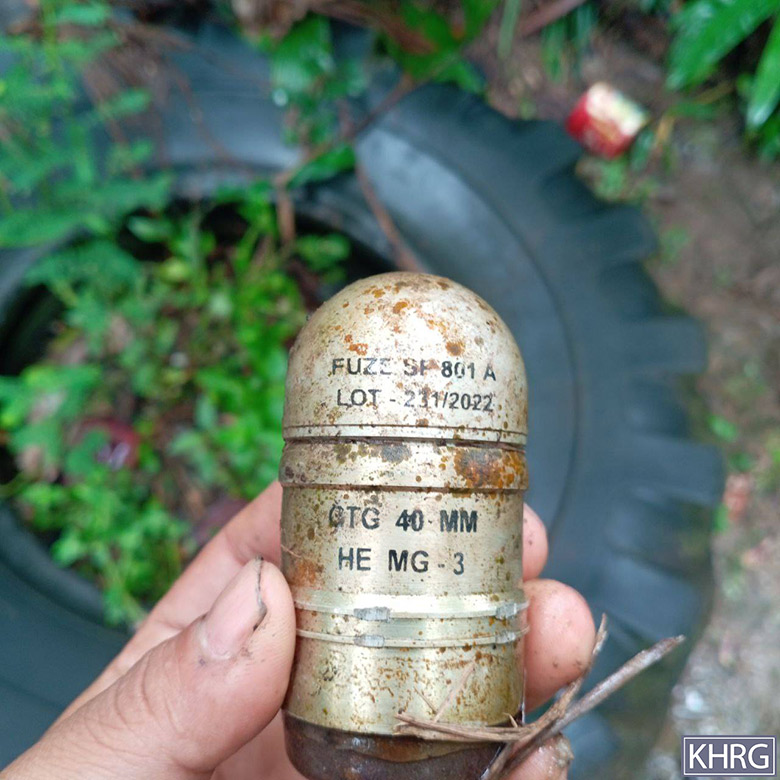
This photo was taken in August 2025 in Ba--- village, Kyein Chaung village tract, T’Naw Th’Ree Township, Mergui-Tavoy District. It shows the remnant of an unexploded 40 mm, believed to have been fired in 2022 in Ba--- village, which was found on August 12th 2025. It is unknown to KHRG whether this UXO has been safely removed. [Photo: KHRG]
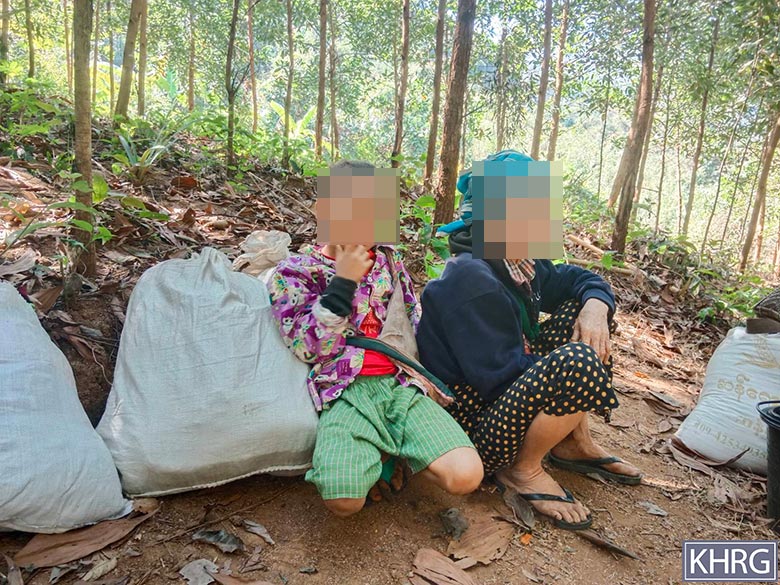
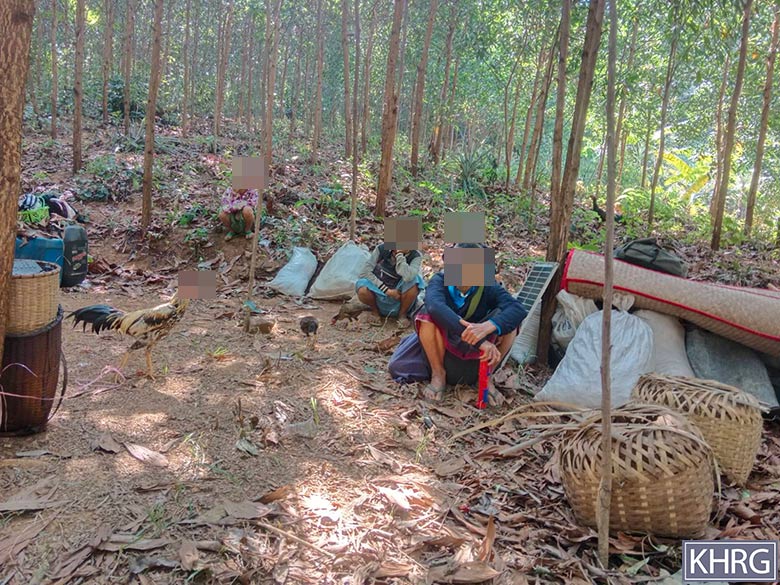
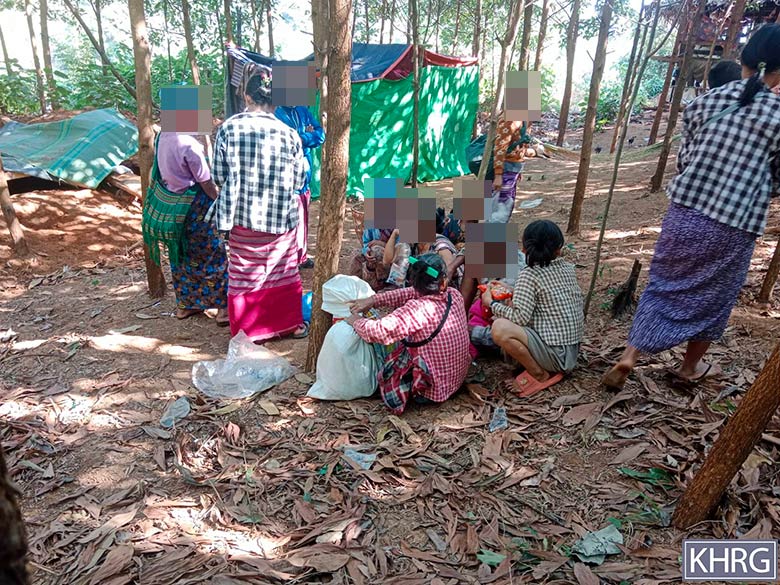
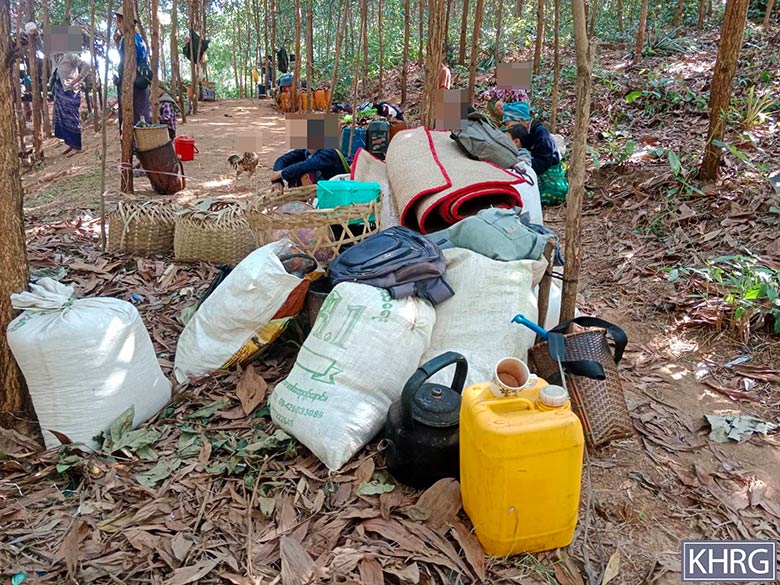


These four photos were taken in January 2025, at a displacement site in Waw Muh village tract, Dwe Lo Township, Mu Traw District. They show villagers from Bi--- village, Waw Muh village tract, Dwe Lo Township, Mu Traw District, who fled to the forest on January 7th 2025, after receiving a warning from the local Karen National Union (KNU)[16] and Karen National Liberation Army (KNLA) of the likelihood of an impending shelling by the Burma Army. An SAC unit at Meh Pree Hkee army camp shelled near Bi--- village, and SAC forces also conducted an air strike on the area. Villagers remain displaced (as of December 2025). [Photos: KHRG]
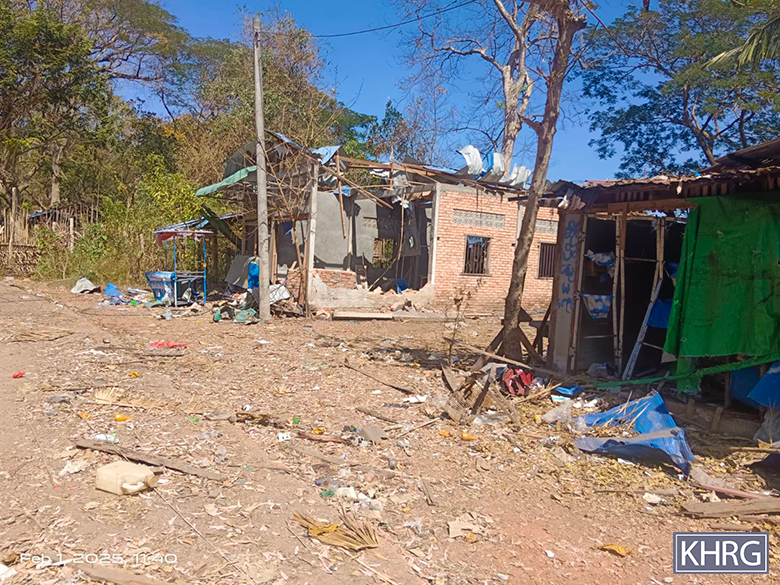
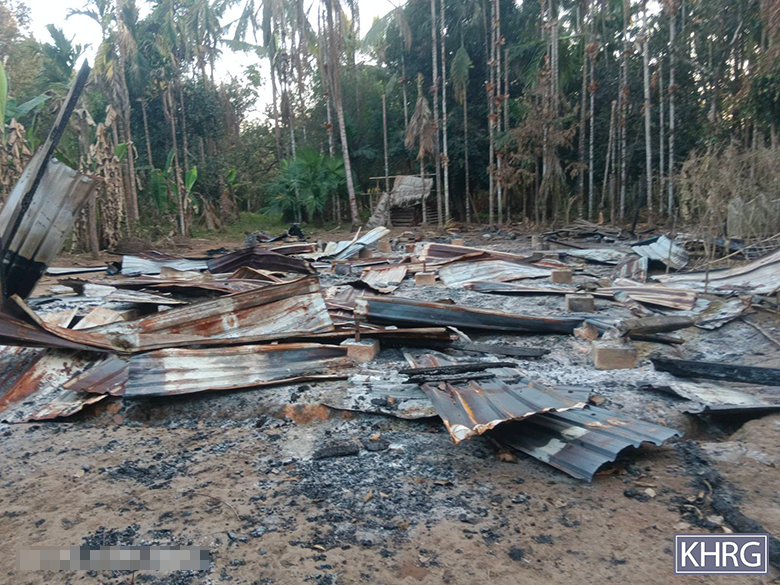
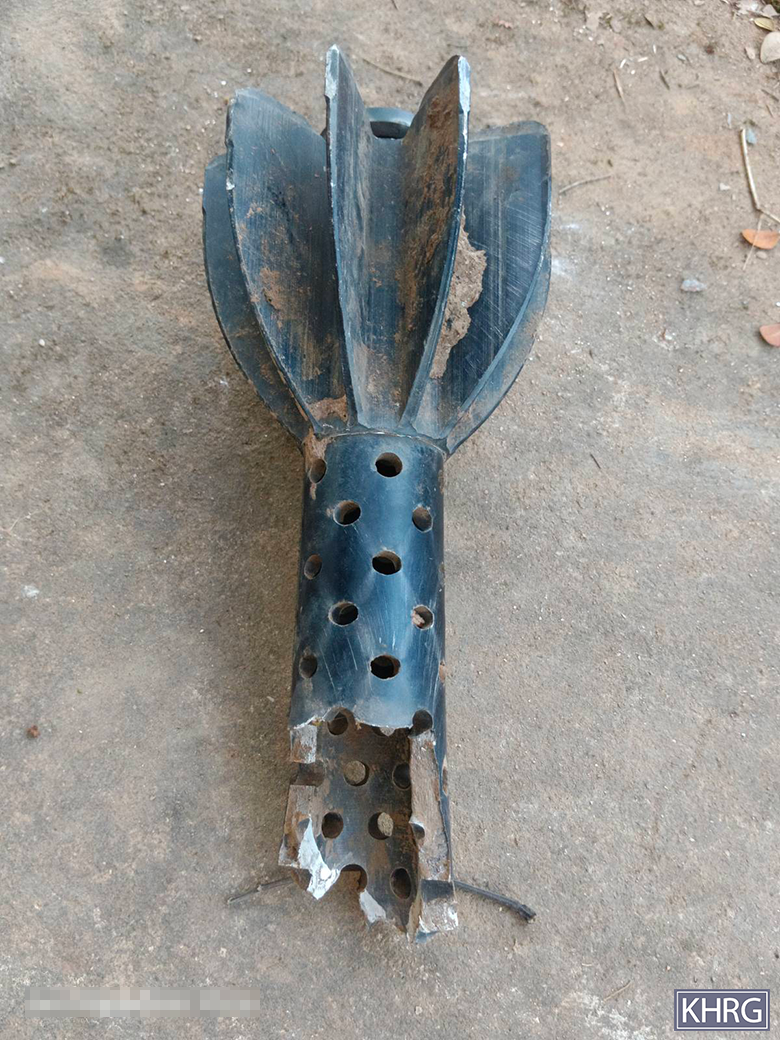
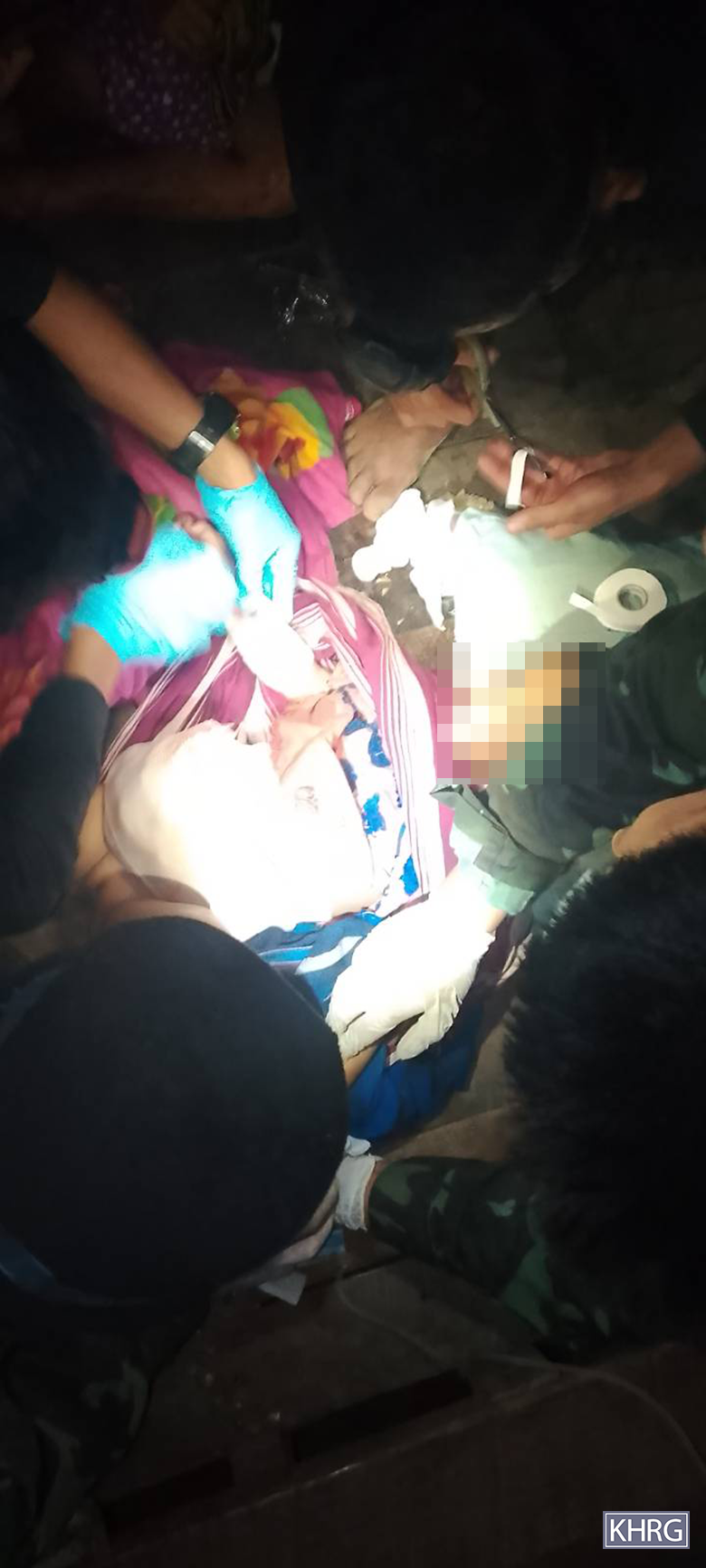


These four photos were taken in January 2025, in An--- village, K’Ter Tee village tract, Dwe Lo Township, Mu Traw District. The photo at the top left shows a house that was destroyed when SAC soldiers, based at the K’Ter Htee army camp, fired a 60 mm mortar shell into the village on January 21st 2025, although fighting was not ongoing. The photo at the top right and the photos at the bottom were taken later in January 2025, also in An--- village, after another shelling on January 23rd 2025, believed to have been fired by the Border Force Guard (BFG) #1013, as the BGF was also based at K’Ter Tee army camp. These photos show (in order): a house completely destroyed, the remnants of the mortar shell, and a boy who was injured due to the shelling. The boy received treatment in the village by a KNLA medic and has now recovered. [Photos: KHRG]
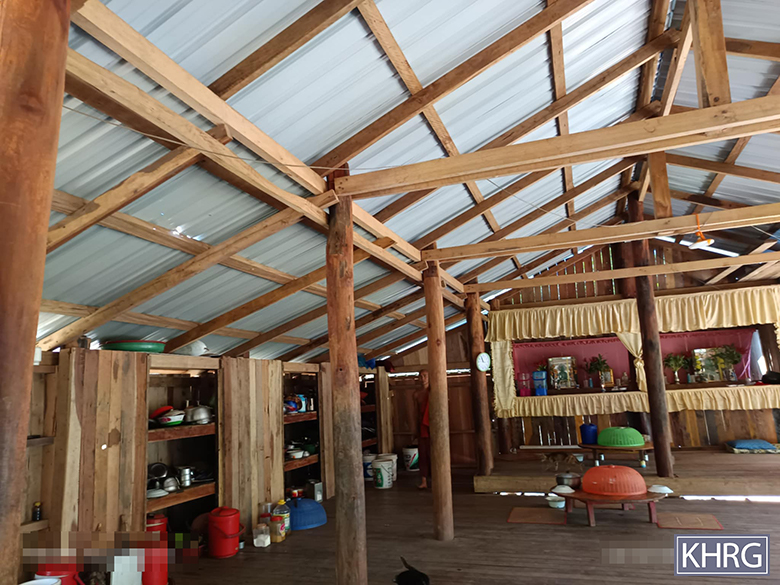
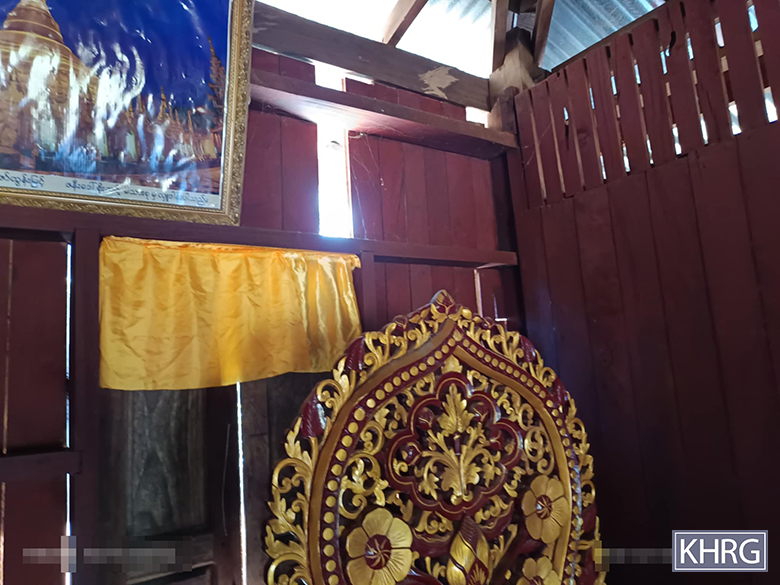


These two photos were taken in February 2025, in Au--- village, K’Ter Tee village tract, Dwe Lo Township, Mu Traw District. They show the roof and windows of Au---’s monastery, which were damaged when the soldiers based at the BGF #1013 K’Ter Tee army camp fired a 120 mm mortar that landed in the monastery compound on February 1st 2025, at 12 pm. [Photos: KHRG]
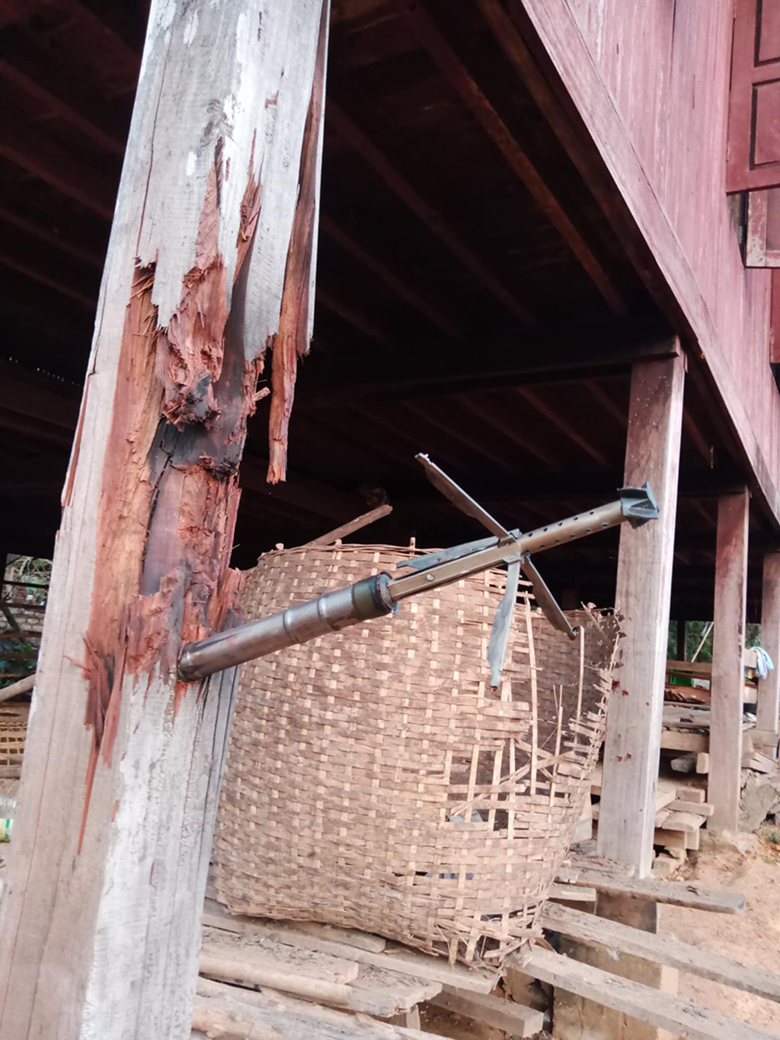
This photo was received from the village head of Az--- village, Lay Poe Hta village tract, Dwe Lo Township, Mu Traw District, on February 28th 2025. It shows the remnant of a mortar shell fired on February 27th 2025, at 4 pm by an SAC Artillery Unit based at the K’Ter Tee army camp. The shell struck a house post belonging to a villager in Az--- village. This shell was removed by local leaders. [Photo: Local villager]
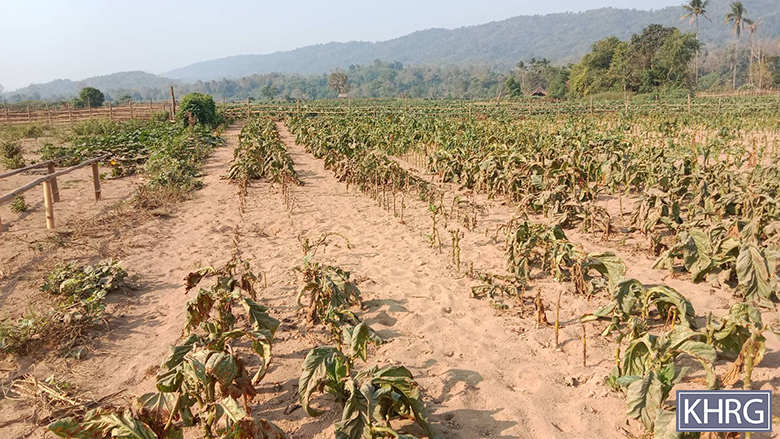
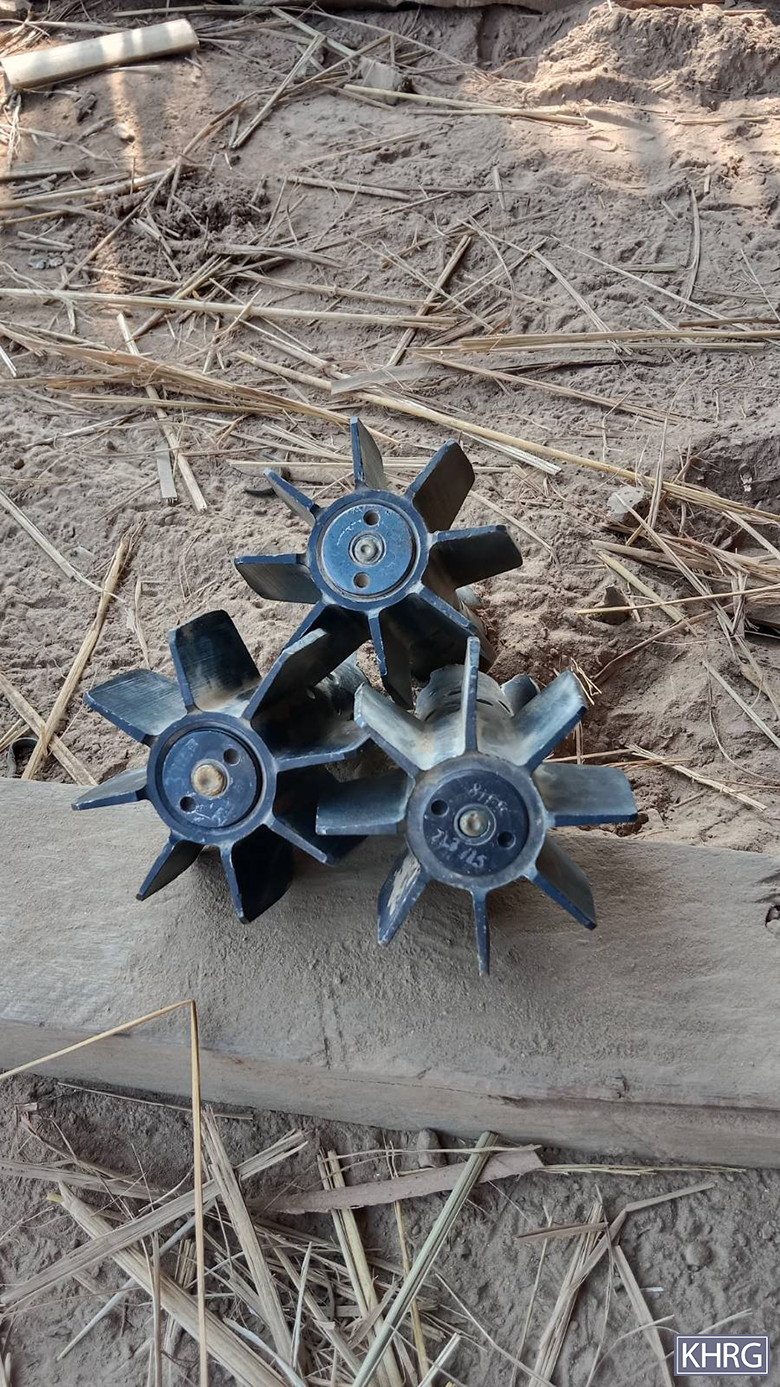


These two photos were taken in March 2025, in Bd--- field, located near Be--- village, Ma Htaw village tract, Dwe Lo Township, Mu Traw District. On February 28th 2025, at 8:30 pm, the SAC LIBs #341 and #340 based at Hpapun Town, fired five rounds of 81 mm shells onto Be--- village. One of the five shells landed on the tobacco plantation of a villager named Saw[17] T---, damaging some of his tobacco plants, the drying tobacco, and a hut. The photo on the left shows part of the damaged tobacco plantation, while the photo on the right shows the tailspin of exploded shells found at the plantation. [Photos: KHRG]
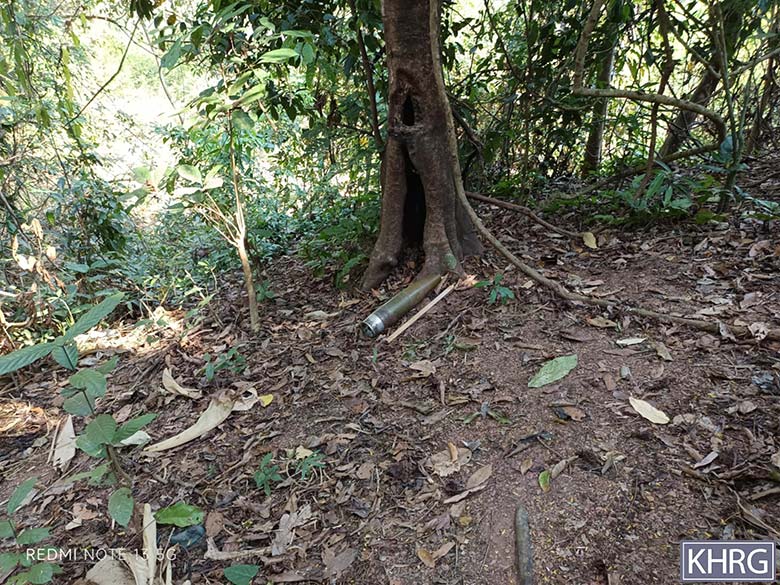
This photo was taken in March 2025 near Ax--- village, Lay Poe Hta village tract, Dwe Lo Township, Mu Traw District. On March 1st 2025, at 9:35 am, SAC affiliated forces based at the K’Ter Tee army camp, located in K’Ter Tee village tract, shelled into Ay--- village, Bu Tho Township, Mu Traw District. One of the mortars did not explode. A villager from Ax--- village found the unexploded mortar in Ay--- village and brought it back to his village. Other villagers warned him that it was dangerous to keep it there, so he later placed the mortar outside the village under a tree. [Photo: KHRG]
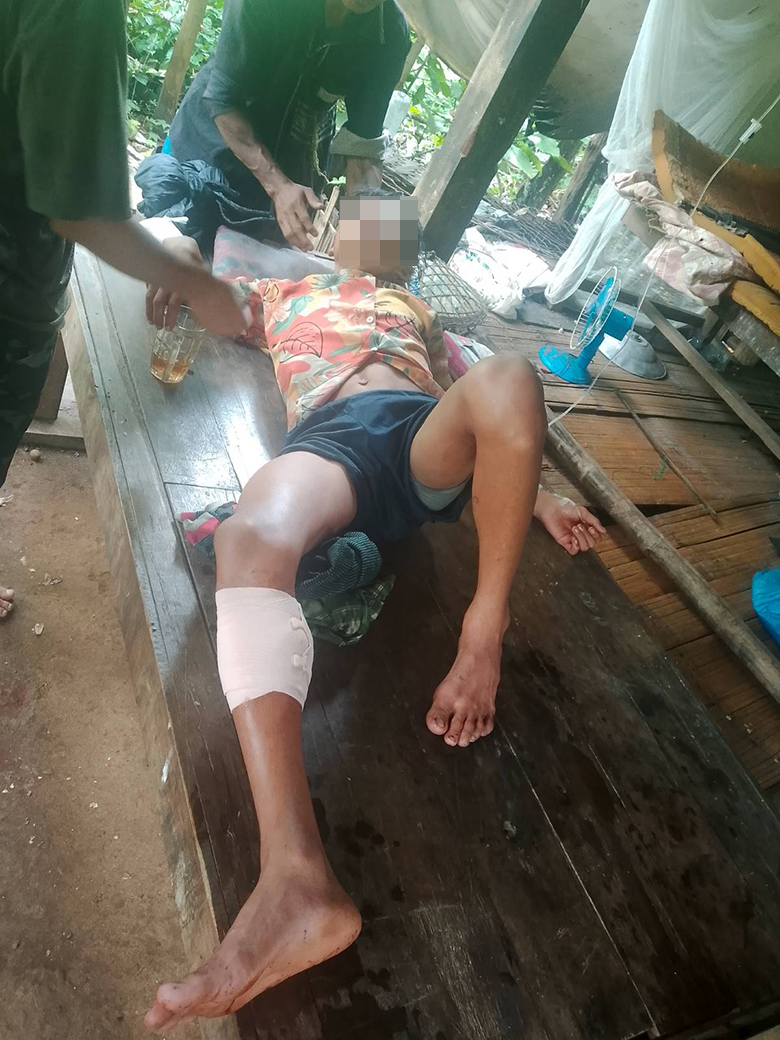
This photo was received from a local authority on July 11th 2025. It shows a 17-year-old boy named Saw D--- from Ae--- village, Meh Klaw village tract, Bu Tho Township, Mu Traw District, receiving treatment at his home after sustaining injuries when an SAC unit based at Hpapun army camp conducted shelling on July 10th 2025. A mortar shell landed near the road between Af--- village and Ag--- village, Meh Klaw village tract, where Saw D--- was travelling with one of his friends. As soon as he was injured, his friend screamed out for help. The Karen National Police Force (KNPF)[18] based at a checkpoint nearby got healthcare workers from the Karen Department of Health and Welfare (KDHW)[19] to provide him treatment. [Photo: Local KNU authority]
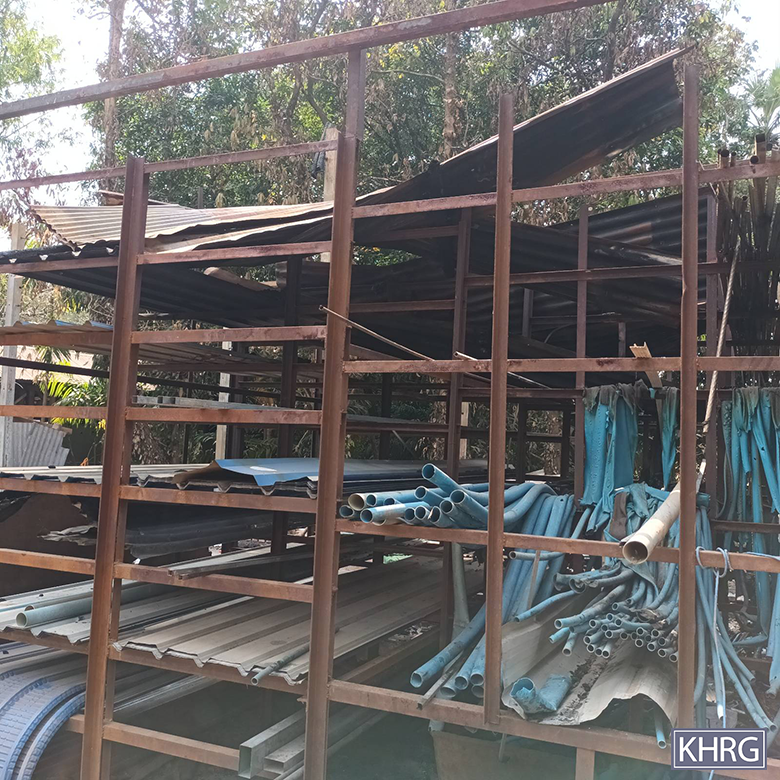
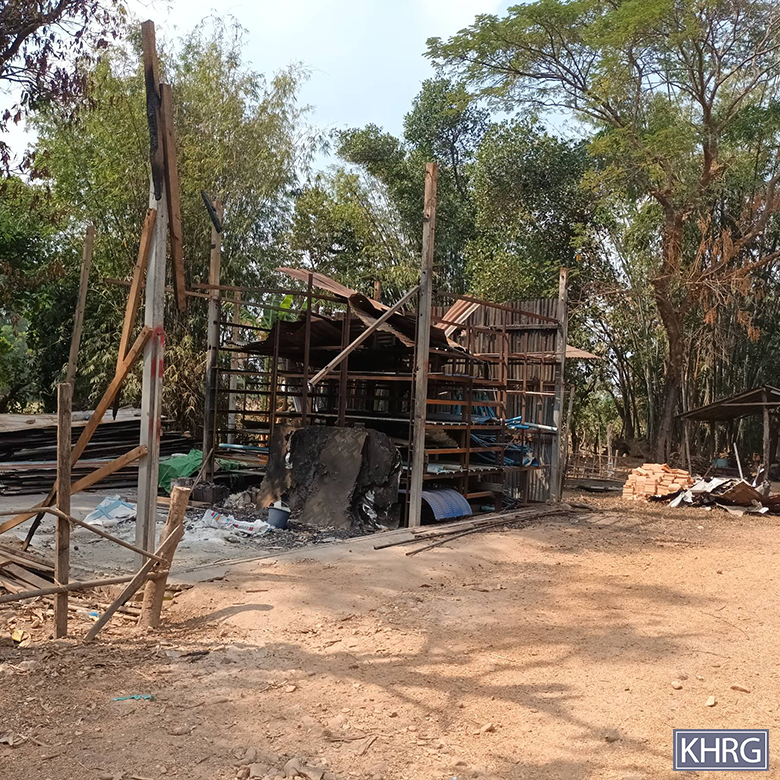


These photos were taken in February 2025, at Al--- village, Maung Ma Ywar Thit village tract, Kru Tu Township, Dooplaya District. On January 13th 2025, at around 8 pm, the SAC IB #97, under Military Operations Command (MOC)[20] #12, located near the Asian Highway[21] in Kaw T’Ree Township, fired a mortar shell that landed in Al--- village and burned villagers’ livelihood equipment and materials. The photos show a burned rice bran storage unit along with pipes, zinc roofing, and other materials that were damaged by the shelling. [Photos: KHRG]
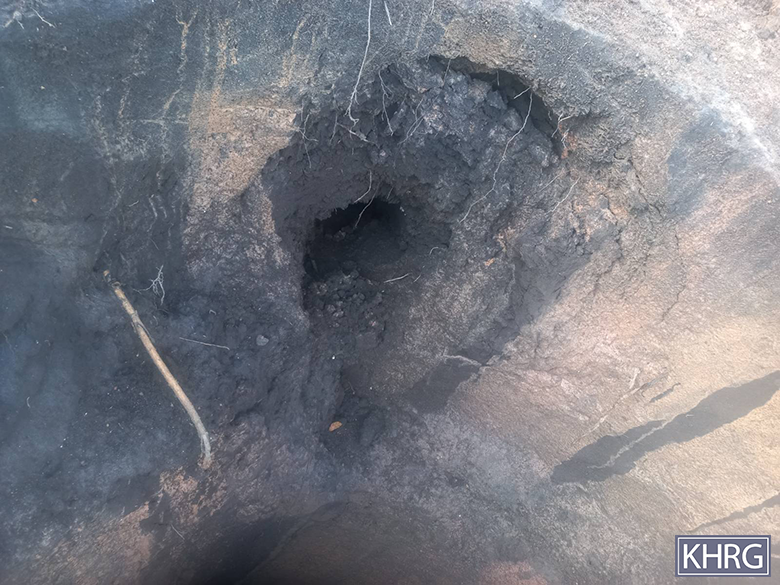
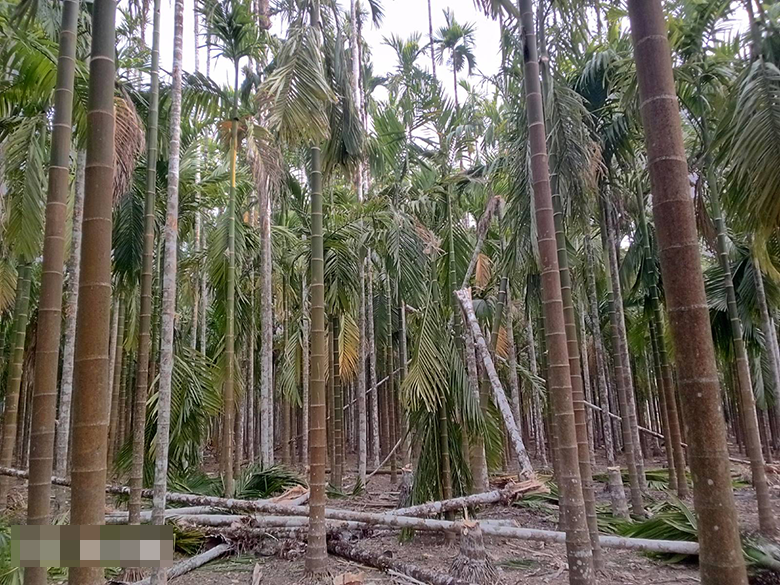


The photo on the left was taken in April 2025, in Bf--- village, Loh Shah village tract, Waw Ray Township, Dooplaya District. The photo shows a water well owned by a villager in Bf--- that was damaged by an SAC shelling on April 14th 2025. The photo on the right was received from a Bf--- villager and shows a betel nut plantation belonging to another villager that was also damaged by the SAC shelling. [Photos: KHRG/Local villager]
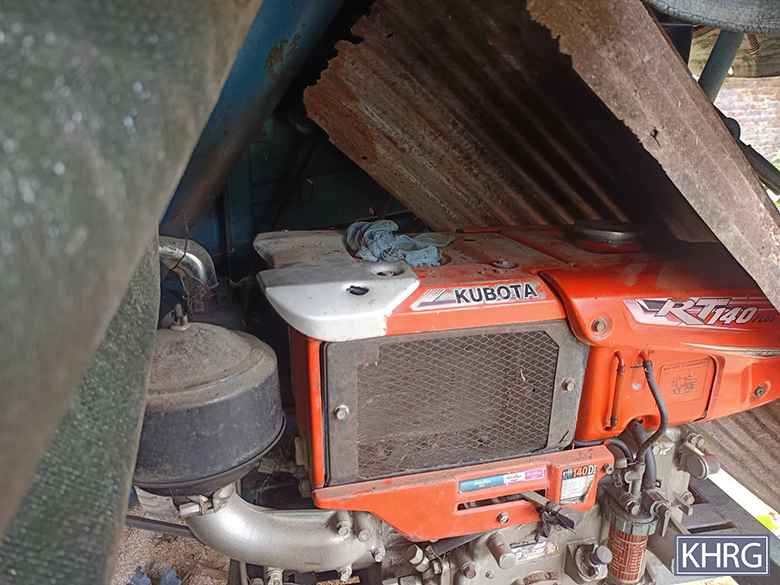
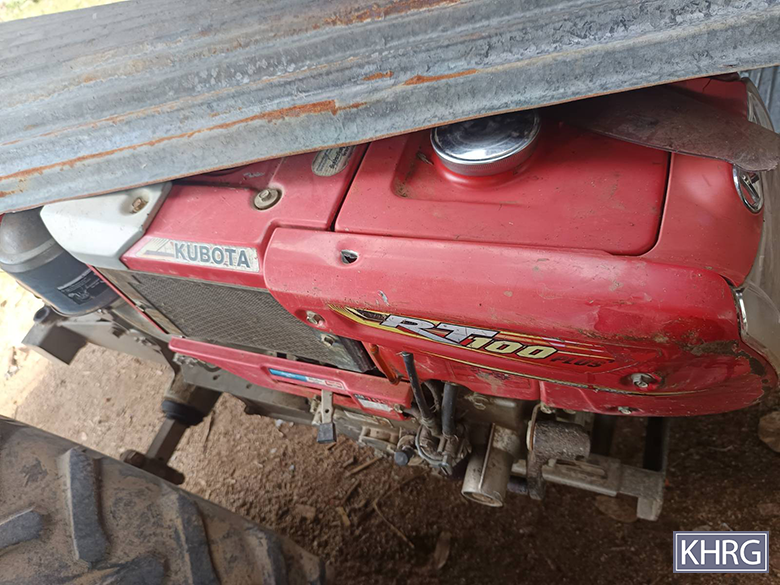
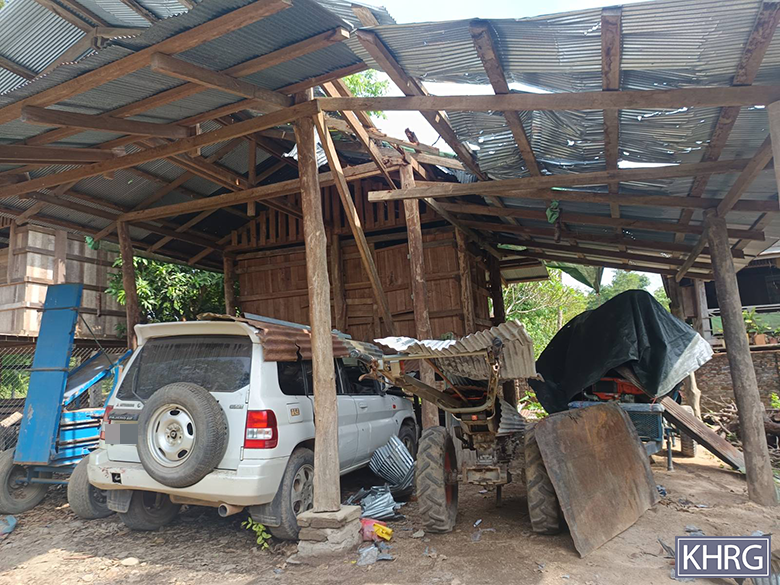
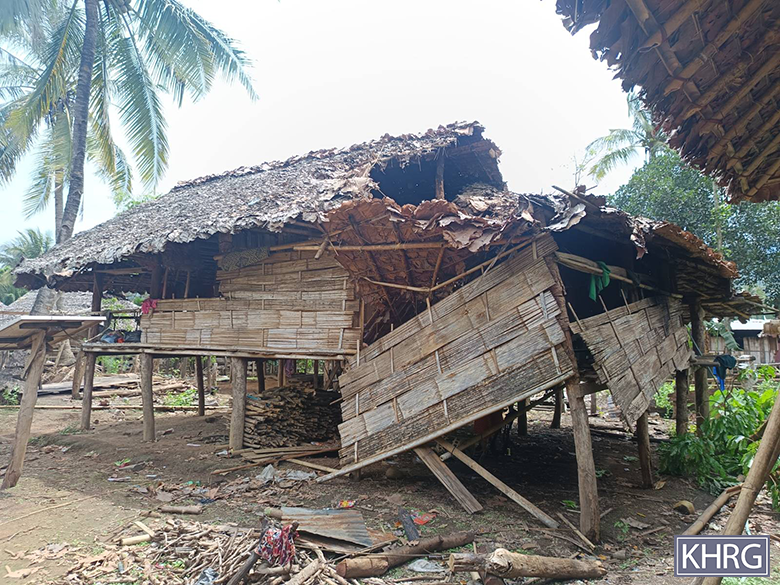


These photos were taken in April 2025, in As--- village, Noh Poe village tract, Kaw T’Ree Township, Dooplaya District. On the afternoon of April 15th 2025, the SAC’s Aung Zeya Column[22], positioned along the Asian Highway, shelled two 81 mm mortar rounds into As--- village. These photos show the resulting damage to villagers’ milling machines, a car, and villagers’ houses.[23] [Photos: KHRG]
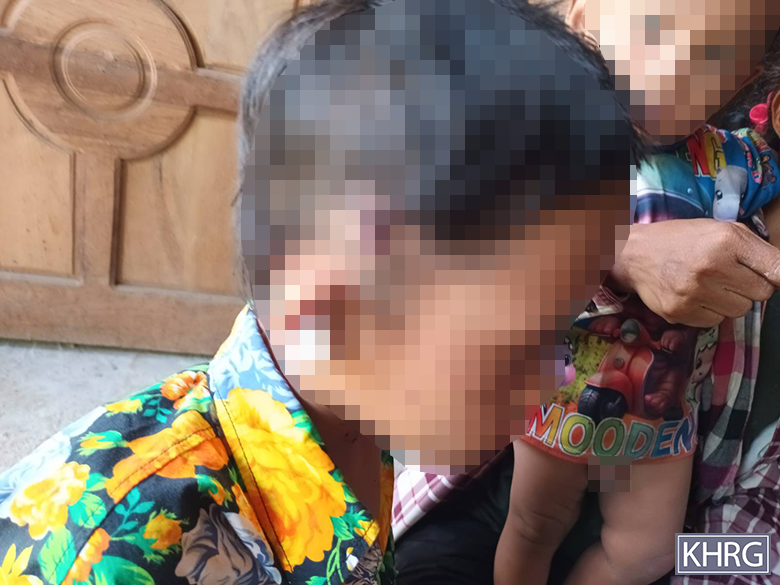
This photo was taken in July 2025, in Ac--- village, Myauk Kya Inn village tract, Kruh Tuh Township, Dooplaya District. On July 9th 2025, at 5 pm, the SAC Light Infantry Battalion (LIB) #545, based in Kruh Tuh Township, fired a mortar that landed in Ac--- village, injuring four children. This photo specifically shows two of the children (10 years old and 10 months old) who were injured by the SAC shelling. They were injured on the face, head, and back. The children recovered after accessing medical treatment.[24] [Photo: KHRG]
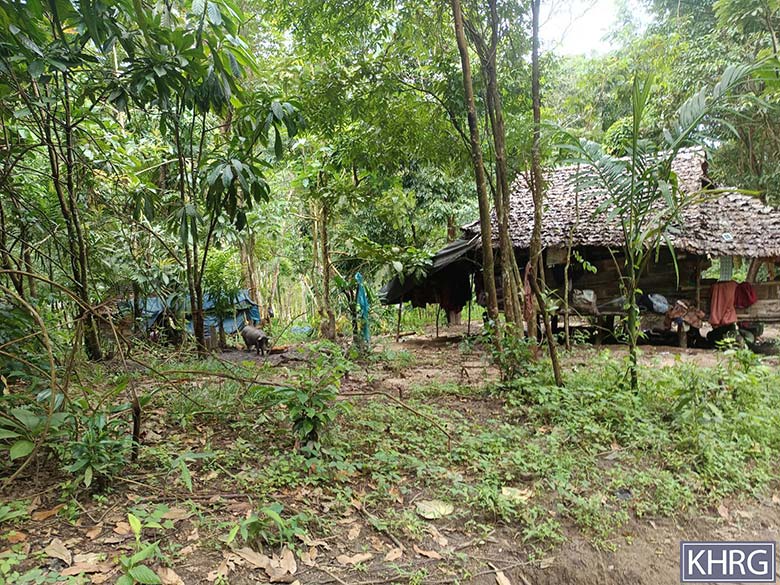
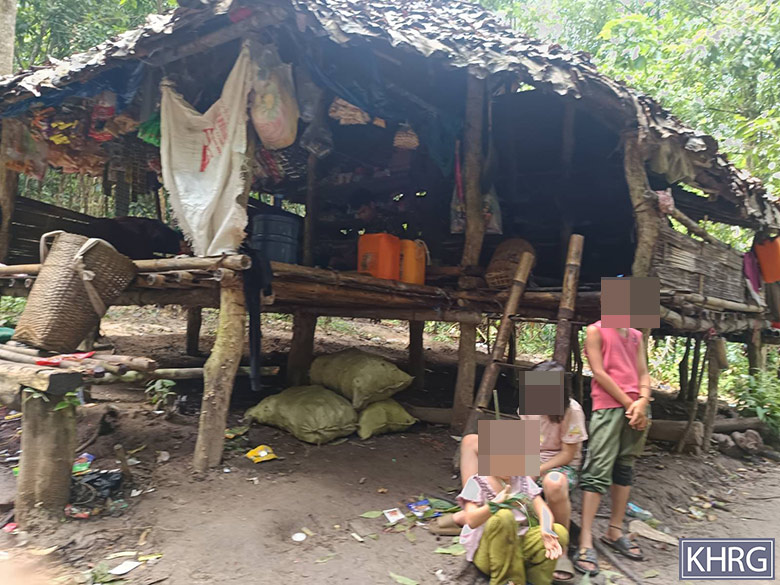
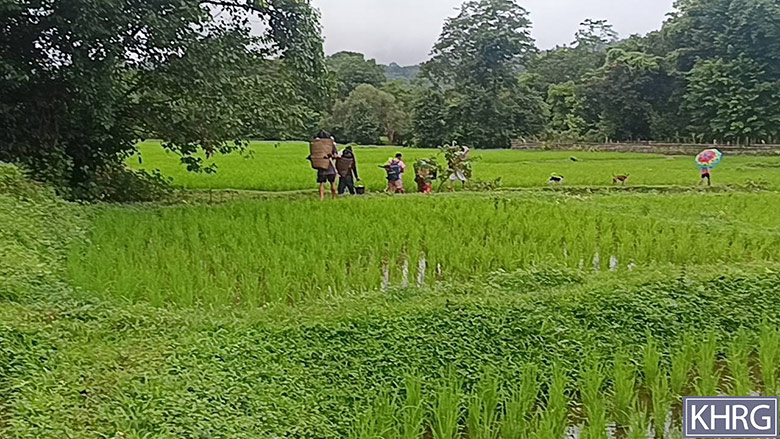


These photos were taken in August 2025, in Bj--- village, Noh Poe village tract, Kaw T’Ree Township, Dooplaya District. These photos show villagers who were displaced from their homes and who are sheltering outside the village, following Burma Army’s shelling into Bj--- village on August 14th 2025. [Photos: KHRG]
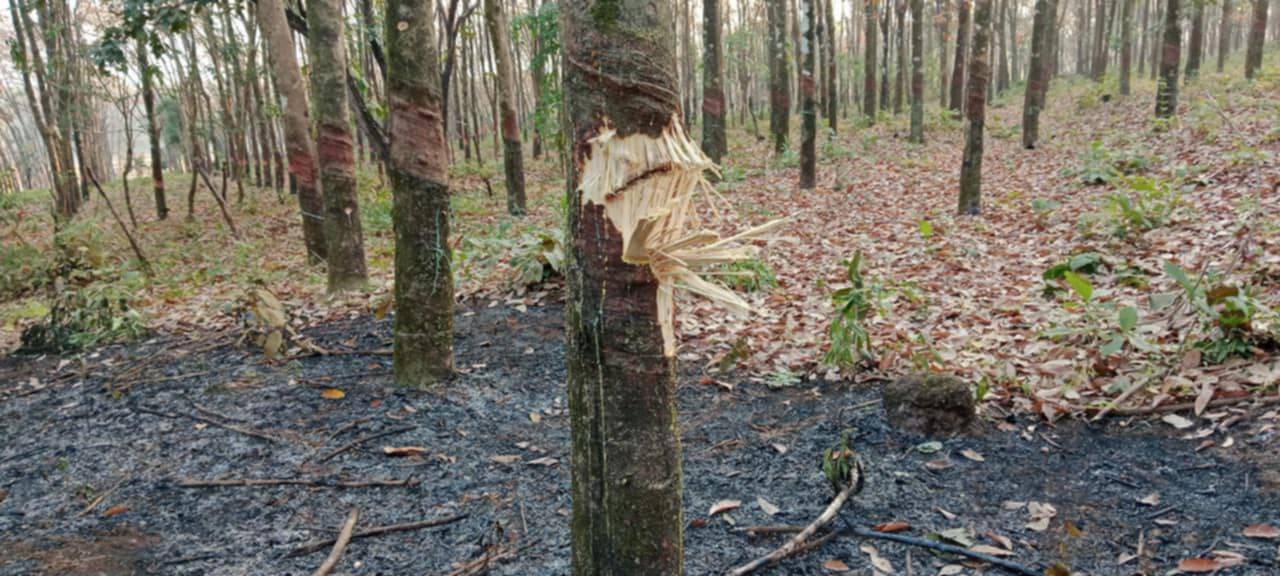
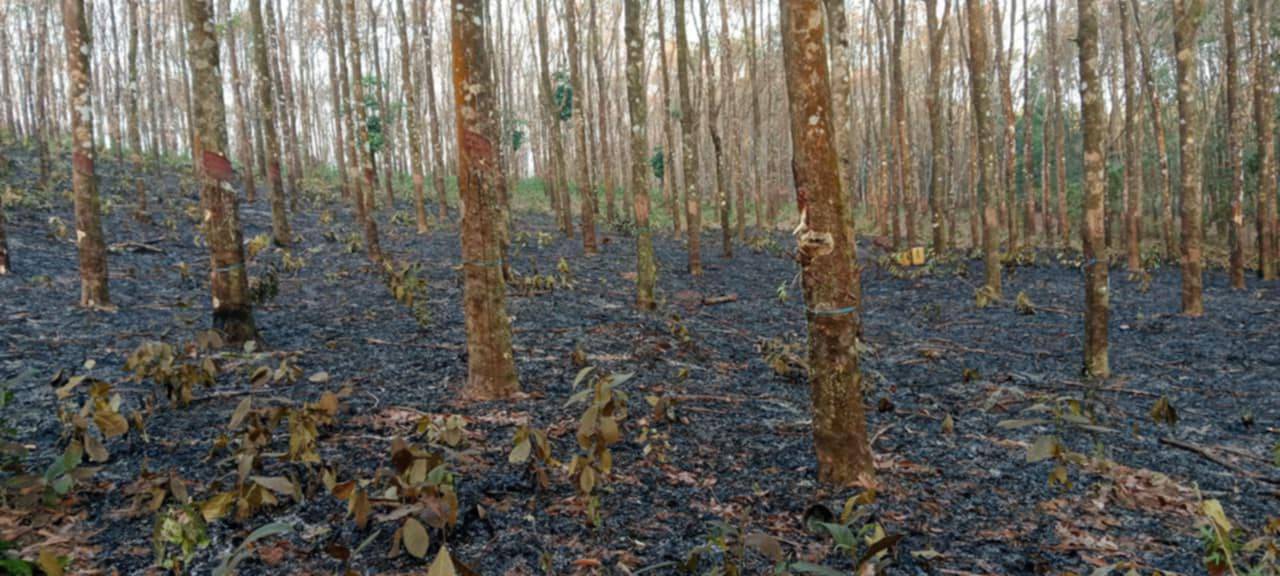


These photos were received on March 4th 2025 from a villager living in Bc--- village, Yaw Kuh village tract, T’Nay Hsah Township, Hpa-an District. The villager took the photos on the morning of February 28th 2025, at U S---’s rubber plantation near Bc--- village. On February 27th 2025, SAC forces, based at Hlaing Wa Artillery Unit #97, fired 120 mm shells, including incendiary weapons, which burned U S---’s rubber plantation. The photos show the damage to the plantation. [Photos: Local villager]
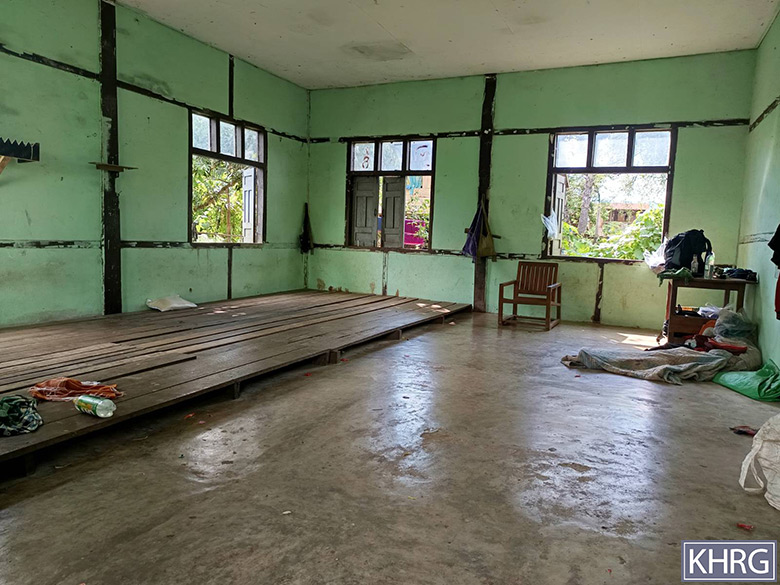
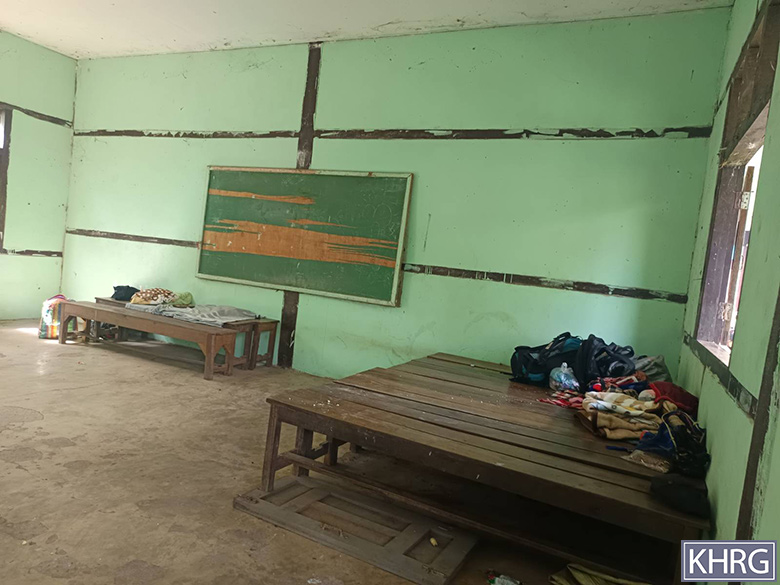


These photos were taken in September 2025 in Bk--- village, Htee Wa Blaw village tract, T’Nay Hsah Township, Dooplaya District. These photos show a place where displaced villagers from Bj--- village and As--- village, Noh Poe village tract, Kaw T’Ree Township, Dooplaya District, stay and sleep following a shelling conducted by the Burma Army on September 2nd 2025 into Bj--- and As--- villages. Due to the shelling, some villagers’ houses were damaged. [Photos: KHRG]
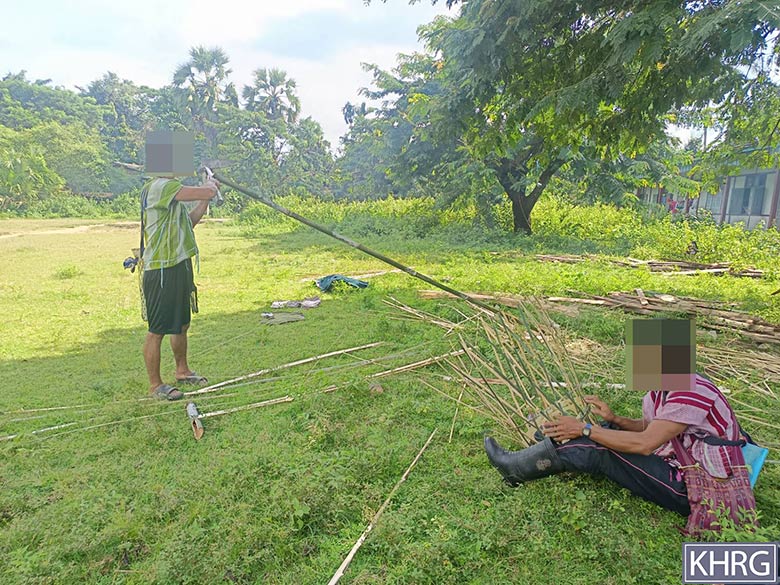
This photo was taken in September 2025 in Bk--- village, Htee Wa Blaw village tract, T’Nay Hsah Township, Hpa-an District. This photo shows displaced villagers from Bj--- village and As--- village, Noh Poe village tract, Kaw T’Ree Township, Dooplaya District making bamboo baskets to carry water and store it, following a shelling conducted by the Burma Army on September 2nd 2025 on Bj--- and As--- villages. [Photo: KHRG]
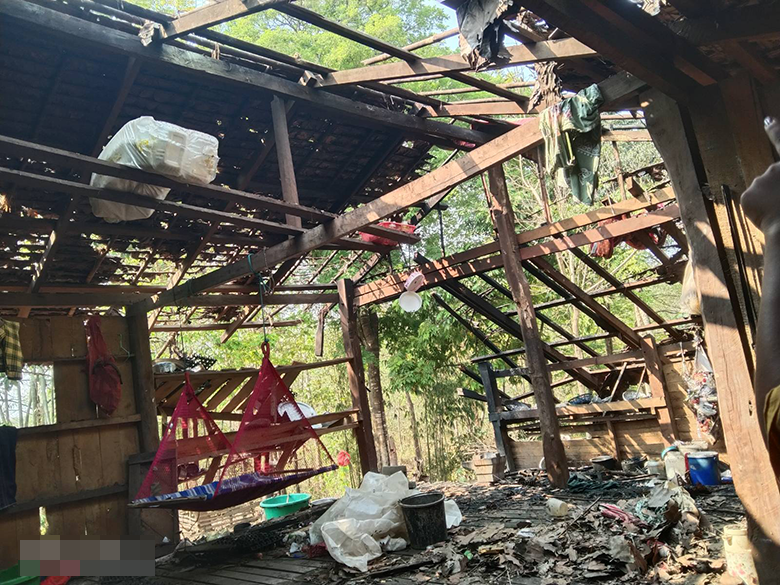
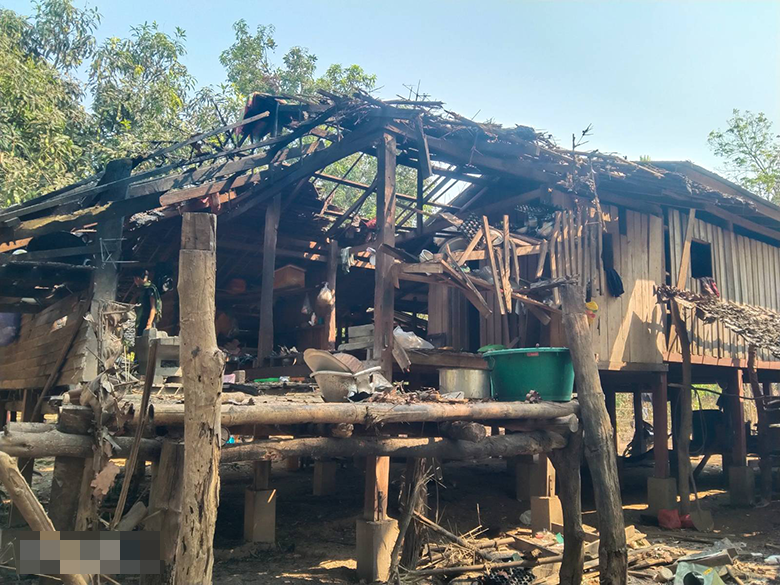
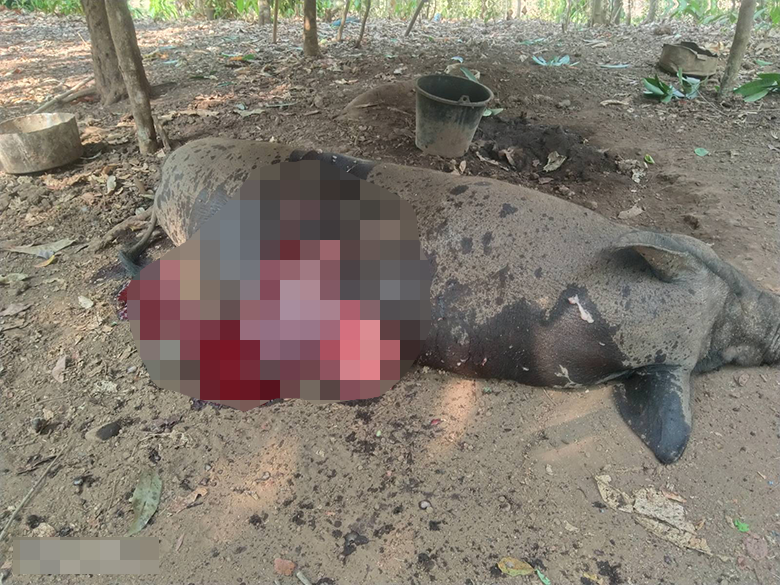
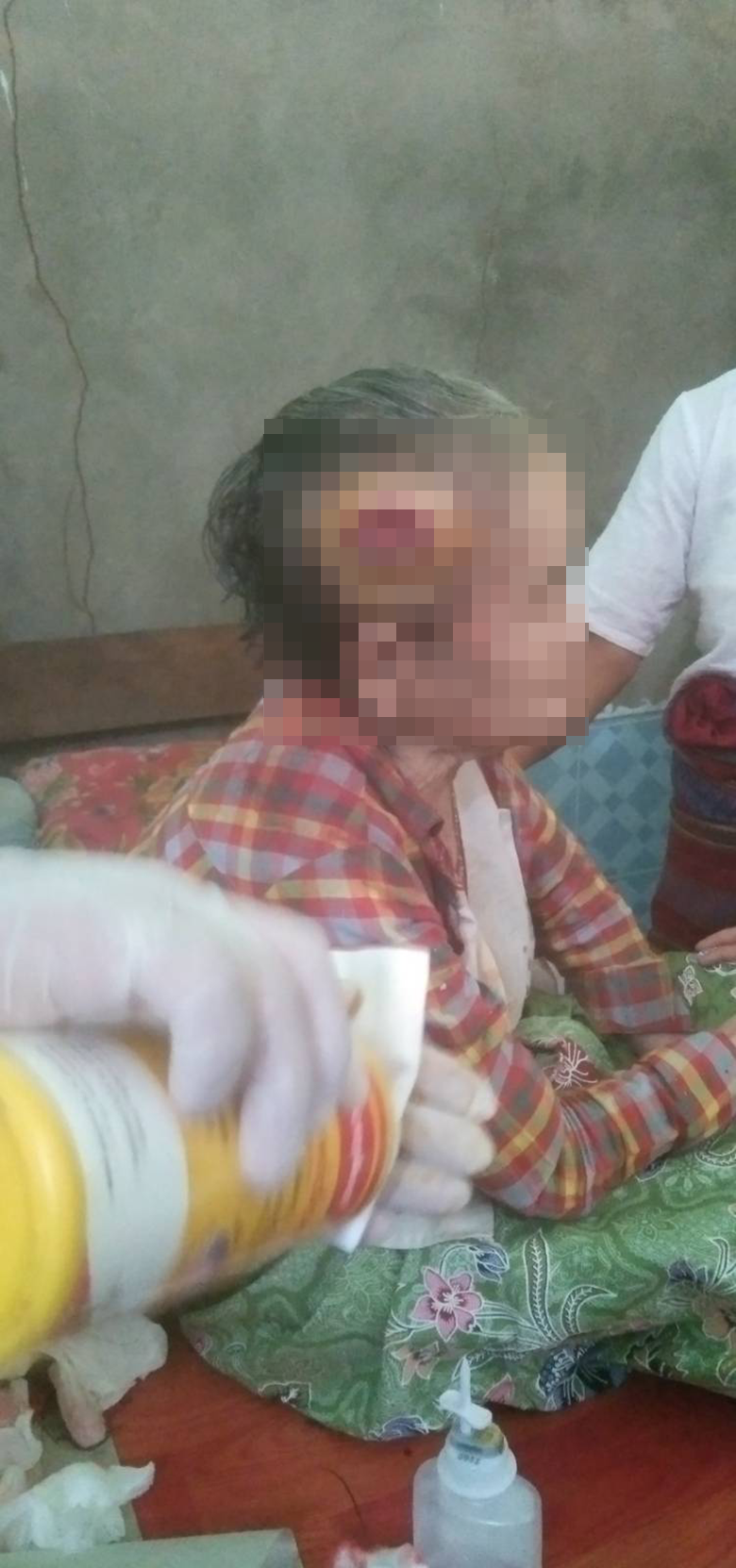


These photos were received from a local KNU authority in T’Nay Hsah Township, Hpa-an District, in March 2025. On March 27th 2025, at 8:03 am, the MOC #12, based at the Hlaing Wa Artillery Unit, fired a 120 mm mortar shell into Ao--- village, Yaw Kuh village tract, T’Nay Hsah Township, causing injury and damage to villagers. The first two photos (left column) depict the burned house of a local villager, U L---. The third photo depicts a dead pig that was killed by the shelling. The photo on the right shows Daw[25] M---, U L---’s mother-in-law, as she receives treatment in a clinic in Ap--- village, Noh Kay village tract, T’Nay Hsah Township, after she was injured by the shelling that landed in Ao--- village at her family’s house. [Photos: local KNU authority]
Footnotes:
[1] The terms Burma military regime, Burma Army, junta, and SAC are used interchangeably throughout this report to describe Burma’s armed forces. Villagers themselves commonly use Burma Army, Burmese soldiers, or alternatively the name adopted by the Burma military regime at the time –from the 2021 coup to July 2025, the State Administration Council (SAC). On July 31st 2025, the military junta changed its name to State Security and Peace Commission (SSPC).
[2] The State Administration Council (SAC) is the executive governing body created in the aftermath of the February 1st 2021 military coup. It was established by Senior General Min Aung Hlaing on February 2nd 2021, and is composed of eight military officers and eight civilians. The chairperson serves as the de facto head of government of Burma (Myanmar) and leads the Military Cabinet of Burma, the executive branch of the government. Min Aung Hlaing assumed the role of SAC chairperson following the coup. The military junta changed its name on July 31st 2025 to State Security and Peace Commission (SSPC).
[3] KHRG operates in seven areas in Southeast Burma: Doo Tha Htoo (Thaton), Taw Oo (Toungoo), Kler Lwee Htoo (Nyaunglebin), Mergui-Tavoy, Mu Traw (Hpapun) and Dooplaya and Hpa-an. When KHRG receives information from the field, it organises data according to these seven areas. These are commonly referred to as ‘districts’ and are used by many local Karen organisations. KHRG’s use of the district designations in reference to our research areas does not imply political affiliation. For clarity, the Burmese terms for these districts are provided in brackets but do not correspond with the Burma (Myanmar) government administrative divisions.
[4] Border Guard Force (BGF) battalions of the Tatmadaw were established in 2010, and they are composed mostly of soldiers from former non-state armed groups, such as older constellations of the DKBA, which have formalised ceasefire agreements with the Burma/Myanmar government and agreed to transform into battalions within the Tatmadaw.
[5] The first Pyu Saw Htee groups were officially formed in mid-May 2021 in opposition to the National Unity Government’s call for the formalisation of a People’s Defence Force to resist the military regime following the 2021 military coup. The Pyu Saw Htee is made up of military veterans and Buddhist ultranationalist pro-military supporters whose aim is to counter and control opposition to the military regime.
[6] The Karen National Liberation Army is the armed wing of the Karen National Union.
[7] The People’s Defence Force (PDF) is an armed resistance established independently as local civilian militias operating across the country. Following the February 1st 2021 military coup and the ongoing brutal violence enacted by the junta, the majority of these groups began working with the National Unity Government (NUG), a body claiming to be the legitimate government of Burma/Myanmar, which then formalized the PDF on May 5th 2021 as a precursor to a federal army.
[8] Karen State, defined locally, includes the following areas: Kayin State, Tanintharyi Region and parts of Mon State and Bago Region. Karen State, located in Southeastern Burma, is primarily inhabited by ethnic Karen people. Most of the Karen population resides in the largely rural areas of Southeast Burma, living alongside other ethnic groups, including Bamar, Shan, Mon and Pa’O.
[9] A Light Infantry Battalion (LIB) comprises 500 soldiers. Most Light Infantry Battalions in the Tatmadaw are under-strength with less than 200 soldiers, yet up-to-date information regarding the size of battalions is hard to come by, particularly following the signing of the NCA. LIBs are primarily used for offensive operations, but they are sometimes used for garrison duties.
[10] Ko is a Burmese title meaning older brother. It can be used for relatives as well as non-relatives.
[11] The National Unity Government (NUG) was formed by the acting cabinet of the Committee Representing Pyidaungsu Hluttaw (CRPH) on April 16th 2021, following the February 1st military coup. U Min Wyint was retained as President, and Daw Aung San Suu Kyi as State Counsellor, both still under detention by the State Administration Council (SAC) military. The NUG claims to be the legitimate government of Myanmar, and has sought international recognition as such. The NUG cabinet is composed primarily of lawmakers elected in the 2020 election, along with other key ethnic figures. As the military junta has declared the NUG illegal, it is operating as a government-in-exile. On May 5th 2021, the NUG announced the formation of a "People’s Defence Force" to serve as its armed wing. Further information can be found at the NUG website: https://www.nugmyanmar.org/en/
[12] An Infantry Battalion (IB) comprises 500 soldiers. However, most Infantry Battalions in the Tatmadaw are under-strength with less than 200 soldiers. Yet up to date information regarding the size of battalions is hard to come by, particularly following the signing of the NCA. They are primarily used for garrison duty but are sometimes used in offensive operations.
[13] ‘Ma’ is a Burmese female honorific title used before a person’s name.
[14] ‘U’ is a Burmese title used for elder men, used before their name.
[15] ‘Maung’ is a Burmese male honorific title used before a person’s name.
[16] The Karen National Union (KNU) is the main Karen political organisation. It was established in 1947 and has been in conflict with the government since 1949. The KNU wields power across large areas of Southeast Myanmar and has been calling for the creation of a democratic federal system since 1976. Although it signed the Nationwide Ceasefire Agreement (NCA) in 2015, following the 2021 coup staged by Burma Army leaders, the KNU officially stated that the NCA has become void.
[17] Saw is a S’gaw Karen male honorific title used before a person’s name.
[18] The Karen National Police Force is the law enforcement agency of the Karen National Union. It was established in 1991.
[19] The Karen Department of Health and Welfare (KDHW) is the health department of the Karen National Union. It was established in 1956 to address the lack of public healthcare resources in rural Southeast Myanmar. It currently operates a network of community-based clinics in the region, but its capabilities remain limited due to funding constraints.
[20] A Military Operations Command (MOC) is comprised of ten battalions for offensive operations. Most MOCs have three Tactical Operations Commands (TOCs) made up of three battalions each.
[21] The Asian Highway Network is a United Nations Economic and Social Council for Asia and the Pacific-supported project that aims to link 32 countries in Asia across 141,000 kilometres of roadway. In Burma/Myanmar the project has involved land confiscation and forced labour. For more information about the Asian Highway Network, see: KHRG, “Beautiful Words, Ugly Actions: The Asian Highway in Karen State, Burma”, August 2016; KHRG, “The Asia Highway: Planned Eindu to Kawkareik Town road construction threatens villagers’ livelihoods,” March 2015.
[22] The Aung Zeya Column is a State Administration Council (SAC) counteroffensive that was formed in April 2024 under the name ‘Operation Aung Zeya’. Its aim is to retake control of the Asian Highway between Kaw T’Ree (Kawkareik) and the border town Myawaddy, from Karen National Liberation Army (KNLA) forces. The column is being overseen by deputy junta chief Soe Win and comprises over 1,000 troops. Since the operation started, there have been daily attacks along the Asian Highway.
[23] KHRG, “Dooplaya District Incident Report: SAC’s Aung Zeya Column shelling injured two villagers and damaged villagers’ houses and properties in Kaw T’Ree Township (April 2025)”, September 2025.
[24] KHRG, “Dooplaya District Incident Report: SAC shelling injured four children in Kruh Tuh Township (July 2025)”, December 2025.
[25] ‘Daw’ is a Burmese female honorific title used before a person’s name.

