
 English
 ကညီကျိာ်
 မြန်မာ
 Print:
This Photo Set presents photographic evidence of the challenges faced by villagers in Southeast Burma to secure their livelihoods due to the armed conflict, attacks by armed actors, and natural disasters, from December 2023 to December 2024. During this period, KHRG documented extensive evidence of human rights violations committed by soldiers, mainly by the Burma Army under the command of the State Administration Council (SAC), including killings, arbitrary arrests, torture, forced displacement, and repeated attacks on villagers’ livelihoods. These attacks have led to the death and injury of villagers, the damage of their crops and livestock, as well as the destruction of primary livelihood assets, increasing the risk of starvation. The ongoing armed conflict and SAC attacks impact villagers’ security, freedom of movement to pursue their livelihoods, and increasingly drive food insecurity. Additionally, natural disasters, such as floods and insect infestations, have worsened the already fragile conditions in many communities. Despite the challenges, villagers employed coping strategies to secure their livelihoods, including treating injured livestock and temporarily displacing to safer locations.
Photo Set: Destruction of civilian livelihoods in Southeast Burma due to military attacks (December 2023 - December 2024)
In 2024, villagers in Southeast Burma(/Myanmar)[1] continued to struggle to secure their livelihoods. KHRG has received over 1,743 evidentiary photos documenting the impacts of the State Administration Council (SAC)[2] attacks, ongoing armed conflict, and natural disasters between December 2023 and December 2024. The Burma Army[3] continued to carry out severe violations through military activities, such as air strikes and indiscriminate shelling, conducted in civilian areas, including into villages, farms and plantations, on communities’ pasturelands and roads. SAC abuses also involved torture of farmers, placing travel restrictions, and looting of villagers’ properties. A few incidents were also carried out by other armed groups, such as the Kaw Thoo Lei Army (KTLA)[4]. These attacks have led to civilian casualties, as well as the destruction or damage of primary livelihood assets, such as homes, rice barns, household items, savings, livestock, farms and plantations, farming infrastructure and equipment, means of transportation and related structures, and local businesses and workplaces.[5] Despite the challenges, villagers employ coping strategies to secure their livelihoods, including treating injured livestock, bringing goods and crops to displacement sites, relocating to nearby farmland, extinguishing house fires to save property, and collecting remaining belongings to restore their livelihoods.
This Photo Set includes a selection of 80 photos from all seven districts of locally-defined Karen State[6]: Doo Tha Htoo (Thaton), Taw Oo (Toungoo), Kler Lwee Htoo (Nyaunglebin), Mergui-Tavoy, Mu Traw (Hpapun), Dooplaya, and Hpa-an District.[7] These photos were taken by local villagers, including community members who have been trained by KHRG to monitor the human rights situation in their respective local areas. The names of the victims, their photos, and the exact locations are censored for security reasons. This Photo Set illustrates immediate and long-term impacts on villager’s livelihoods.
Photographic evidence of destruction of homes and villagers’ property
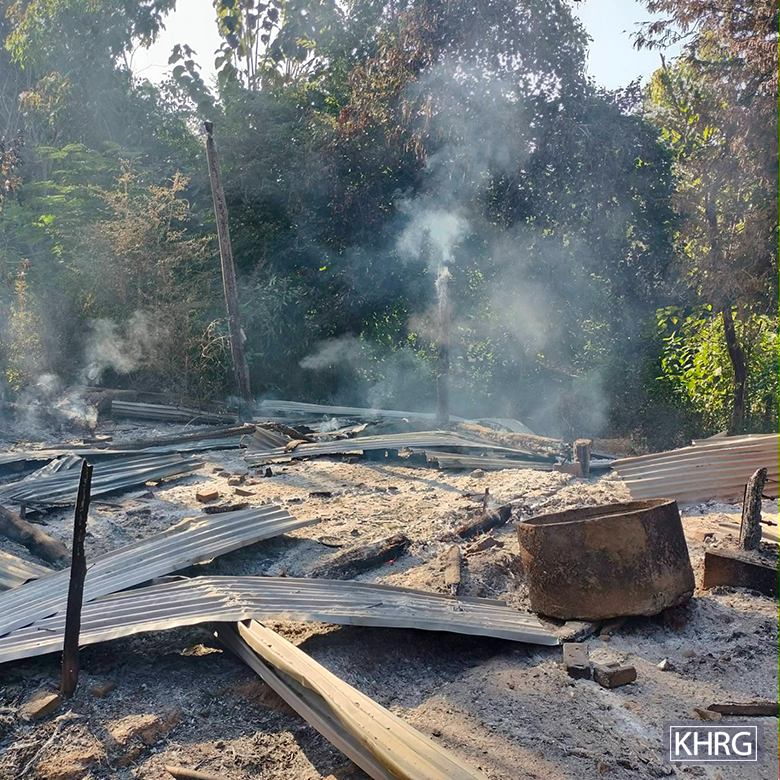
This photo was taken in January 2024 in D--- village, Day Loh Mu Nu village tract, Htaw Ta Htoo Township, Taw Oo District. On January 8th 2024, at around 6 pm, Karen National Liberation Army (KNLA)[8] forces combined with the People Defence Force (PDF)[9] attacked SAC Infantry Battalion (IB)[10] #39 army camp, based in Lay Maing (‘Four Miles’) area. On January 10th, SAC soldiers from IB #39 went into D--- village and burned down 17 villagers’ houses. The photo on the left shows one of the houses, completely destroyed. The owners of the burned houses are Kyaw[11] E---, Saw[12] F---, G---, H---, I---, J---, K---, Naw[13] L---, Naw M---, Saw N---, O---, P---, Saw Q---, Kyaw R---, Saw S---, Saw T---, and U---. [Photo: KHRG]
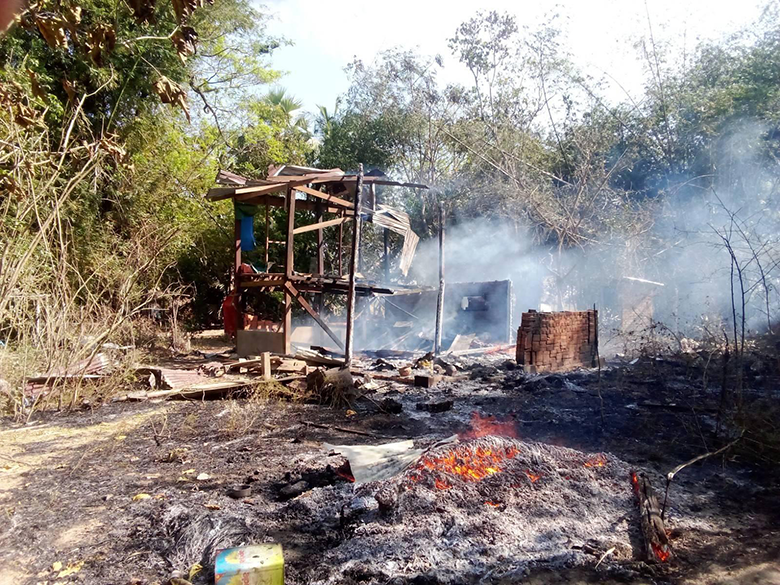
KHRG received this photo on February 29th 2024. It was taken in Aa--- village, Hkay Gyee special area[14], Moo Township, Kler Lwee Htoo District. The photo shows a house and all of the villagers’ possessions inside burned down when a bomb was dropped on it by an SAC drone on February 17th 2024. [Photo: Local villager]
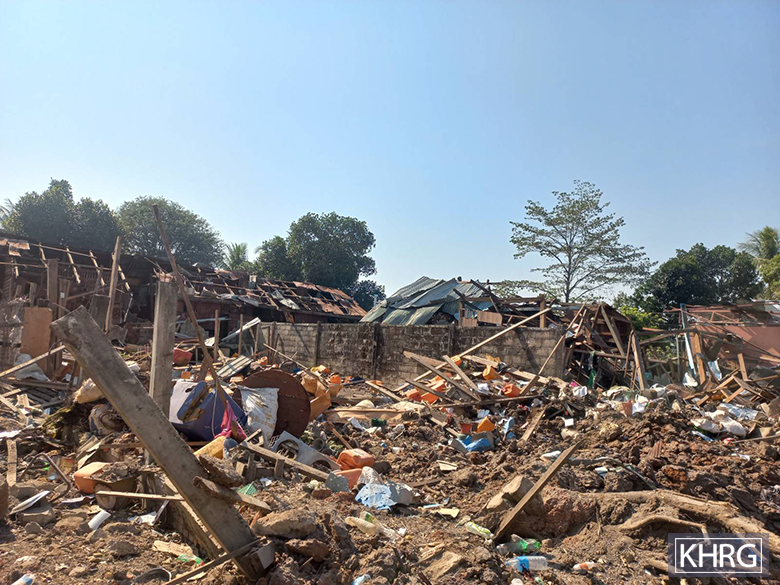
This photo was taken in March 2024 in Myo Thit Town, located between Kaw T’Ree Township, in Dooplaya District, and T’Nay Hsah Township, in Hpa-an District. The photo shows one of the villagers’ houses destroyed by an SAC air strike, on March 5th 2024, in Myo Thit Town, during fighting between the SAC against combined forces of the KNLA and PDF. [Photo: KHRG]

The photo on the left was taken in March 2024 in Aj--- village, Baw Thay Hta village tract, Lu Thaw Township, Mu Traw District. Between March 19th and 25th 2024, the SAC often conducted mortar shelling and air strikes on villages, farms, and roads in Baw Thay Hta village tract, making villagers feel unsafe to return to their village or work to support their families’ livelihoods. The photo shows one of four villagers’ houses destroyed when an SAC fighter jet dropped a bomb on Aj--- village around midnight on March 21st. The houses were owned by Naw Ak---, Al---, Am--- and An---. [Photo: KHRG]
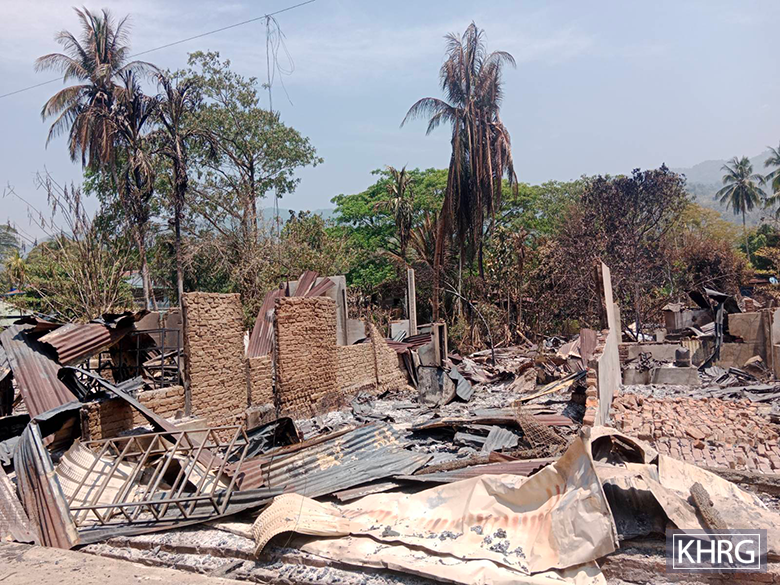
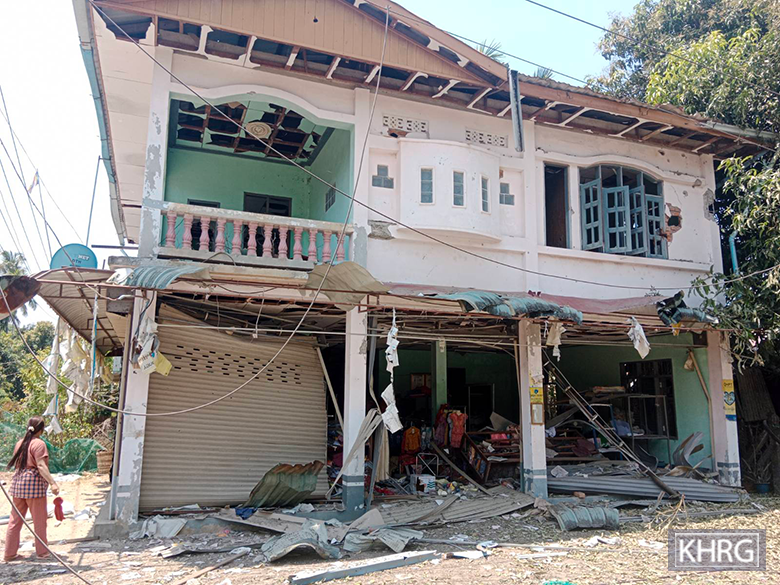


These two photos were taken in March 2024 in Hpapun Town, Mu Traw District. The photos were taken after several SAC air strikes destroyed villagers’ houses and shops in Hpapun Town, on March 24th 2024, during fighting between the SAC and KNLA combined forces at the SAC’s army camp in Hpapun Town. The photos show the remains of villagers’ houses that were completely destroyed. [Photos: KHRG]

The photo on the left was taken in March 2024 in B--- village, Way Raw village tract, Tha Htoo Township, Doo Tha Htoo District. The SAC Light Infantry Battalion (LIB)[15] #9 (based in Wa Pa army camp, Shwe Yaung Pya village tract) fired three mortar rounds into B--- village in March 2024. The photo shows a house and household items, such as pots and plates, owned by a villager named Naw C---, damaged by shrapnel. [Photo: KHRG]
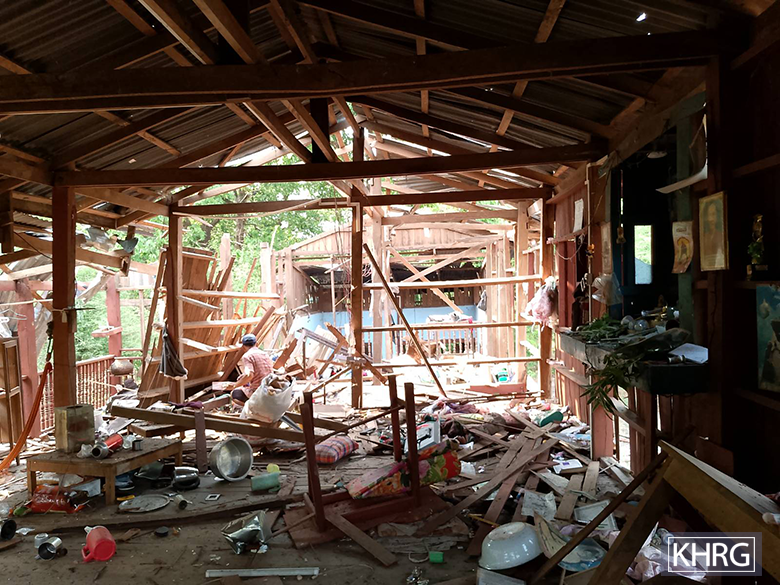
This photo was taken in May 2024 in Ap--- village, Maw Ma Ywa Thit village tract, Kaw T’Ree Township, Dooplaya District. The photo shows a villager’s house and all possessions inside, essential for their livelihoods, destroyed after the SAC dropped a bomb on Ap--- village on May 18th 2024. Several houses were impacted by the attack. [Photo: KHRG]


KHRG received these photos on September 29th 2024, taken in Af--- village, P’Law area, Ler Mu Lah Township, Mergui-Tavoy District. On September 14th 2024, around 100 SAC troops from Infantry Battalion (IB) #285 launched a ‘clearance operation’ in P’Law area and fighting broke out. After, the SAC soldiers burned down over 60 villagers’ houses and interrogated, arrested, and assaulted villagers. The photos show several houses in Af--- village burned down on September 19th. Due to the attack, all possessions, including livelihoods machines and tools, were burned down. Consequently, villagers from P’Law area faced serious livelihood challenges. [Photos: Local villager]
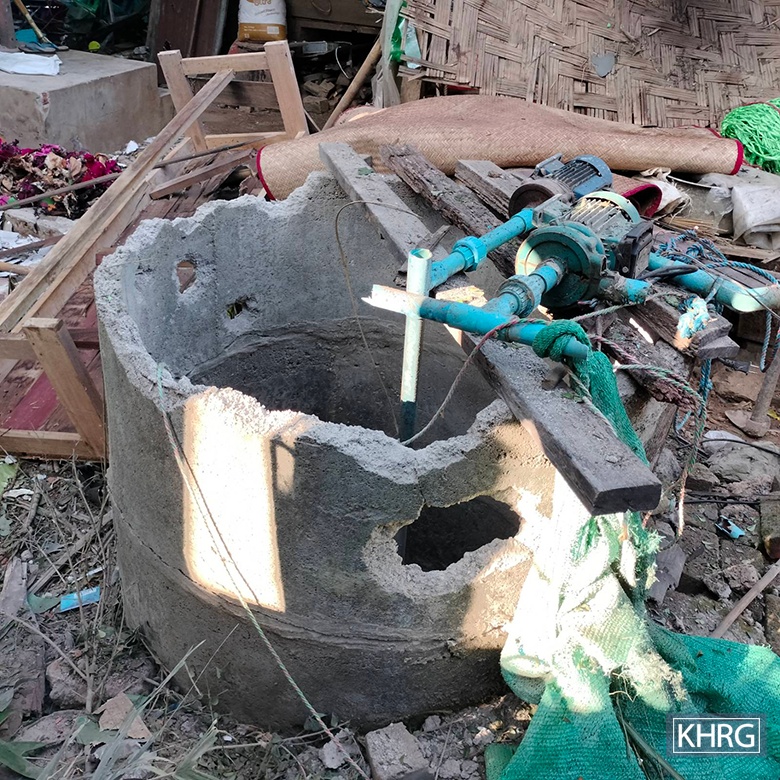
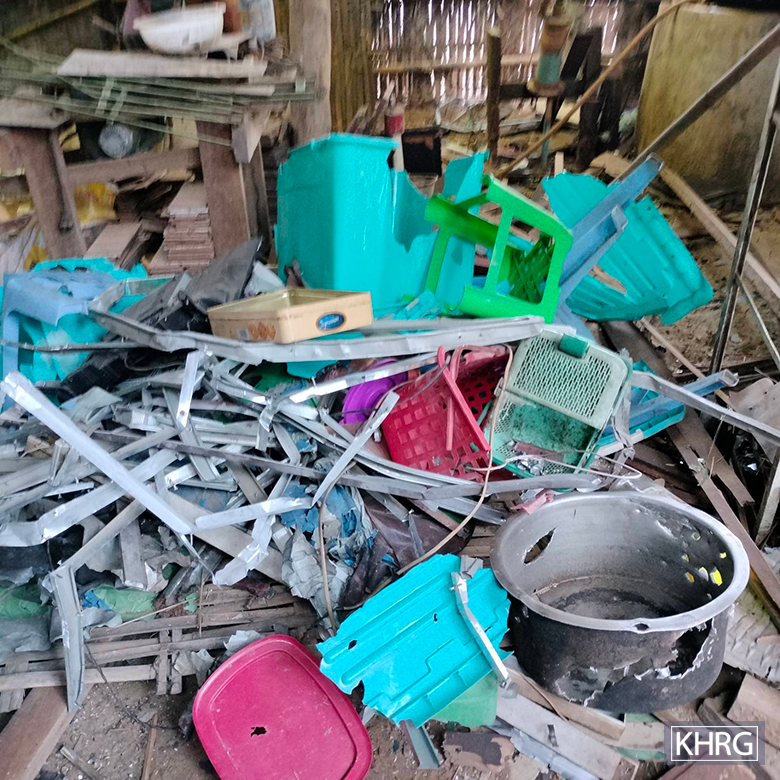


These photos were taken in December 2024 in Y--- village, P’Saw Loh village tract, Daw Hpah Hkoh Township, Taw Oo District. On December 12th 2024, despite the absence of fighting, SAC soldiers based in Set Chauk Maing (Yay Pu San) village shelled two mortar rounds into Y--- village. One of the mortar shell explosions destroyed three houses and all belongings inside. The photos show one of the houses, owned by U[16] Z---, destroyed along with all of his household’s possessions, such as an electric motor for a water pump, a water cooler machine, pots, chairs, clothes, and other items.[17] [Photos: KHRG]
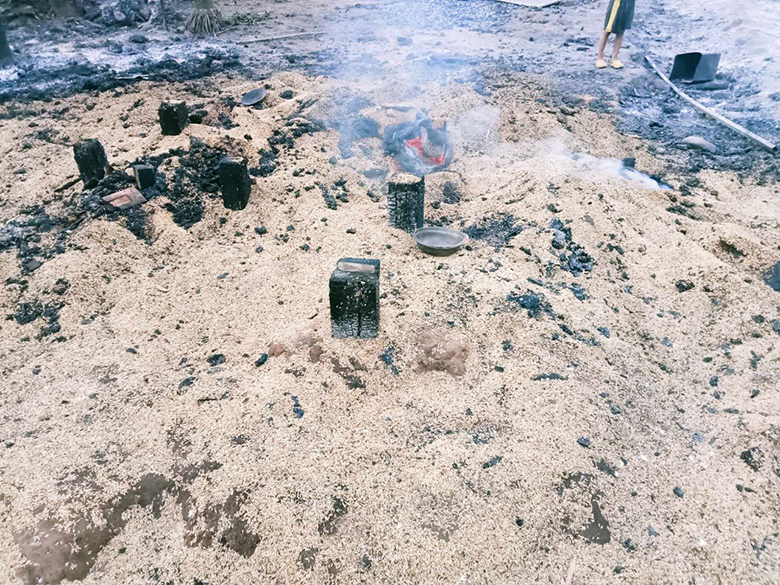
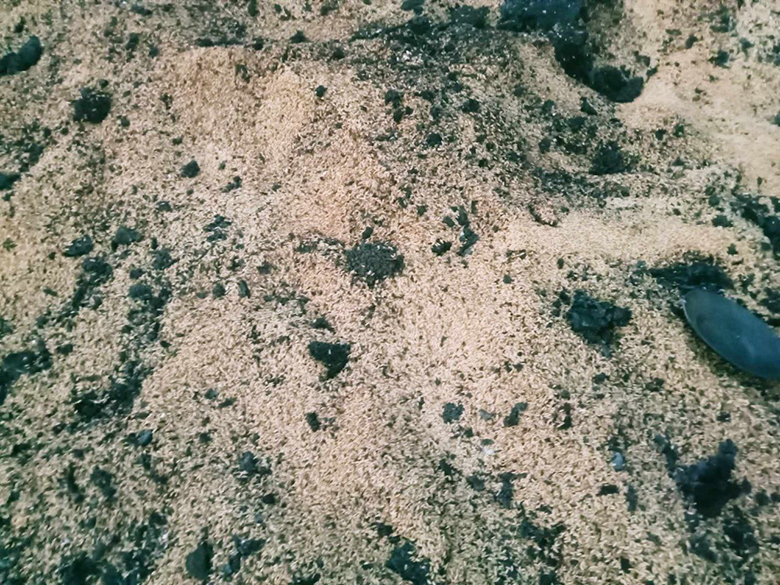


KHRG received these photos in December 2023. The photos were taken in Bk--- village, Aaw Pu area, Ler Mu Lah Township, Mergui-Tavoy District. On December 21st 2023, SAC IB #285 fired about 80 mortar shells, which landed on villagers’ plantations, causing a rice barn and two houses to burn down (as shown in the pictures). The owners lost all of their valuable possessions in the fire. The SAC often fired mortars indiscriminately into the village, so villagers had to move to a displacement site, while some moved to plantations considered safe. [Photos: Local villager]
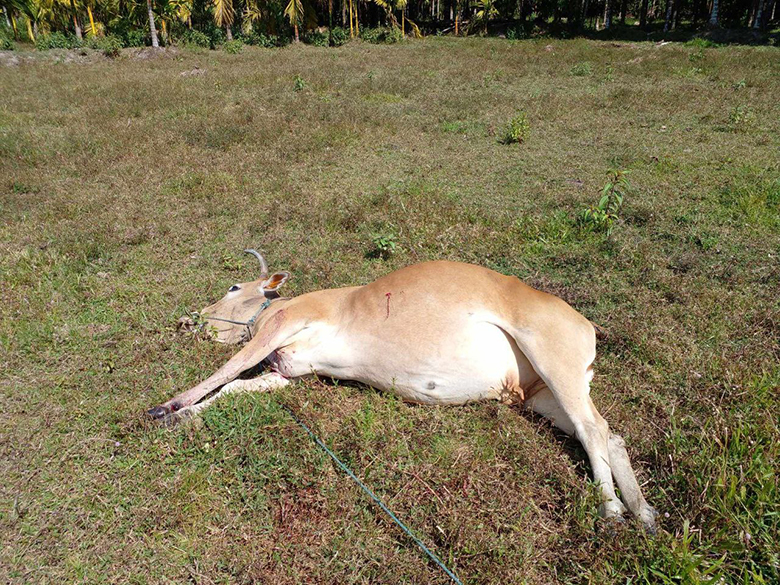
This photo was received on March 27th 2024, from Bf--- village, P’Law Area, Ler Mu Lah Township, Mergui-Tavoy District. On January 4th 2024, SAC soldiers from IB #285, based in P’Law Town, indiscriminately fired two 120 mm mortar rounds into Bf--- village. Some of the mortar rounds landed on villagers’ plantations and farms, resulting in the death of a cow (as shown in the picture) and damage to the plantations. [Photo: Local villager]
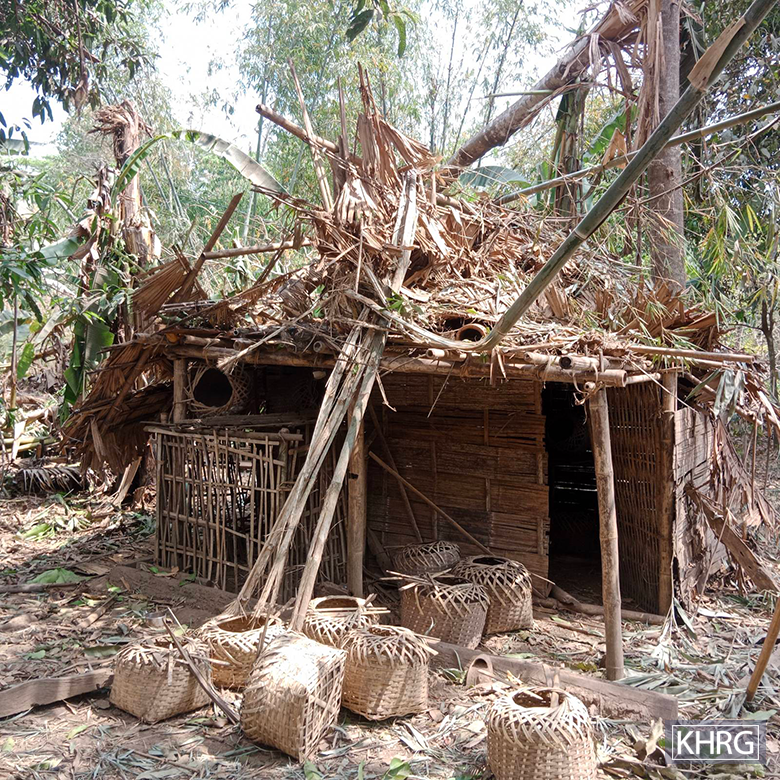
This photo was taken in March 2024 in Bj--- village, Baw Thay Hta village tract, Lu Thaw Township, Mu Traw District. The photo shows a chicken coop owned by a villager, destroyed by an SAC air strike in the Bj--- village. The air strike was conducted on March 21st 2024, around midnight. Four villagers’ houses were also destroyed during the attack. [Photo: KHRG]
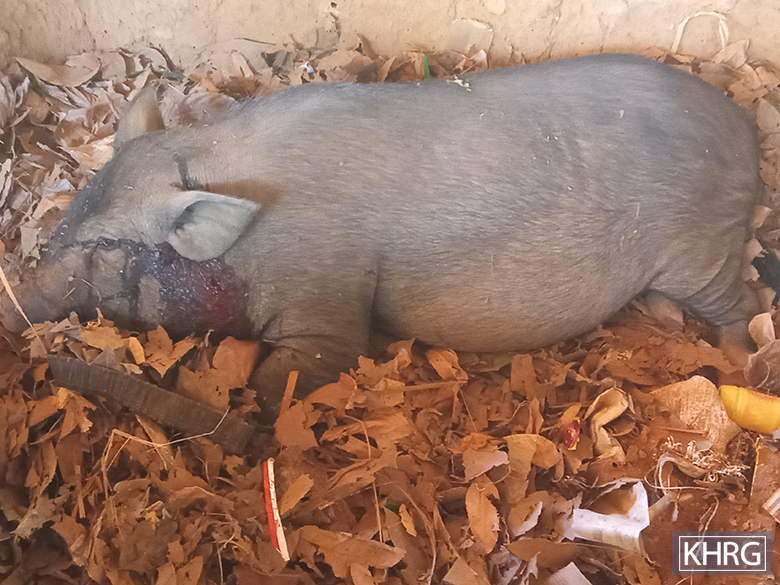
This photo was taken in March 2024 in Bg--- village, Meh Nyoo Hta village tract, Bu Tho Township, Mu Traw District. On March 25th 2024, an SAC aircraft dropped bombs onto Bg--- village. The resulting explosion damaged villagers’ properties and killed their livestock. The photo shows one of the two dead pigs, owned by a villager named U Bh---. [Photo: KHRG]
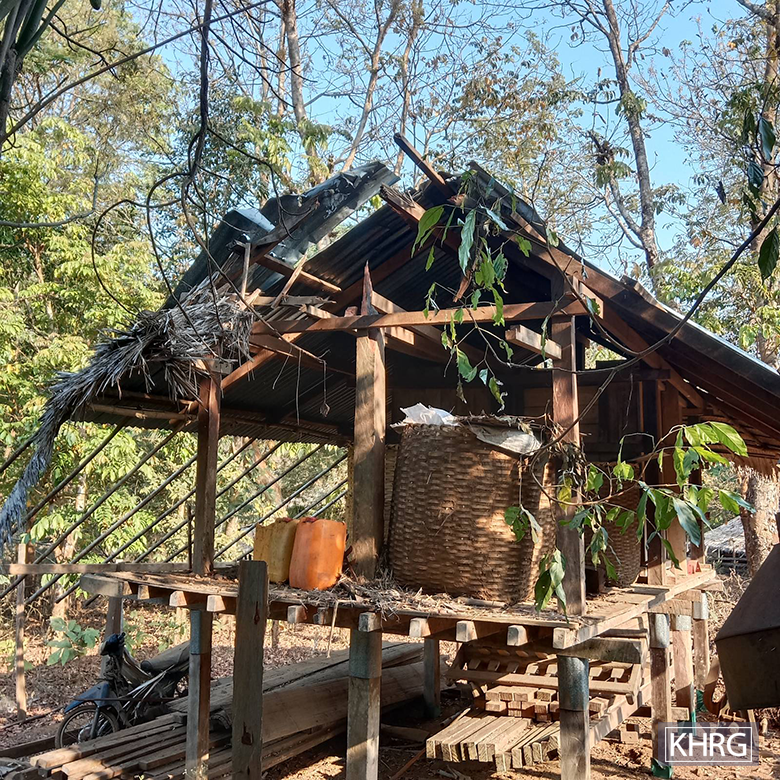
This photo was taken in March 2024 in Bl--- village, Ma Htaw village tract, Dwe Lo Township, Mu Traw District. In the morning of March 25th 2024, an SAC drone dropped a bomb onto Bl--- village, and the resulting explosion destroyed a rice barn and a house owned by Saw Bn---. The photo shows the damaged rice barn of Saw Bn---. [Photo: KHRG]
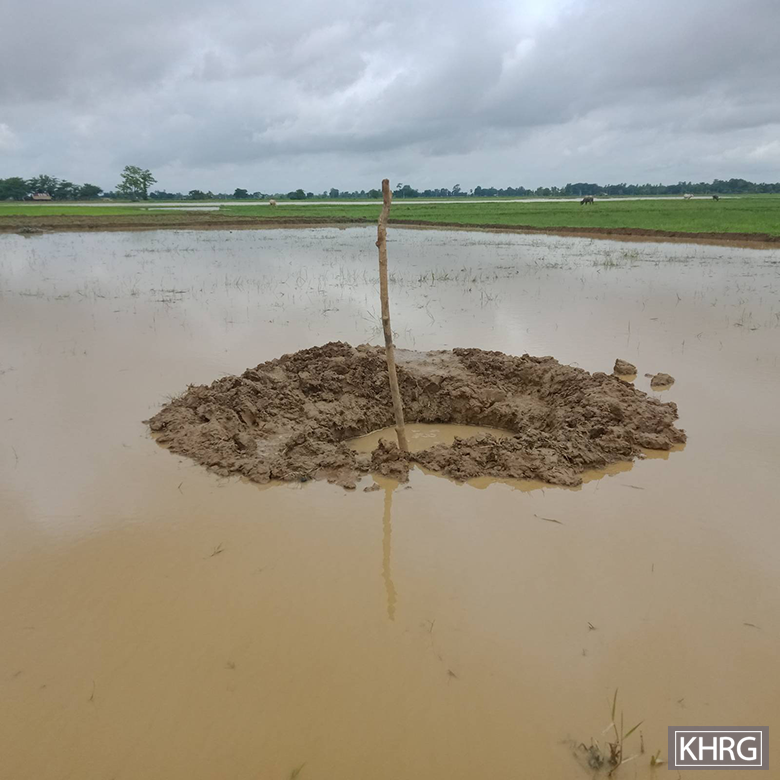
This photo was taken in June 2024 in Ay--- village, Moo special area, Moo Township, Kler Lwee Htoo District. SAC soldiers from LIB #307, based in Shwe Wa army camp, Moo special area, set up a temporary base in Az--- and Ba--- villages, also in Moo special area, and fired three 120 mm mortar rounds into Ay--- village on June 19th 2024. One of the shells landed on a villager’s paddy farm, damaging the paddies and increasing security risks for villagers working on a nearby farmland. The photo shows the farmland where the mortar shell landed. [Photo: KHRG]
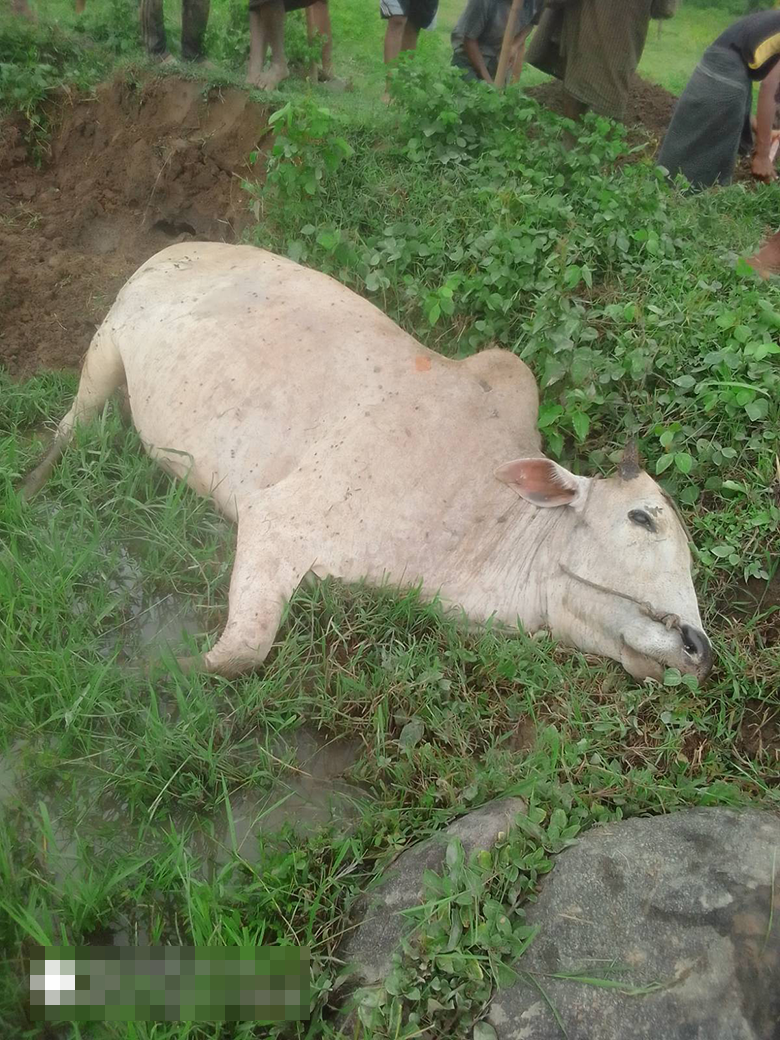
This photo was taken on July 21st 2024 in Bd--- village, Day Lo Mu Nu village tract, Htaw Ta Htoo Township, Taw Oo District. On July 21st 2024, at around 4 pm, SAC soldiers from IB #39, based in Lay Maing (‘Four Miles’) Town, near the Thandaunggyi road, Daw Hpah Hkoh Township, conducted indiscriminate shelling into Bd--- village. One of the mortar rounds landed on a villager’s farm, also used as pastureland. The shrapnel killed a bull (shown in the picture), owned by a villager named Saw Be---, and destroyed some of the paddies. [Photo: Local villager]
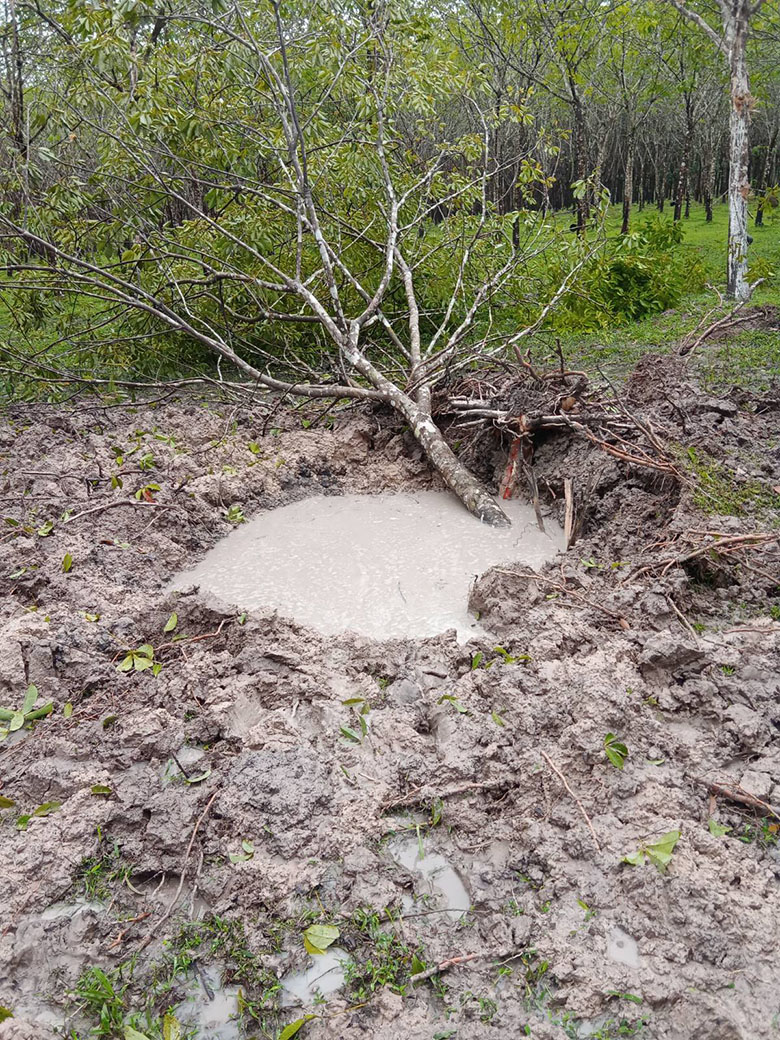
This photo was taken in September 2024 near Bb--- village, Taw Tee village tract, Waw Ray Township, Dooplaya District. On September 21st 2024, the SAC conducted shelling onto civilian areas in Taw Tee village tract, including villages, plantations, and farmland. This photo shows rubber trees from a villager destroyed by a shell fired by the SAC. The explosion also destroyed villagers’ houses, other plantations, and injured a villager named Bc---. [Photo: Local villager]

This photo was taken in September 2024 in Av--- area, about three miles away from Aw--- village, Day Lo Mu Nu village tract, Htaw Ta Htoo Township, Taw Oo District. On September 10th 2024, around 12 pm, SAC soldiers from Set Thone Maing (’13 Miles’) army camp (near Thandaungyi Town), indiscriminately fired two mortar rounds into Av--- area. One of the mortar rounds landed on a paddy field owned by a villager named Saw Ax---, destroying some paddies. Villagers did not feel safe working on their farmland near the army camp, so they moved to another plantation in a different area. [Photo: KHRG]
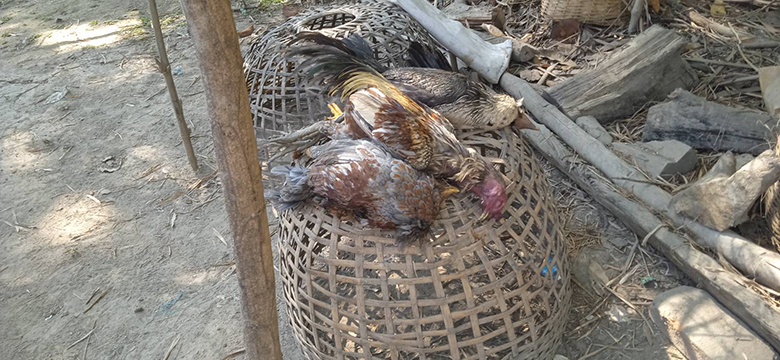
The photo on the left was taken on December 17th 2024 in Bi--- village, Thoo K’Bee village tract, Ler Doh Township, Kler Lwee Htoo District. The photo shows villagers’ chickens killed when SAC soldiers from the army camp in Nat Tha Kwin city indiscriminately fired a 122 mm mortar round into Bi--- village on December 17th 2024. The mortar explosion also destroyed civilian properties and killed and injured villagers.[18] [Photo: Local villager].
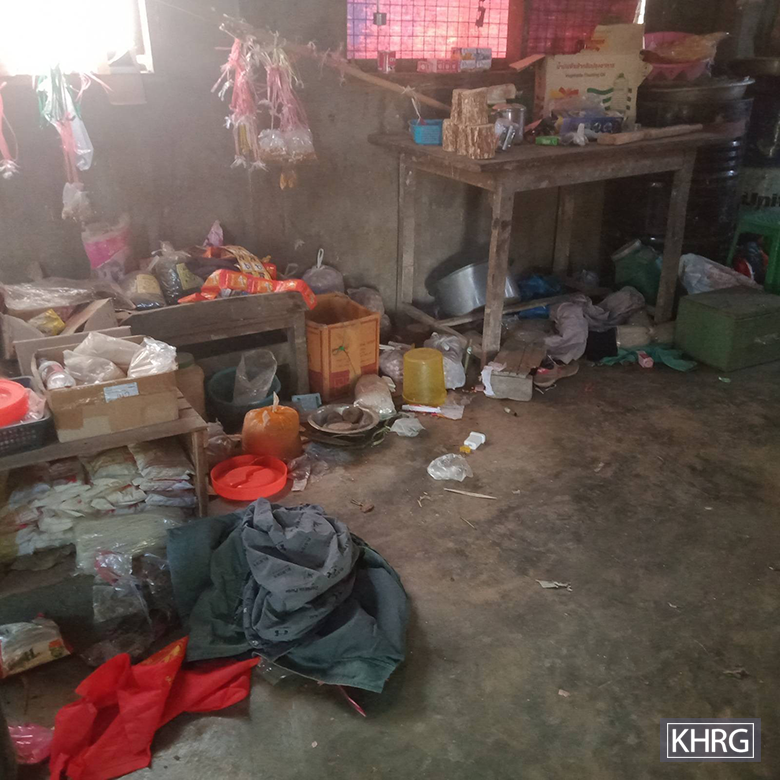
This photo was taken in March 2024 in Bp--- village, Moo special area, Moo Township, Kler Lwee Htoo District. On March 1st 2024, SAC soldiers from Light Infantry Division (LID)[19] #77 left Dq--- village, Moo special area, and went to Ler Doh Town, Ler Doh Township. The soldiers passed through multiple villages on their way, burning down several villagers’ houses in Ac--- village, Moo special area, and looting villagers’ possessions in Bp--- village. This photo shows one of the shops looted by SAC soldiers. [Photo: KHRG]
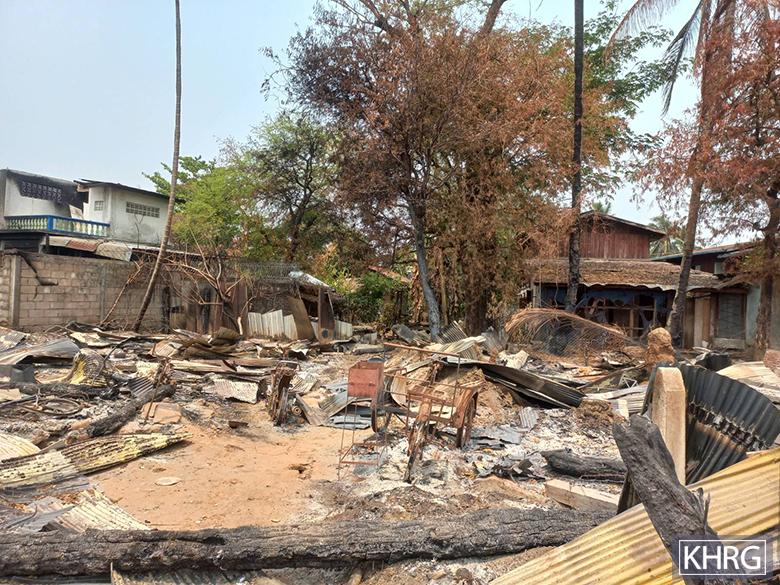
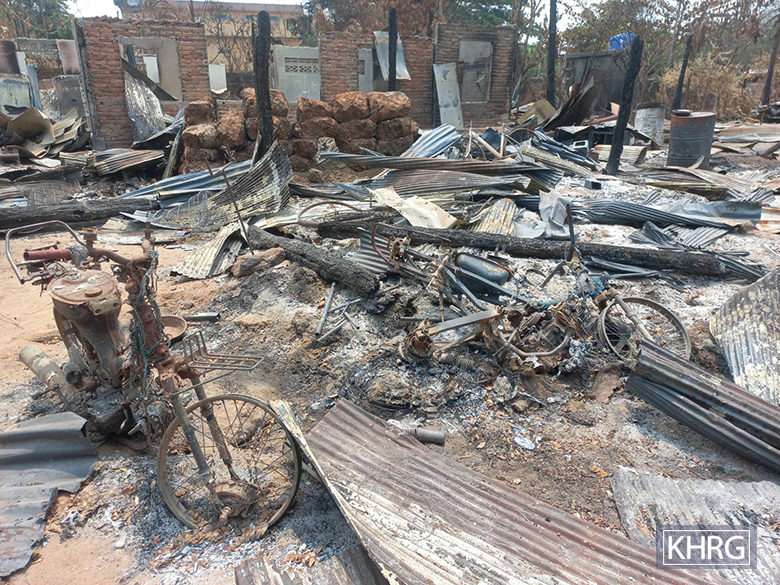
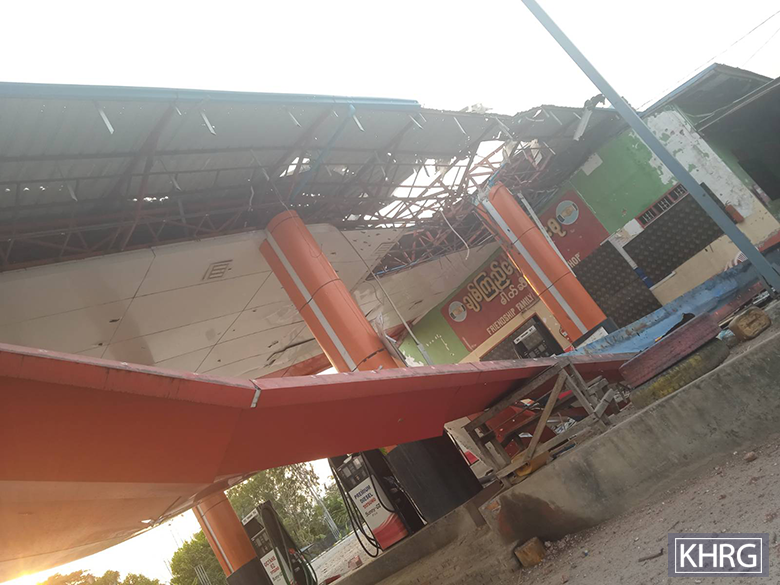


These three photo were taken in Bq--- Town, Noh Poe village tract, Kaw T’Ree Township, Dooplaya District. Fighting happened between the SAC and KNLA combined forces from March 7th to 18th 2024. The KNLA Cobra Column[20] #1 and #2, from Dooplaya District, and KNLA Battalion #101 from Hpa-an District, along with PDF combined troops, attacked the SAC’s Thin Gan Nyi Naung Strategic Operations Command[21], including LIBs #355, #356, and #357 army camps. During the fighting, an SAC aircraft indiscriminately dropped bombs on communities in Noh Poe village tract, and Htee Wah Blaw village tract, T’Nay Hsah Township, Hpa-an District, on a daily basis.[22] The bottom left photo was taken in March 2024 and it shows a gas station destroyed by an SAC air strike in Bq--- Town. The photos at the top right and top left were taken in April 2024, and show villagers’ property destroyed, including houses, means of transport, and other items essential to livelihoods, destroyed during fighting. [Photos: KHRG]
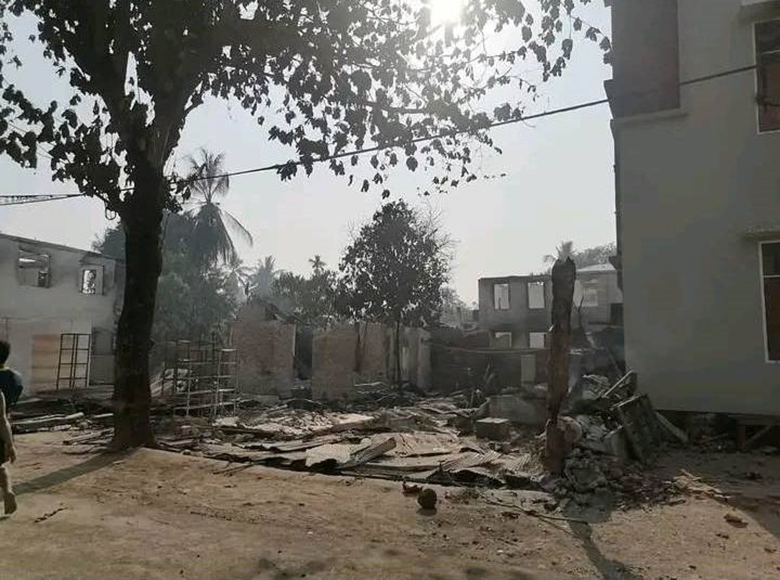


These four photos were taken in Aq--- village, Way Shah village tract, T’Nay Hsah Township, Hpa-an District. On March 17th 2024, SAC soldiers from IB #275 army camp fired two 120 mm mortar rounds into Aq--- village. The photos on the top right, top left and bottom left were taken on March 18th 2024 by local villagers. The photo on the top left shows a villagers’ house, burned down in a fire caused by an SAC mortar shell explosion. The photo on the top right shows a smartphone shop, and the photo on the bottom left shows a motorcycle workshop, both owned by local villagers and burned down by SAC indiscriminate shelling. The photo on the bottom right was taken in May 2024 and it shows properties of Saw Ar---, a villager from Aq--- village, burned down in a fire caused by the SAC mortar shell explosion.[23] [Photos: KHRG/ local villager]
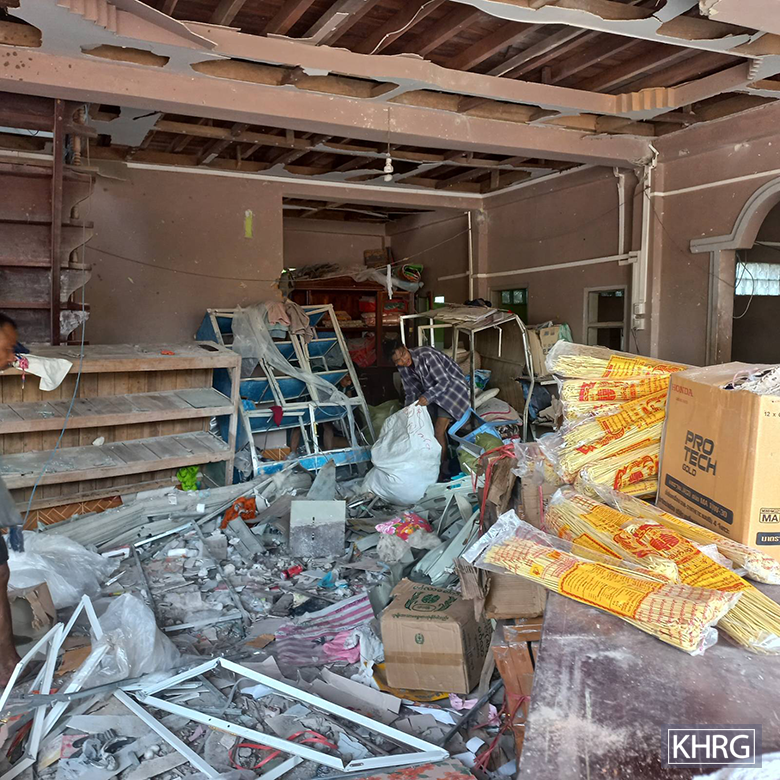
This photo was taken in March 2024 in Bo--- village, Kyaw Hkee village tract, Kaw T’Ree Township, Dooplaya District. On March 18th 2024, an SAC fighter jet dropped two 500-pound bombs on the village. The bombs’ explosions killed two villagers and injured a girl on the hands. It also damaged and destroyed several houses and shops. This photo shows one of the villagers’ stores, where the entire stock, including food, was destroyed. [Photo: KHRG]
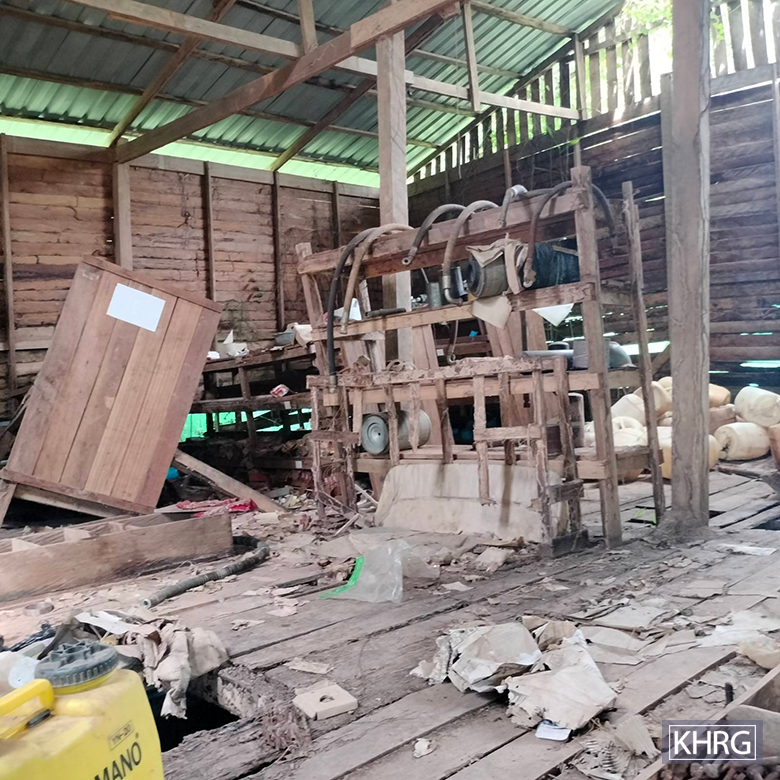
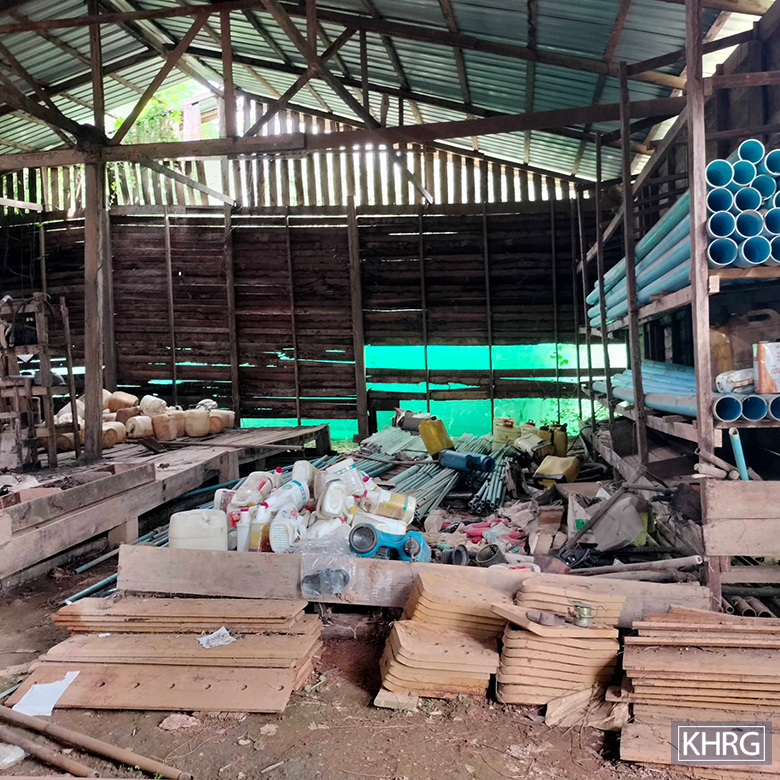


These photos were taken in July 2024 at the facilities of Mac Oil Palm Company Limited, in M’Naw Roh area, Ler K’Saw Township, Mergui-Tavoy District. They show damaged buildings and assets belonging to Mac Oil Palm Company Limited. In the last week of June 2024, an unknown armed group looted the company’s facilities, seizing large quantities of essential materials supplies such as petrol, palm oil, engines, and other machinery. This incident affected the livelihoods of villagers and workers, who rely on their jobs at the company for income. [Photos: KHRG].
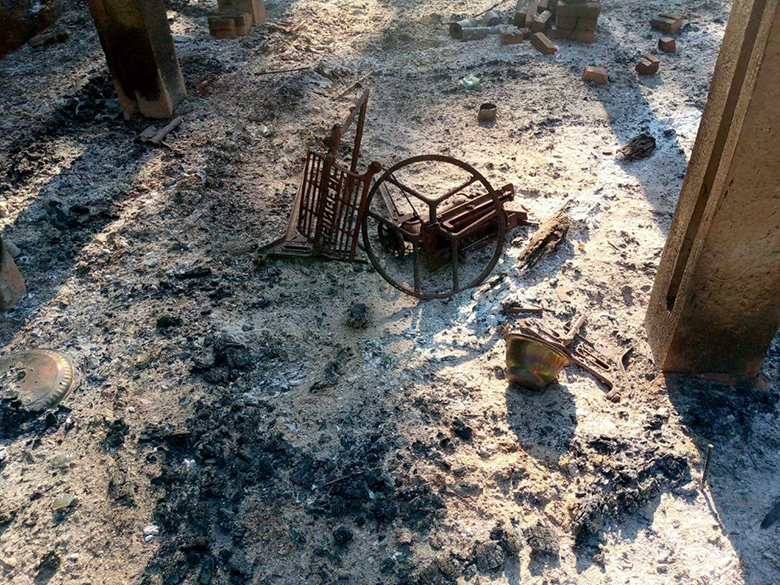

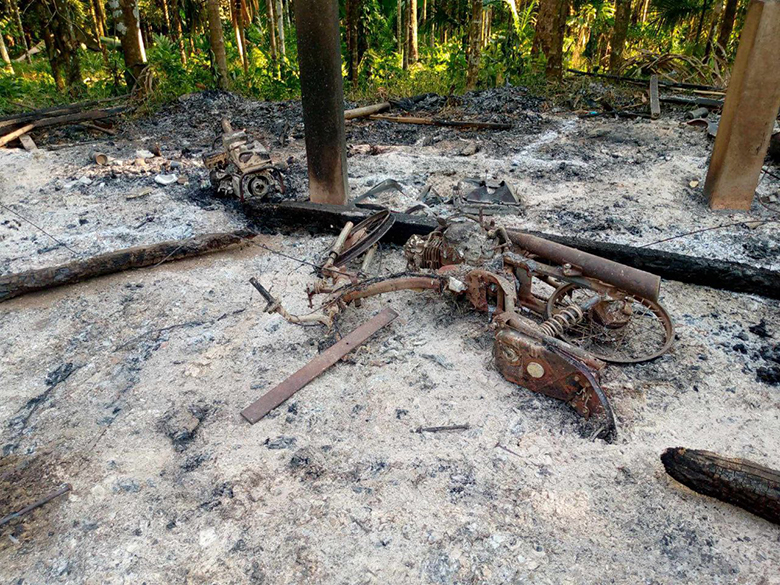


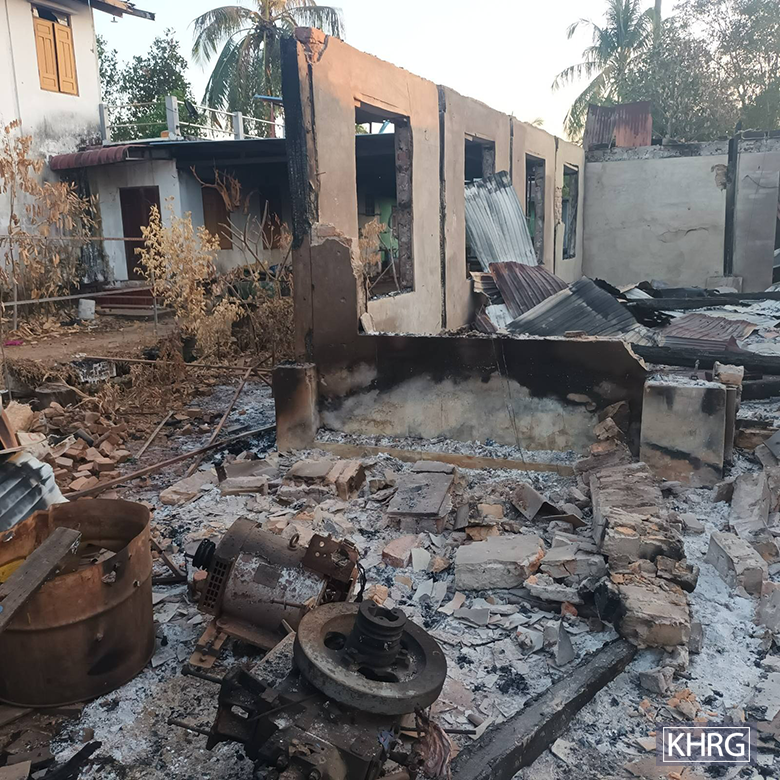
KHRG received these three photos on December 17th 2023. The photos were taken in Zz---village, Aaw Poo area, Ler Mu Lah Township, Mergui-Tavoy District. On December 12nd 2023, SAC ground soldiers from IB #285 entered Zz--- village and burned down 11 villagers’ houses along with all their possessions. Villagers had fled to a safer location prior to their arrival due to concerns for their safety. As a result of the attack, some villagers had to move to a displacement site, while others moved to their relatives’ homes and have not returned to the village. These photos provide evidence of the destruction of villagers’ homes and livelihoods tools by SAC soldiers. [Photos: Local villager]
KHRG received this photo on December 22nd 2023. It was taken in By--- village, Aaw Poo area, Ler Mu Lah Township, Mergui-Tavoy District. Regardless of whether fighting occurred or not, SAC forces in Aaw Poo area frequently conducted indiscriminate shelling into civilian areas, forcing villagers to displace for their safety. Some villagers relocated to displacement sites, while others moved to safer areas near farms and plantations. On December 21st 2023, SAC soldiers from IB #285 fired about 80 mortar rounds into By--- village and surrounding farmlands. As a result of the heavy shelling, two villagers’ houses and a barn were burned down, along with all their possessions, and one villager sustained a head injury. The photo shows a villager’s multifunctional machine burned during the incident. [Photo: Local villager]
This photo was taken in January 2024 in Cg--- village, Taung Kyain village tract, Kruh Tuh Township, Dooplaya District. In December 2023, SAC soldiers set up a temporary army base on the compound of Cg--- high school. This high school is administered by the SAC. On December 28th 2023, local PDF launched a military operation in the area of the high school campus, and fighting broke out. In response, an SAC aircraft dropped bombs around the incident area. The bombs’ explosions destroyed two school buildings, 22 villagers’ houses, and other possessions inside the houses, which caught fire. The photo shows a burned multifunctional machine used by villagers for their livelihood activities, such as transportation and ploughing the farm, that was destroyed in the attack. [24] [Photo: KHRG]
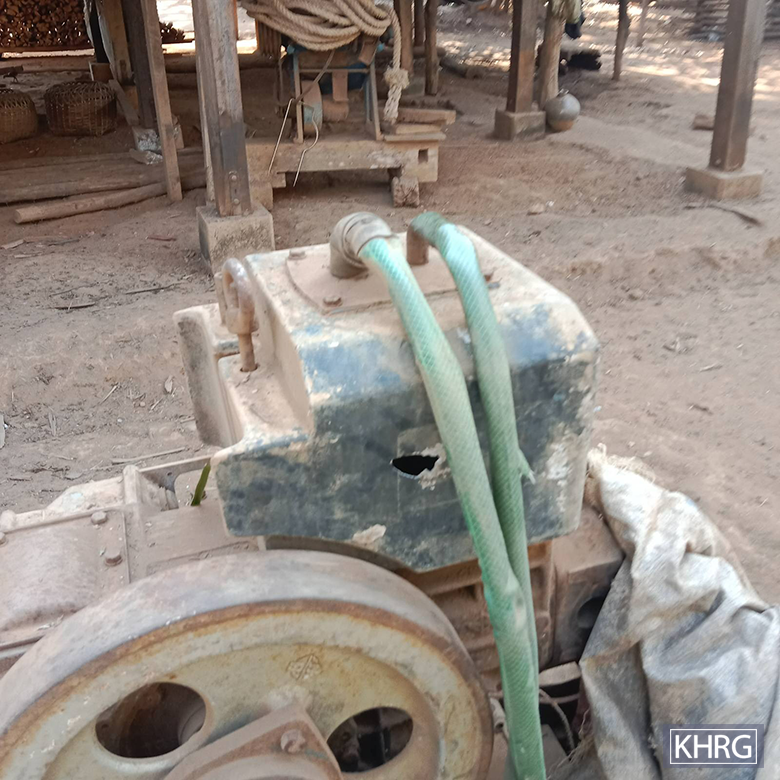
This photo was taken in March 2024, in Bz--- village, Htee Th’Bluh Hta village tract, Dwe Lo Township, Mu Traw District. SAC soldiers based in K’Ser Ther Pler (Taung Thon Loh) army camp, Htee Th’Blu Hta village tract, frequently fired mortar rounds into Ma Htaw, Htee Th’Bluh Hta, K’Ter Tee, and Lay Hpoh Hta village tracts. As a result, the shelling caused civilian and livestock casualties, property destruction, and increased livelihood insecurity. The photo was taken after one of the shelling incidents occurred on March 1st 2024, in Bz--- village, damaging a rice milling machine (as shown in the picture), owned by Naw Ca---, as well as her house and other possessions, including a rice storage box. [Photo: KHRG]

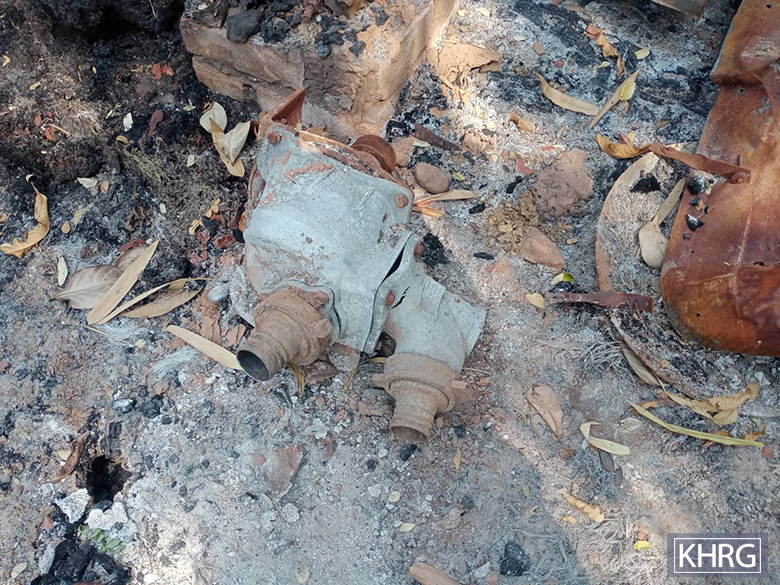

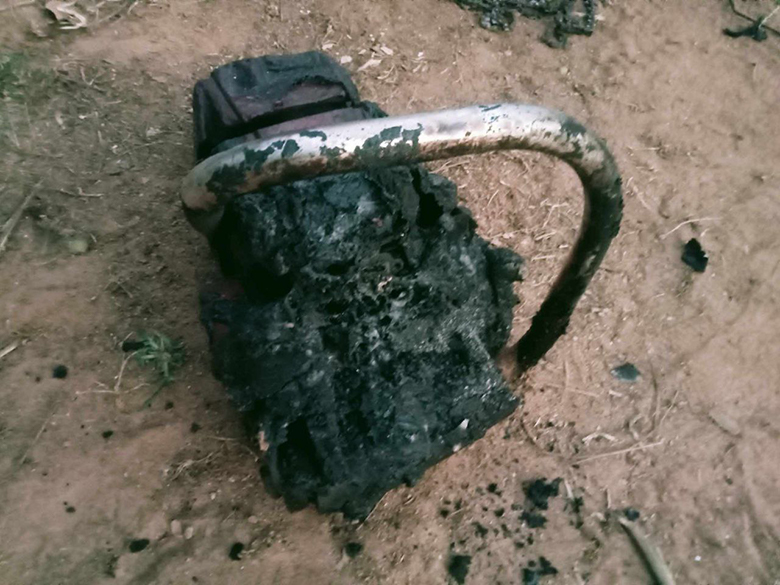
This photo was taken in March 2025 in Bt--- village, Mway Twin village tract, Moo Township, Kler Lwee Htoo District. On March 11th 2024, SAC LIB #599, known as Ton Taw Battalion, set fire to the bushes near their army camp to clear the area. The fire spread to Bt--- and Bu--- villages, where 42 villagers’ houses burned down. The fire reached the village while villagers were displaced to another area due to earlier shelling that had caused deaths and injuries. When villagers at the displacement site saw smoke rising from their village, they tried to return to extinguish the flames and protect their houses and properties. However, they were unable to save all of them. The photo on the left shows a burned tractor, while the photo on the right shows a burned farming machine engine used for livelihood activities. Many farming machines and tools were lost in the fire. [Photos: KHRG]

This photo was taken in May 2024 in Br--- village, Htee Day area, Daw Hpah Hkoh Township, Taw Oo District. Although there was no fighting in or near the village, on March 25th 2024, at 10:40 am, an SAC aircraft dropped bombs on Br--- village. As a result, two civilian houses, a cow shed, mango trees, coconut trees, and other plants, cultivated by villagers for their livelihoods, were destroyed. The estimated value of the two houses and cow shed was approximately 20 million kyat [952.38 USD[25]]. This photo shows one of the destroyed houses, along with a damaged machine used for livelihood activities (such as milling, rice, beans, peanut, sesame). The two destroyed houses were owned by U Dr--- and U Ds--- and the cow shed was owned by U Bs---. [Photo: KHRG]
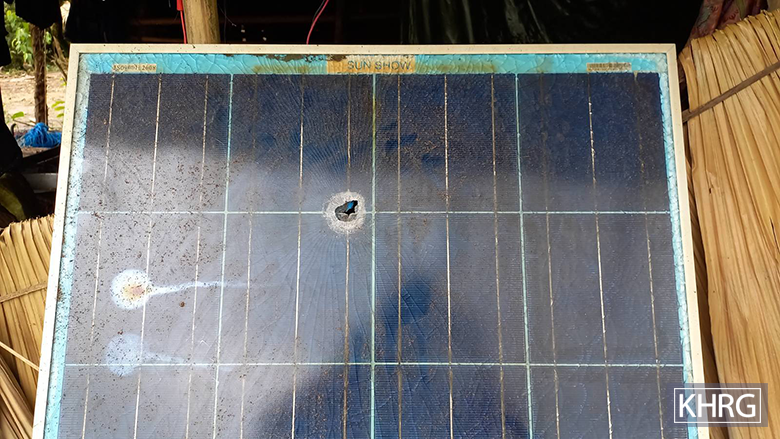
This photo was taken in August 2024 in Bv--- village, Aee Heh village tract, Hpa-an Township, Doo Tha Htoo District. On August 22nd 2024, SAC soldiers from MOC #8 (based in P’Nweh Kla army camp, Maw Lay village tract, Bilin Township) indiscriminately fired two shells into Bv--- village. The first 120 mm shell landed on a road near a house owned by Saw Bw---, damaging its roof and wall. The second mortar shell landed near a hut owned by Saw Bx--- and destroyed a solar panel, seen in the picture. [Photo: KHRG]

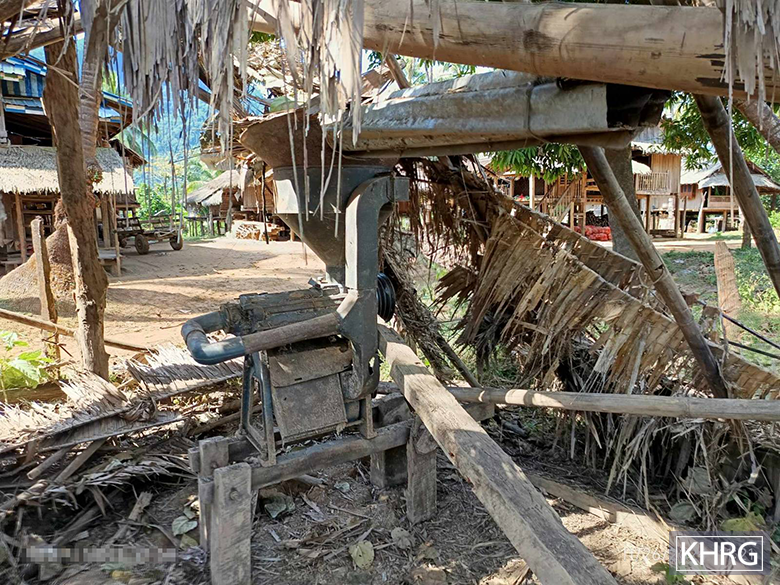


These photos were taken in November 2024 in Cb--- village, K’Ter Tee village tract, Dwe Lo Township, Mu Traw District. On November 24th 2024, at about 3 pm, an SAC troop based in K’Ser Ther Pler army camp shelled mortar rounds into Cb--- village. The shrapnel from the mortar explosion destroyed a rice milling machine and other tools owned by Saw Cc---, shown in the pictures. The mortar explosion also damaged two houses owned by Naw Cd--- and Saw Ce---. [Photos: KHRG]
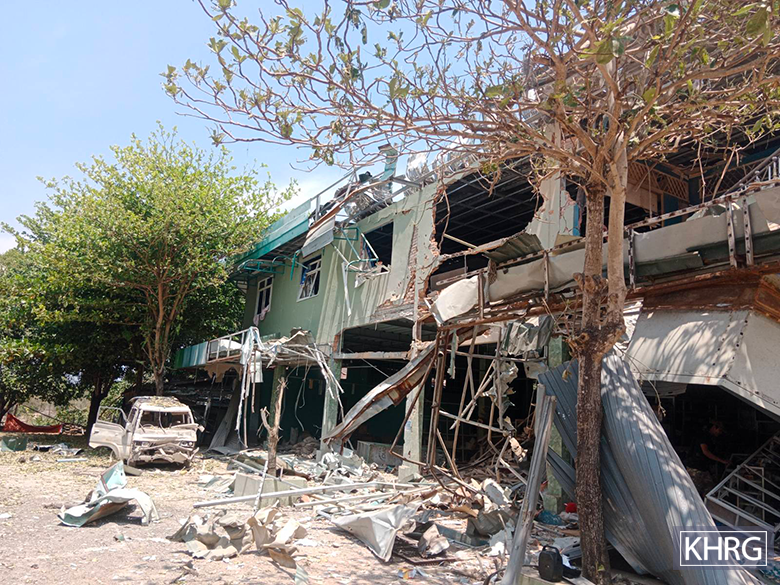
This photo was taken in March 2024 in Hpapun Town, Mu Traw District. The photo shows destruction caused by an SAC air strike in Hpapun Town: a villager’s house, a shop, and a car. These properties are essential means of transportation to carry out essential livelihood activities. Air strikes happened during fighting between KNLA combined forces and SAC at Hpapun SAC army camp. [Photo: KHRG]
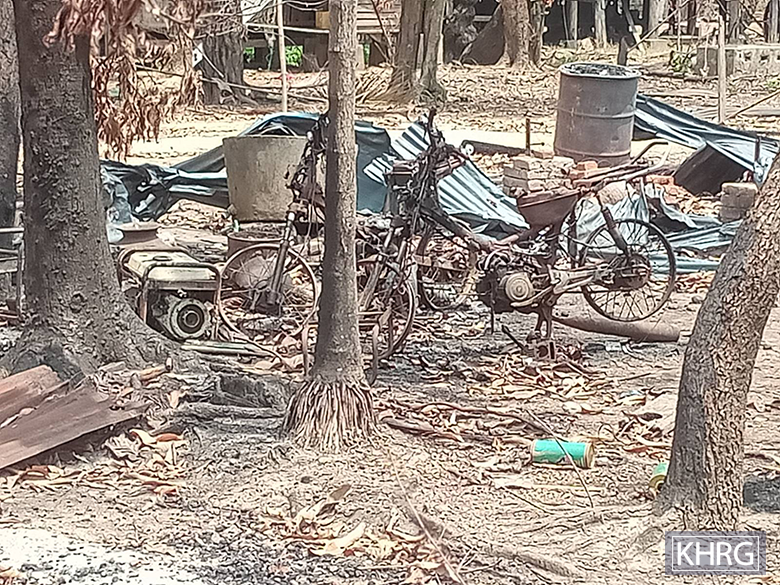
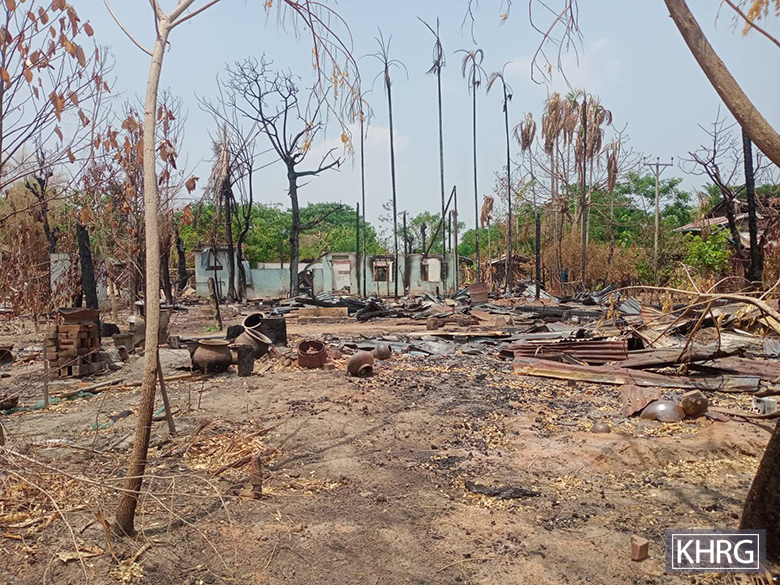


These two photos were taken in April 2024 in Ab--- village, Moo special area, Moo Township, Kler Lwee Htoo District. On the last week of February 2024, SAC soldiers from Shwe Wa army camp, in Moo special area, under LIB #439, #60 and #528, conducted military operations in villages, including planting landmines, shelling, and burning down houses. Many villagers’ houses in Ab---, Ac---, Ad---, and Ae--- villages were burned down. Villagers did not feel safe returning to their homes to access food and other necessities. Villagers were displaced in Ay--- village, Moo special area. The photos show Ab--- villagers’ houses and property, including motorcycles and machinery, burned down by SAC soldiers in February 2024. Additionally, on April 12th, a villager from Ac--- village was also injured after stepping on a landmine in Ab--- village, while transporting essential livelihood items, such as rice and other basic food supplies and materials like blankets, pots, and a pan. [Photos: KHRG]
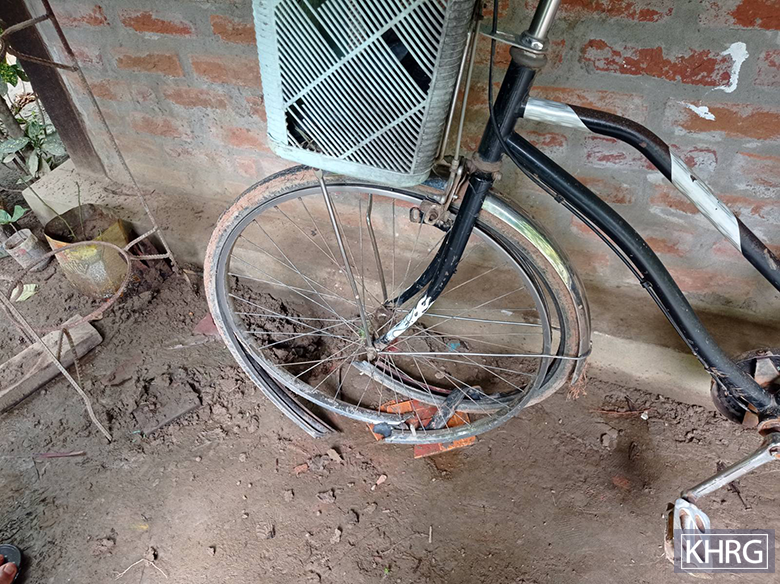
This photo was taken in August 2024 in Ch--- village, Htoo Wah Seh village tract, Ler Doh Township, Kler Lwee Htoo District. On August 8th 2024, SAC IB #264 fired 155 mm mortar rounds in Ch--- village. The shrapnel destroyed villagers’ property, including houses and other livelihood tools and means of transportation, such as a bicycle, as shown in the picture. [Photo: KHRG]
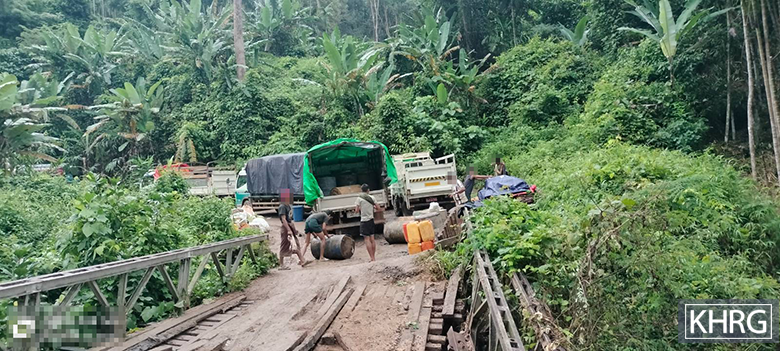


These two photos were taken in August 2024 near Cm--- village, Baw Shay area, Daw Hpah Hkoh Township, Taw Oo District. The photo shows a public bridge in Taw Oo District on a main road near Cm---village, P’Shaw Loh village tract, Daw Hpa Hkoh Township, destroyed by a bomb explosion, in the early morning of August 20th. Due to the presence of multiple armed groups in this area, local villagers could not identify which armed group was responsible for destroying the bridge. As a result, villagers faced transportation difficulties, which significantly hindered their ability to carry out livelihood activities. [Photos: KHRG]
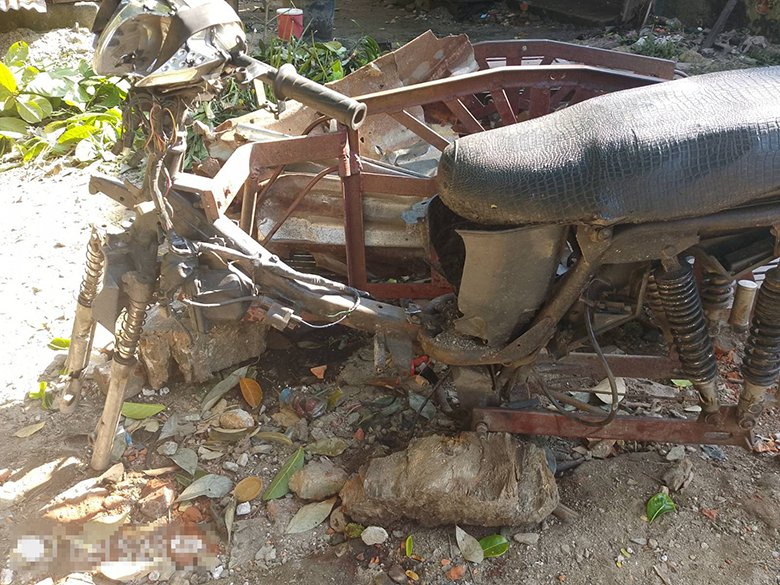
This photo was taken on October 9th 2024 in a farm near Ck--- village, Day Lo Mu Nu area, Htaw Ta Htoo Township, Taw Oo District. On October 7th 2024, at 6:45 pm, SAC soldiers from IB #39, based in Lay Maing (‘Four Miles’) army camp, in Thandaungyi Town, indiscriminately fired three mortar rounds into civilian areas. One of the mortar rounds landed on a betel nut farm owned by a 47-year-old villager named Cl---, located near his house. The shrapnel injured the villager, near his eyebrow. It also destroyed some of his betel nut trees, mango trees, a hut, and one motorcycle that he used to go to work, as shown in the picture.[26] [Photo: Local villager]
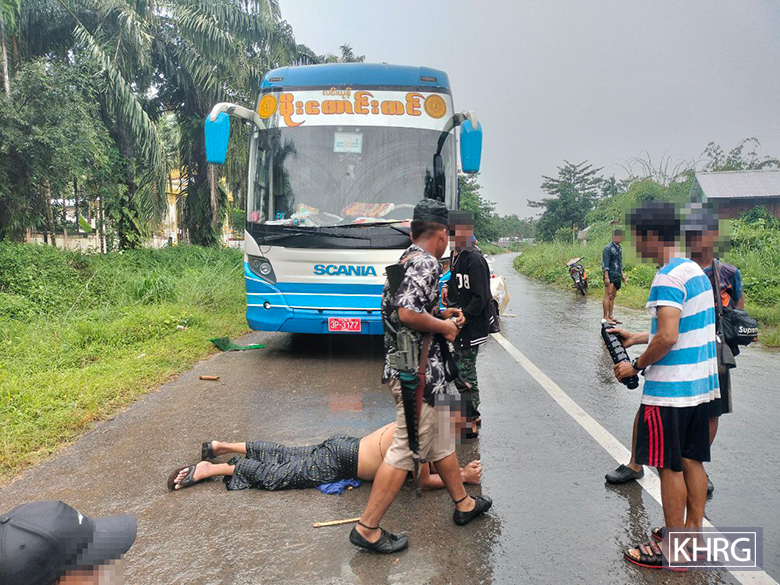
This photo was taken in October 2024 near Cn--- village, Sa Tain village tract, Ler K’Saw Township, Mergui-Tavoy District. On October 9th 2024, Kaw Thoo Lei Army (KTLA) soldiers checked a bus at a KTLA checkpoint located near Cn--- village and found two bullet cases in the bus. Then, they ordered the bus driver and six male passengers to get down from the bus, take out their shirts, and lie down on the road, while raining. They beat them without asking any questions. They detained the villagers at 8 am and did not release them until 11 am, when the KTLA commander arrived at the checkpoint. The commander gave 150,000 kyat [71.43 USD] to the villagers as compensation, without offering any form of apology. [Photo: KHRG]
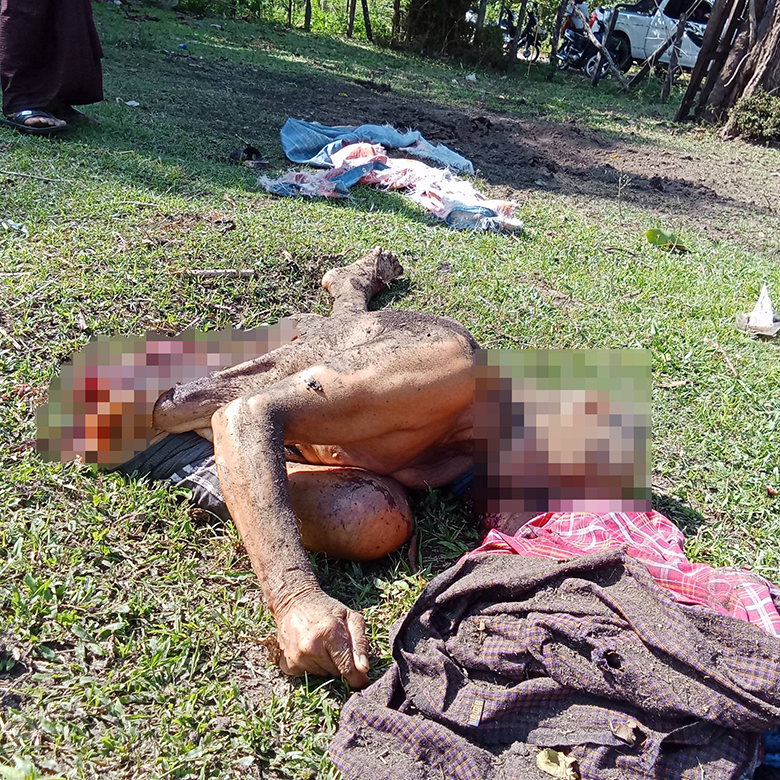
This photo was taken on October 18th 2024 at Cw--- village, Myauk Kya Inn village tract, Kruh Tuh Township, Dooplaya District. On October 18th, SAC soldiers from Artillery Unit #545, under MOC #12, based in Kaw T’Ree Township, fired in two sequences a total of six mortar rounds, into Cw--- village. As result, the shrapnel killed a villager named U Cx---while he was herding his cows on pastureland, as the photo shows.[27] [Photo: Karen National Union (KNU)[28] media group29]]
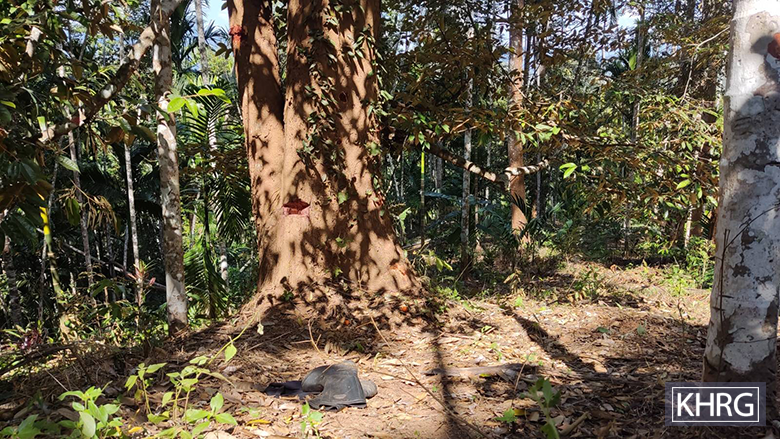
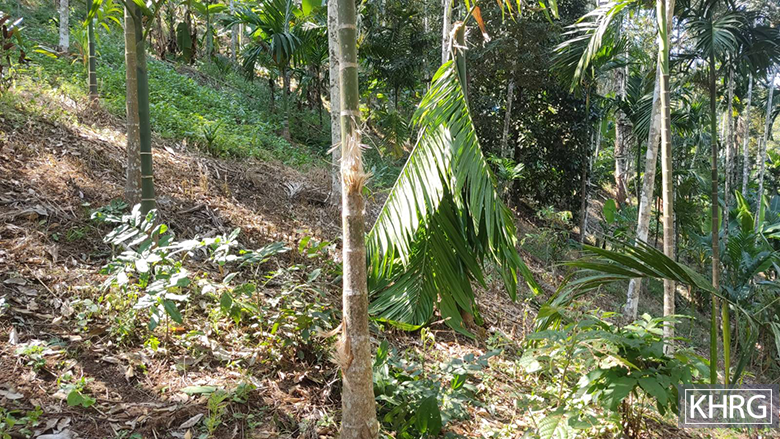


These photos were taken in November 2024 in a plantation area between Cs--- and Ct--- villages, Yay Tho Kyi village tract, Htaw Ta Htoo Township, Taw Oo District. On November 21st 2024, SAC soldiers from MOC #20 army camp (near Cr--- village, Kaw Thay Der village tract, Htaw Ta Htoo Township), Thit Say Taung army camp (Htaw Ta Htoo Township), and Pyaung Tho army camp (Daw Hpah Hkoh Township) fired about ten 120 mm and 60 mm mortar rounds into civilian areas, including a road and villagers’ plantations. At the time of the incident, six villagers were working on the plantation. The mortar explosion killed a man named Saw Cu---, who was over 30 years old, and injured a 55-year-old woman named Naw Cv---. After the incident, villagers called a car operated by a local volunteer group from Taw Oo Town that provides transportation services. The car transported them to Taw Oo public hospital for medical treatment. The hospital is administrated by the government. The photo on the left shows a rubber boot owned by one of the victims, left at the incident place. The photo on the right shows damage to villagers’ betel nut trees caused by mortar shells that exploded on a plantation owned by a villager named Saw Au---.[30] [Photo: KHRG]
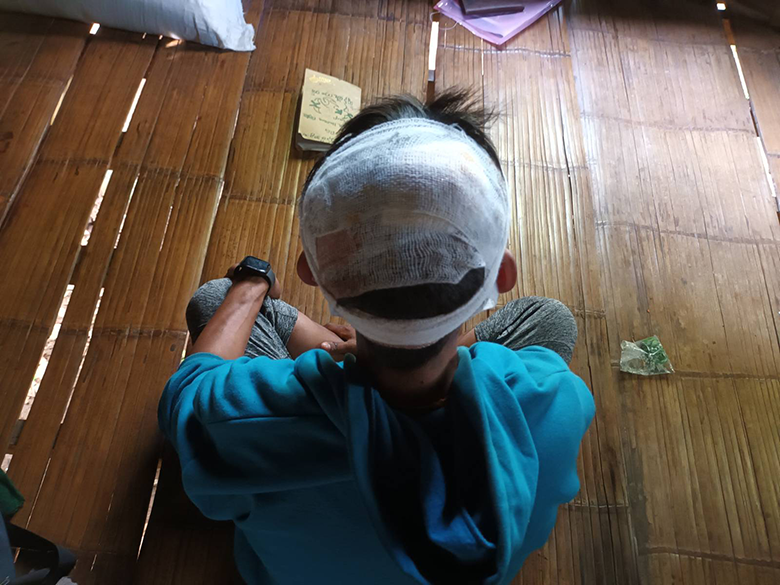
This photo was taken on November 25th 2024 in Dt--- area, Daw Hpah Hkoh Township, Taw Oo District. The photo shows an injured villager, named Ko[31] Co--- (33 years old), who is a driver from Cp--- area. On November 25th 2024, Ko Co--- was driving a bus from Toungoo Town to Yay Thoe Lay Town. When he reached Cp--- area, he was forced to stop by the SAC soldiers (around six soldiers, who were not in full uniform) and told him to get out of the car. They were aiming at him with their guns the whole time. As soon as he got off the car, the soldiers ordered him to lay flat on the ground and a soldier beat him on his head with a gun. The soldiers also robbed his phone and took approximately 150,000 kyat [71.43 USD] from him. The soldiers also kicked the bus fare collector, a 21-year-old, with such force that he was knocked under the bus. The whole incident lasted about three minutes, after which they let him go. He sustained a severe head injury and went to Cq--- clinic for medical treatment, where he received eight stitches. He had been working as a driver at Cr--- area to earn a living. On that day, around five buses were robbed. [Photo: Local villager]

The photo was taken in July 2024 at a farm near Dv--- village, Noe Hkwee village tract, Ta Kreh Township, Hpa-an District. The photo shows one of the villagers’ farms destroyed by flooding between July 22nd and 26th. Noe Hkwee bridge was also destroyed by the flooding. [Photo: KHRG]
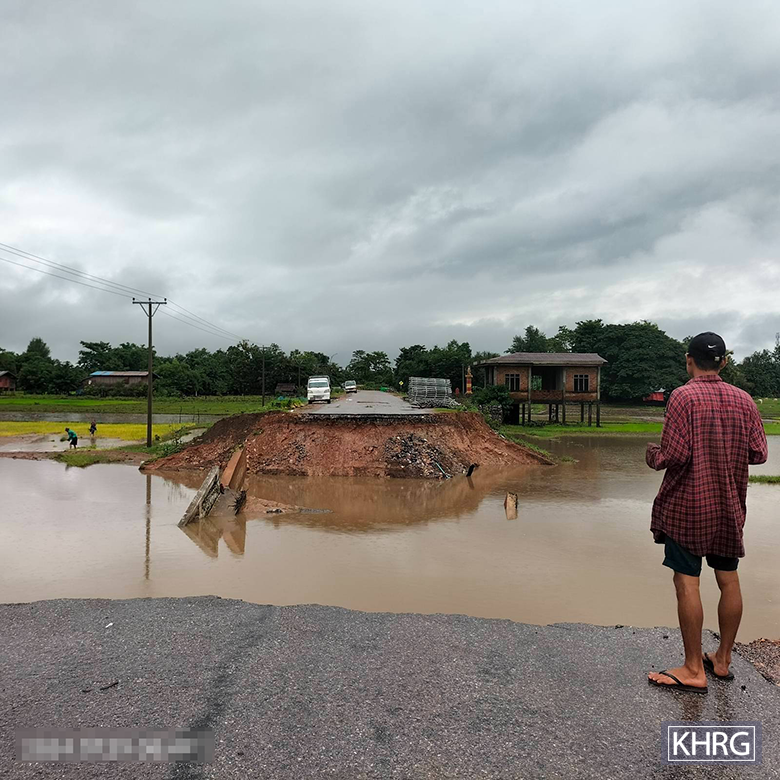
This photo was taken in July 2024 near Du--- village, Kyet Tu Yway village tract, Ta Kreh Township, Hpa-an District. The photo shows a bridge on a road near Du--- village that destroyed by flooding between July 22nd and 26th 2024. [Photo: KHRG]
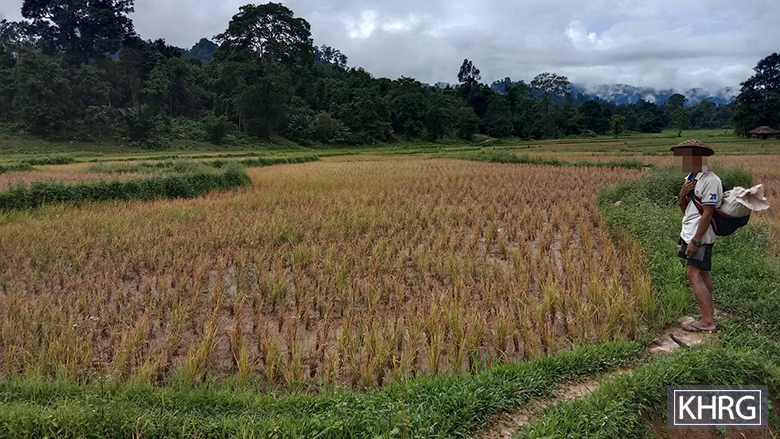
This photo was taken in August 2024 in Cy--- village, Htee T’Bluh Hta village tract, Dwe Lo Township, Mu Traw District. This photo shows one of the paddy farms in Cy--- village destroyed by an insect infestation, that turned the paddies reddish. Almost all farmers were affected by the infestation, resulting in a shortage of rice. Villagers attempted to control the outbreak by purchasing and spraying pesticide, but it was ineffective, and many crops were ultimately lost. In addition, villagers have been living under the ongoing security threat of SAC’s indiscriminate shelling and air strikes. As a result, they face serious concerns about food insecurity in the coming year. [Photo: KHRG]
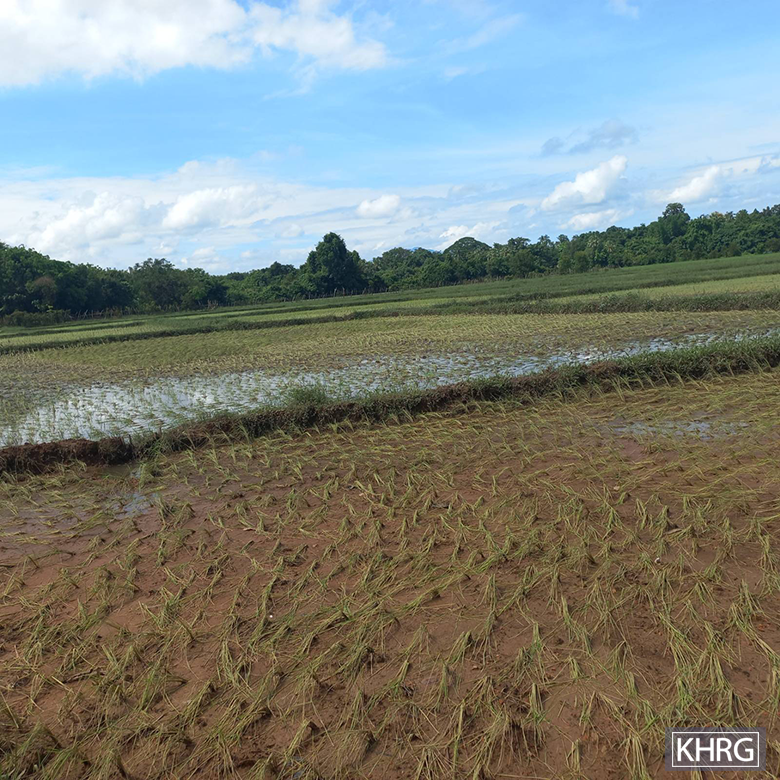
This photo was taken in August 2024, near Dw--- village, Ywa Tan Shin village tract, in Kaw T’Ree Township, Dooplaya District. The photo shows villagers’ farms in Ywa Tan Shin village tract, where many village tracts were affected by flooding in August 2024, including Aaw Hpa, Kaw Nweh, Kya K’Wa, T’Ray T’Kaw, and other village tracts.[32] [Photo: KHRG]
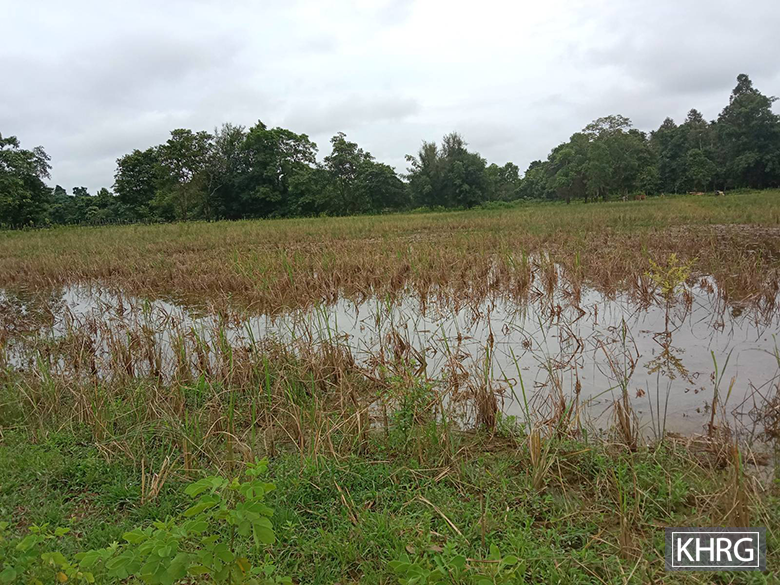
This picture was taken in September 2024 in a farm near Dx--- village, Ta Au Hkee village tract, Bilin Township, Doo Tha Htoo District. The photo shows flooding that destroyed crops in Dx--- village in August 2024. The remaining crops were later affected by an insect infestation, which caused the paddies to turn yellow and die. [Photo: KHRG]

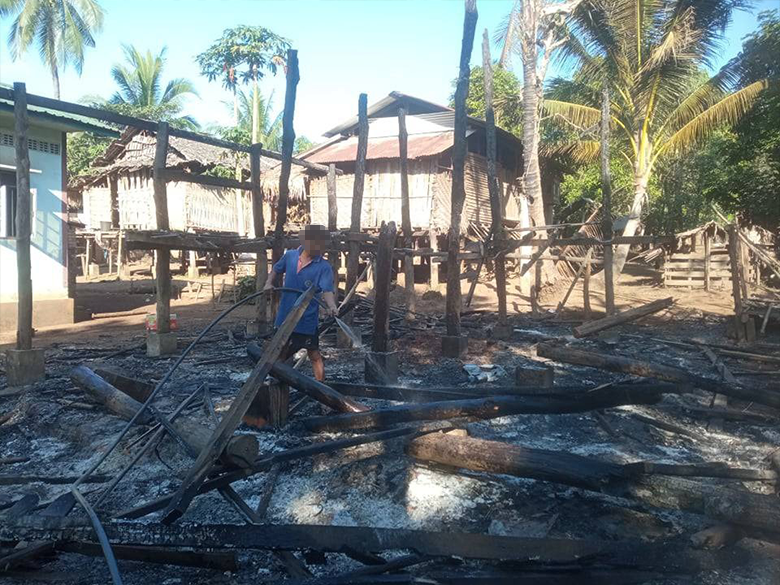


These photos were taken in December 2023 in A--- village, Ta Paw village tract, Bilin Township, Doo Tha Htoo District. On December 23rd 2023, the Karen National Defence Organisation (KNDO)[33] Battalion #2 fought against the SAC LIB #410, under MOC #6, based in A--- army camp. During the fighting, SAC soldiers from LIB #9 and LIB #3, based in Ka Ma Moh army camp, fired 60 mm, 79 mm, and 120 mm mortar rounds indiscriminately into A--- village day and night. The motar explosions destroyed two houses owned by Saw V--- (21 years old) and Saw W--- (40 years old). On December 26th 2023, SAC soldiers from A--- army camp shelled three 60 mm mortar rounds into A--- village. A house owned by a villager named Saw X--- was burned down due to the mortar explosion. The photo shows the remains of the burned house of Saw X---. The photo on the right shows a displaced villager who on the left had returned home to extinguish the fire to save as many belongings as possible and to prevent the fire from spreading to nearby houses, as shown in the picture. [Photos: Local villager]
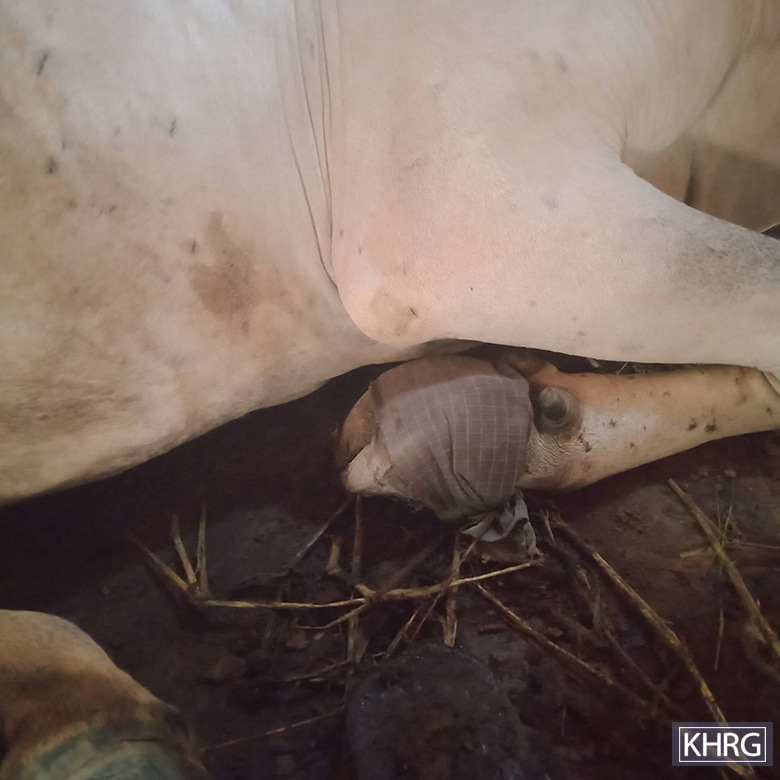
This photo was taken in January 2024 in Dj--- village, Moo special area, Moo Township, Kler Lwee Htoo District. On January 23rd 2025, SAC LIB #439, based in Shwe Wa army camp, conducted mortar shelling into Dj--- village. The mortar explosion destroyed villagers’ houses, killed one cow and injured one bull. This photo shows a bull owned by U Dk--- and Daw Dl---, injured in the leg. Villagers treated the injury in order to save the animal and protect their future livelihoods. [Photo: KHRG]

This photo was taken in February 2024 in a plantation in Dn--- village, Meh Naw Ah village tract, Kaw T’Ree Township, Dooplaya District. The photo shows displaced villagers from Meh Naw Ah village tract, processing peanut crops they brought to a secured area to support their livelihoods, after the SAC conducted air strikes on civilian areas, including shelling attacks on January 26th and 29th 2024 in Kyeh Doh Town, located near Mee Naw Ah village tract. [Photo: KHRG]
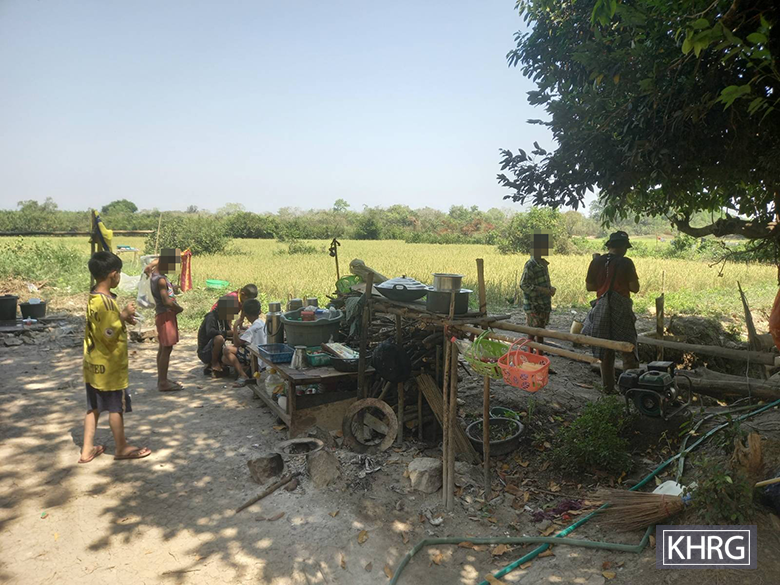


This photo was taken in February 2024 in Meh K’Tha village tract [specific place censored for security], Kruh Tuh Township, Dooplaya District. The photo shows displaced villagers from many villages, including Dp--- village, nearby a paddy field where crops were almost ready to harvest. Villagers were displaced due to the SAC’s indiscriminate shelling into villages, which posed serious risks to their safety, following the fighting that started on November 11th 2023. Some displaced villagers reported to KHRG that their houses were burned down by SAC soldiers. [Photo: KHRG]
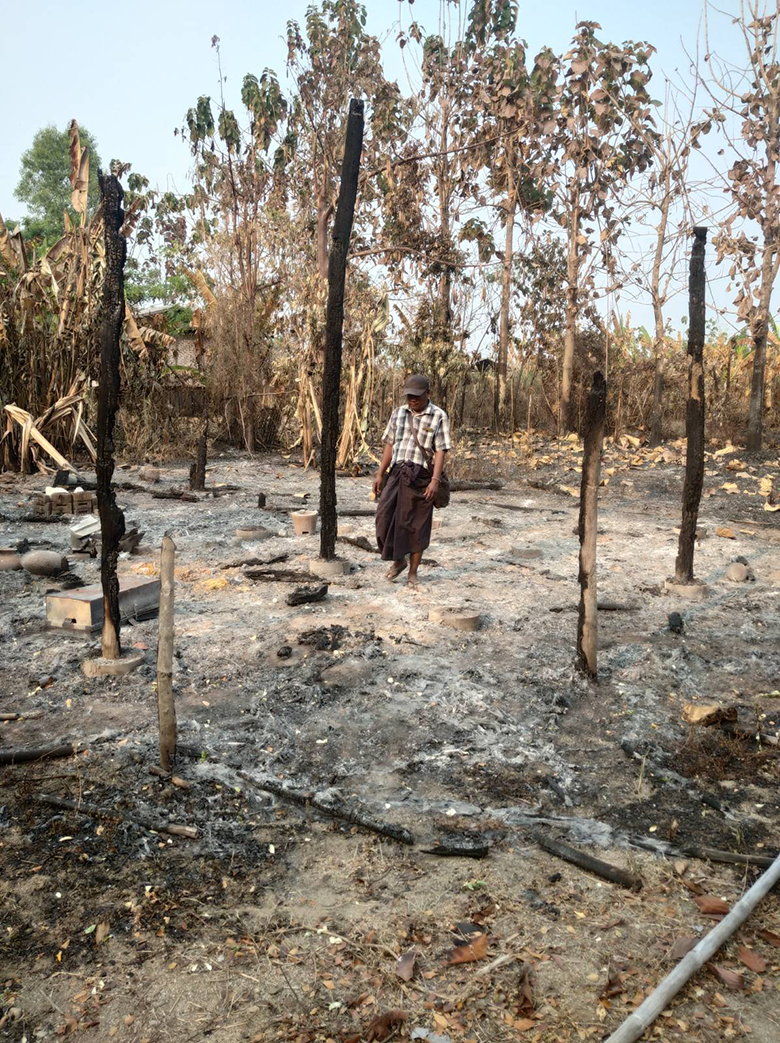
These two photos were taken on March 16th 2024 in Cz--- village, Zayat Gyi Taung Chan area, Htaw Ta Htoo Township, Taw Oo District. On March 16th 2024, at 7 pm, SAC IB #73 fired mortar rounds into Cz--- village. The mortar explosions caused a fire that burned down nine houses. The nine houses were owned by U Da---, U Db---, U Dc---, U Dd---, U De---, Daw[34] Df---, U Dg---, U Dh---, and U Di---. The photos shows villagers extinguishing the fire. [Photos: Local villager]
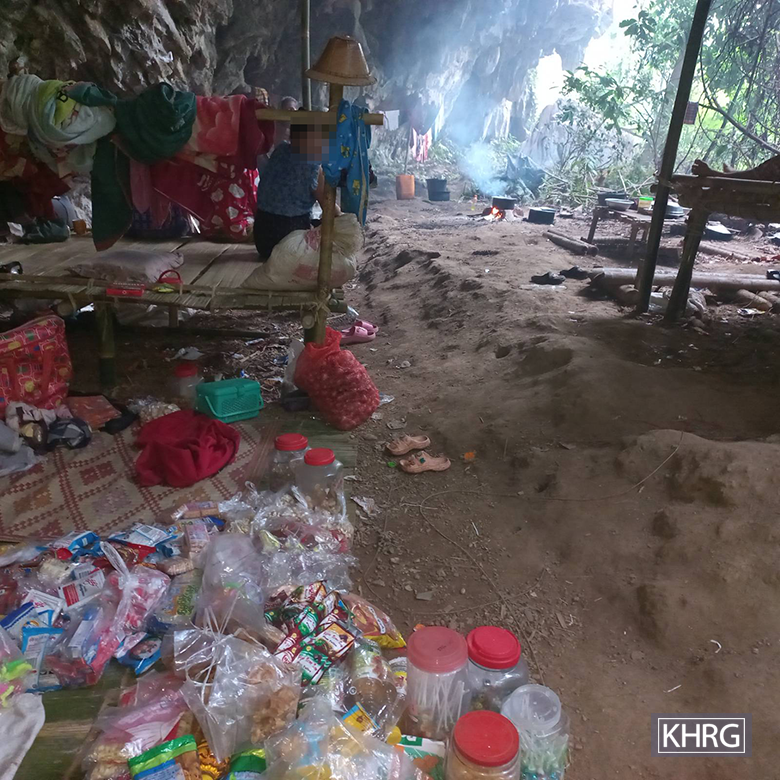
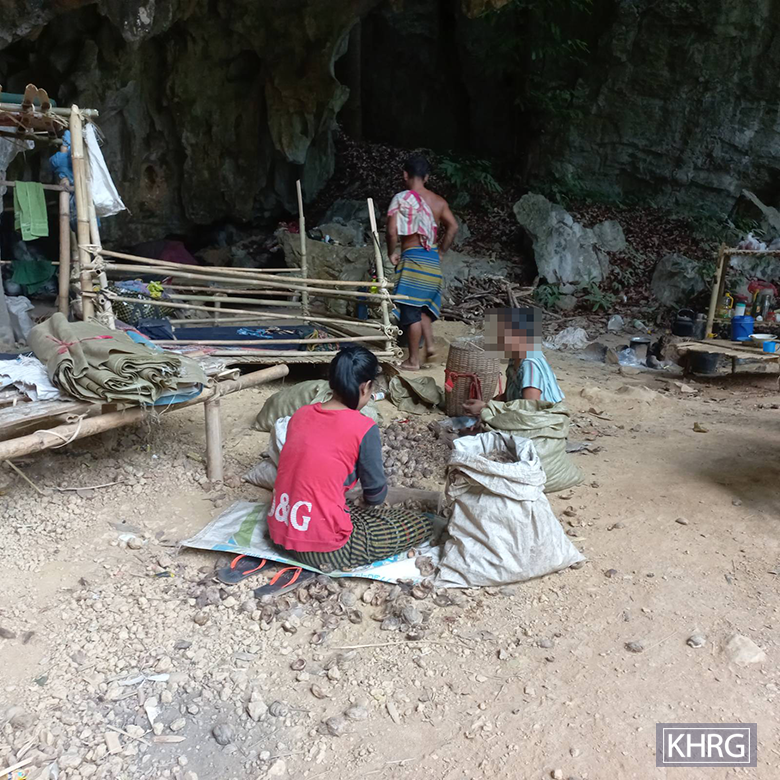


These two photo were taken in April 2024 in a cave where villagers were displaced in Noh Hsoo Neh village tract, Waw Ray Township, Dooplaya District. Villagers are displaced after an air strike was conducted by the SAC in Noh Ber Baw village tract, Waw Ray Township, on 12th March 2024. The photo on the left shows villagers who brought their store stock to the displacement site and continued running a small shop to support their livelihoods. The photo on the right shows villagers husking betel nuts, which they had brought to the displacement site to help meet part of their livelihood needs. [Photo: KHRG]
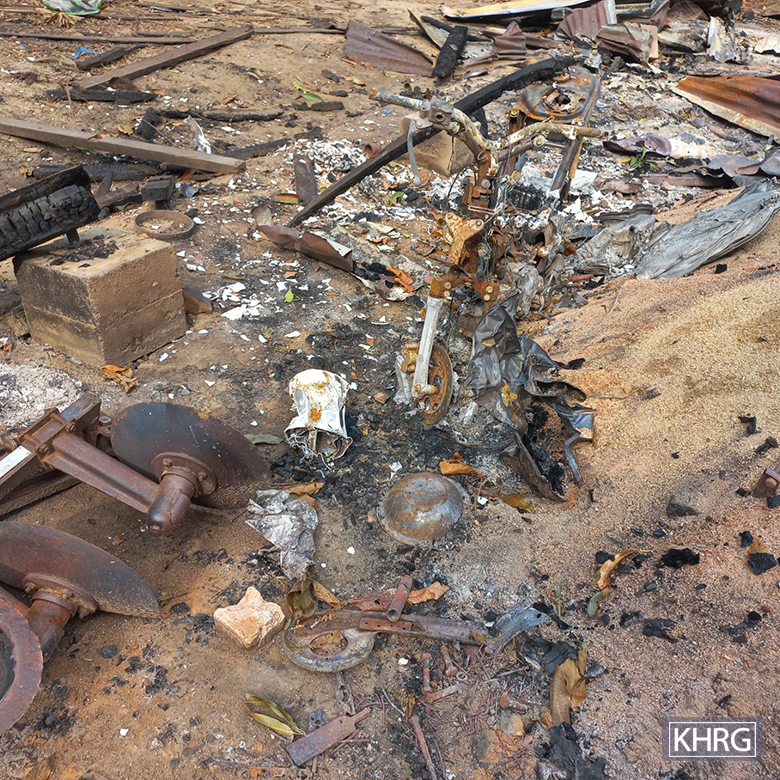
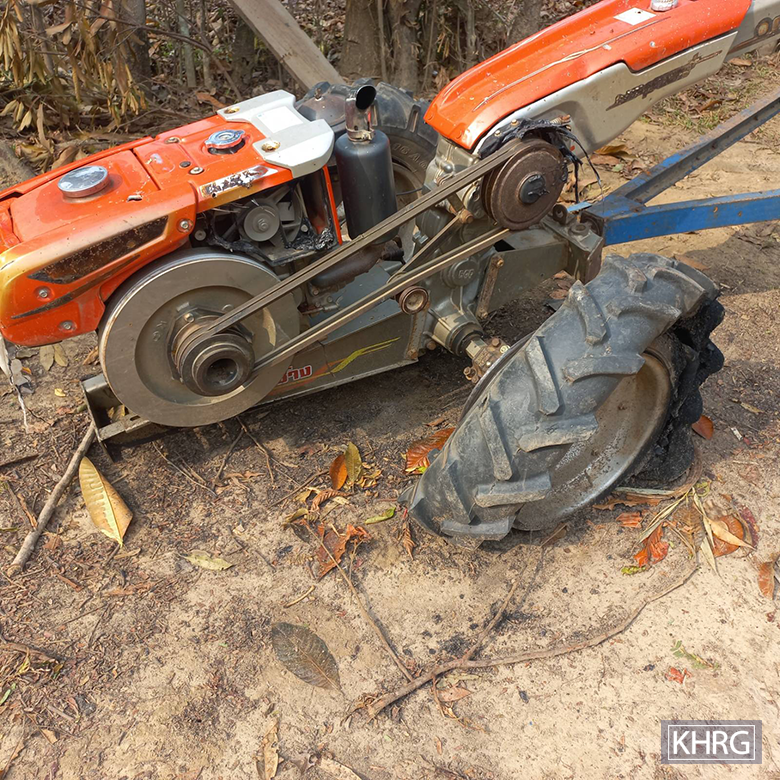
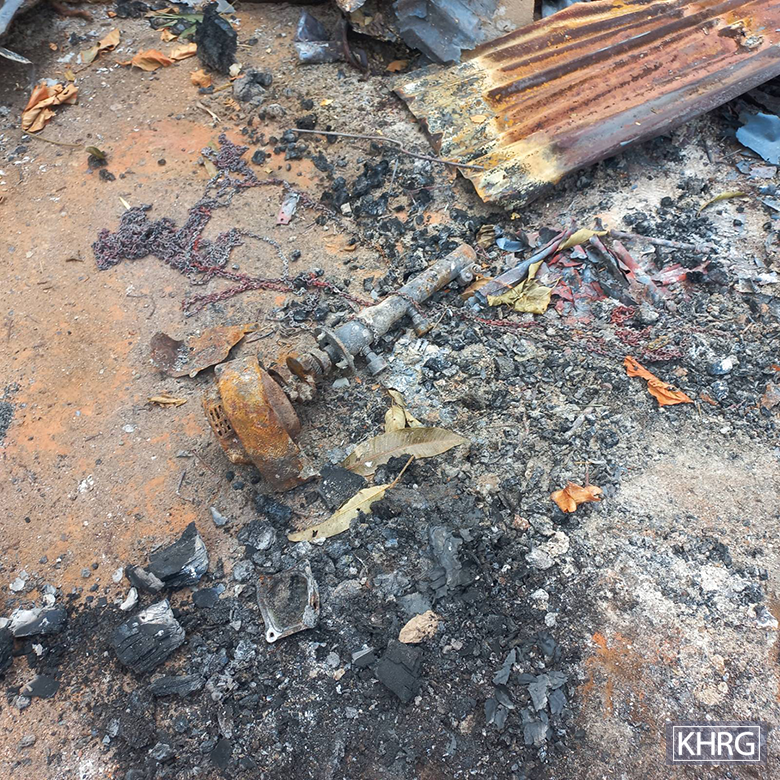

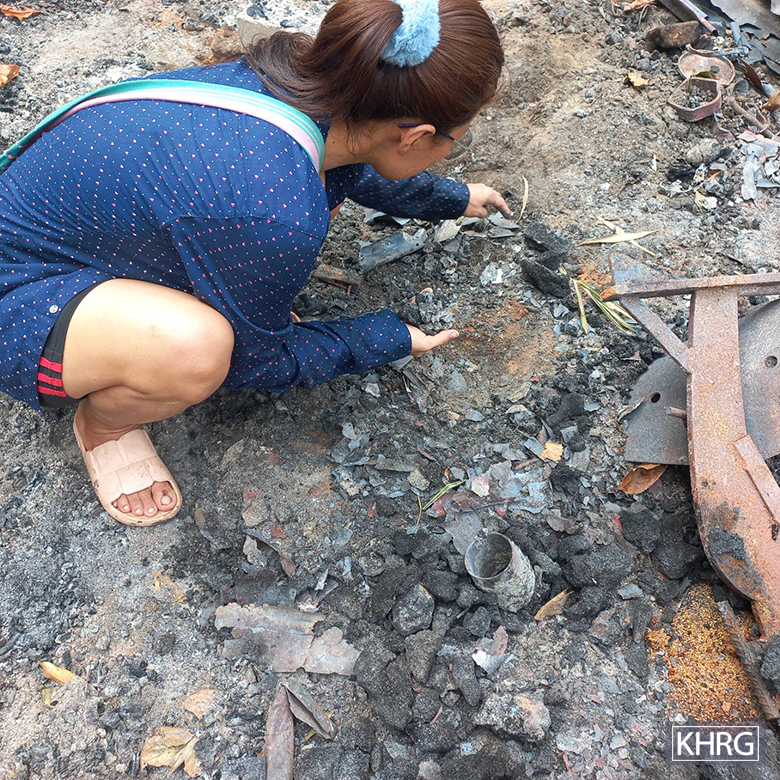



These five photos were taken in May 2024 in Cf--- village, Aaw Hpa Hpa Doh village tract, Kaw T’Ree Township, Dooplaya District. On April 13th 2024, SAC forces fired several mortar rounds into Cf--- village, destroying villagers’ houses, property, and valuable possessions. These included machinery and tools used for livelihood activities (such as a farming tractor), transportation equipment (such as a motorbike), houses used for shelter, and other personal valuables, (such as gold and cash). The attack also caused the death of villagers’ livestock. The two photos on the top row and the photo on the left of the middle row show a tractor and farming tools destroyed. The photo on the right of the middle row shows a villager’s motorbike, destroyed. Lastly, the photo on the left of the bottom row shows a woman trying to recover some remaining belongings in order to support her family’s livelihood needs. [Photos: KHRG]
Footnotes:
[1] In 1989, the then-ruling military regime changed the name of the country from Burma to Myanmar without consultation from the people. KHRG prefers the use of Burma because it is more typically used by villagers, and since the name change to Myanmar is reflective of the military regime’s longstanding abuse of power.
[2] The State Administration Council (SAC) is the executive governing body created in the aftermath of the February 1st 2021 military coup. It was established by Senior General Min Aung Hlaing on February 2nd 2021, and is composed of eight military officers and eight civilians. The chairperson serves as the de facto head of government of Burma/Myanmar and leads the Military Cabinet of Myanmar, the executive branch of the government. Min Aung Hlaing assumed the role of SAC chairperson following the coup. The military junta changed its name in July 31st 2025 to State Security and Peace Commission (SSPC).
[3] The terms Burma military, Burma Army, military junta, and SAC are used interchangeably throughout this report to describe Burma’s armed forces. Villagers themselves commonly use Burma Army, Burmese soldiers, or alternatively the name adopted by the Burma military regime at the time -since the 2021 coup, the State Administration Council (SAC).
[4] The Kaw Thoo Lei Army (KTLA) was founded on July 17th 2022 by Brigadier-General Nerdah Bo Mya. Nerdah Bo Mya, former Commander-In-Chief of the Karen National Defence Organisation (KNDO), was dismissed by the KNU in 2022. KTLA operates in two districts in Southeast Burma, in KNU-controlled areas, namely Mergui-Tavoy and Dooplaya districts. In Dooplaya District, they operate in alliance with resistance armed groups. KTLA battalions in Mergui-Tavoy District are in conflict with both SAC and KNLA troops.
[5] See also: KHRG, Defying Hunger : State Administration Council (SAC)’s systematic destruction of civilian livelihoods and food systems in Southeast Burma (January - December 2024), May 2025.
[6] Karen State, defined locally, includes the following areas: Kayin State, Tanintharyi Region and parts of Mon State and Bago Region. Karen State, located in Southeastern Burma, is primarily inhabited by ethnic Karen people. Most of the Karen population resides in the largely rural areas of Southeast Burma, living alongside other ethnic groups, including Bamar, Shan, Mon and Pa’O.
[7] KHRG operates in seven areas in Southeast Burma: Doo Tha Htoo (Thaton), Taw Oo (Toungoo), Kler Lwee Htoo (Nyaunglebin), Mergui-Tavoy, Mu Traw (Hpapun) and Dooplaya and Hpa-an. When KHRG receives information from the field, it organises data according to these seven areas. These are commonly referred to as ‘districts’ and are used by the Karen National Union (KNU), as well as many local Karen organisations, both those affiliated and unaffiliated with the KNU. KHRG’s use of the district designations in reference to our research areas does not imply political affiliation; rather, it is rooted in the fact that many rural communities commonly use these designations. For clarity, the Burmese terms for these districts are provided in brackets but do not correspond with the Burma (Myanmar) government administrative divisions.
[8] The Karen National Liberation Army is the armed wing of the Karen National Union.
[9] The People’s Defence Force (PDF) is an armed resistance established independently as local civilian militias operating across the country. Following the February 1st 2021 military coup and the ongoing brutal violence enacted by the junta, the majority of these groups began working with the National Unity Government (NUG), a body claiming to be the legitimate government of Burma/Myanmar, which then formalized the PDF on May 5th 2021 as a precursor to a federal army.
[10] An Infantry Battalion (IB) comprises 500 soldiers. However, most Infantry Battalions in the Tatmadaw are under-strength with less than 200 soldiers. Yet up to date information regarding the size of battalions is hard to come by, particularly following the signing of the NCA. They are primarily used for garrison duty but are sometimes used in offensive operations.
[11] Male honorific title in Burmese language.
[12] ‘Saw’ is male honorific title in S’gaw Karen language.
[13] ‘Naw’ is a S’gaw Karen female honorific title used before a person’s name.
[14] Special Areas or Special Regions are areas that are under KNU-control or mixed-control with the Burma Army. Following the 2021 coup that reinvigorated the armed conflict in Southeast Burma, the KNU has claimed back some of these areas after seizing them or after the withdrawal of SAC troops or SAC administration. The KNU refers to these areas as Special Areas or Special Regions as they are not formally under KNU administration, but in the process of forming their governance. The SAC also refers to areas in Southeast Burma as Special Areas. This refers to areas that they do not have full control over.
[15] A Light Infantry Battalion (LIB) comprises 500 soldiers. Most Light Infantry Battalions are under-strength with less than 200 soldiers, yet up-to-date information regarding the size of battalions is hard to come by, particularly following the signing of the NCA. LIBs are primarily used for offensive operations, but they are sometimes used for garrison duties.
[16] ‘U’ is a Burmese male honorific title used before a person’s name.
[17] KHRG, “Taw Oo District Short Update: SAC indiscriminate shelling killed one villager and injured six, including children, and destroyed villagers’ property in Daw Hpah Hkoh and Htaw Ta Htoo Townships (October and December 2024)”, February 2025.
[18] KHRG, “Kler Lwee Htoo District Short Update: SAC drone strikes and indiscriminate shelling caused casualties, destruction, and livelihood and education challenges in Ler Doh Township (November to December 2024)”, March 2025.
[19] A Light Infantry Division (LID) of the Tatmadaw is commanded by a brigadier general, and consists of ten light infantry battalions specially trained in counter-insurgency, jungle warfare, search and destroy operations against ethnic insurgents. They were first incorporated into the Tatmadaw in 1966. LIDs are organised under three Tactical Operations Commands, commanded by a colonel, three battalions each and one reserve, one field artillery battalion, one armoured squadron and other support units. Each division is directly under the command of the Chief of Staff (Army).
[20] The Cobra Column is one of eight armed resistance forces that have emerged since March 2022 under the joint command of the Karen National Liberation Army (KNLA) and the People’s Defence Force (PDF). The Cobra Column operates largely under KNLA Company #1, Battalion #27 of KNLA's Brigade #6.
[21] Strategic Operations Command; under regional command, three to four battalions and a headquarters, covers an area mostly for defence.
[22] KHRG, “Dooplaya District Situation Update: SAC air strikes and shelling caused death, injury, damage, and displacement in Kaw T’Ree Township (December 2023 to March 2024)”, March 2025.
[23] KHRG, “Hpa-an District Short Update: SAC shelling injured villagers, drug issues and livelihood challenges in T’Nay Hsah and Luh Pleh Townships (March to November 2024)”, May 2025.
[24] KHRG, “Dooplaya District Short Update: SAC shelling and air strikes resulted in civilian casualties, property destruction and displacement, in Kruh Tuh Township, December 2023.”, August 2024.
[25] All conversion estimates for the kyat are based on the August 22nd 2025 mid-market exchange rate of 1,000 kyats to USD 0.48 (taken from wise.com/gb/currency-converter/mmk-to-usd-rate).
[26] KHRG, “Taw Oo District Short Update: SAC indiscriminate shelling killed one villager and injured six, including children, and destroyed villagers’ property in Daw Hpah Hkoh and Htaw Ta Htoo Townships (October and December 2024)”, February 2025.
[27] KHRG, “Dooplaya District Incident Report: SAC shelling killed a villager in Kruh Tuh Township, October 2024”, April 2025.
[28] The Karen National Union (KNU) is the main Karen political organisation. It was established in 1947 and has been in conflict with the Burma/Myanmar government since 1949. The KNU wields power across large areas of Southeast Burma and has been calling for the creation of a democratic federal system since 1976. Although it signed the Nationwide Ceasefire Agreement in 2015, relations with the government remain tense.
[29] This documentation team, formed by a group of researchers, is founded by the district Karen National Union (KNU) authorities, and hence they are part of the KNU district staff members. Their role is to collect and document human rights violations on the ground and share them with KNU's Township and District staff, which then will be shared with the general public through the KNU's media pages and website.
[30] KHRG, “Taw Oo District Incident Report: SAC shelling killed a villager, injured another villager, and damaged a plantation in Htaw Ta Htoo Township (November 2024)”, June 2025.
[31] ‘Ko’ is a Burmese title meaning older brother. It can be used for relatives as well as non-relatives.
[32] KHRG, “Dooplaya District Situation Update: SAC shelling, militarisation and air strikes causing casualties, displacement, and education, healthcare and livelihood challenges in Kaw T’Ree Township (January to August 2024)”, December 2024.
[33] The Karen National Defence Organisation (KNDO) was formed in 1947 by the Karen National Union and is the precursor to the Karen National Liberation Army (KNLA). Today the KNDO refers to a militia force of local volunteers trained and equipped by the KNLA and incorporated into its battalion and command structure; its members wear uniforms and typically commit to two-year terms of service.
[34] ‘Daw’ is a Burmese female honorific title used before a person’s name.


